Pan’s Labyrinth is returning to the page as well as the big screen for its 20th anniversary. Insight Editions is publishing two official books devoted to Guillermo del Toro’s dark fantasy: Pan’s Labyrinth: The Complete Screenplay and Guillermo del Toro’s Pan’s Labyrinth: Inside the Creation of a Modern Fairytale — 20th Anniversary Edition.
They are related releases, but they serve notably different purposes. One presents the full shooting script written by del Toro; the other is a production-focused account developed in close collaboration with the filmmaker. For admirers of the movie’s unsettling storybook imagery, practical creature work and historical setting, that distinction matters. A screenplay is a record of narrative construction and on-set intent. A making-of volume is a record of how a film’s many departments move from early concepts to finished images.
The anniversary campaign also includes a theatrical return on Oct. 9. Cineverse and Fathom Entertainment are bringing the film back to theaters in 3D and HDR by Barco. Tickets are listed as on sale. For the wider pop-culture context around the anniversary presentation, the planned theatrical return and book releases are outlined here.
What the two Pan’s Labyrinth books contain
Pan’s Labyrinth: The Complete Screenplay is the more text-centered release. It contains the film’s complete shooting script, written and directed by del Toro. A shooting script is the production-ready version of a screenplay: rather than being merely a story draft, it is the document used to organize the work of turning scenes into a film. Reading one offers a different route through a familiar movie. Dialogue, scene progression and written action can be considered without music, editing, performance or production design steering the reader’s attention in the moment.
For more context, explore Resident Evil Has No Post-Credits Scene, but Its Ending Leaves a Monster-Sized Question.
That is particularly apt for Pan’s Labyrinth, a film built around the movement between a brutally grounded world and a dangerous fantasy realm. The story follows Ofelia, played by Ivana Baquero, a young girl escaping the danger surrounding 1944 Francoist Spain in the aftermath of the Spanish Civil War. She enters a fantastical world, meets a mysterious faun and confronts deadly creatures. Doug Jones, Maribel Verdú and Sergi López also star.
The screenplay edition should therefore be most relevant to readers curious about the film’s underlying narrative architecture: how Ofelia’s journey is organized, how the real and fantastical strands are set alongside one another, and how much is communicated directly through written scene description. It is not being positioned as a new story or a sequel; it is the full script for the existing film.
The companion title, Guillermo del Toro’s Pan’s Labyrinth: Inside the Creation of a Modern Fairytale — 20th Anniversary Edition, takes the wider production route. Created in close collaboration with del Toro, it traces the filmmaking process from the director’s early ideas through casting, production challenges and the film’s eventual critical reception.
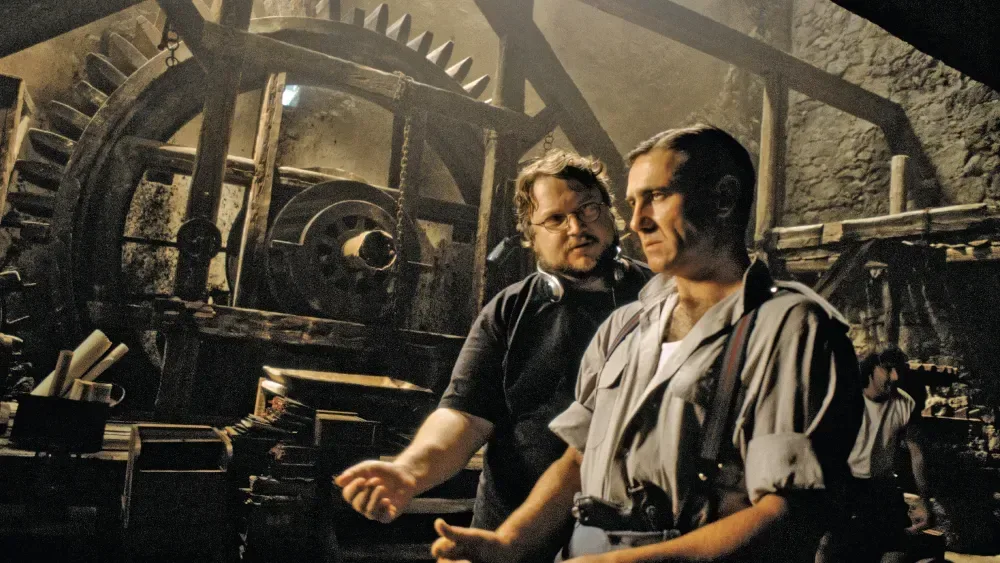
Its announced visual material includes rare concept art and candid photographs taken on set. The book also includes interviews with a substantial group of the people connected to the production: del Toro; actors Baquero, López, Verdú and Jones; producers Alfonso Cuarón and Bertha Navarro; and cinematographer Guillermo Navarro. Steven Spielberg contributes the foreword.
Why a screenplay and an art book tell different stories
Film books are often grouped together as “making-of” material, but these two releases preserve different kinds of evidence. The screenplay preserves decisions in written form. The behind-the-scenes volume preserves the wider chain of interpretation required to make those words physical and cinematic.
Concept art, for example, is not simply decorative bonus material. It documents an exploratory part of production, when the appearance of a character, environment or prop can still change significantly. In a fantasy film, those images can clarify how visual ideas were shaped before they appeared in costume, makeup, sets, practical effects or photography. The announced on-set photography serves another purpose: it captures the working environment in which those choices were executed.
The interviews add yet another layer. An actor can address a role from the standpoint of performance; producers can speak to the logistical and creative work of bringing a project together; and a director of photography can illuminate the visual side of production. None of those perspectives replaces the film itself, but each can make its finished form easier to examine with greater specificity.
For that reason, the two books are complementary rather than redundant. The screenplay is likely the cleaner choice for someone interested in del Toro’s writing. The anniversary creation book is the broader option for readers who want a visual record and multiple production perspectives. Readers who want both the written blueprint and the journey from idea to screen will find that the releases divide those jobs cleanly.
The limited edition is the collector-focused version
Alongside the standard anniversary material, a limited edition of Inside the Creation of a Modern Fairytale is planned at 500 copies. The first 100 copies are signed by del Toro. It is available exclusively through Insight Editions.
The stated physical specifications make clear that this is intended as a premium display edition rather than simply another printing. It is casebound in Svepa leatherette, with gilded page edges, gold foil and blind debossing, and it comes in a debossed slipcase.
Those terms describe the book’s finish rather than its editorial contents:
- Casebound means the pages are bound into a hard cover, generally the format associated with durable, presentation-oriented books.
- Leatherette is a leather-like covering material, here identified as Svepa leatherette.
- Gilded edges refers to page edges finished with a metallic treatment.
- Gold foil is a metallic decorative application, commonly used for lettering or cover accents.
- Blind debossing is an indented design pressed into a surface without ink or foil; it relies on texture and shadow to remain visible.
- Slipcase means a protective open-ended outer case that the book slides into.
For physical-media collectors, those details are useful because they separate a numbered, specially finished edition from a conventional reading copy. The signed subset adds an autograph element, but the available information does not establish any further tiers, signatures or contents beyond the first 100 being signed by del Toro. Buyers looking for a particular edition should pay close attention to whether they are selecting the standard anniversary book or the 500-copy limited version.
The film at the center of the anniversary
Even with its fantasy creatures and fairy-tale framing, Pan’s Labyrinth is anchored to a specific and severe setting: Spain in 1944, after the Spanish Civil War, under Francoism. Ofelia’s encounter with the faun and the realm of deadly beasts does not remove the historical danger around her. The tension between those two worlds is foundational to the movie’s identity, and it helps explain why the anniversary releases are divided between screenplay and production study.
The script provides a chance to follow the story’s written transitions between Ofelia’s circumstances and her encounters in the fantasy realm. The making-of book, meanwhile, is positioned to explore the creative labor behind presenting that fantastical material alongside the film’s real-world setting. Its contributor list is significant in that regard: it brings together the director, performers, producers and cinematographer rather than limiting the project to one retrospective voice.
Jones’s inclusion is also notable given that he is among the film’s principal cast and that the production book promises material on the creative process. Baquero, López and Verdú round out the named cast contributors, giving the volume representation from key performers in Ofelia’s story and the human world that surrounds it. Navarro’s participation adds a cinematography perspective, while Cuarón and Bertha Navarro represent the producing side.
How to choose the right edition
The available details point toward three sensible paths for different kinds of fans.
- For writers and close readers: choose The Complete Screenplay. Its value is the full shooting script and the opportunity to study the film in its written form.
- For art-book readers and production-history fans: choose Inside the Creation of a Modern Fairytale. It combines development history, concept art, on-set photography and interviews with major collaborators.
- For dedicated physical collectors: consider the 500-copy limited edition of the creation book, especially if the deluxe binding, slipcase and potential del Toro signature are the primary draw.
The Oct. 9 theatrical event offers a separate way to revisit the film, with 3D and HDR by Barco attached to the screenings. The books should not be mistaken for tie-in fiction or a newly expanded version of the movie; based on the announced contents, they are archival and process-oriented companion pieces. One returns readers to the script that guided the production, while the other gathers art, photographs and participant recollections around the making of the film.
That makes the 20th-anniversary slate unusually coherent. The theatrical presentation puts the completed work back in cinemas. The screenplay turns attention to the written foundation. The creation book focuses on the people and visual development behind the final result. And the limited edition gives fans of deluxe movie books a deliberately scarce version with a more elaborate physical presentation.
Shop the products
Check current price, model and availability at the retailer.