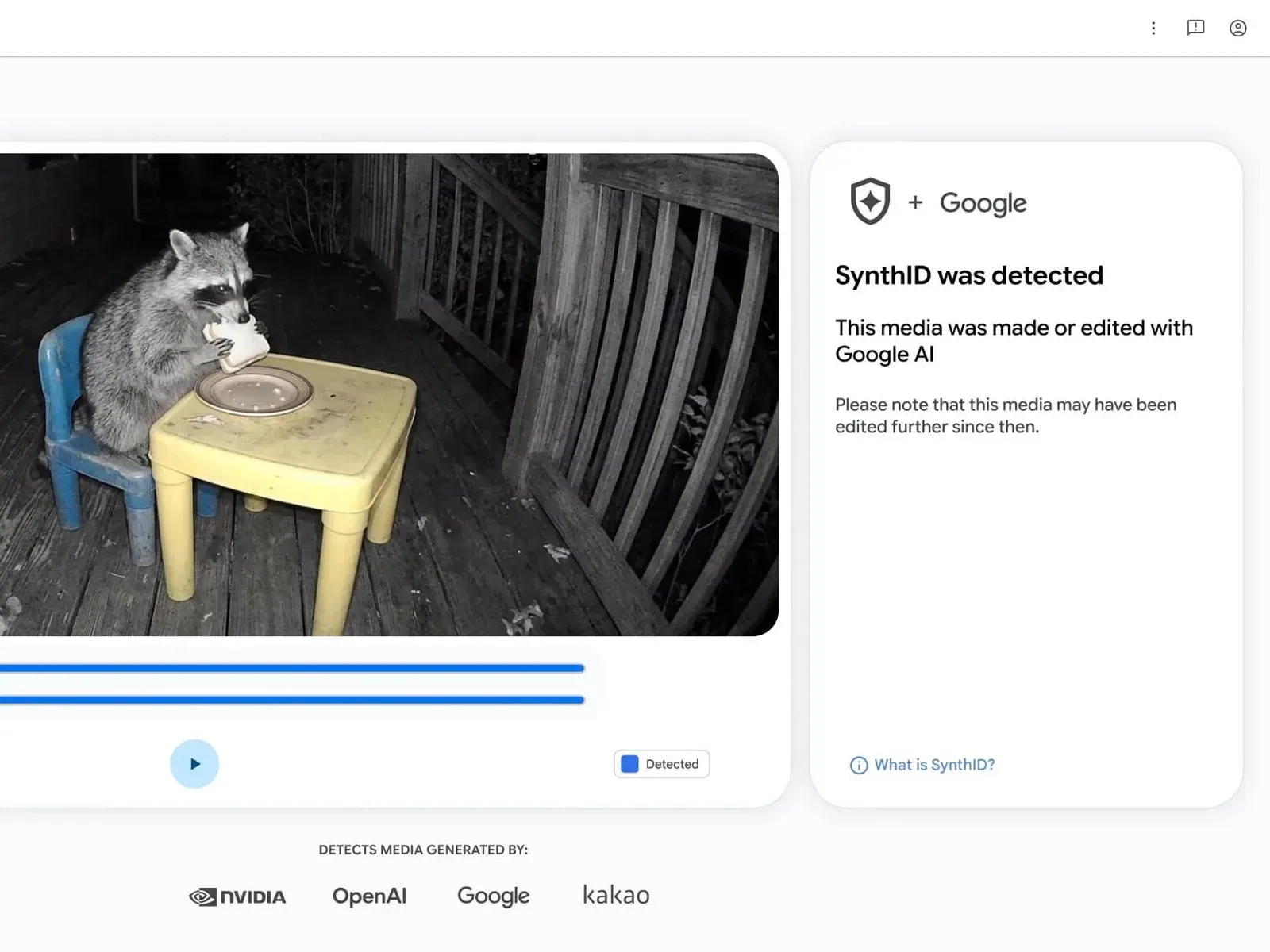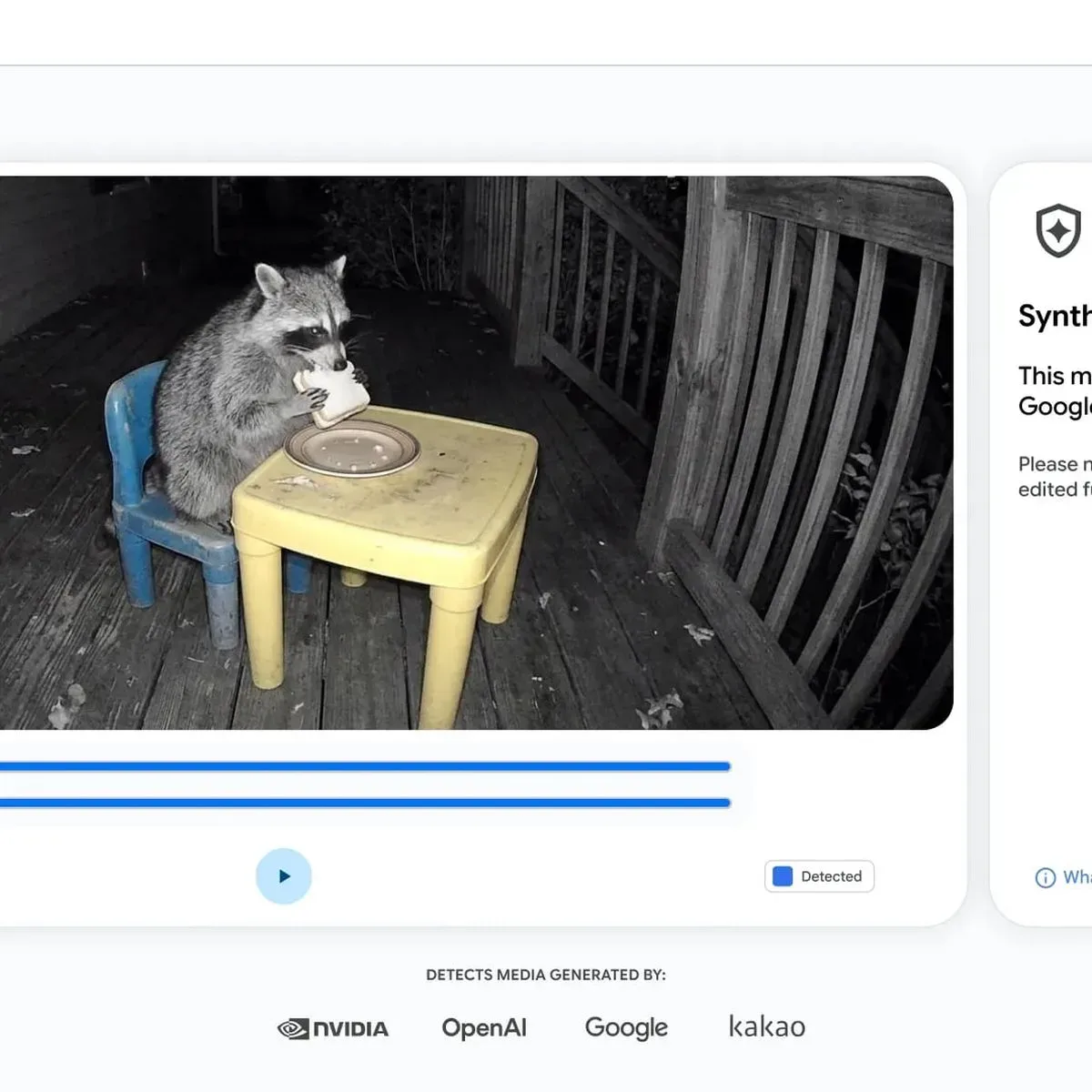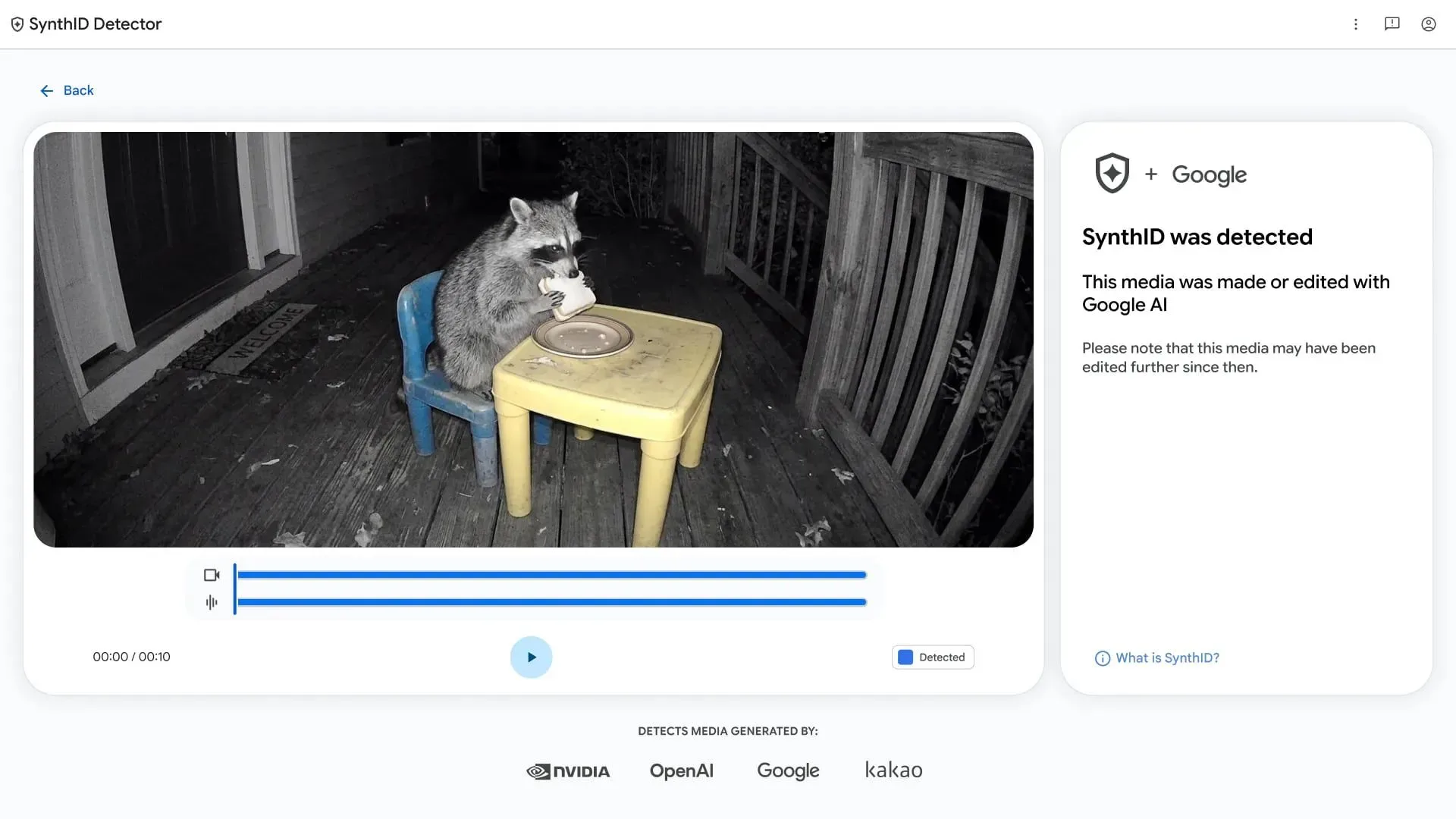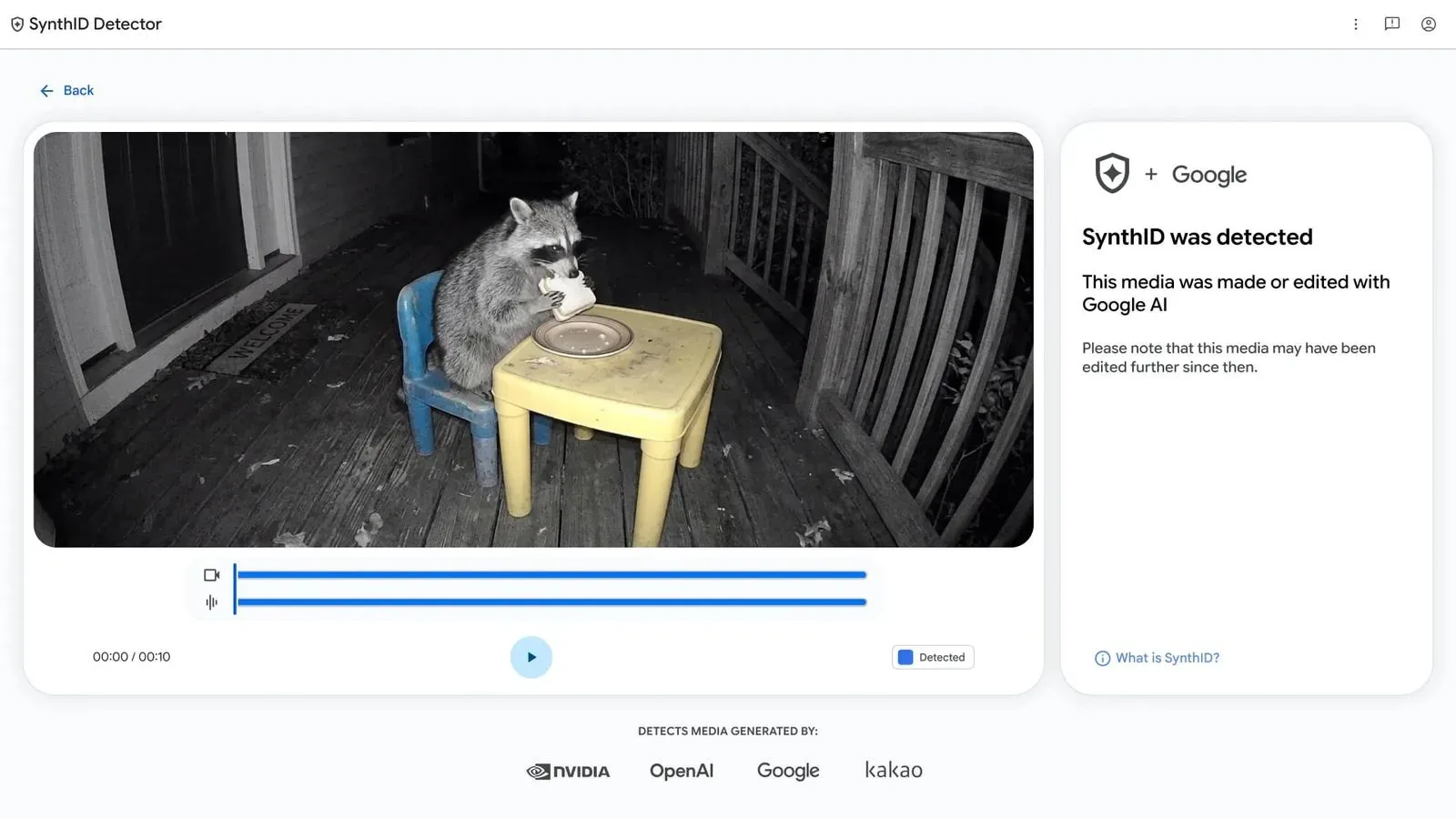
Google has made SynthID Detector available to the public worldwide in English, opening up a tool designed to check whether a photo, video or audio file carries a SynthID watermark. Anyone using it must sign in, then upload a supported media file for inspection.
That sounds straightforward: feed the machine a suspicious clip and ask whether a machine made it. But that is not quite what the service does, and the distinction matters. SynthID Detector does not claim to be a general-purpose detector for all AI-made media. It looks specifically for the SynthID technology embedded in participating AI output.
Put less grandly, it is not a robot detective that can stare at every JPEG and pronounce it guilty of being generated. It is a watermark reader. When the mark is present and detectable, the tool can identify it. When the mark is absent, the result does not establish that the media was made by a person.
What SynthID Detector checks
SynthID is a system of digital watermarks for AI-generated content. A watermark in this context is information embedded into media rather than visible text or a logo stamped in a corner. The supplied description says these marks are not visible to people, but can be identified through Google’s website.
The detector accepts three broad kinds of media:
- Photos and other image files
- Video files
- Audio files
Users upload a file to see whether it contains a SynthID watermark. The public version follows an earlier rollout to members of the media last year and is now offered globally in English.
The key phrase is “whether it has a SynthID watermark.” That is the question the tool is built to answer. It is not presented as a way to determine the complete creative history of a file, identify every generative model ever used, or separate all authentic material from all synthetic material.
The limitation that should shape every result
Google explicitly says that SynthID Detector cannot tell the difference between media that was wholly created with AI and media that was merely edited with AI. A detected watermark therefore signals the presence of relevant AI involvement covered by the technology, not necessarily that every pixel, frame or sound in the uploaded file originated from a generator.
That boundary is especially important for video and audio, where audiences often want a simple answer to a complicated question. “Was this made by AI?” can mean several different things: Was the entire thing generated? Was one element altered? Was audio created synthetically? Was a real recording adjusted using an AI feature? SynthID Detector does not sort among those scenarios.
Its output should be read more narrowly: the media contains a detectable SynthID watermark. That is useful provenance information, but it is not a full account of authorship, editing or intent.
Provenance is not the same thing as detection
Provenance means information about where something came from or how it was made. In this case, a watermark provides a technical clue tied to the creation or editing pipeline used by a participating system. A general AI detector, by contrast, would attempt to infer whether any given file appears AI-made even if it carries no specific embedded marker.
Those are fundamentally different jobs. SynthID takes the provenance route. Rather than judging an image’s style, an audio recording’s cadence or a video’s visual oddities, the detector checks for its compatible invisible watermark. Google itself cautions that the site is not a general AI detector.
That makes the tool potentially clearer in scope than services marketed as universal arbiters of online authenticity, but it also means users need to resist turning a narrow result into a broad verdict. A positive finding identifies compatible watermark technology. A negative finding only means the detector did not find a SynthID watermark; it does not settle whether AI was or was not involved.
Which AI ecosystems are covered
Google says SynthID Detector can identify qualifying media generated using AI from Google, OpenAI, Nvidia and Kakao. Apple is also expected to support SynthID later this year.
The multi-company list is significant because media routinely moves across apps, services and devices. A watermark system becomes more practical when it can be checked outside a single creator’s original tool. Still, coverage is defined by SynthID use, not by a sweeping claim that all output from every AI system can be evaluated.
Apple’s planned support adds another company to the group around the technology. That planned compatibility is separate from Apple’s other work, including its UK-focused Creative Labs initiative with The King’s Trust. For SynthID Detector users, the relevant point is simply that Apple support is planned later this year, rather than described as already active.
Where people may encounter SynthID checks
The standalone website is one route to a result, but it is not the only place Google has put SynthID checks. They are already integrated into Search, Gemini and Chrome for people who prefer an alternative to uploading media directly to SynthID Detector.
That gives users several contexts in which provenance information may surface. The dedicated site is the explicit upload-and-check option; the integrations place related checks in products people may already use while searching, working with Gemini or browsing in Chrome.
None of those placements changes the central scope of the technology. Whether accessed through the website or an existing Google product, a SynthID check concerns SynthID-compatible watermarking. Interface convenience should not be confused with a broader technical claim.
What this means for people sharing media
For everyday users, the practical value is modest but real: there is now a public way to examine a file for a specific, invisible provenance signal instead of relying only on visual hunches. If a user needs to know whether a file contains a compatible mark, the tool offers a direct route to that limited question.
For people publishing or passing along images, clips and recordings, the responsible interpretation is equally direct:
- A detected SynthID watermark is evidence that the file contains that watermark.
- It does not distinguish fully AI-created work from AI-edited work.
- No detected watermark is not proof that a file is human-made.
- The tool requires a sign-in and works through uploaded photo, video and audio files.
Those guardrails are not caveats buried beneath the story; they are the story. As generated and AI-assisted media becomes harder to discuss with a single yes-or-no label, a system that reports one concrete technical signal can be helpful. It can also be misunderstood if its result is stretched beyond what the system says it measures.
A useful label, not a final ruling
SynthID Detector’s public rollout makes watermark checking more accessible, particularly now that it is available worldwide in English rather than being restricted to the earlier media-focused release. The participating-company support gives the system a defined practical footprint across images, video and audio.
But the most accurate way to describe it is deliberately unflashy: it is a checker for a particular invisible watermark. It can surface meaningful information about qualifying AI-generated or AI-edited material, while leaving larger questions about the rest of the file—and media without that watermark—unanswered.
In an online environment that constantly demands instant certainty, that may feel like an unsatisfying answer. It is also the honest one. SynthID Detector can tell users something specific. It cannot tell them everything.