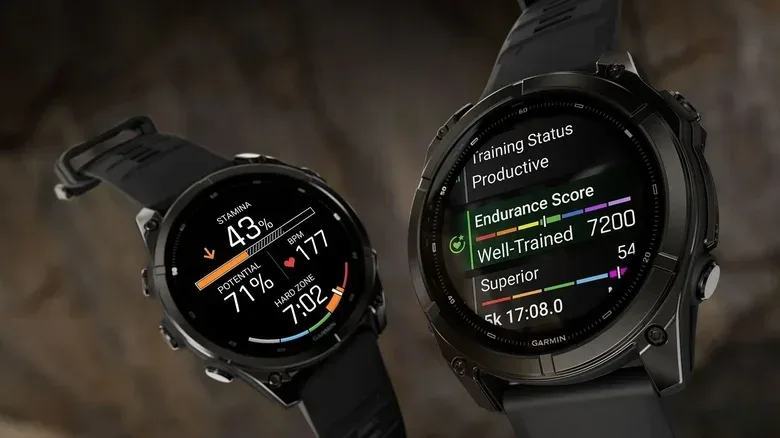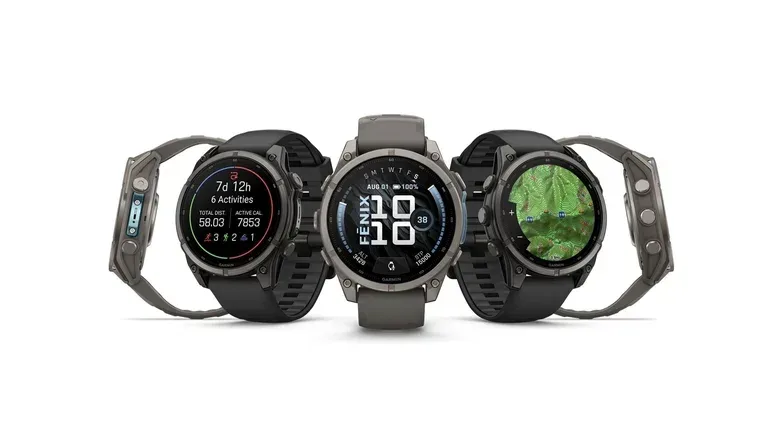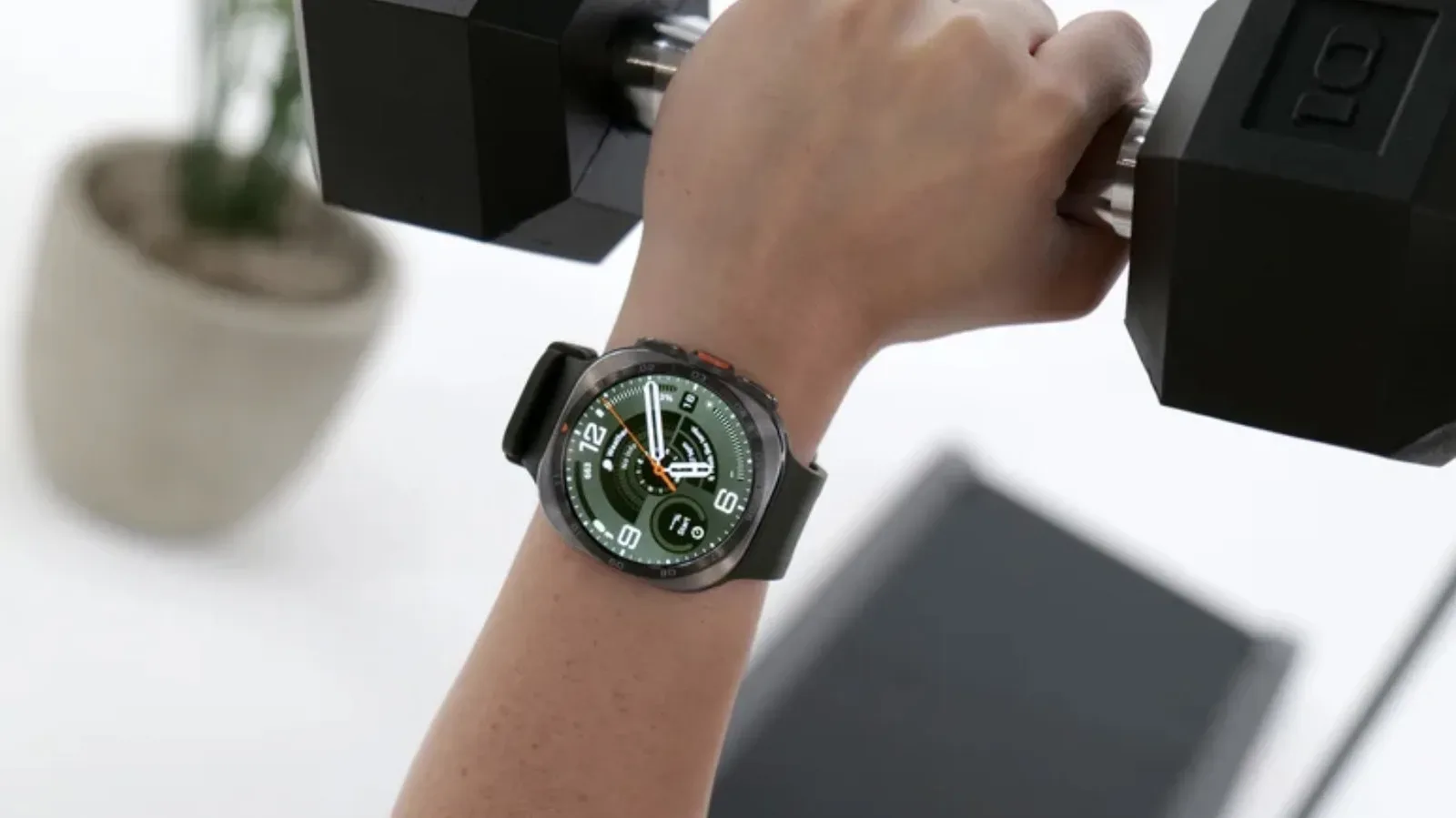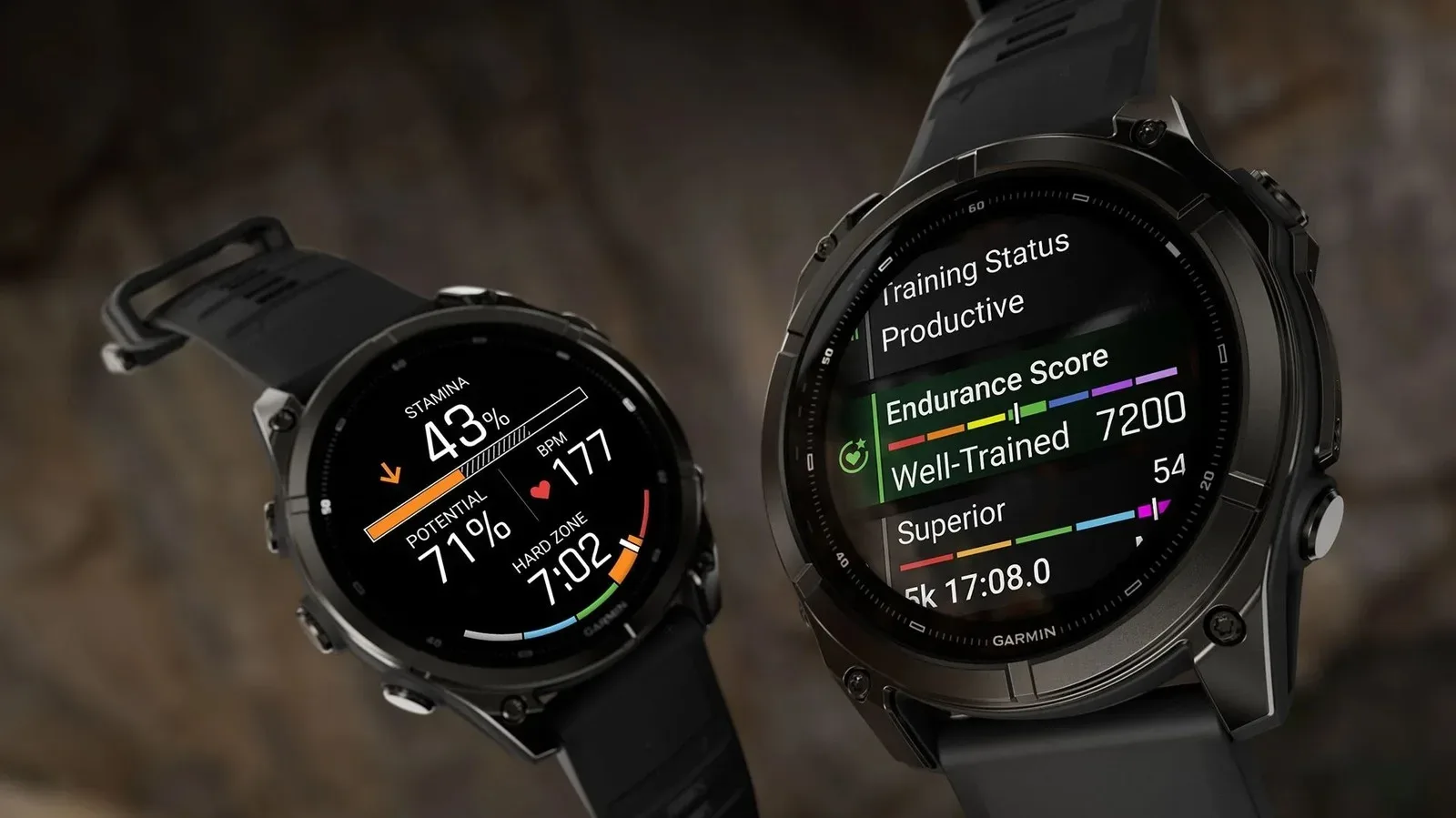
Garmin’s Fenix 9 is not trying to reinvent the company’s premium adventure-watch formula. Instead, it takes a Fenix 8 that already covers a wide range of athletic and outdoor use cases and sharpens a few areas where serious users can feel real friction: reading a screen in harsh sunlight, carrying offline maps and music, and moving around those maps quickly.
That makes the upgrade question unusually specific. The Fenix 9 starts at $999.99 for the 43mm model and reaches $1,099.99 in the 51mm size, while the Fenix 8 has at times been discounted; one cited 43mm Fenix 8 offer was $850 during the Fenix 9’s launch week. The newer watch has the same $1,000-class starting point as its predecessor did at launch, but a sale-priced Fenix 8 changes the value calculation considerably.
The practical answer is straightforward: a current Fenix 8 owner does not need to replace a capable watch solely because the Fenix 9 exists. But the newer model makes a credible case for people who regularly use offline mapping, fill their watch with downloaded audio, train in glaring conditions, or want the longest possible runway for a newly purchased device.
What stays fundamentally the same
Both generations are built for demanding exercise and outdoor use, from endurance events and mountain activities to open-water diving. They share the same size options, health-tracking suite, ECG capability, integrated LED flashlight, and speaker-and-microphone combination for calls and voice commands. Garmin Pay, music streaming and daily metrics are also part of the common feature set.
Durability is similarly familiar. Both are described as tested to U.S. military standards and rated for dives to 40 meters. The distinction in materials is more about which configuration a buyer is considering than a broad leap in ruggedness: the standard Fenix 9 uses a titanium bezel and sapphire lens, a pairing that had previously appeared on higher-end Fenix 8 versions. The Fenix 8’s base configuration offered a stainless-steel bezel and glass lens.
Battery life also does not provide a reason to move from one standard model to the other. Garmin lists the same maximum of 29 days of use on one charge. Buyers whose priority is endurance away from a charger should look specifically at the Fenix 9 Pro Solar, which is rated for up to 57 days, rather than assume the ordinary Fenix 9 extends the Fenix 8’s battery result.
The display upgrade matters most outdoors
The headline hardware change is the Fenix 9 AMOLED display. Garmin says it is twice as bright as the Fenix 8 display. AMOLED is a display technology known here for a bright, vivid presentation; the Fenix 8 itself was already the first Fenix family model to adopt an AMOLED panel, following Fenix 7 and 7 Pro models that used sunlight-visible, transflective memory-in-pixel, or MIP, displays.
Garmin has not supplied a brightness figure in nits for the Fenix 8’s AMOLED screen. A nit is a unit used to describe display brightness. The Fenix 9 Pro is said to reach up to 3,000 nits, but that number should not be treated as a direct specification for every Fenix 9 model or as a precise Fenix 8 comparison.
Related coverage includes Garmin Fenix 9 vs. Fenix 8: What the New Watch Changes.
The Fenix 8’s display remains bright and colorful, so this is not automatically a dramatic everyday difference indoors or during casual use. Its value is clearest for runners, hikers, climbers and other users who repeatedly glance at the watch under strong sun. Better brightness can make a map, workout field or navigation prompt easier to read without changing the underlying activity-tracking experience.
Buying implication: If sunlight readability is an ongoing frustration with a Fenix 8, the Fenix 9 addresses an actual problem rather than merely adding a prettier specification. If the current screen has been fully adequate, this alone is unlikely to justify spending close to $1,000 again.
64GB storage is the most tangible everyday improvement
The Fenix 9 doubles onboard capacity to 64GB. Garmin says that room can support twice as many apps and up to 7,000 songs drawn from Spotify, Deezer or Amazon Music accounts. This is useful not simply as a larger number on a specification sheet, but because offline content competes for a limited pool of internal storage.
Someone preparing for a trip may want regional maps available without depending on a connection, while also keeping a substantial downloaded music library on the same device. More room means less need to delete songs or remove one map region before adding another. For an athlete whose watch is both a navigation tool and a phone-free audio player, that reduction in housekeeping may be the Fenix 9’s strongest upgrade argument.
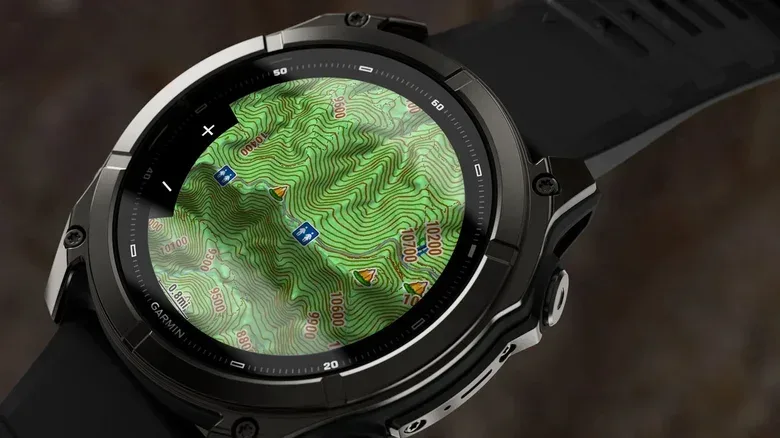
The new watch also has 50% more RAM. RAM is short-term working memory used while the device is actively operating, as opposed to storage used to retain apps, maps and media. More RAM is expected to help the watch switch between apps and load maps more quickly. Garmin further says map panning can be up to 30% faster through a more powerful map engine.
“Up to” is important language. It describes a best-case ceiling rather than a guaranteed result in every scenario. Still, maps are one area where speed is especially meaningful. Panning is the act of moving the visible area of a map to inspect terrain or find the next section of a route. Faster panning can make a wrist-based map feel less like a static reference and more like a tool that keeps pace when a user needs a quick decision.
New tracking and sharing tools, with an update caveat
The Fenix 9 introduces Garmin Epic, a Garmin Connect feature intended to group multiple activities across days, weeks or months into one shareable story. That gives multi-day hikes and training camps a more coherent way to be presented than a string of separate sessions.
It also adds stamina zones and a stamina curve. These tools are designed to show how endurance changes over time and help users pace themselves more effectively. In plain terms, they aim to turn endurance information into something that can guide effort during a workout or longer activity, rather than leaving it as a collection of isolated data points.
Rucking receives more attention, too. Rucking is an activity involving walking or training with weight carried in a pack. On the Fenix 9, users can log a pack-weight adjustment during an activity. The watch also integrates structured GORUCK workouts with guided routines, step counts and rest periods.
These additions are meaningful for the people who will actually use them, but they need to be separated into hardware and software categories. The brighter display, extra storage and memory advantages are tied to the Fenix 9 hardware. Some software-led features may eventually arrive on Fenix 8 through updates, which would reduce their usefulness as reasons to replace an existing watch. No assumption should be made that every new feature will be backported, but it is sensible to wait for update details before treating a software function as permanently exclusive.
Security support is a quiet factor in a premium purchase
Garmin guarantees critical security-vulnerability patches for a minimum of two years from launch. That minimum window has already passed for the Fenix 8, although there is no clear public schedule establishing when its patches will end. This is not evidence that support has stopped; it is a reminder that the stated guaranteed minimum has elapsed.
Security support deserves particular attention because the watches include Garmin Pay, which can involve sensitive payment-related information. A critical security patch addresses a serious weakness that could otherwise be exploited. Buyers deciding between a discounted older model and a new one should account for the uncertainty around the Fenix 8’s future patch horizon, not just compare screen brightness and storage.
This is part of a broader technology-buying reality: hardware can remain physically useful after its guaranteed software-support period becomes less clear. The same kind of support transition is relevant across personal devices, including the Intel MacBook cutoff discussed in this look at macOS 27 and Intel MacBooks.
Who should choose each watch?
Choose the Fenix 9 if you are buying new
For a first-time buyer looking for a premium Garmin sports and adventure watch, the Fenix 9 is the more complete choice at its $999.99 starting price. Its larger 64GB capacity, increased RAM, faster map handling and brighter display provide concrete advantages without a higher base launch price than the previous generation. It also begins with a fresher security-support timeline.
The case is especially persuasive for people who rely on maps rather than merely keeping them available as a contingency. The same applies to those who want substantial offline music and multiple map regions without routine storage management.
Keep the Fenix 8 if its limits are not your limits
The Fenix 8 remains a highly capable watch with the core package intact: AMOLED display, 40-meter dive rating, flashlight, calls and voice commands through its speaker and microphone, ECG functionality, payment features, music and extensive daily and athletic metrics. Battery life on the standard model is the same as the Fenix 9’s stated 29 days.
Its principal compromise is not that it suddenly lacks essential capability. It has less capacity, less RAM and a dimmer display than the newer model. For owners who have not encountered storage pressure, map sluggishness or frequent readability trouble in bright sunlight, those differences may not alter daily use enough to justify an expensive replacement.
Consider a discounted Fenix 8 with clear eyes
A Fenix 8 at a meaningful discount can be the value pick for someone who wants the shared fundamentals and does not need the Fenix 9’s extra headroom. The cited $850 price for the 43mm version illustrates why it remains a tempting alternative to a $999.99 Fenix 9.
That decision should be deliberate, however. The buyer is choosing lower storage, potentially slower map operation and a display that is not as bright, while accepting that the guaranteed minimum window for critical security patches has already passed. A lower price can outweigh those trade-offs, but only when those are trade-offs the buyer genuinely does not mind.
The verdict: evolution with several meaningful quality-of-life gains
The Fenix 9 is an evolution, not a wholesale reset. Its shared foundation with the Fenix 8 is extensive, and its unchanged standard battery estimate reinforces that point. But the improvements are well chosen: display brightness helps in difficult viewing conditions; 64GB storage helps with maps and music; additional RAM and a faster map engine target responsiveness; and newer activity, rucking and sharing tools extend the platform.
For Fenix 8 owners, upgrade only when those improvements solve a recurring problem: full storage, hard-to-read outdoor screens or map performance that feels too slow. For new buyers, the Fenix 9 is the simpler recommendation, provided its premium pricing fits the budget. For bargain hunters, the Fenix 8 remains formidable, but its discount should be weighed alongside the new model’s practical hardware advantages and the older watch’s less certain future security-support position.