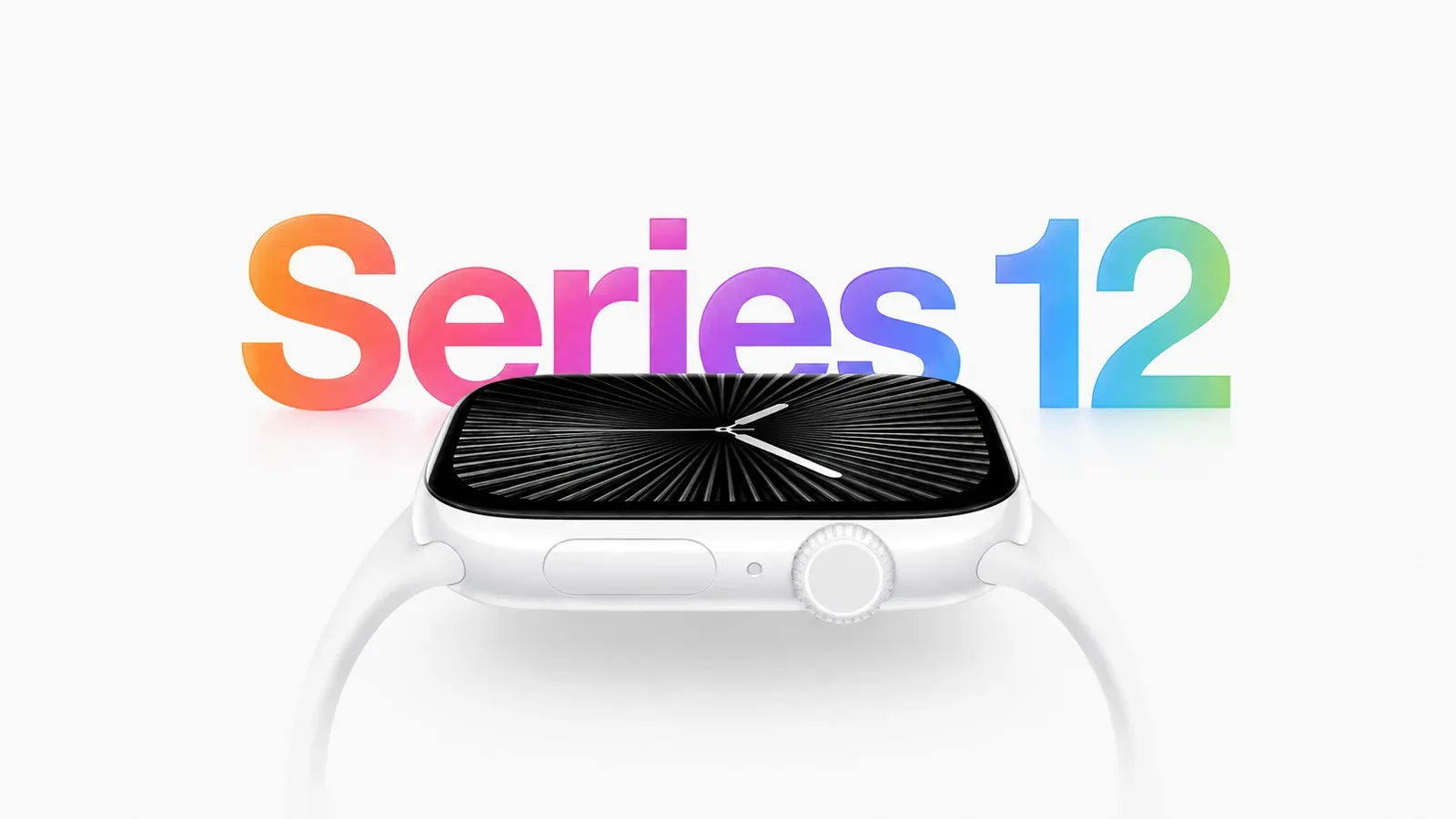
Apple Watch Ultra 4 and Samsung Galaxy Watch Ultra 2 arrive as unusually close rivals at the expensive end of the smartwatch market. Both are titanium wearables designed around workouts, outdoor activity and safety tools. Both offer 64GB of storage, can be submerged to 100 meters and carry an EN13319 depth-gauge rating. Both also include Emergency SOS capability, a siren and fall detection.
That shared foundation should make this a straightforward comparison, but the meaningful differences sit in the details. Samsung emphasizes an exceptionally bright circular display, a thinner chassis, an 800mAh battery and a wide list of fitness metrics. Apple brings a larger rectangular display, its S11 chip, new frequent heart-rate measurements, crash detection and battery modes that spell out expected endurance during continuous GPS and heart-rate use.
Neither watch is merely a notification screen. These are premium, activity-focused computers that make a case on durability, tracking and app capability as much as they do on appearance. The better choice therefore depends less on titanium versus titanium than on what a buyer needs to see outdoors, measure during training, charge before leaving home and access in their preferred hardware ecosystem.
At a glance: the major distinctions
- Galaxy Watch Ultra 2: 10.7mm thickness, a 1.52-inch circular Super AMOLED display, peak brightness of 5,000 nits, Snapdragon Wear Elite, Google Gemini, 64GB storage, 2GB memory, an 800mAh battery and a claimed maximum of 60 hours of use.
- Apple Watch Ultra 4: 12mm thickness, a 49mm by 44mm rectangular wide-angle OLED LTPO3 display, peak brightness of 3,000 nits, Apple S11, new Siri, 64GB storage, a claimed maximum of 50 hours or 84 hours in Low Power Mode, plus Extended Workout Mode rated for 25 hours of continual GPS and heart-rate readings.
- Starting price: Samsung’s model starts at $700, while Apple’s is priced at $799.
Those lists are not a declaration of an automatic winner. Screen geometry affects how information fits on a wrist. Battery claims use differing modes and should be read as manufacturer estimates, not an identical real-world test. And raw hardware specifications do not fully capture the software and health features each company offers.
Titanium cases and ratings built for the outdoors
The physical similarities are substantial. Each watch uses a titanium body, a practical material choice for premium rugged wearables because it signals an emphasis on strength without turning the case into an even heavier object. Samsung offers gray and silver finishes. Apple offers black and natural options. Each also supports a range of band styles and materials, allowing buyers to prioritize sport use or a less overtly athletic look.
Apple additionally continues its Hermés collaboration for the Ultra 4, with a titanium band and ocean-themed watch faces. That is a style differentiator rather than a functional reason to pick one watch over the other, but it reinforces that these products are expected to occupy a place in daily wear as well as workouts.
The durability specifications deserve a more careful reading than the shorthand phrase “waterproof.” Apple lists IP6X dust resistance, 100-meter submersion and EN13319 depth-gauge capability. Samsung lists the same 100-meter submersion and EN13319 rating, alongside IP69K dust and water resistance.
IP ratings describe resistance to intrusion from dust and water under defined tests; they are not a blanket guarantee against every activity or every form of water exposure. IP6X identifies dust resistance, while Samsung’s IP69K rating refers to resistance against dust and high-pressure, high-temperature water jets. The shared EN13319 rating is particularly relevant here: it is a depth-gauge standard, giving both watches a stronger footing for swimming and diving-oriented use than an ordinary casual smartwatch.
In practical terms, both models have the stated credentials for serious swimmers and divers. The key caveat is that a rating tells a buyer what a device is designed to withstand, not which specialized diving app they might prefer. Both watches can run dedicated dive-computer apps for scuba or snorkeling, and those apps may carry their own fees.
Screen shape, thickness and the sunlight question
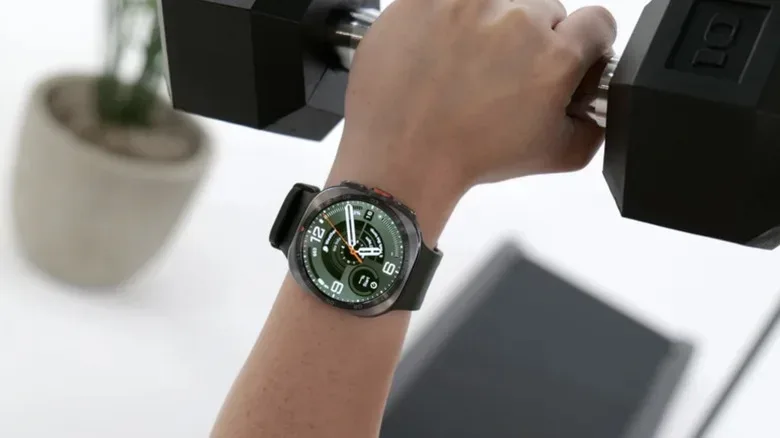
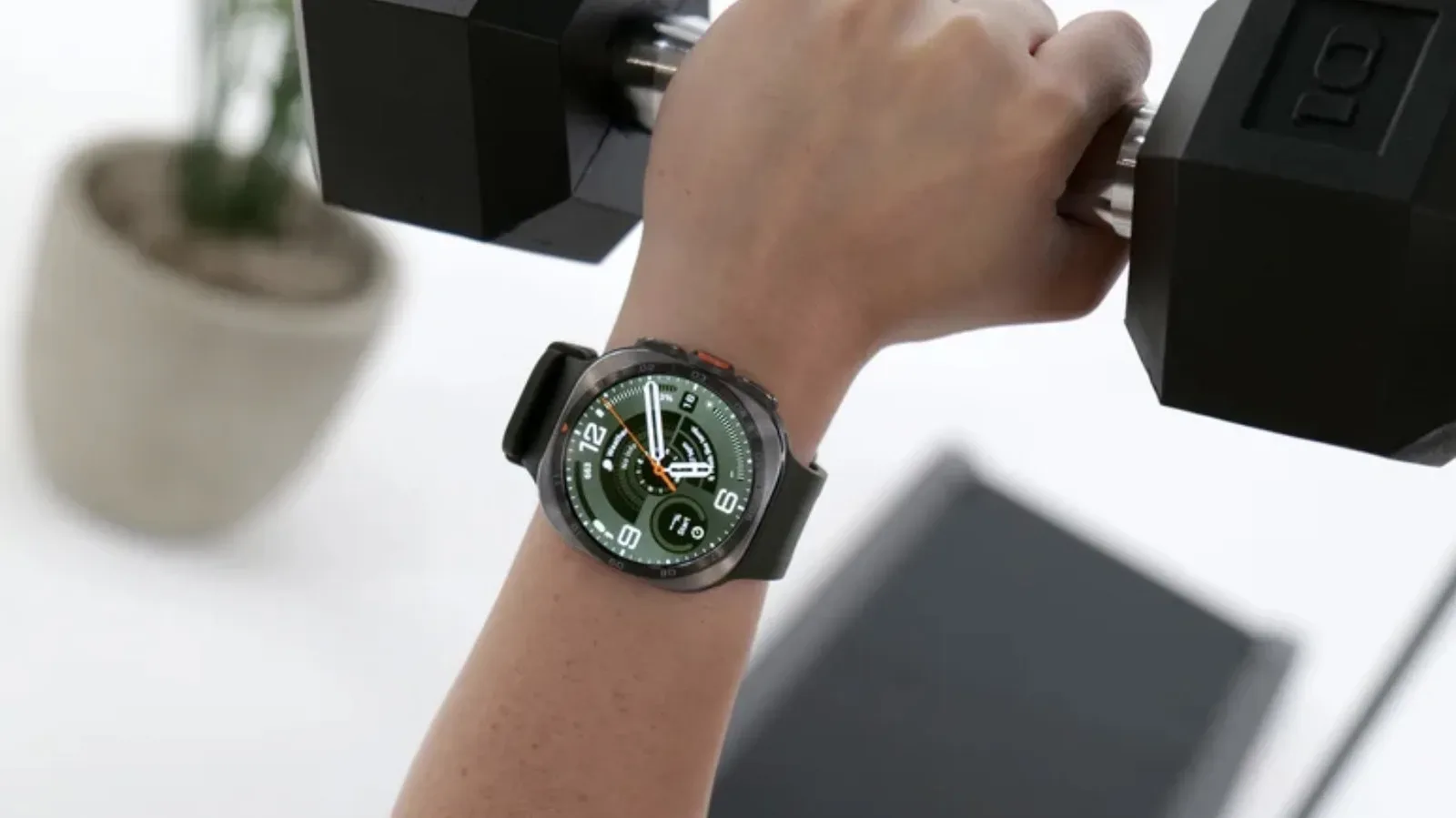
Samsung keeps the Galaxy Watch Ultra 2’s familiar visual identity: a circular display positioned within a rounded-square frame. Its screen measures 1.52 inches, and the watch is 10.7mm thick. The display is a Super AMOLED panel, a screen type known here primarily as the basis of Samsung’s circular presentation.
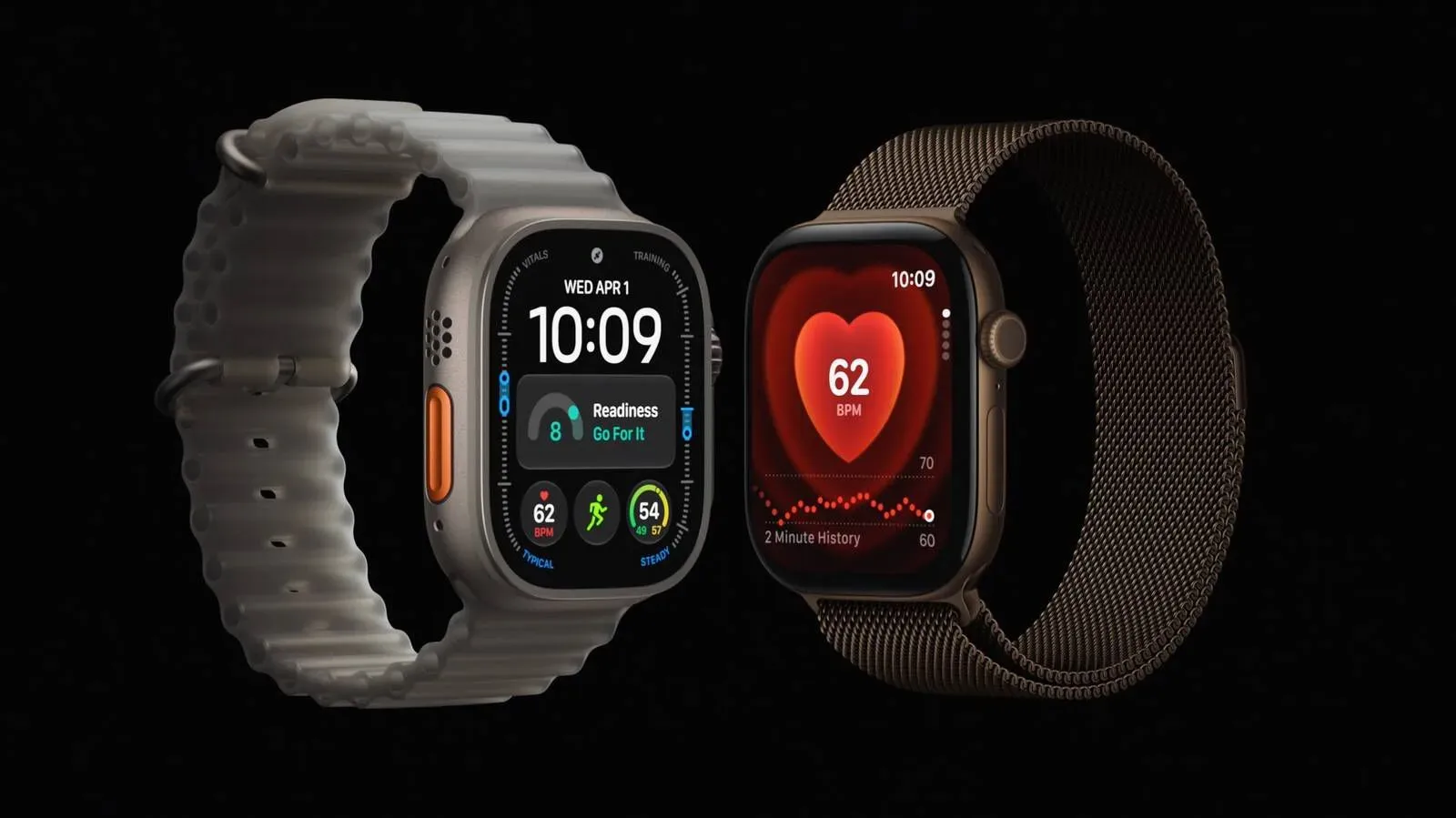
Apple’s watch takes the opposite route in shape. The Ultra 4 has a rectangular display measuring 49mm tall by 44mm wide, approximately 1.9 inches by 1.7 inches, within a case that is 12mm deep. Its panel uses Retina wide-angle OLED LTPO3 technology.
There is no one objectively superior screen shape. A circular display naturally preserves the classic-watch silhouette, while a rectangle offers a visibly different canvas for text and interface layouts. Buyers comparing the two should consider the actual information they expect to glance at most often—workout numbers, maps, alerts or health summaries—rather than treating the diagonal measurement as a direct apples-to-apples contest.
The brightness gap is much less ambiguous on paper. Galaxy Watch Ultra 2 peaks at 5,000 nits, compared with 3,000 nits for Apple Watch Ultra 4. A nit is a measure of luminance, or the light emitted by a screen. More peak brightness can improve display legibility in intense sunlight, making Samsung’s stated 5,000-nit ceiling a notable advantage for anyone who regularly struggles to read a watch outdoors.
That specification should still be understood as a maximum rather than a promise that the display will always run at its highest brightness. Yet for runners, cyclists, hikers or anyone checking an activity screen in direct sun, it is one of the clearest hardware distinctions between these two devices.
Different processors, same storage capacity
Inside, the watches take predictably separate paths. Galaxy Watch Ultra 2 uses a Snapdragon Wear Elite chip and includes Google Gemini AI assistant support. Samsung pairs it with 64GB of storage and 2GB of memory.
Apple Watch Ultra 4 uses Apple’s S11 chip, new Siri and 64GB of storage. The S11 also means the watch supports Audio Intelligence features also planned for Watch Series 12.
Storage is a rare point of clean parity. With 64GB available on both products, prospective buyers cannot use capacity alone to separate them. Samsung’s disclosed 2GB memory figure is also not directly comparable with Apple’s published information, because the supplied specifications do not provide an equivalent Apple memory total. Comparing only the figures that are actually known is more useful than turning an incomplete spec sheet into a scorecard.
What is clear is that both watches are intended to support specialized apps beyond their built-in fitness functions. That flexibility matters for niches such as diving, but it also introduces a potential extra cost: specialized applications may require separate payment even though the watches themselves do not require a recurring subscription for most core features.
Smartwatch software remains a growing part of the wider game-and-tech conversation, where platform-specific tools and companion services can matter as much as hardware muscle. The same tension between a distinctive software loop and a broader hardware pitch appears in PUBG: Dednet’s stated push toward a faster, riskier multiplayer FPS loop, albeit in a completely different product category.
Battery claims need to be compared by mode
Battery figures can be the most persuasive line in a smartwatch advertisement and the easiest to misread. Apple says the Ultra 4 reaches up to 50 hours normally, or up to 84 hours in Low Power Mode. It also states that Extended Workout Mode can last up to 25 hours while continuously recording GPS and heart-rate readings.
That final number is especially valuable because it identifies a demanding use case rather than a vague maximum. GPS and continuous heart-rate tracking are central to long outdoor workouts, so a stated 25-hour target under those conditions gives an endurance-minded buyer a concrete benchmark for Apple’s approach.
Samsung highlights an 800mAh battery and promises up to 60 hours of use. Milliamp-hours, written as mAh, express battery capacity, but capacity is not by itself a direct measure of runtime. Different displays, processors, operating systems, sensors and power-management settings can draw electricity at different rates. The 800mAh number is important hardware context, but the company’s up-to-60-hours claim is the more useful measure when considering day-to-day endurance.
On stated maximum use, Samsung’s 60-hour figure exceeds Apple’s normal 50-hour estimate. Apple’s Low Power Mode figure reaches much farther, at up to 84 hours, but is explicitly a power-saving mode. The figures should therefore be treated as different operating scenarios rather than proof that one model categorically lasts longer for every person.
Charging may be as important as ultimate runtime. Samsung says Galaxy Watch Ultra 2 reaches 40 percent in roughly 30 minutes. Apple says a 15-minute fast charge can add up to 18 hours of battery life. Samsung expresses the result as a percentage of battery capacity; Apple expresses it as estimated time gained. Neither phrasing supplies a full charge-time comparison, but each suggests that a short charging window can materially change whether the watch is ready for an outing or overnight use.
Apple’s health stack centers on denser heart-rate tracking
Apple has added a new sensor system to the Ultra 4. The headline update is heart-rate measurement every five seconds, which Apple says improves tracking accuracy. The watch also receives a new pedometer intended to make step counting more accurate.
The company’s Readiness app combines recent activity and sleep score to estimate how prepared the wearer may be for that day’s activity. This is an example of a combined metric: rather than asking a user to interpret every separate reading independently, the software aggregates multiple data points into one guidance-oriented result. It can be useful as a compact trend indicator, but it does not erase the value of examining the underlying activity and sleep information.
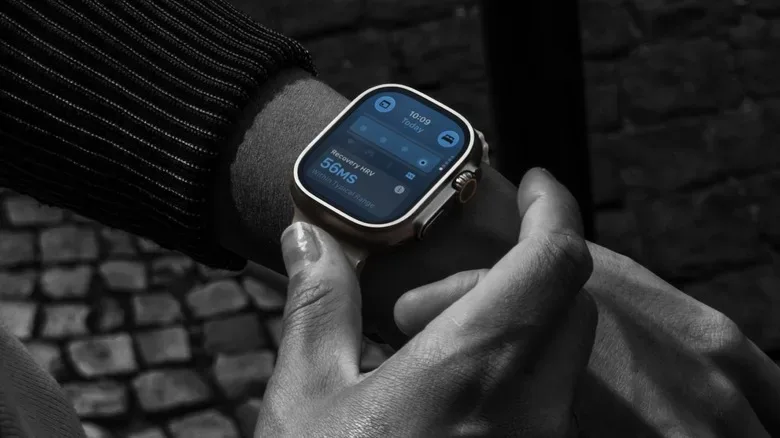
Apple’s Vitals app covers heart rate, respiratory rate, wrist temperature, sleep duration and heart-rate variability, or HRV. HRV refers to variation in the intervals between heartbeats. The Ultra 4 also includes recovery HRV, high-frequency background heart-rate tracking, high- and low-heart-rate notifications, irregular-rhythm notifications, ECG, Blood Oxygen, sleep stages and sleep score.
Other listed tools include advanced cycle tracking, medications, mindfulness with state-of-mind tracking, Noise, sleep apnea notifications and hypertension notifications. A new Apple Health app is planned for later this year.
These are extensive wellness and notification tools, but their presence should not be conflated with a diagnosis. The most responsible practical use is to regard alerts and trends as information that can prompt attention or discussion with an appropriate professional, not as a replacement for medical judgment.
Samsung offers broader specialty metrics, with one stated caveat
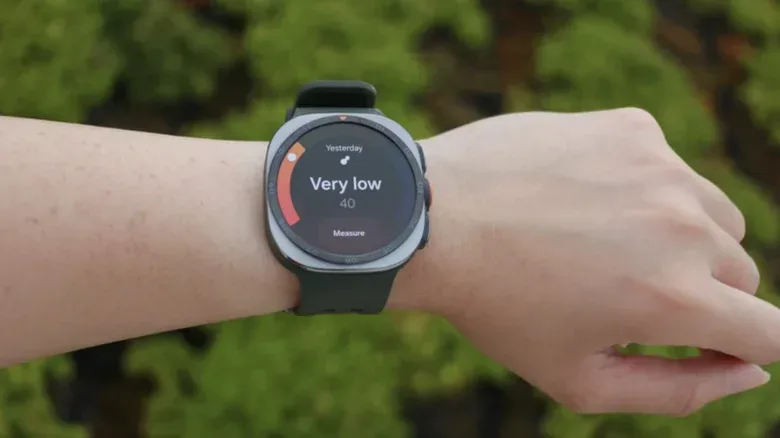
Samsung’s recent Samsung Health changes place Vitals at the center of its approach. The menu provides daily readings of key biomarkers intended to flag deviations from an individual baseline. A baseline is simply a person’s usual pattern over time; a departure from it may be more informative than a single isolated number.
Galaxy Watch Ultra 2’s health list includes Energy Score, sleep apnea, Bedtime Guidance, High Stress Alert, Fitness Index, Daily Cardio Load, Running Coach, Heart Health Score, personalized heart-rate zones and personalized functional threshold power. Functional threshold power is a training metric used to personalize exercise intensity; its inclusion signals Samsung’s interest in structured performance guidance, not only general activity logging.
Samsung also lists Trail Run, including hydration guidance, as well as blood-pressure estimates, ECG, irregular-heart-rhythm notifications, AGEs Index, body composition, cycle tracking and hearing protection. Its antioxidant readings are a more unusual wearable feature, although their effectiveness has been described as mixed. That limitation is important: novelty is not the same thing as proven practical value.
The most meaningful Samsung advantage may be the breadth of distinct, training-oriented tools. The most meaningful Apple strength may be its updated sensor system and unusually frequent heart-rate readings. People who want straightforward readiness and sleep context may gravitate toward Apple’s presentation; those seeking a long menu of coaching, cardio and body-focused metrics may find Samsung’s list more compelling.
Safety coverage and price set the final decision
Both watches cover several core emergency functions: Emergency SOS calling when appropriate, alert sirens and fall detection. Apple also includes crash detection. For an outdoor-focused buyer, those shared functions reinforce the point that either device is designed for more than counting steps. The difference is that Apple supplies one additional incident-detection feature in the provided specifications.
Samsung’s Galaxy Watch Ultra 2 starts at $700. Apple Watch Ultra 4 costs $799, a $99 gap before potential trade-ins, promotions or optional services. Samsung had offered $100 off its watch a month after launch, while Apple’s device was still in preorder at the stated time. That does not establish a permanent discount pattern, but it does mean the real price gap may vary.
Most importantly, neither model requires an ongoing monthly fee to use most features. Optional services such as Apple Fitness+ and Samsung-compatible iFIT are additive, not compulsory. Buyers should still budget for any specialized apps they expect to need, especially for activities like scuba or snorkeling.
Galaxy Watch Ultra 2 is the clearer specification pick for a buyer who values a slimmer body, the highest stated outdoor brightness and Samsung’s expansive specialty-health list. Apple Watch Ultra 4 makes its strongest case through its 49mm-by-44mm display, S11-based feature set, five-second heart-rate readings, crash detection and clearly detailed battery estimates for Low Power and extended GPS workouts. Both are formidable on paper; the deciding factor is which mix of display, endurance mode, safety support and health interpretation best fits the wearer rather than which spec sheet has the most lines.