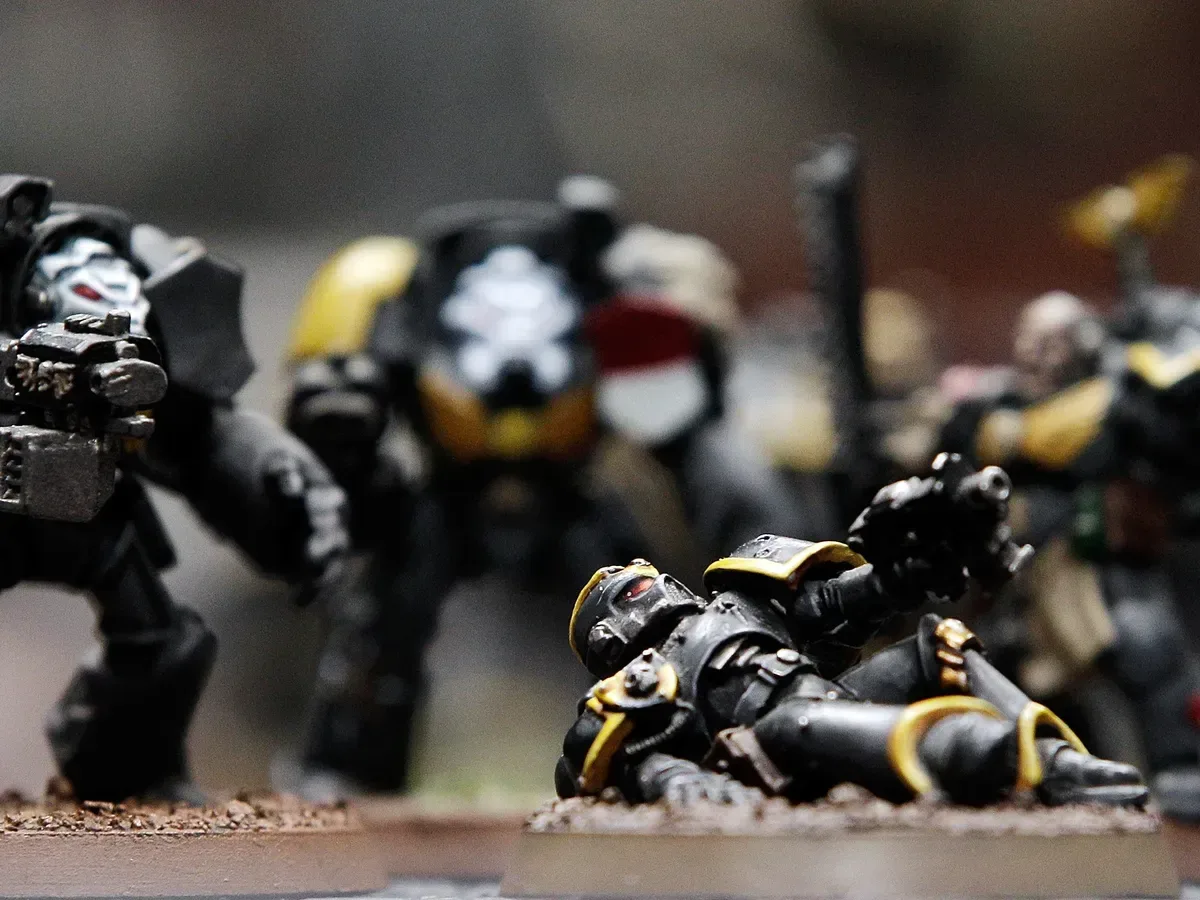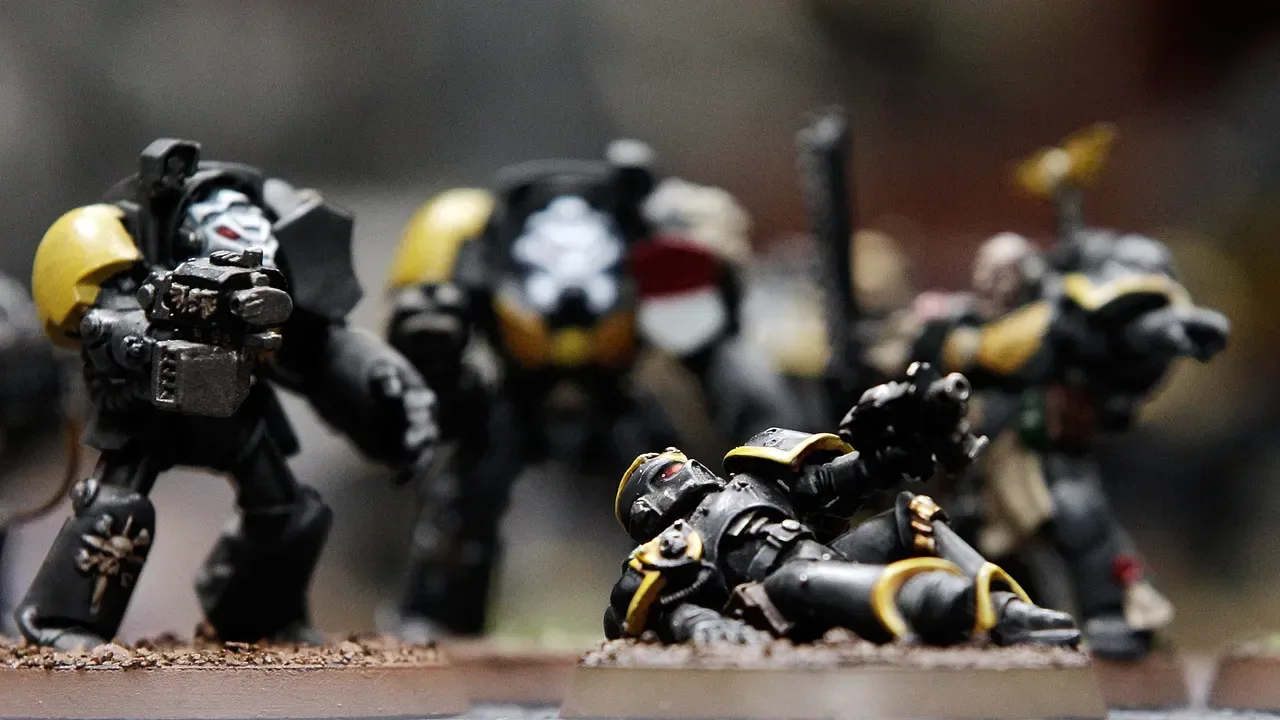
Games Workshop, the company behind Warhammer 40,000, is facing a familiar but often confusing market contradiction: it has reported record profits while its share price has moved sharply lower. Over the past six months, the company’s shares fell 13.76%, removing hundreds of millions of pounds from its market value after a much stronger longer-term run in which the stock gained more than 70% across five years.
That contrast has naturally led to speculation among Warhammer players and observers. But the information currently available does not establish that the business is in financial trouble, that the latest edition of Warhammer 40,000 has underperformed, or that demand has suddenly collapsed. It does suggest that investors are reassessing a harder question: how much further can a successful premium hobby business grow when production, shipping and household budgets are under pressure?
A falling share price is not the same as falling profits
A company’s share price reflects what investors expect to happen in the future, not simply its latest reported results. Record profits tell shareholders that Games Workshop has produced a strong outcome over the relevant period. They do not guarantee that the market believes the company can repeat its previous rate of growth indefinitely.
That distinction is central here. The available reporting points to concern around rising manufacturing and logistics costs, as well as the potential for slower consumer spending. Miniature wargaming is a physical hobby: models must be made, moved through supply chains and sold through retail channels. Costs associated with making and distributing products can affect profitability even when sales remain healthy.
Retail momentum is also being watched closely. Growth per store reportedly turned negative in the second half of Games Workshop’s 2026 financial year for the first time since the pandemic. That is a meaningful datapoint because stores are a direct way to measure activity in the company’s tabletop ecosystem. Still, it should not be stretched into a broader verdict on the entire business. A negative period of per-store retail growth is not, by itself, evidence of a company-wide decline, especially alongside record profits and a trading update that remained in line with board expectations.
In a mid-September update, Games Workshop said trading through August 30 was in line with expectations for the current financial year. That statement matters because it is the clearest direct indication provided by the company in the material available. It does not promise exceptional growth; it does indicate that the company had not publicly signaled an unexpected deterioration in trading at that point.
Why growth expectations matter so much
Games Workshop’s success has helped build high expectations. When a company has delivered substantial shareholder gains over a number of years, the debate can shift from whether it is successful to whether it can keep expanding at the same pace. Any sign that growth may normalize can unsettle investors, even if the company remains profitable and operationally sound.
Growth normalization means a business may continue to grow, but more slowly than it did during an unusually strong earlier period. It is different from contraction. In practical terms, a player may still see new miniatures, game releases and an active community, while investors worry that sales cannot continue accelerating forever.
Related coverage includes Games Workshop Share Price Drop Sparks Questions Despite Record Profits.
That concern is particularly understandable in a hobby with premium physical products. A customer’s decision to buy a new kit, start an army or add another unit is discretionary spending: money that can be delayed or redirected when living costs rise or confidence about employment weakens. The broader economic backdrop referenced in the reporting includes cost-of-living pressure and anxiety around jobs, including uncertainty tied to artificial intelligence. Those forces do not single out Warhammer, but they can make consumers more careful with non-essential purchases.
Manufacturing and logistics pressures add another layer. Manufacturing costs cover the expense of producing goods, while logistics costs concern getting those goods through the supply chain and to customers. If those expenses rise faster than revenue, margins can become tighter. A margin is the amount of money left after costs are subtracted from sales; it is one reason investors care about much more than the number of products sold.
Those pressures are not exclusive to tabletop games. Manufacturing, retail and supply-chain conditions remain important subjects across the wider technology and entertainment economy, as seen in this look at manufacturing and retail priorities in another major consumer business. For Games Workshop, the specifics are distinct, but the broad commercial reality is similar: physical products depend on costs staying manageable and customers remaining willing to spend.
11th Edition speculation remains speculation
Some online discussion has centered on whether the recently released 11th edition of Warhammer 40,000 has met expectations. There is no official sales data in the available information that substantiates claims that it has performed poorly. Treating that claim as established fact would go beyond the evidence.
There are also complaints that recent releases have created a sense of oversaturation, particularly as multiple expensive miniatures have arrived. Oversaturation, in this context, is the perception that a company is releasing products so frequently, or asking customers to consider so many costly purchases, that the audience cannot comfortably keep up. It can become a concern for a collectible, miniature-driven hobby because players may feel pressure to choose between releases rather than enthusiastically buying across them.
However, a community perception is not a verified sales result. Some players may regard a release calendar as crowded; others may welcome broader army support and more modeling options. The current evidence supports saying that the concern exists, not that it has been proven to have damaged 11th Edition’s commercial performance.
The confidential report adds uncertainty, not clarity
Investor attention intensified after reporting about a confidential document connected to Dragoneye, a short-focused research firm. The document’s contents have not been publicly established in the information available, although its reported focus was the possibility of slowing growth at Games Workshop. Reports tied the reaction to a £480 million reduction in the company’s market value, approximately $635 million.
It is important to understand what short-focused means. A short-focused firm researches companies with the aim of identifying reasons a share price might fall. That does not automatically make its analysis wrong, but it is a relevant incentive and context for readers assessing the claims. In this case, the document itself is not available here, so the details cannot be independently weighed from the supplied material.
A market reaction to an unpublished report may therefore demonstrate nervousness more clearly than it demonstrates a specific new operational fact. Investors could be reacting to uncertainty, to the general possibility of slower growth, or to the concern that other investors may react in the same way. That feedback loop can produce sharp moves in a share price without changing the company’s day-to-day fundamentals overnight.
At the time covered, the shares were up 1.22%. That modest rebound should not be overread any more than the previous fall should. Daily movements show that markets continue to reassess information and sentiment; they do not settle the bigger question of Games Workshop’s long-term trajectory.
Warhammer’s wider entertainment push remains a major factor
One reason a straightforward “Warhammer has peaked” reading is premature is the wider set of projects still connected to the brand. Total War: Warhammer 40,000 and Space Marine 3 are both due in coming years. Henry Cavill also continues work on a Warhammer 40,000 cinematic universe for Amazon.
These projects are not evidence that tabletop sales will rise by any particular amount, and no such outcome should be assumed. They do, however, show that Warhammer’s future is not confined to the performance of a single boxed miniature release or a single retail period. Games, screen projects and other entertainment can broaden awareness of the setting and introduce it to people who have never assembled or painted a model.
That broader strategy is often described as extending an IP, or intellectual property. Here, the term refers to the Warhammer settings, characters, visual identity and fictional universe being adapted across different media. The potential benefit is audience expansion. The limitation is that awareness does not automatically become miniature purchases, and the supplied evidence does not quantify any financial impact from the projects.
What the evidence supports—and what it does not
The clearest picture is more measured than the loudest online reaction. Games Workshop has had a notable six-month share-price decline despite record profits. Investors appear worried about rising costs, weaker per-store retail growth and the possibility that rapid expansion becomes harder to sustain. A confidential report associated with a short-focused firm appears to have compounded that unease, although its full contents are unknown.
- Supported: Shares fell 13.76% over six months after a strong five-year rise, while the company reported record profits.
- Supported: Trading through August 30 was said to be in line with board expectations.
- Supported: Retail growth per store turned negative in the second half of the 2026 financial year.
- Not established: That 11th Edition has commercially failed.
- Not established: That Games Workshop is in immediate financial trouble.
- Unknown: The detailed contents and evidentiary basis of the confidential Dragoneye document.
For fans, the practical takeaway is that a volatile share price is not a reliable shortcut to judging the health of the hobby they enjoy. It can reflect real concerns, but it also reflects forecasts and sentiment. The next meaningful signals will be the company’s own financial updates and whether its retail, cost and demand trends support or challenge today’s competing narratives.