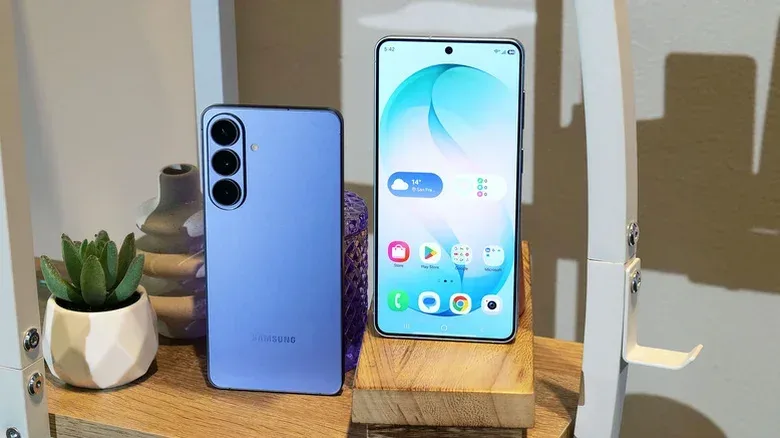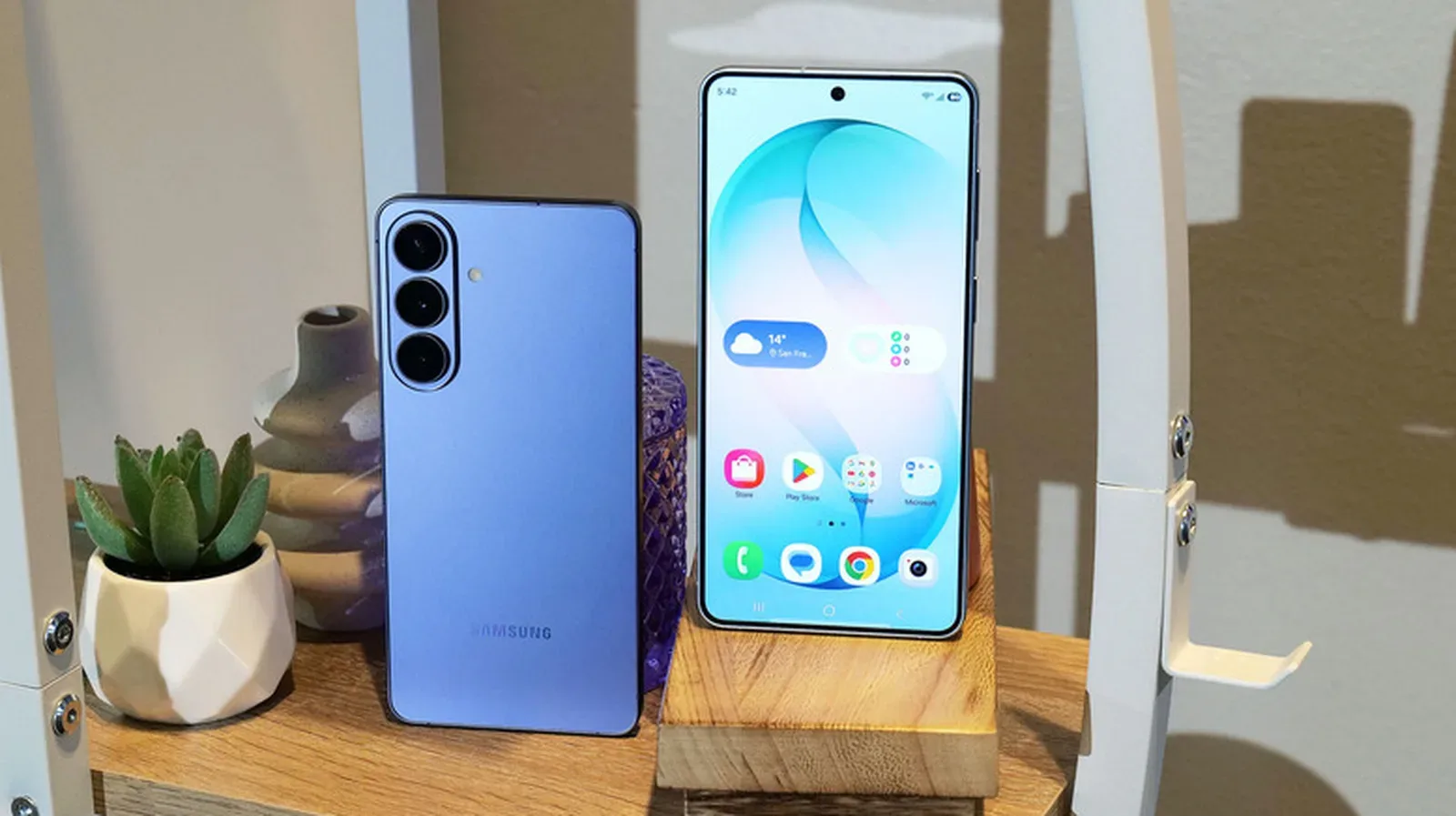
Samsung has raised the prices of its Galaxy S26, Galaxy S26+ and Galaxy S26 Ultra phones, adding at least $100 to nearly every listed configuration. The largest increase lands on the 1TB Galaxy S26 Ultra, which now costs $2,000 after a $200 jump.
The adjustment matters because the S26 family had already entered the market at higher prices than comparable Galaxy S25 models. The standard Galaxy S26 with 256GB of storage now starts at $1,000—$200 above the equivalent Galaxy S25 configuration. Samsung’s Galaxy S26 FE, released a month earlier, is the lone current slate-style model that did not receive this new increase.
For buyers, the immediate lesson is blunt: storage capacity is no longer merely a spec-sheet preference. It is now a major part of the purchase decision, particularly on the Ultra. A shopper who needs more local space for games, video, photos, apps, and offline downloads can face a dramatically different bill from someone satisfied with the entry configuration.
Updated Galaxy S26 prices
- Galaxy S26, 256GB: $1,000
- Galaxy S26, 512GB: $1,200
- Galaxy S26+, 256GB: $1,200
- Galaxy S26+, 512GB: $1,400
- Galaxy S26 Ultra, 256GB: $1,400
- Galaxy S26 Ultra, 512GB: $1,600
- Galaxy S26 Ultra, 1TB: $2,000
Most entries in that list have risen by $100. The 1TB Ultra is the exception: its price moved up by $200. That makes it the clearest example of the pressure being placed on high-capacity models, and it is a meaningful distinction for people who typically choose a top-tier phone specifically to avoid storage compromises.
Why RAM and storage costs matter
Samsung attributed declining operating profit in its mobile business during the April-to-June quarter to higher costs, including more expensive RAM and storage components. RAM, or random-access memory, is the short-term working memory that helps a phone keep applications active and juggle tasks. Storage is the longer-term internal space used for the operating system, installed apps, media, game files, downloads, and locally saved documents.
Those parts are not interchangeable. A phone can have ample storage while still benefiting from more RAM in demanding multitasking scenarios; likewise, plenty of RAM does not create room for a growing game library or a large camera roll. Yet both are supplied components, and higher input costs can affect the manufacturer’s margins on devices across a product range.
The new prices do not establish a detailed component-by-component explanation for every S26 configuration. Still, Samsung’s stated concerns about RAM and storage costs provide important context for why retail prices might rise after launch. The especially large increase on the 1TB Ultra is consistent with a market environment in which higher storage tiers are becoming more expensive to produce or less attractive to subsidize, though the company has not publicly provided a specific breakdown for that model’s $200 change.
A difficult picture inside Samsung’s mobile business
The price increase arrives despite overall revenue growth and higher starting prices for the S26 line. Samsung’s mobile division recorded its first-ever loss in the April-to-June quarter, with operating profit pressured by rising costs. Operating profit is the money left from a business’s regular operations after operating expenses are accounted for; it is a more focused measure than headline revenue alone.
That distinction helps explain why “revenue grew” and “a division posted a loss” can both be true. Selling products at higher prices may lift revenue, but the business can still be under pressure if the costs required to make, market, distribute, and support those products rise faster, or if the product mix is less profitable than expected.
Samsung’s chip business, by contrast, helped drive the company to all-time high quarterly revenue and operating profit in the second fiscal quarter. That split underscores a useful point for consumers interpreting a phone price rise: a corporation’s strong overall performance does not necessarily mean every part of the company faces the same costs or earns the same returns. The semiconductor side and the phone-selling side can be moving in very different directions.
What the change means for gamers and heavy phone users
Mobile players often run into the practical storage question faster than light users. Large game installs, patches, extra downloaded content, screenshots, video captures, chat apps, music, and offline video can all compete for the same internal capacity. The relevant choice is not simply whether 256GB, 512GB, or 1TB sounds generous in isolation. It is whether the premium for the next tier solves a real usage problem.
At the revised prices, that calculation becomes sharper. The standard S26 moves from $1,000 at 256GB to $1,200 at 512GB, a $200 difference. The S26+ makes the same $200 jump. The Ultra moves from $1,400 at 256GB to $1,600 at 512GB, then another $400 to 1TB. The 1TB option therefore carries a notably steeper step from the middle configuration than the earlier storage jumps in the current range.
That does not make the largest model inherently poor value, nor does it mean every buyer should settle for the base configuration. It means the capacity decision should be made deliberately. Someone who routinely keeps a substantial offline library may consider high internal storage a necessity. Someone whose usage is dominated by a smaller rotating app selection may find that paying for extra capacity immediately offers less benefit than waiting for a promotion.
The same restraint applies to any premium mobile device purchase. A very capable phone is not automatically the most sensible phone at every storage level. Buyers should compare the final configuration price rather than treating the starting price as the full story.
The FE model and sale timing become more important
The Galaxy S26 FE did not receive the sudden price increase affecting the S26, S26+, and S26 Ultra. That makes it a potentially important reference point for shoppers weighing Samsung’s current slate-style lineup, even though a lower price alone cannot tell a buyer whether it meets their needs. The available facts here do not establish a full feature-by-feature comparison, so it would be premature to present the FE as a direct substitute for every S26 model.
What can be said is that it avoids this particular increase at a time when the rest of the family now begins at $1,000. For a buyer who does not have a firm need for a specific S26, S26+, or Ultra configuration, the unchanged FE price is worth keeping in the decision set.
Waiting may also be a rational option. Black Friday is approaching, and Amazon’s Prime Big Deal Days is scheduled for the following week. A sale does not guarantee that every S26 configuration will be discounted, or that any promotion will offset the full increase. But it does change the value of patience for buyers who are not replacing a broken device or otherwise facing a deadline.
Price shopping should focus on the exact model and storage capacity under consideration. A promotion on the base S26, for example, does not automatically improve the case for a 1TB Ultra. Conversely, a storage-upgrade deal could materially alter the comparison for a shopper who genuinely needs more room. The revised list prices make those distinctions more consequential.
Could the next Galaxy generation cost even more?
Reports indicate Samsung may make storage upgrades still more expensive in the Galaxy S27 range. That remains a prospective possibility rather than a confirmed price list, and the current S26 changes should not be treated as proof of what every S27 configuration will cost.
Still, the direction of travel is clear enough to inform purchase planning. Consumers who have traditionally assumed that a storage bump will be a modest add-on should pay close attention to the pricing structure when future devices arrive. If component costs remain elevated, the gap between entry storage and high-capacity storage may become as important as the starting price.
For gaming and portable-tech buyers, that is part of a broader hardware reality: the advertised headline price rarely captures the complete trade-off. Storage, accessories, subscriptions, and timing all shape the eventual cost. The same need to assess compromises is visible across gaming hardware, including the trade-offs surrounding new PC gaming gear.
Samsung has been contacted for clarification on the S26 price changes. Until a more detailed explanation arrives, the confirmed facts are the new listed prices, the unchanged S26 FE, and the company’s previously stated pressure from higher RAM and storage costs. For prospective S26 buyers, those facts point to a simple, if unglamorous, strategy: decide how much local storage is actually necessary, compare the final configuration rather than the family’s starting price, and consider whether waiting for a sale is feasible.