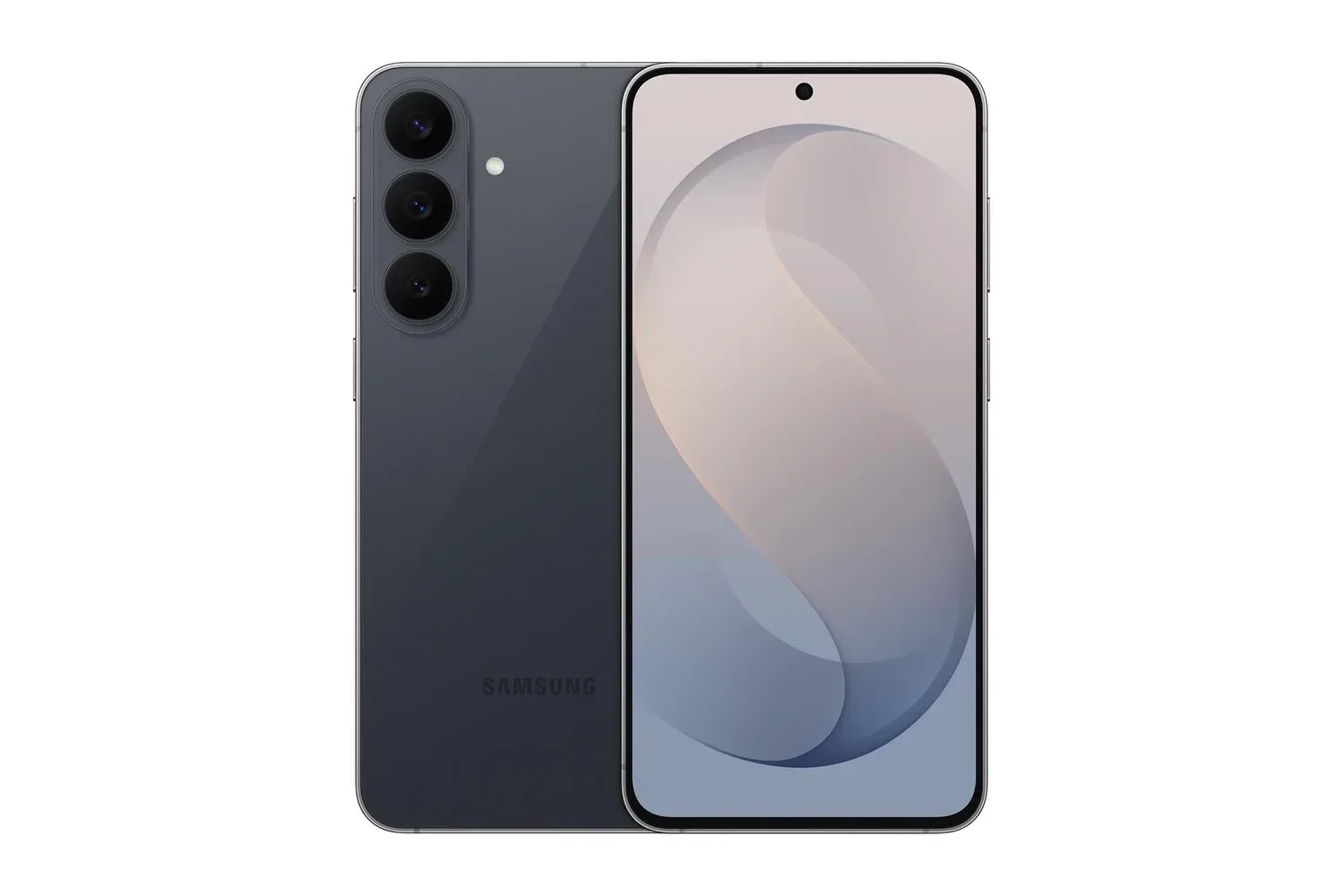
Samsung’s Galaxy S26+ has fallen under the $1,000 line in a promotion that makes it a notably more interesting option for people who treat a phone as a serious gaming device as well as an everyday handset. The unlocked 256GB model is listed at $950 in Black, White and Cobalt Violet, reduced from $1,200. Sky Blue is listed lower at $920. Eligible trade-ins may reduce the effective cost by as much as another $100.
That price movement matters because the S26+ is positioned between Samsung’s standard Galaxy S26 and its camera- and feature-heavy S26 Ultra. It carries the same flagship processor named for the Ultra model while avoiding the Ultra’s added hardware and premium price. For a buyer whose priority is games, streaming and a large display rather than the top camera package, that division of the range is worth paying attention to.
The discount does not turn a premium phone into a budget phone. It does, however, put a 6.7-inch handset with 12GB of memory, a 120Hz display and current flagship-class Qualcomm silicon closer to the price many shoppers would expect to pay for a high-end Android device. For mobile players weighing an upgrade, the meaningful question is less whether the S26+ has powerful components—it does—and more whether those components suit the way they actually play.
Why the S26+ specification sheet is relevant to games
In the US, the Galaxy S26+ uses the Snapdragon 8 Elite Gen 5 for Galaxy, paired with 12GB of RAM. A phone processor, often called a system-on-chip or SoC, combines major computing parts—including the CPU, graphics processor and other specialist hardware—into one package. Its importance in games goes beyond a headline benchmark: it determines how much processing headroom the device has for demanding rendering, fast loading, multitasking and background activity.
That headroom is particularly useful for three broad uses mentioned for the S26+: native mobile games, emulation and cloud streaming. Native games run on the phone itself, so processor and graphics capability have a direct role in how a game performs. Emulation is software recreating the behavior of another system, and can be demanding depending on the software involved. Cloud streaming shifts much of the game processing to remote hardware, but still benefits from a capable phone for decoding video and handling the app experience.
None of those use cases guarantees identical results from every game or service. App support, game settings, controller compatibility and network conditions remain important. Still, a flagship chip and 12GB of RAM provide a strong starting point for someone who does not want a device that feels immediately constrained as larger games arrive or as they move between a game, voice chat, a browser and other apps.
For people considering cloud play specifically, the S26+ also supports Wi-Fi 7. Wi-Fi standards describe the connection between a device and a compatible local wireless network; they do not by themselves guarantee the quality of an internet connection or a streaming service. In practical terms, a player still needs a suitable router, a solid local signal and reliable internet. The feature is best understood as one part of the chain, rather than a promise that streaming will be flawless everywhere.
A large, fast display is the immediate upgrade
The S26+ has a 6.7-inch Dynamic AMOLED 2X display with a 3,120 by 1,440 resolution, adaptive refresh up to 120Hz and stated peak brightness of 2,600 nits. Of those numbers, the screen size and refresh rate are likely to be the first things a player notices during daily use.
Related coverage includes Samsung Galaxy S26+ Falls to $950, Bringing Flagship Mobile Gaming Hardware Below $1,000.
A 120Hz refresh rate means the display can update up to 120 times per second. Compared with a conventional 60Hz panel, that can make scrolling, interface movement and compatible games look more fluid. “Adaptive” means the refresh behavior can vary rather than remain fixed at its maximum all the time. That approach is intended to balance smooth motion with power use. The actual experience in a given game naturally depends on whether the game can output at higher frame rates and on the settings it offers.
The 6.7-inch panel also has a straightforward practical advantage in landscape play: more room for on-screen controls, menus and readable text. It will not replace the tactile certainty of a physical controller, but it can make touch-based titles less cramped. A larger panel is similarly useful for video, game guides and chat windows when players are not actively in a match.
Brightness is another specification that has real-world relevance. A nit is a unit used to express screen brightness. Samsung rates the S26+ at up to 2,600 nits, a figure aimed at visibility in bright surroundings. That is useful for a phone likely to be used outdoors or near windows, although viewing comfort is also shaped by reflections, the content being shown and ambient light. Samsung also says the phone automatically tunes the image for additional sharpness.
Big screen, relatively restrained body
Large gaming phones can become tiresome in long landscape sessions, especially when the player is supporting the handset’s weight without a stand or controller grip. The Galaxy S26+ measures 7.3mm thick and weighs 190 grams. Those are not substitute measurements for trying a phone in hand, but they help explain the model’s role in the lineup: it aims to offer a large display without moving all the way to the Ultra’s more feature-packed proposition.
Ergonomics are personal, and the source material does not establish how the S26+ compares in comfort with every competing device. But prospective buyers should think beyond screen diagonal alone. A large screen can be easier to see, while a phone’s width, weight distribution and accessories can decide whether it stays comfortable during extended sessions. Anyone planning to attach a controller should also check the fit of that accessory separately rather than assuming support from the phone’s dimensions alone.
The S26+ launched in March, and its current reduction is therefore not simply an entry-level offering being cleared at a low price. It is a flagship-tier device receiving a substantial discount. That distinction is key for players who have been waiting for premium mobile hardware to become less expensive without stepping down to a smaller screen or weaker internal specification.
Battery and charging: useful features, with sensible expectations
Samsung equips the S26+ with a 4,900mAh battery and 45W wired charging, plus wireless charging and reverse wireless charging. Milliamp-hours, abbreviated mAh, describe battery capacity. They are helpful for comparing devices at a broad level, but they do not precisely predict endurance. Screen brightness, refresh behavior, game workload, signal quality and battery age can all change how long a phone lasts.
For gaming, that caveat is especially important. A graphically intensive game can use energy very differently from a puzzle game or a cloud-streaming app. A player should view the 4,900mAh cell as a substantial hardware provision, not as a precise number of gaming hours. The supplied information positions it for a full day with space for gaming breaks, while the 45W wired option is intended to make short charging stops more useful between sessions.
Wireless charging is convenient when a cable is not at hand. Reverse wireless charging allows the phone to send power to another compatible device, such as earbuds, by placing it against the handset. That can be handy during a commute, but it also takes power from the phone’s own battery. It is a contingency feature rather than a reason to skip charging the phone before a longer gaming session.
The extras are not the core purchase case
The Galaxy S26+ also includes Galaxy AI features such as Photo Assist, which accepts typed editing requests for images, and Now Nudge, which offers suggestions based on timing and context. When paired with Galaxy Buds4 Pro, it can provide live translations through the earbuds. The wider front camera is another social-use feature, intended to fit more people into group selfies.
Those additions may make the overall phone more appealing, but they are separate from its central case as a gaming device. A buyer should avoid treating them as evidence that the S26+ will make games run better. The strongest gaming-focused argument remains the combination of the Snapdragon 8 Elite Gen 5 for Galaxy, 12GB of RAM, a large high-resolution 120Hz display and wireless connectivity features in a comparatively thin 190-gram handset.
There is also a useful buying lesson in the current pricing. The Ultra may remain the logical pick for somebody who specifically values its extra camera hardware and premium features. But paying more simply because it is the highest-end label is not automatically the best gaming decision. The S26+ appears designed as the middle ground: it preserves the flagship processor and large screen while leaving out extras that may be less important to a player.
What to check before treating the price as a must-buy
The 256GB configuration is the one attached to the listed discounts, so shoppers should make sure they are comparing like with like. Color also affects the price in this promotion: Sky Blue is listed at $920, while Black, White and Cobalt Violet are listed at $950. In both cases, the phone is unlocked, meaning it is not sold tied to one carrier under the stated offer. Confirm compatibility with a chosen carrier before purchasing, particularly if switching networks is part of the plan.
It is equally wise to view trade-in value as conditional. The offer can add up to $100 for eligible devices; “up to” is not a universal $100 reduction. The final result depends on whether the trade-in qualifies. The listing also includes free returns, which is useful for buyers who want the option to assess the size and feel in person.
Finally, a top-tier phone does not eliminate every limitation around mobile gaming. Touch controls remain touch controls, cloud streaming remains dependent on the network, and a game’s own optimization affects what players see on screen. Buyers with a specific use in mind—emulation, controller-based sessions or streaming—should check the relevant apps and accessories before making a decision. That is the practical counterpart to an attractive specification sheet.
At $920 for Sky Blue or $950 for the other listed colors, the Galaxy S26+ offer is compelling because it reduces the cost of a phone with few apparent compromises in the areas that matter most for portable play. The S26+ is not the cheapest Android option, and it is not pretending to be. Its appeal is that the performance, screen and charging package normally associated with a flagship is now available for less than $1,000.
For more context on how shifting hardware priorities can affect gaming platforms, see Google’s 2026 closures and what they mean for Steam on Chromebooks.
Shop the products
Check current price, model and availability at the retailer.