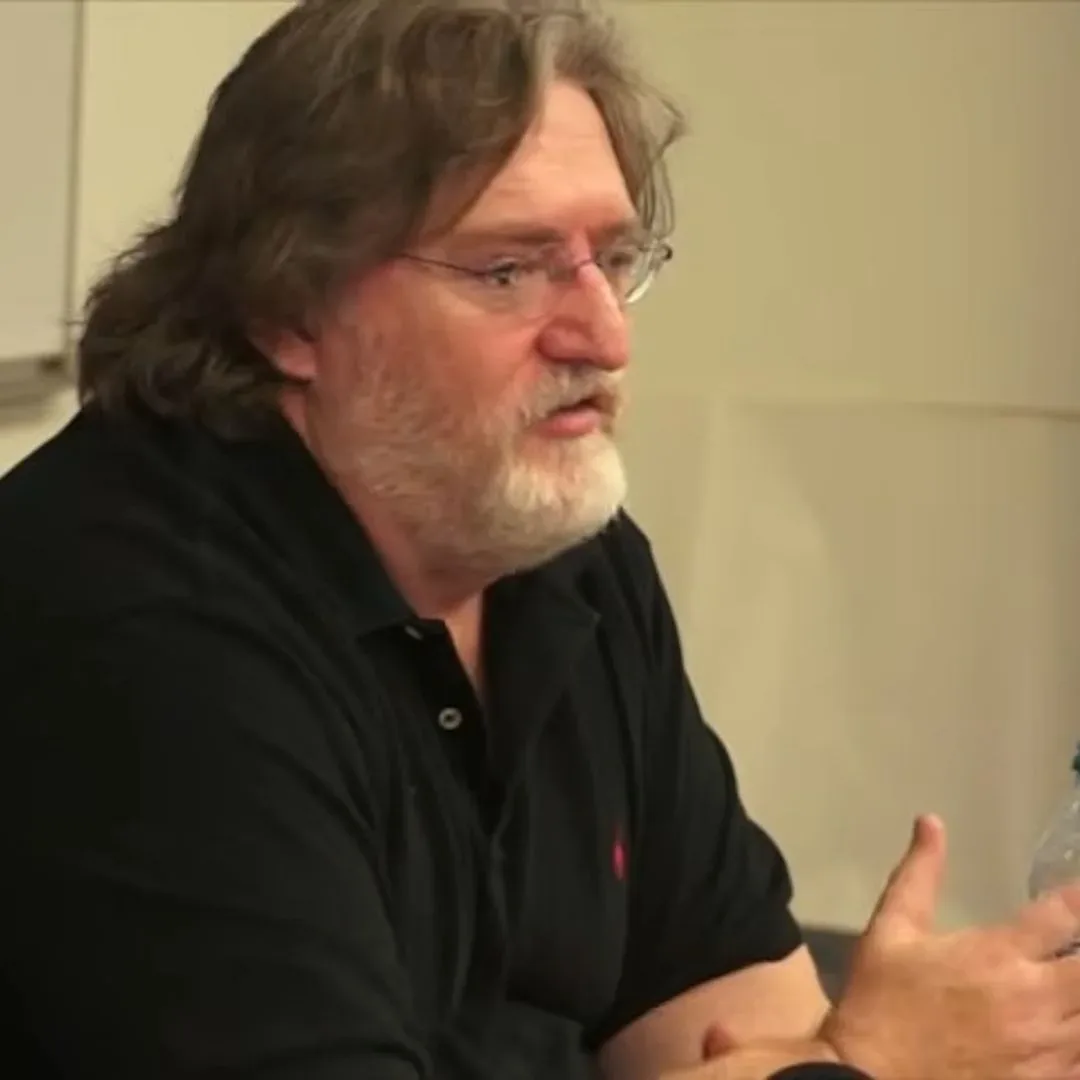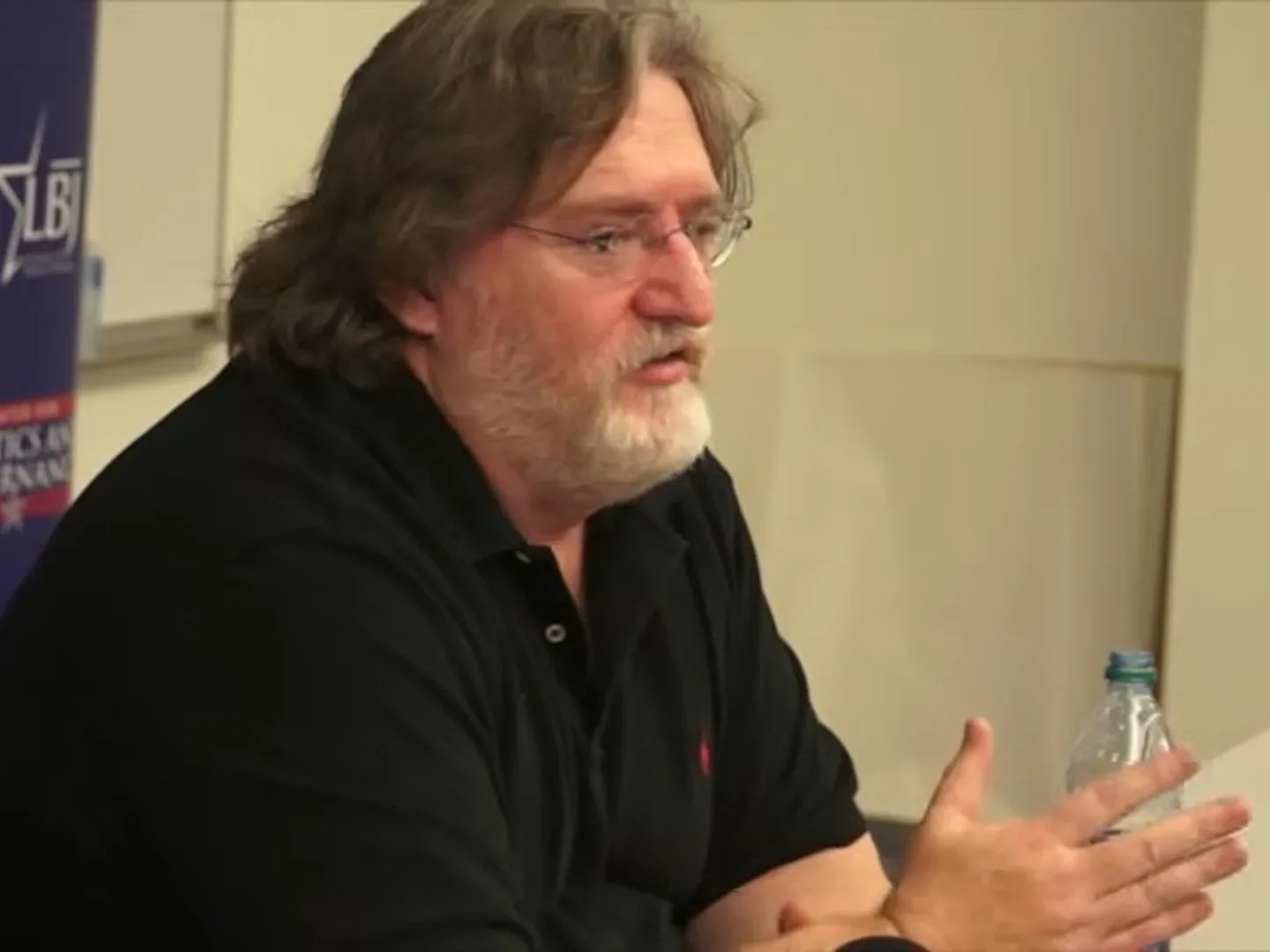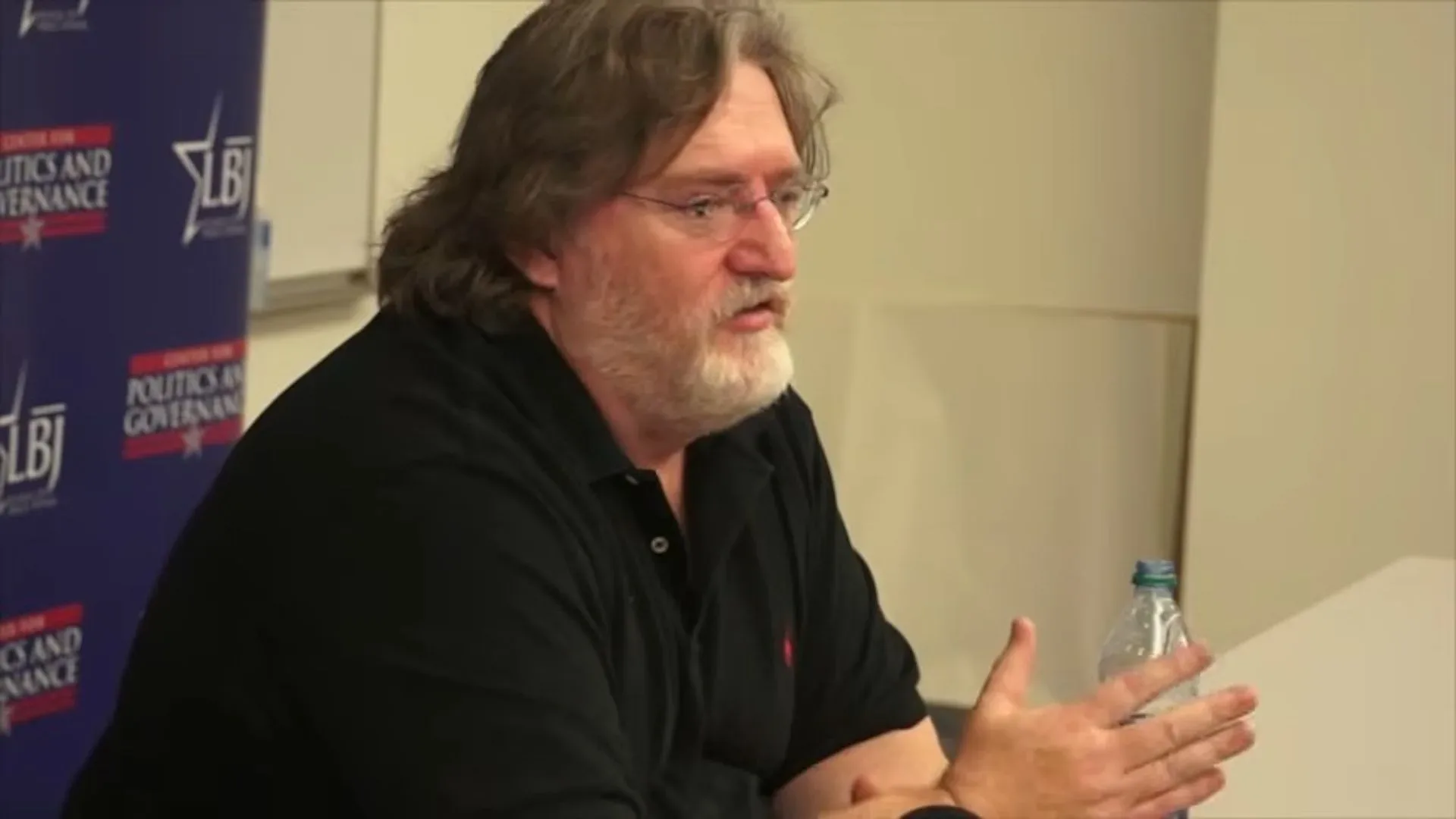
One of the internet’s favorite pastimes is excavating an old Gabe Newell talk, clipping out a few minutes, and treating it like a newly discovered tablet from the mountain. The latest rediscovery comes from a 2013 lecture in which the Valve co-founder laid out why the company chose to remain privately held—and why, in his view, paying dearly for exceptional people was more sensible than searching globally for the cheapest available labor.
The discussion has found an especially receptive audience in 2026. Large technology and game companies have endured a turbulent period of layoffs, reorganizations and intense cost-cutting. Against that backdrop, Newell’s long-standing argument is easy to understand: a company that wants remarkable work should focus on finding people capable of it, give them latitude, and avoid adding owners whose priorities may not line up with the people making and buying the product.
The viral video is an edited extract from a 62-minute January 2013 appearance at the LBJ School of Public Affairs at the University of Texas. The broader lecture covered productivity, economics, institutions and the possible future of corporations. That wider context matters, because the circulating segment is not simply a speech about a corporation refusing an IPO. It is Newell explaining a connected theory of value: the best talent can be underpriced, organizational borders can get in the way of problem-solving, and private ownership can keep decisions closer to players and creators.
Valve’s contrarian hiring thesis
In the lecture, Newell recalled that outsourcing was a major business trend during Valve’s early years. The usual pitch was straightforward: locate lower-cost English-speaking workers, give them comparable tasks, and reduce expenses. Newell said Valve’s leadership came to believe the opposite approach was the opportunity.
Valve was founded in 1996 by Newell and Mike Harrington. Newell described conversations with people in insurance, airlines and Silicon Valley startups that helped convince the founders that many companies were optimizing for the wrong thing. Instead of treating talent as a cost to minimize, Valve sought people at the expensive end of the market because the company believed unusually productive workers could create substantially more value than their compensation.
“What we decided was that we were going to buy the most expensive talent that was out there in the world.”
The point was not merely to offer giant salaries for their own sake. Newell’s premise was that someone who makes an outsized contribution should receive outsized compensation. In the lecture, he gave a hypothetical example involving a feature-film worker in New Zealand earning $200,000 annually and said that, if their value at Valve were much higher, paying $500,000 or even $5 million could be rational.
That is a striking number, particularly when isolated as a clip, but it reflects an economic argument more than a universal salary plan. If a person is capable of generating vastly more value than they cost, Newell reasoned, hiring them is not excess. It is an investment. The difficult part, naturally, is recognizing that capacity and building a workplace that does not smother it in meetings, silos and approvals.
Related coverage includes Gabe Newell's Old Valve Lecture Finds New Life as Players Revisit the Case for Staying Private.
The Half-Life example at the center of the argument
Newell pointed to Yahn Bernier, a programmer associated with the original Half-Life, as an example of elite productivity. He said Bernier had been producing roughly 4,000 lines of code per day in an era well before today’s AI-assisted programming tools became part of the conversation.
Line counts are an imperfect measure of software quality; more code does not automatically mean better code. But Newell’s illustration was about scale and capability rather than a scoreboard. His claim was that exceptional contributors can have a disproportionate impact, and that companies benefit from creating conditions that let those contributors work across the problem in front of them.
That leads to another famous aspect of Valve’s identity: its relatively loose relationship with conventional job titles and strictly separated disciplines. Newell described a Half-Life contributor who built the skeletal animation system but also had a fine arts degree and could create environmental art. In his telling, that mix of skills was an advantage, not a résumé oddity to be boxed into a single department.
For a game like Half-Life, the ability to move between code, animation and environments could change the final experience. A developer who sees a problem may be able to solve it through gameplay space, technical implementation or animation rather than waiting for three separate teams to negotiate ownership. Newell argued that rigid titles can stop people from defining and addressing problems at the level where they would be most effective.
It is a seductive philosophy for anyone who has watched a small design tweak spend weeks traveling through an approval maze. It also helps explain why Valve’s creative process has become a frequent point of fascination. Fans looking back at Half-Life, Portal and Steam often see a company that made unusual choices and had the autonomy to live with them. Those games and platforms did not emerge from a single organizational doctrine, but the 2013 lecture offers a useful window into the thinking Newell associated with Valve’s structure.
Why private ownership mattered to Newell
Newell’s case for remaining private centered on decision-making. He said public ownership would introduce outside parties into the process, particularly investors and a board, while failing to solve a problem Valve had at the time. A publicly traded company can access capital markets and distribute ownership broadly, but it also operates under shareholder expectations and formal governance demands that can shape its choices.
For Newell, avoiding those pressures meant reducing what he called noise between customers and producers. In practical terms, the argument is that Valve could judge a hiring decision, a product decision or an internal experiment by its expected value to the company and its audience instead of by how it might satisfy a third party’s shorter-term priorities.
“The whole point of being a privately held company is to eliminate another source of noise in the signal between the consumers and the producers of a good.”
That does not mean private companies are automatically more player-friendly, better managed or immune from mistakes. Nor does it mean public companies cannot build excellent games, employ outstanding people or take long-term risks. Ownership structure is one variable among many. Still, Newell’s remarks explain why Valve has traditionally been reluctant to look like a standard public tech giant.
They also land differently during a period when players and developers are openly discussing layoffs, consolidation and the pressure to make each quarter look better than the last. Industry questions of trust and management are hardly limited to Valve; as recent conversations about rebuilding trust after public missteps show, leaders are being pressed to explain how organizations make decisions and whom those decisions serve.
A 2013 philosophy facing 2026 questions
The renewed interest in this lecture does not prove that every part of Valve’s model transfers cleanly to other studios. Valve’s circumstances are distinctive: Steam is an enormous PC distribution platform, its workforce is far smaller than that of many multinational technology companies, and it has a history of successful games and hardware experiments. Private ownership can provide freedom, but it also offers less public visibility into internal decisions than a publicly traded corporation is required to provide.
Even so, the available business figures help explain why people are revisiting Newell’s ideas. Steam is reported to have generated $15 billion in revenue so far this year, while an analyst estimated that Crimson Desert alone exceeded $203 million. Revenue is not profit, and neither number independently establishes how Valve distributes its money or measures employee value. But they illustrate the scale of the ecosystem that supports Valve’s independence.
Valve also faces modern constraints that a 2013 lecture could not fully anticipate. Engineer Yazan Aldehayyat has warned that an AI-driven memory shortage could worsen after affecting the Steam Machine launch. Newell, meanwhile, has discussed AI’s potential impact on programming productivity, suggesting that people who understand the tools may sometimes be more effective than programmers with greater conventional experience.
That observation fits surprisingly well with the older lecture. Newell’s central concern was not preserving a particular job title or process. It was finding the most effective route to a good outcome, then empowering people who can travel it. In 2013 that meant a multidisciplinary developer choosing whether code, art or animation was the best answer. In 2026, it may also mean deciding how AI tools fit into skilled human work.
The viral clip is therefore more than a tidy anti-IPO soundbite. It is a reminder of Valve’s long-held bet: prioritize exceptional contributors, let them cross traditional boundaries, and keep enough control to make decisions without a crowd of external voices pulling on the controller. Whether every company could—or should—copy that formula is another matter. But its continuing relevance is why an old lecture is once again commanding the internet’s attention.