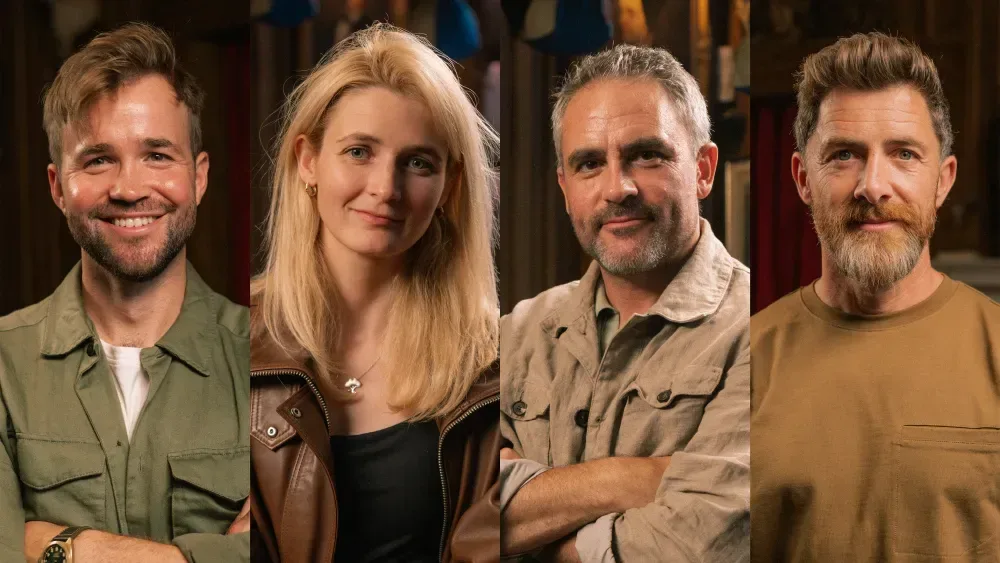
A new digital adventure brand is betting that the stories left on the cutting-room floor may be as valuable to audiences as the polished expedition documentary itself. Frontier Collective has launched with Expedition HQ, a weekly YouTube roundtable featuring explorers Aldo Kane, Alex Bescoby, Levison Wood and Lucy Shepherd.
The format is straightforward: four established adventure storytellers sit together and discuss their work exploring the natural world and remote locations. But its larger purpose is more ambitious. Frontier Collective is designed as a shared hub for creators whose audiences already follow adventure material on YouTube and across social platforms, while giving those creators space for stories, context and footage that may not fit into a completed film.
Expedition HQ debuted November 1 on the Frontier Collective YouTube channel. New episodes are planned weekly, with clips also distributed through Instagram, TikTok, Facebook and Snapchat.
A creator-led home for adventure storytelling
Frontier Collective comes from Hearst Canvas, the creator-led media operation within Hearst Networks in the U.K. Canvas launched in October 2025 with a remit to identify creators for specific audience verticals and develop formats intended to work natively on YouTube.
That framing matters. A creator-led format is not simply a conventional television idea uploaded to a video platform. The creator is central to both the proposition and audience relationship: viewers may arrive because they know an individual explorer, then stay for the group dynamic and the wider network of related stories. The format can also support different lengths and styles of video, from the recurring full roundtable to short-form clips built for social feeds.
Dean Possenniskie, who oversees Hearst Networks in the U.K. as well as Europe, the Middle East and Africa, described the initiative as a way to make work specifically for creator-driven viewing rather than treating YouTube as a secondary destination. He also characterized the adventure audience as global and broader than one traditionally reached through the company’s U.K. pay-TV, direct-to-consumer and broadcast outlets.
That does not mean the new channel replaces documentaries. Instead, its core appeal appears to be the material around them: what happened behind the scenes, what was omitted for time or structure, and what fellow explorers can draw out of one another in conversation.
Why the four-person setup is important
The founding lineup gives Frontier Collective a defined identity from launch. Kane, Bescoby, Wood and Shepherd are not presented as hosts reading isolated interviews; they are peers exchanging expedition stories. That distinction may be the format’s most useful asset.
Adventure programming often has a strong individual perspective. An expedition is typically organized around a single route, objective or presenter, and the finished program needs a clear narrative. A roundtable can work differently. It can make room for anecdotes that complicate the tidy version of events, production challenges that are not central to the documentary plot, and practical or emotional details that only another experienced explorer is likely to recognize.
Wood specifically pointed to the amount that is necessarily excluded from finished documentaries. For viewers, that suggests Frontier Collective may act as a companion space rather than just another outlet for finished expedition films. The value lies in added perspective, including unseen material when creators choose to share it through the collective and their own channels.
Kane similarly positioned the YouTube channel as a direct connection to the community, focused on the real story behind adventures. Shepherd emphasized the motivational side of gathering people whose work has influenced other adventurers, with the aim of encouraging viewers to seek some form of adventure in their own lives.
Those are complementary promises. One is access: more of what occurred around an expedition. The other is community: an ongoing destination where viewers can encounter multiple voices in the genre. Whether that combination develops into a larger slate remains to be seen, but it establishes a clear reason for a dedicated brand rather than a one-off series page.
What “digital native” means here
Frontier Collective is described as a digital-native brand, a term that can become vague if it is not tied to concrete choices. In this case, the available details give it a practical meaning: YouTube is the home for the full recurring show, the release rhythm is weekly, and social platforms carry clips that can reach viewers in the places they already browse.
The approach recognizes that a single audience may encounter the same project in several ways. Someone might find a short clip on TikTok or Instagram, follow the channel for a full Expedition HQ episode, and then look for further material from one of the explorers’ individual accounts. The collective is intended to connect those routes without erasing the creators’ separate identities.
For a media business, that is also a different proposition from commissioning a traditional series for one scheduled channel. The format is designed around ongoing discovery, direct viewer relationships and an international platform. It is not evidence that every adventure series will work the same way, but it is a focused attempt to meet an audience where adventure personalities already have established visibility.
The production team behind Expedition HQ
Expedition HQ is produced by Grammar Productions, a company co-founded by Bescoby. Grammar Productions has previously produced work for BBC, Channel 4, Apple TV, Amazon Prime, Discovery, Sky HISTORY and Canal+, alongside branded projects.
That background is relevant because the new project sits between traditional production experience and a more platform-native distribution plan. A conversational creator show still needs strong editorial judgment: a discussion must have enough freedom for unexpected stories, but enough structure that an episode feels purposeful rather than like an unedited chat. Grammar’s involvement gives the launch a production partner familiar with making factual programming for a range of outlets.
Hearst Canvas is led by creative director Danny Baggot and executive producer Sam Pearson. Its first announced commission was the unscripted business-revitalization series Pitch, Please, revealed October 29. Frontier Collective therefore arrives early in Canvas’ effort to establish distinct creator-led verticals.
Adventure viewers want more than the final cut
Bescoby argued that adventure storytellers have wanted a more permanent home for their work as traditional television has reduced its emphasis on the genre, despite continuing audience interest. Frontier Collective is a response to that perceived gap, not a claim that expedition films have disappeared altogether.
The practical implication is that a collective can make individual adventure work more discoverable while creating material that is less dependent on any one expedition’s release schedule. A filmmaker may spend considerable time preparing, travelling and producing a project before a final documentary is complete. A discussion program and related social clips can keep a conversation with viewers going in between, provided there are meaningful stories to tell.
There is also a creative advantage in allowing several practitioners to compare notes. Adventure storytelling can be visually spectacular, but a group conversation can emphasize the human side: decisions, uncertainty, relationships, research and the inevitable mismatch between an experience in the field and the concise narrative that makes it to screen. The launch information does not spell out a fixed episode structure beyond the roundtable premise, so audiences will have to wait to see how deeply the show pursues those subjects.
What to watch next
The immediate measure of Frontier Collective will be consistency. Weekly episodes give the channel a regular cadence, while the four-person lineup provides continuity from installment to installment. Social clips can introduce moments from those conversations to people who do not yet know the channel, but the full show must establish its own reason to return.
Its broader significance is as an example of how creator-focused media groups are seeking to build formats around talent communities rather than around a single finished program. The concept depends on a delicate balance: the collective needs a recognizable shared voice, yet each explorer’s existing audience and perspective must remain visible.
For now, the essentials are clear. Expedition HQ is live on the Frontier Collective YouTube channel, featuring Kane, Bescoby, Wood and Shepherd, and it is set to release weekly. It gives adventure fans a new recurring place for expedition conversation—and gives four seasoned storytellers a venue for the parts of the journey that do not always fit in the final cut.
For another look at how creator and entertainment businesses are being built around direct audience connections, see this report on Big Sean’s Detroit entertainment project.