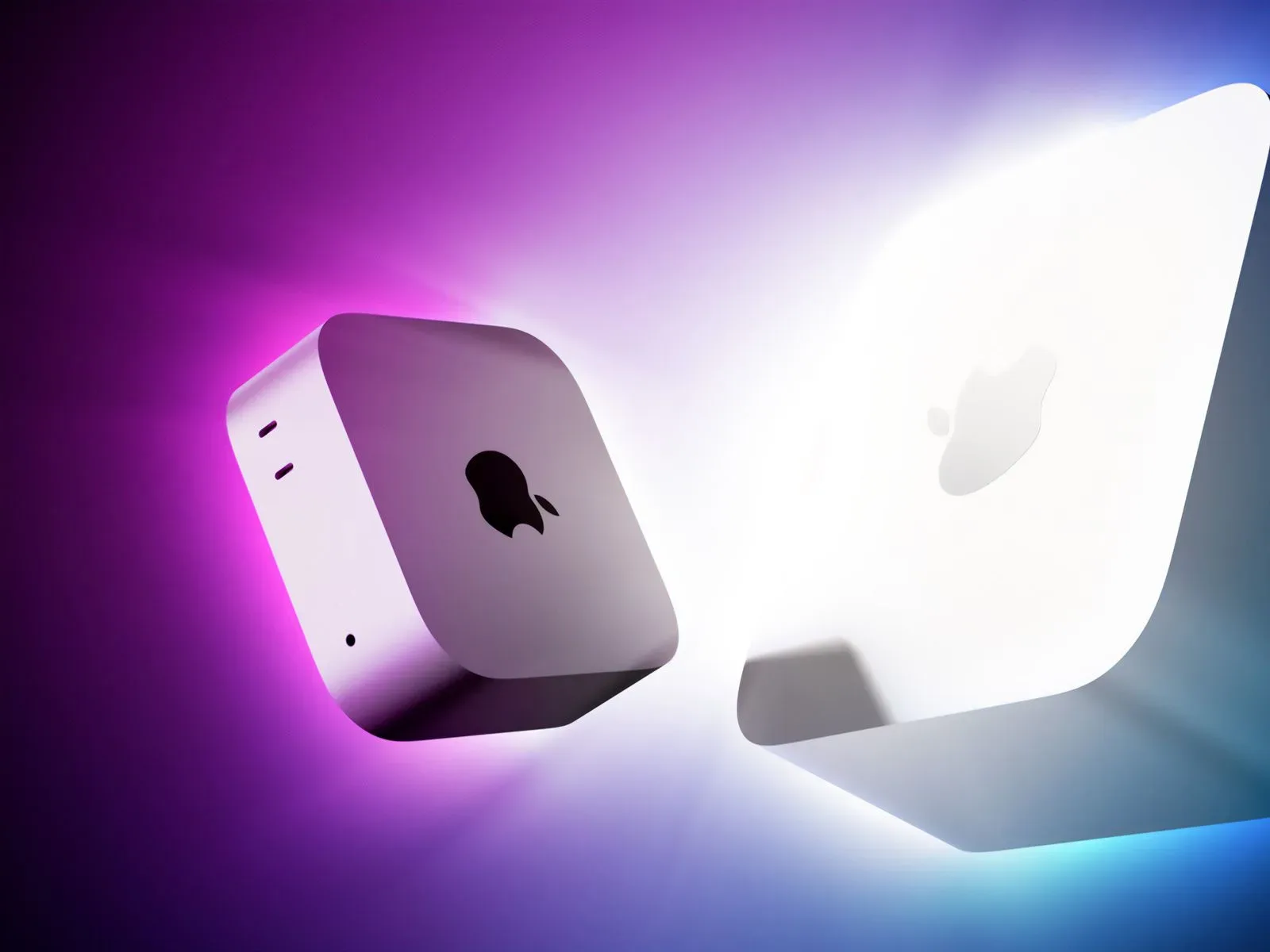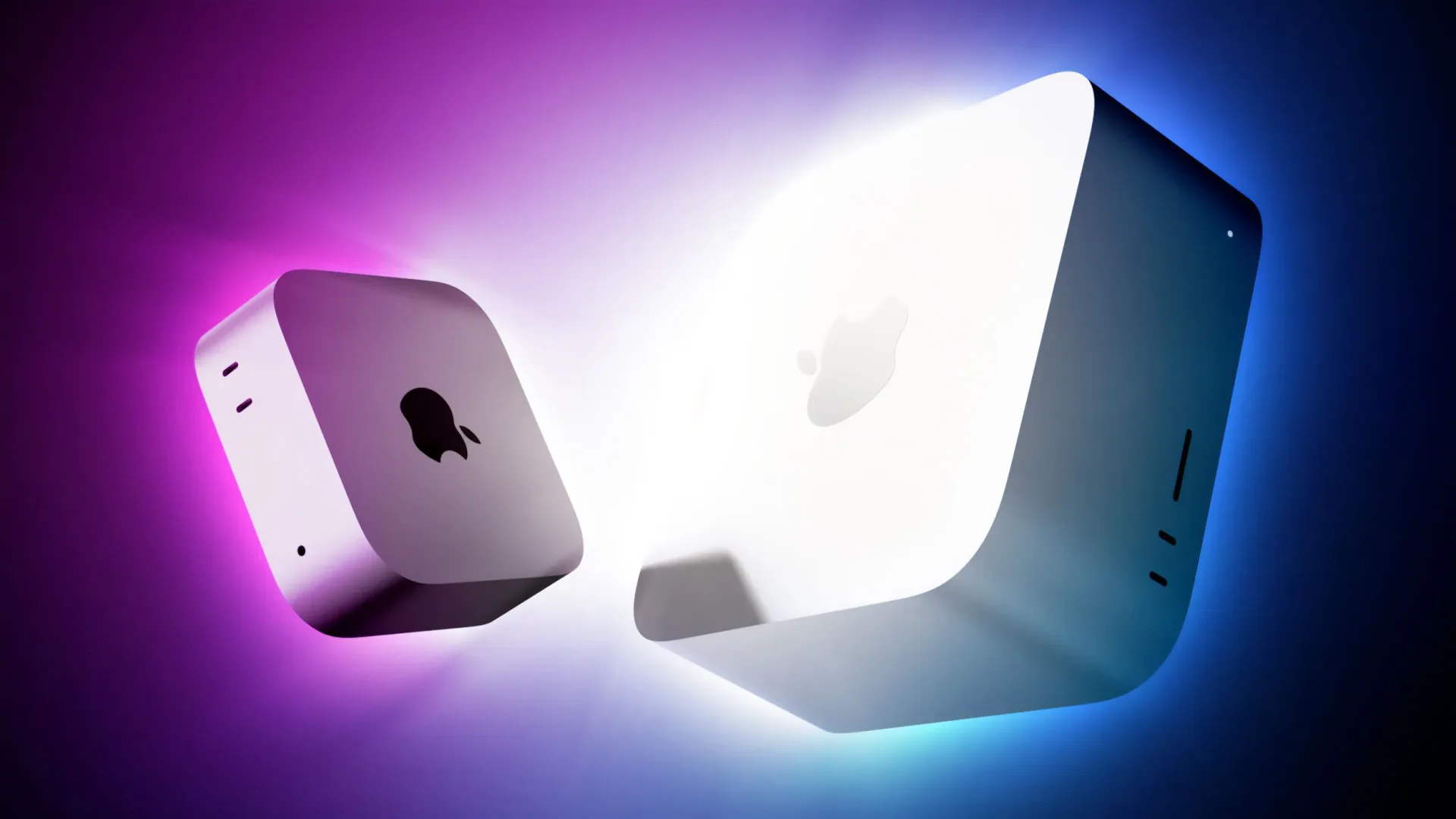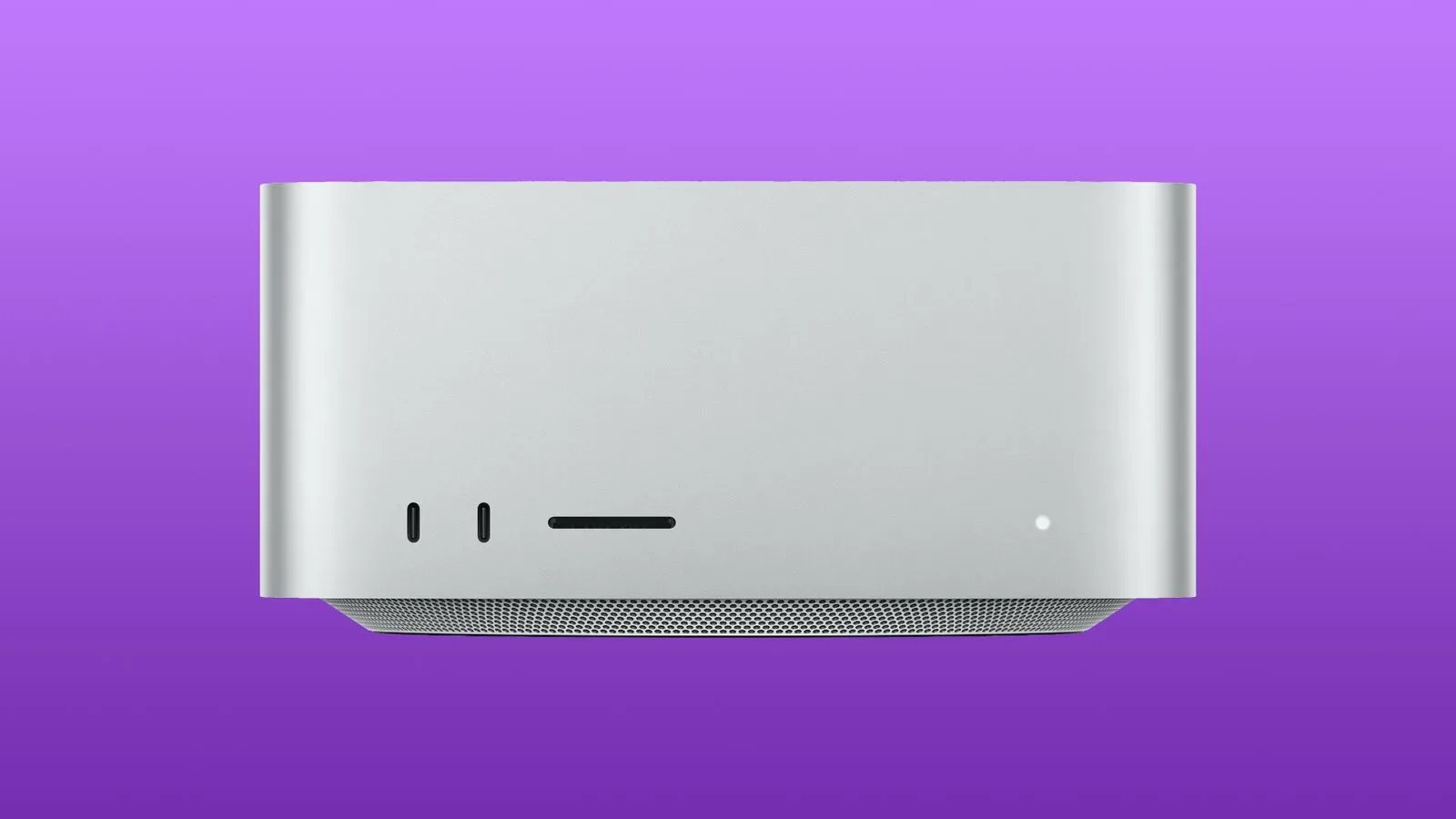
New Apple desktop hardware has already wandered into discount territory. Select configurations of the latest Mac mini and Mac Studio are listed for less than their standard prices, with reductions reaching $49. The savings are modest rather than earth-shaking, but early price cuts can still matter when the starting point is a compact desktop that needs a monitor, keyboard and other essentials alongside it.
The largest stated reduction is attached to a Mac Studio configuration with Apple’s M5 Max chip, 36GB of memory and a 512GB solid-state drive. That model is listed at $2,449.99, down from $2,499.00, a $49.01 difference. Two Mac mini configurations are also reduced: the 16GB memory/256GB SSD version is listed at $879.99 rather than $899.00, while the 16GB memory/512GB SSD version is listed at $1,069.99 rather than $1,099.00.
The discounted configurations at a glance
- Mac Studio with M5 Max, 36GB memory and 512GB SSD: $2,449.99, previously $2,499.00.
- Mac mini with 16GB memory and 256GB SSD: $879.99, previously $899.00.
- Mac mini with 16GB memory and 512GB SSD: $1,069.99, previously $1,099.00.
None of those figures turn a premium desktop into an impulse buy. They do, however, establish an important reality for shoppers who were already planning a purchase: the list price is not necessarily the only price in play, even shortly after a product arrives. The useful comparison is therefore not simply “discount versus no discount,” but whether the particular configuration offers enough memory and internal storage for the work it will be asked to do over its usable life.
Mac mini versus Mac Studio: a configuration question, not just a box-size question
Apple’s desktop naming can make the decision look like a simple step from small to larger, or affordable to expensive. The supplied configurations show why that framing is incomplete. The Mac mini listings each include 16GB of memory, with the meaningful split being 256GB or 512GB of SSD storage. The Mac Studio listing costs much more, but it pairs an M5 Max chip with 36GB of memory and 512GB of storage.
Memory, sometimes called unified memory in Apple’s terminology, is the working space the system uses while applications and data are active. More memory can be consequential for people who regularly keep many applications open, deal with larger assets, or use workloads that hold substantial amounts of data in memory. It is not the same thing as SSD capacity.
SSD storage is the persistent space used for applications, documents, game files and other material that remains when the computer is shut down. The gap between 256GB and 512GB is straightforward: the latter offers twice the stated internal capacity. But it is still a purchase decision that benefits from a practical inventory. A buyer who mainly uses web applications and keeps local files light may read the smaller drive very differently from someone expecting to maintain a large collection of local media, development files, or game installations.
That is why a $20 reduction on the 256GB Mac mini and a roughly $29 reduction on the 512GB version should not be treated as interchangeable bargains. The lower-priced model remains cheaper, but the better value depends on which limitation would arrive first: budget or capacity. A discount only changes the entry price; it does not change the physical amount of storage included in the machine.
What Apple is claiming for the M6 Mac mini
The current Mac mini uses Apple’s M6 chip. Apple says that, compared with a previous-generation Mac mini configured with a 10-core M4 chip, 32GB of unified memory and 2TB of storage, the M6 Mac mini can offer up to 40% faster CPU performance, up to four times faster performance for AI tasks, up to twice the graphics performance, and up to twice the storage speed.
Those are manufacturer performance claims, and the wording matters. “Up to” expresses a maximum result under particular conditions, not a promise that every task finishes at exactly that multiplier. The comparison is also against a specific prior machine: an M4 Mac mini with 32GB of unified memory and a 2TB SSD. It should not be read as a blanket measurement of every earlier Mac mini configuration.
The CPU, or central processing unit, handles general-purpose processing work. Faster CPU performance may help work that is limited by processor speed, but the result for any individual task depends on the software and the nature of the job. Graphics performance refers to work handled by the system’s graphics hardware, while storage speed describes how quickly the internal SSD can move data. These measurements address different bottlenecks; doubling one does not automatically make every part of a workflow twice as quick.
The AI figure needs the same restraint. “AI tasks” is a broad category rather than one single activity. Apple’s claim identifies a potentially large improvement in that area, but it does not define an identical benefit for every application that happens to advertise AI features. Shoppers considering a desktop specifically for that kind of workload should distinguish an overall chip claim from the requirements and behavior of the tools they actually intend to use.
A practical way to read an early discount
Early reductions are easy to overinterpret. In this case, the listed savings are real price changes, but they are not steep cuts that erase the need to choose carefully. The Mac mini’s $20 discount is about 2.2% of its $899.00 listed price in the 256GB configuration. The $29.01 reduction on the 512GB version is about 2.6% of $1,099.00. The Mac Studio’s $49.01 reduction is about 2.0% of $2,499.00.
Put another way, the central decision is still the system itself. The deal is best understood as a small rebate on a configuration someone has already judged to be suitable, not evidence that a more expensive desktop is suddenly a necessity. The same logic applies to saving a little on a lower-capacity model: it is a win only if the configuration remains appropriate after the checkout page is closed.
Questions worth answering before buying
- Is 256GB enough local storage? The first Mac mini is less expensive, but it also carries half the SSD capacity of the 512GB Mac mini listed alongside it.
- Is 16GB of memory aligned with the intended workload? Both discounted Mac mini configurations have the same stated 16GB memory amount, so the storage choice does not increase memory.
- Does the M5 Max Mac Studio’s 36GB memory configuration solve a genuine need? Its price and hardware class are substantially different from the Mac mini offers.
- Are the advertised performance comparisons relevant? Apple’s M6 figures are comparisons with a defined M4 Mac mini configuration and are presented as “up to” results.
- Is the retailer’s live price still the one expected? Listings and discounts can change, so the current configuration, price and availability should be checked at the point of purchase.
Why storage deserves more attention than the discount percentage
The two Mac mini offers make storage the cleanest direct comparison. For $190 more at their undiscounted prices—or $190 more at the stated discounted prices—the 512GB version doubles internal SSD capacity over the 256GB model while retaining the same stated 16GB memory amount. That means the shopper is not deciding between two different memory tiers in these particular listings. They are deciding whether the added room is worth the additional outlay.
That distinction can prevent an easy shopping mistake: assuming that every higher-priced configuration is faster in every way. The supplied information supports a capacity difference between the two Mac mini configurations, but it does not state a separate processor or memory change between them. Storage capacity and storage speed are also separate concepts. Apple’s claim of up to two times faster storage on the M6 Mac mini concerns performance relative to the specified M4 comparison system; it does not mean the 512GB discounted mini is stated here to be twice as fast as the 256GB discounted mini.
For users weighing a compact Apple desktop against other purchases, the financial context is also helpful. The Mac Studio deal is a $49.01 reduction, yet it remains $1,380 more than the listed $1,069.99 512GB Mac mini. That is not a criticism of either system; it simply underlines that the Studio is a different commitment. The M5 Max chip and 36GB memory in its listed configuration are the hardware differences explicitly identified here, and those differences should be the reason to move up—not the fact that the nominal discount is larger in dollars.
What this means for gaming-adjacent desktop shoppers
A Mac can be part of a gaming-adjacent setup without the purchase being reducible to game performance. It may serve as a general desktop, a place to manage a media library, work with creative projects, communicate with a community, or handle tasks around the games themselves. The information available here does not establish game benchmarks, compatibility, or settings for either the M6 Mac mini or the M5 Max Mac Studio, so it would be misleading to turn Apple’s broad graphics claim into a recommendation for particular games.
What the figures do provide is a disciplined starting point. The M6 Mac mini carries Apple’s claims of increased CPU, graphics, AI and storage performance against a specific M4 model. The Mac Studio listing identifies considerably more memory and an M5 Max chip, with a much higher price. Buyers who need a Mac desktop can use those facts to compare the scope of each offer while leaving application-specific performance to evidence that actually tests the software they care about.
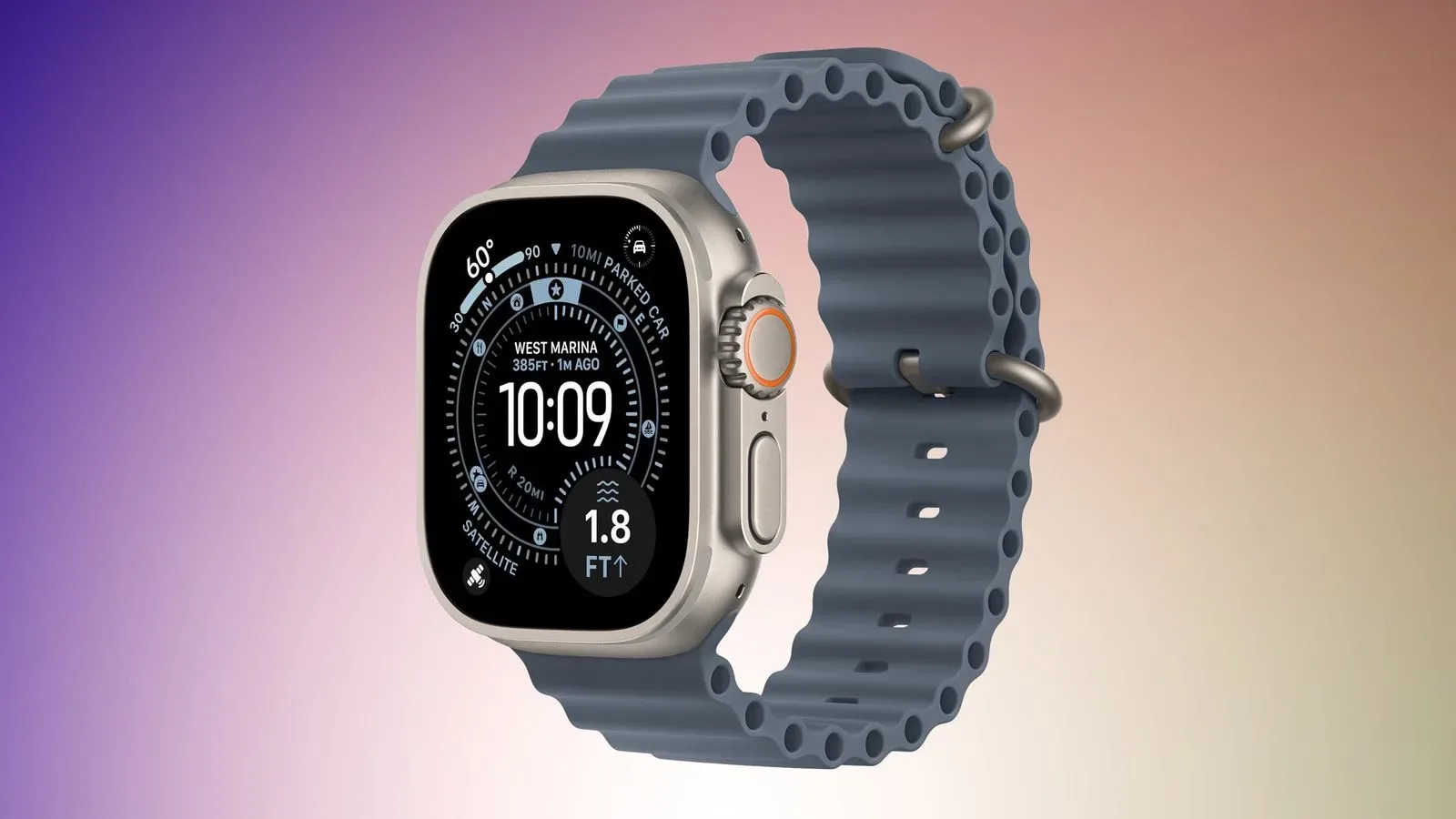
Apple-related discounts can vary considerably by configuration, as demonstrated by the much deeper reduction on one specific Apple Watch model in this Apple Watch Ultra 3 deal. That is a useful reminder to evaluate the exact model, storage and memory combination rather than treating a product family’s headline bargain as universal.
For now, the headline is pleasantly plain: a handful of current Apple desktops have slipped below their listed prices. The reductions are limited, but so is the guesswork. The M5 Max Mac Studio with 36GB of memory and a 512GB SSD is listed at $2,449.99. The 16GB/256GB and 16GB/512GB M6 Mac minis are listed at $879.99 and $1,069.99. Whether one of those is a good deal comes down to the configuration a buyer can actually use, not merely the size of the red number beside it.
Shop the products
Check current price, model and availability at the retailer.