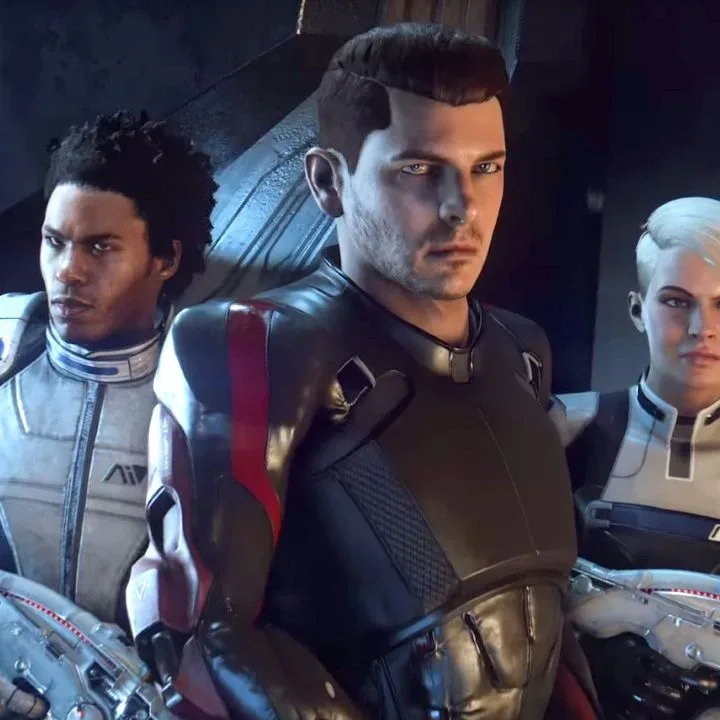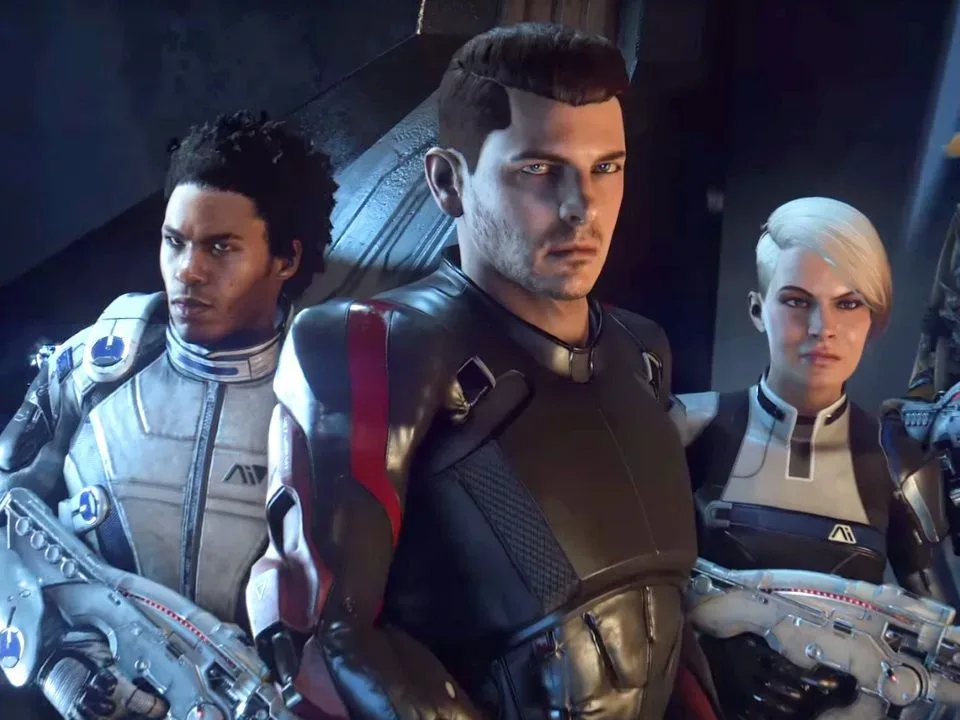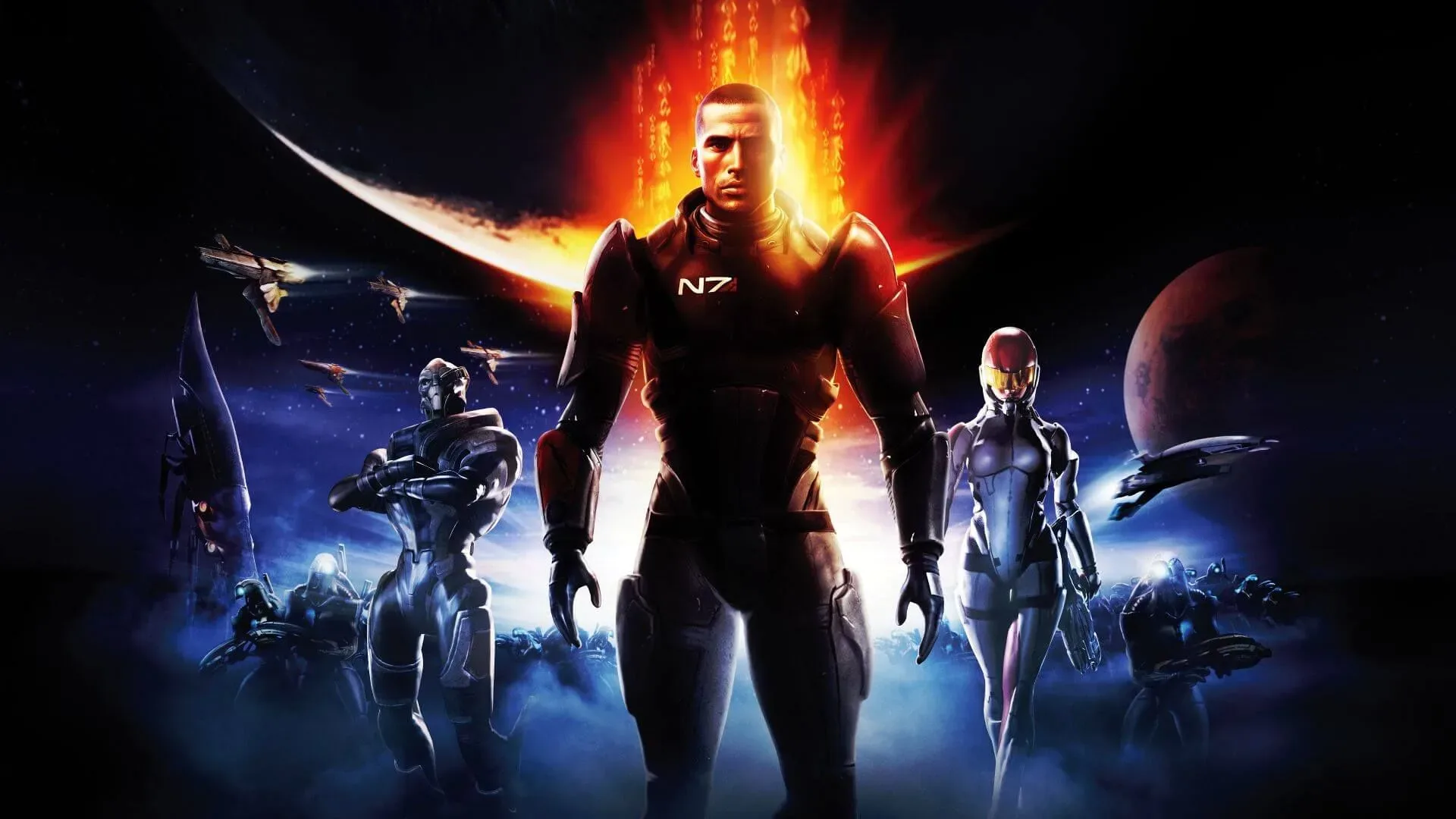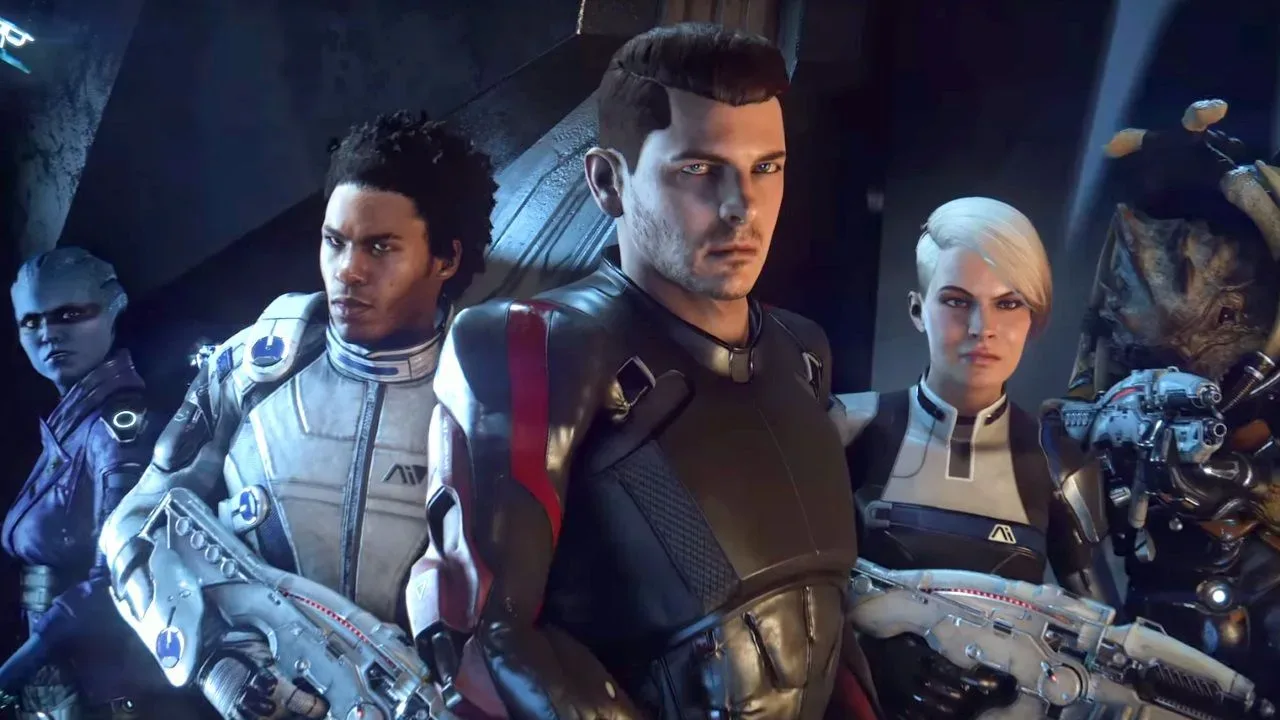
The next Mass Effect is still one of gaming’s biggest open questions: not merely what it will be, when it will arrive, or which familiar faces might return, but whether BioWare will have the latitude to make the kind of ambitious role-playing game its name still evokes. Armando Troisi, an original Mass Effect cinematic designer, has offered a notably direct answer to the question of the studio’s creative readiness. He believes the people at BioWare can handle it. His concern is the structure above them.
Troisi’s argument is neither a detailed prediction about the game nor a promise that everything will be fine. It is a plea for leadership to trust the developers. In his view, a project at this scale depends on many moving parts, yet the central requirement is simple: give experienced creators room to do their jobs. He says BioWare can make something special if management does not smother the process with interference.
That distinction matters because the future Mass Effect game has spent years in a strange state of anticipation. It was first announced at The Game Awards in 2020, and public information since then has been limited. Fans have had a teaser, a few carefully rationed signals of continued development, and plenty of time to turn every fragment into a galaxy-sized theory board. But there has been no release date, no confirmed platform list, and no full public demonstration that can tell players what the project has become.
In other words, the question is not whether people are eager for a new Mass Effect. The question is whether the corporate environment surrounding BioWare can support a long, expensive, creatively demanding game without continually trying to reshape it into something safer, faster, or more immediately monetizable.
Why Troisi still believes in BioWare’s creative core
Troisi’s confidence comes from institutional memory. He pointed to longtime BioWare figures including lead designer Preston Watamaniuk and art director Derek Watts, describing them as veterans who know the work. That continuity is important in a franchise where success has never rested solely on a combat system, a dialogue wheel, or an impressive set of alien skylines.
Mass Effect works when multiple specialties are pulling toward the same destination. Narrative teams must establish characters worth listening to. Designers have to make player choice feel meaningful even when the story needs to retain a coherent shape. Artists must make distant planets feel like places that can hold a history. Cinematic teams need to sell a glance, a hesitation, or the uncomfortable pause before a decision that may ruin a friendship. Producers have to protect all of that from collapsing under schedules, technical limits, and the merciless arithmetic of a giant production.
Veterans cannot solve every problem by themselves, and no individual’s involvement guarantees a game’s quality. Still, the presence of people with deep knowledge of BioWare’s methods offers a more substantive reason for optimism than nostalgia alone. Troisi’s message is that the studio does not need outsiders to explain what Mass Effect is supposed to be. Its remaining experienced developers understand the assignment.
That may sound obvious, but it is an unusually valuable asset after two decades of changing technology, shifting market expectations, staff movement, and organizational upheaval. A modern Mass Effect should not simply recreate the original trilogy’s approach with prettier lighting. It must understand why players cared about its crew, its moral dilemmas, and its particular mixture of pulpy space adventure and personal consequence. Preserving that understanding while building something new is difficult work—exactly the kind of work for which retained creative knowledge matters.
The leadership question is bigger than one sequel
Troisi’s remarks land amid broader unease about BioWare and its parent company, EA. The concern is not based on an announced cancellation or an official declaration that the next Mass Effect is in danger. It is based on the uncertain conditions surrounding a publisher facing major financial and ownership changes, alongside recent questions about how BioWare’s projects have been managed.
EA’s $55 billion buyout involves Saudi Arabia and private-equity investor Jared Kushner, while the transaction reportedly places roughly $20 billion of debt on EA. For employees and players, figures at that scale invite concerns about future cost-cutting, changing priorities, and which projects will receive patience when budgets are reviewed. Large publishers do not make decisions in a vacuum; ownership, debt obligations, and executive strategy can shape the kinds of games considered acceptable risks.
Some EA developers have reportedly worried that pitches could be affected by what leadership believes the new owners may prefer, whether directly or through self-censorship. That remains a concern rather than a confirmed policy. But even the possibility matters for a studio known for story-heavy games that often ask players to inhabit complicated worlds and make difficult choices.
This is also why a seemingly broad call to “trust your people” has specific meaning. Creative autonomy is not an abstract luxury for a role-playing game. It affects whether writers have time to revise branching scenes, whether developers can respond to internal feedback, whether companion arcs retain their awkward edges, and whether a project is allowed to be itself rather than a stack of trend-responsive bullet points.
There is a useful contrast in how different games create connection. Couch games can produce instant shared drama from a missed jump or a stolen controller, as explored in the unwritten rules of couch multiplayer. BioWare’s specialty is a slower sort of social bond: the one between a player and a party of fictional teammates. Both depend on human judgment. Neither is improved merely because a spreadsheet says the experience has been optimized.
A franchise carrying both opportunity and pressure
For BioWare, Mass Effect is not just another project. It is potentially a major opportunity to reaffirm the studio’s identity. It is also a high-pressure undertaking because the series is so beloved, and because its previous mainline ending remains one of the most intensely debated conclusions in modern game history. A new installment will have to manage expectations from players who want familiar DNA, players who want a decisive reinvention, and players who chiefly want proof that BioWare can still deliver a polished RPG of this magnitude.
Former EA senior manager Emmanuel Rosier has expressed skepticism about whether EA will continue to fund BioWare, saying he will believe the new Mass Effect when he sees it. Former BioWare executive Mark Darrah has similarly warned that highly involved new owners could inflict serious harm. Neither comment establishes the game’s fate, but together they illustrate the gap between development continuing in theory and a finished product reaching players intact.
That gap has swallowed many ambitious games over the years. Projects change scope. Teams are reorganized. Strategies pivot. Studios are asked to chase an industry trend that is already fading by the time the work ships. In the worst cases, a game’s strongest ideas are not disproven; they are simply denied the time, staffing, or stability needed to become real.
For fans, the patience test is especially severe. By 2026, eight years have passed since the release of Mass Effect: Andromeda, while the next entry has been publicly known since 2020. Long waits can be normal for sprawling RPGs, but silence becomes harder to interpret when a studio’s business circumstances are in flux. Every delay could reflect careful development, altered direction, staffing realities, or nothing more than the ordinary pace of a huge game. There is not enough public evidence to confidently select one explanation.
What letting BioWare work would actually mean
“Leave them alone” should not be read as a demand for zero accountability. Massive games require planning, budgets, production leadership, quality assurance, and clear decisions. A studio cannot make a modern RPG by sealing itself in a room with a whiteboard, a soundtrack, and a suspiciously energetic coffee machine.
What Troisi is advocating is better understood as productive trust. Leadership should establish resources and goals, then avoid disrupting the people who possess the relevant expertise. That means recognizing that difficult iteration is not necessarily waste, that narrative complexity takes time, and that a franchise’s distinctive voice can be more valuable than a generic attempt to satisfy every current market signal.
It also means treating experienced staff as a source of direction rather than an obstacle to a new corporate plan. The game industry has repeatedly shown how fragile institutional knowledge can be. When teams are dismantled, experienced people depart, and development restarts under a different mandate, the result is not automatically innovation. Sometimes it is just expensive confusion.
There is a wider industry lesson here, too. New technologies can expand how teams tell stories and build worlds, but their value depends on the people shaping them. The discussion around XR’s pursuit of stronger shared spaces and storytelling reflects a similar reality: hardware and strategy are not substitutes for creative purpose.
For now, Troisi has supplied a cautious form of hope. He is not claiming the next Mass Effect is guaranteed to be great, and the available public information does not support that conclusion. He is saying that BioWare’s developers have the capability, experience, and creative grounding to make it work. Whether they receive the stable backing and freedom needed to prove it is the part nobody outside the company can yet answer.