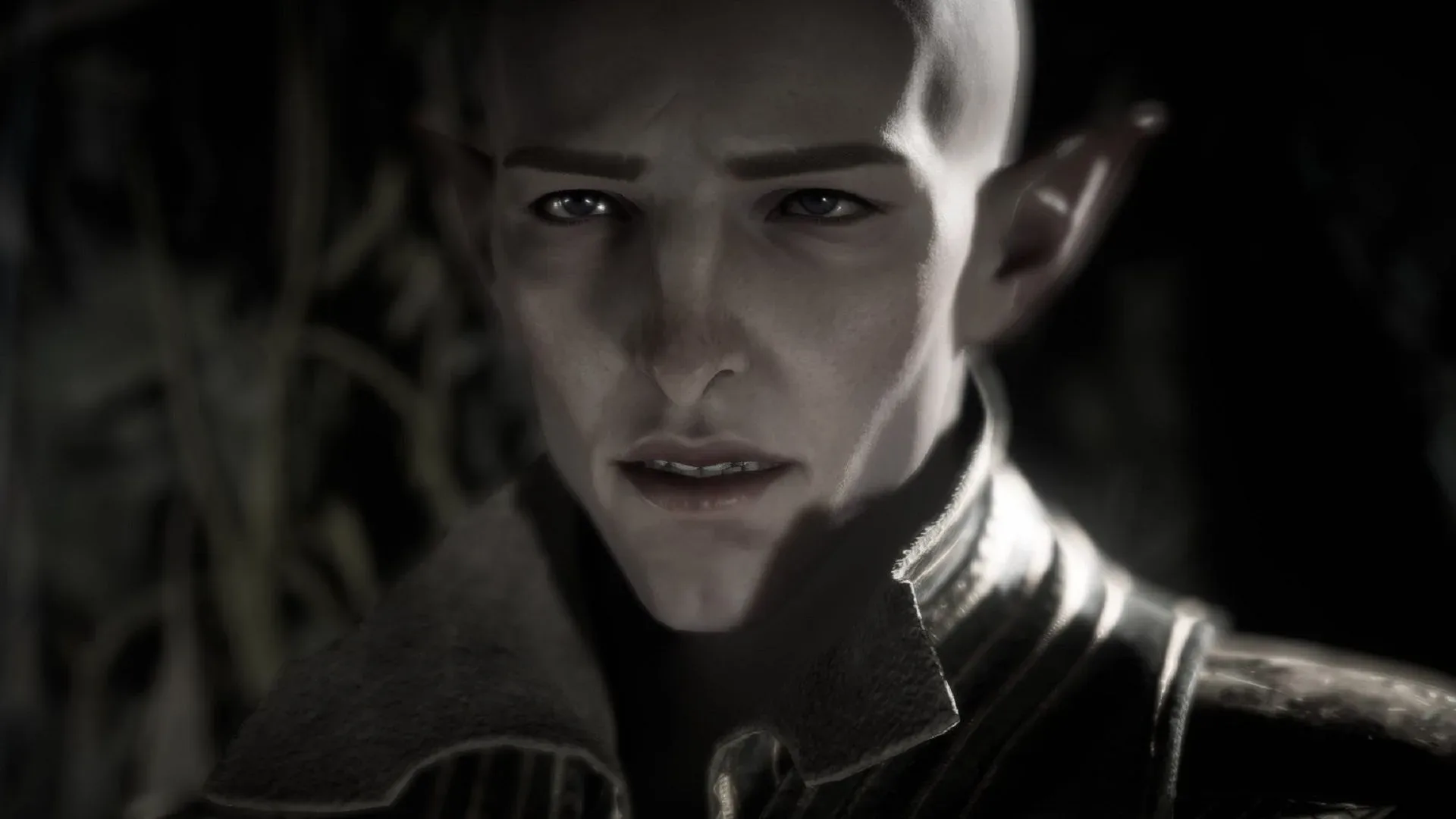
Larian Studios has an enviable problem: after Baldur’s Gate 3 became a landmark role-playing game, virtually anything the studio does next will arrive carrying a spectacularly oversized backpack full of expectations. Its return to Divinity, the series it built itself rather than a licensed Dungeons & Dragons world, is therefore more than a simple sequel-shaped decision. It is a question of audience, identity, and whether a studio can walk back into its own house after millions of new visitors learned to love it through somebody else’s front door.
Mark Darrah, the former BioWare executive producer whose credits include Dragon Age: Origins, Dragon Age 2, and Dragon Age: Inquisition, has described that choice as a risk. Speaking on The Examined Game podcast, Darrah raised a particularly useful question: did Baldur’s Gate 3 change Larian’s creative center of gravity, intentionally or otherwise? And if it did, is the place the studio reached with Baldur’s Gate 3 where it wants to remain?
That is not an accusation that Larian has somehow forgotten how to make Divinity. Quite the opposite. The concern is that enormous success can alter the relationship between a developer and its players. A studio can retain its habits, its staff, its humor, its love of systemic chaos, and its appetite for sprawling RPG problems, while the public’s idea of what that studio is changes almost overnight.
For players whose only Larian experience is Baldur’s Gate 3, Divinity may not automatically read as the expected destination. The newly teased chapter has been presented with a fiery, grim tone associated with the studio’s own fantasy setting. That is recognizable territory for longtime Divinity followers. But it could be a sharp turn for people who arrived primarily because they wanted a Dungeons & Dragons adventure, its familiar setting, its rules vocabulary, or its particular cast of party dynamics.
The audience question behind a return to Divinity
There is a subtle difference between a studio’s established identity and the identity a breakout hit gives it in the public imagination. Baldur’s Gate 3 did not emerge from nowhere; Larian had years of Divinity work behind it. Still, the scale of Baldur’s Gate 3 means the company now has many fans who may associate Larian first with Forgotten Realms lore, recognizable D&D classes, and a specific licensed universe.
Divinity does not need to imitate Baldur’s Gate 3 to deserve those players’ attention. In fact, trying to recreate every surface-level feature of the 2023 success simply because it was successful would risk making the new game feel like an anxious corporate séance: everyone gathered around the table asking the previous hit to move the furniture one more time. The smarter question is whether Larian can clearly communicate what Divinity offers on its own terms.
Darrah’s point is not that every Baldur’s Gate player will be confused or disappointed. Plenty of people are likely to follow Larian because they value the studio’s style, not merely the license. But the potential disconnect is real. A player who knows the developer only through Baldur’s Gate 3 may look at Divinity’s trailer and wonder where the familiar landmarks went. That reaction would not mean the trailer is misleading or that Divinity is somehow less authentic. It would simply show how dramatically the studio’s audience expanded.
It is the sort of expectation-management issue that can make a sequel announcement feel like a group project where half the class arrived from a different course. The assignment may be perfectly clear to Larian and to longtime Divinity fans. The challenge is explaining it to the newcomers without acting as though their interest is a mistake.
Community identity is never fixed, particularly after a game reaches far beyond its original fan base. Players who love one entry may want more of its systems, characters, setting, tone, or freedom. Those desires can overlap, but they are not identical. The broad appeal of role-playing games also makes this messier: one person may be seeking tactical combat, another romanceable companions, another an enormous reactive story, and another an opportunity to turn an innocent-looking crate into a weapon of unreasonable ambition.
For a reminder that game communities are built around shared behavior as much as individual preferences, consider the unwritten rules of couch multiplayer. Even in a far smaller social setting, people bring assumptions about what play is supposed to look like. A studio dealing with a massive new audience faces that same basic phenomenon on a much grander scale.
Why Darrah sees value in Larian’s structure
Darrah’s comments were not only a warning. He also highlighted a structural choice he sees as a strength: Larian concentrating on one major thing at a time. That approach carries risk, since an entire studio’s momentum and future can become tied to a single project. If the game stumbles, there is no parallel franchise ready to soften the blow.
Yet Darrah argues that the focus can preserve a company’s core. In contrast to an organization supporting multiple giant series at once, a single-project model reduces the chance that different teams slowly develop into separate creative organisms. In his view, studios can have trouble when those diverging priorities eventually need to be pulled back together.
The observation naturally invites comparison with BioWare’s past experience operating both Mass Effect and Dragon Age. Darrah’s concern is not that working on multiple franchises is inherently doomed. Many developers do it. Rather, a company can become fragmented when separate projects, production needs, and creative cultures evolve alongside one another for years. At some point, leadership may be left trying to reconcile distinct versions of what the studio is good at, what it wants to make, and what its audience expects.
Larian’s concentration does not eliminate difficult decisions. A studio centered on one enormous RPG still has to balance technical demands, story ambitions, staffing, production timelines, and fans who will inspect every trailer frame as if it contains the combination to an inherited vault. But a unified focus may make the decisions more coherent. The same organization is not simultaneously trying to maintain two large franchise identities that could pull in different directions.
That coherence is particularly important after a breakout success. The easy move is to treat Baldur’s Gate 3 as a permanent template and build a company around chasing its exact silhouette. Larian’s return to Divinity suggests a different calculation: the studio may be willing to accept that some people came for Baldur’s Gate specifically, while betting that its own world and creative voice can stand in the brighter spotlight.
A risk does not mean a mistake
Calling the move risky should not be confused with predicting failure. In games, risk is often merely the gap between what a company is known for now and what it intends to prove it can be next. Larian has a pre-existing history with Divinity, so this is not an untested leap into a genre or setting with no foundation. The unusual factor is the size and composition of the audience watching.
Darrah’s praise is rooted in that distinction. He recognizes that Larian is making a choice that could create friction among a portion of its newer fans, while also seeing discipline in the way the studio is organizing itself. The trade-off is straightforward: a narrower focus creates higher stakes, but it may also protect clarity of purpose.
There are obvious examples of why studios fear these crossroads. Darrah referenced the problems associated with Mass Effect: Andromeda and Dragon Age: The Veilguard as outcomes Larian will want to avoid. That does not make those games simple cautionary labels or reduce their development histories to one organizational lesson. It does underline how difficult it can be for major RPG makers to satisfy legacy expectations while adjusting to changing teams, technology, markets, and player communities.
For Larian, the immediate task is not to guarantee that every Baldur’s Gate 3 player becomes a Divinity devotee. No game can make that promise honestly. Its challenge is to show what the next Divinity is, why the studio wants to make it, and what parts of Larian’s identity carry forward even when the Dungeons & Dragons logo does not.
That kind of clarity matters across the wider creative industry, where teams are regularly asked to scale up without becoming unrecognizable. The broader discussion around how creators organize technology, audiences, and shared experiences can be seen in this look at immersive media’s push toward shared spaces and stronger storytelling. The tools and medium differ, but the central pressure is familiar: growth is useful only if a team can still identify what it is trying to make.
Larian’s next Divinity will eventually have to answer Darrah’s questions in the only way games can: by becoming a game players can see, understand, and judge for themselves. Until then, the useful takeaway is that returning to one’s own series after a generational licensed hit is neither an automatic victory lap nor a retreat. It is a deliberate gamble on creative continuity. And in an industry that often mistakes repetition for safety, that may be the most Divinity-like move available.