EA Sports has put a new name on its American football ambitions: Project Gridiron, described as a “social-first open-world experience” now in development. That short description is the important part—and, for now, almost all there is to work with.
The project appears to sit apart from EA Sports’ established Madden and College Football games. It is not yet clear whether it will use professional or college licensing, feature a story-driven career, operate as an online shared space, or arrive alongside either annual football series. EA Sports has said that more information on Project Gridiron is expected in the coming months.
Even without those answers, the wording indicates a potentially meaningful change in how a major American football game could be structured. Traditional football games largely center on scheduled matches, season management, franchise decisions, card-based collection modes, or a player’s progression through a career. An open-world, social-first game suggests that the activity between matches may be as central as the matches themselves.
What EA Sports has actually confirmed
Project Gridiron is a new project from EA Sports’ American Football team. EA characterizes it as a social-first open-world experience. It is separate enough in the current description to be treated as something new rather than a named Madden or College Football feature.
That is the complete confirmed foundation. The project does not have a release date, announced platforms, a price, a roster of athletes, a licensing list, gameplay footage, or a defined game mode. It also has not been confirmed as a replacement for Madden or EA Sports College Football.
Keeping that boundary clear matters. “Open world” can mean several things in games, from a navigable hub linking activities to a larger explorable environment. “Social-first” similarly points to an emphasis on player interaction, but does not establish exactly how people will gather, compete, communicate, or progress. Those terms convey direction, not a full feature list.
EA Sports is framing Project Gridiron as a brand-new, social-first open-world experience for its American Football team.
Why “social-first” is the key phrase
In this context, social-first most plausibly means that interaction with other players is being considered early in the design rather than being treated as an optional extra attached to isolated matches. That could involve shared spaces, cooperative activities, competitive events, visible player avatars, or systems that encourage groups to return together. None of those components has been announced, so they should be regarded as possibilities rather than promises.
Related coverage includes EA Sports Reveals Project Gridiron, a Social-First Open-World Football Game.
The practical implication is that Project Gridiron may be trying to broaden the rhythm of a football game. Rather than simply selecting a mode, playing a game, and returning to a menu, players could potentially have a persistent place to meet and choose activities. Persistence, in game-design terms, means the world or a player’s identity can continue across sessions. Whether Project Gridiron will have that kind of persistent world is not known.
EA Sports’ description invites comparisons to basketball games that include online social spaces, but comparison is not confirmation. Project Gridiron may take inspiration from that general model, pursue a more limited hub structure, or approach football social play in another way entirely. Until EA shows the game, the label is best understood as a statement of intent.
Open world does not automatically mean open-field football
There is an obvious joke waiting here: an open-world football game sounds like someone finally removed the stadium walls and gave the quarterback a map marker. But “open world” is more likely to describe the game’s structure around football than a promise of full matches played across an unrestricted landscape.
American football is unusually dependent on tightly controlled space, rules, formations and repeated plays. A game that wants to deliver recognizable football will still need clear systems for line play, passing, coverage, tackling, clocks and possession. An open-world framework could instead be used to connect drills, challenges, social encounters and organized games without changing the sport’s basic on-field rules.
That creates a design challenge. The project must give players enough freedom to make a social space feel worth visiting while preserving the clarity and competitive integrity football demands. Too much friction before a match could make the world feel like a lengthy route to the sport. Too little to do away from the field could leave “open world” feeling like a decorative lobby with very good parking.
Where Madden and College Football fit—for now
The existence of Project Gridiron naturally raises questions about EA Sports’ existing football lineup. Madden has previously experimented with narrative-focused campaigns before moving its emphasis back toward a broader career format for players seeking single-player progression. College Football remains a separate pillar, and EA Sports has previously indicated that another College Football release is expected next year.
At present, there is no confirmation that Project Gridiron will replace either series, fold into Madden, or change the usual release approach. It could be an additional product aimed at a different audience and play pattern. It could also represent a new direction whose relationship to the established games will only become clear once EA provides fuller details.
That ambiguity has business and player-facing consequences. Three games under one publisher’s American football umbrella could serve distinct interests, but only if their identities are sufficiently clear. A simulation focused on professional football, a college-centered game, and a social open-world project may appeal to different groups. If their features overlap too heavily, players may reasonably ask which game is meant to be their long-term home.
EA’s broader portfolio plans have also highlighted continued investment in sports alongside other major franchises, as outlined in EA’s wider portfolio strategy. Project Gridiron is one early sign that sports investment is not limited to repeating familiar annual formats.
Licensing remains one of the biggest unanswered questions
Football games are shaped heavily by rights. Player likenesses, team names, uniforms, stadiums and other real-world elements can determine what a game is able to present. Project Gridiron has not announced any licensing arrangements, so there is no basis to assume it will share the same real-world material as Madden or College Football.
This is particularly relevant because College Football faces its own reported pressure. Rising costs involving name, image and likeness rights—often shortened to NIL—along with other licensing and development expenses have reportedly created internal concern. NIL refers to a person’s ability to control and be compensated for commercial use of their identity, including their name, image and likeness.
The same reporting has said College Football sales have declined year over year, prompting concern among some developers about the series’ longer-term outlook. Those reports do not establish that Project Gridiron is a replacement, and EA has not said that it is. Still, a new football project arriving during debate about the costs and sustainability of licensed college sports makes the company’s experimentation notable.
Fight Night’s return provides context, not a connection
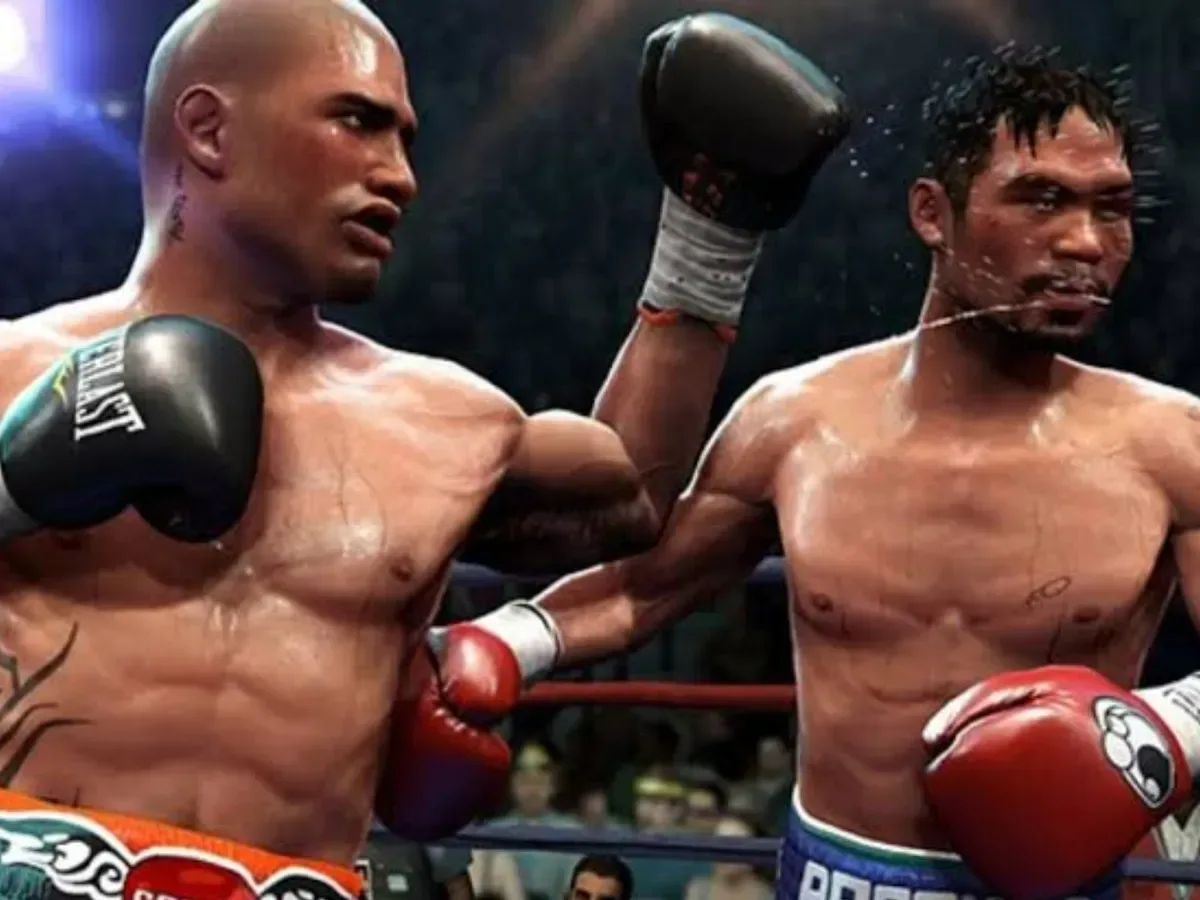
EA’s future-looking update also reaffirmed plans to bring back Fight Night, with the boxing series described as being in pre-production and drawing on capabilities from EA’s simulation fighting team. Pre-production is the early phase in which a game’s concept, scope and planning are developed before full-scale production.
Fight Night and Project Gridiron should not be conflated. They are different projects with different sports and different stated development contexts. Their shared significance is that EA Sports is presenting both as additions to, rather than simple continuations of, its known catalog. For Project Gridiron, that reinforces the idea that the unusual open-world description is deliberate—not merely a new annual-mode label.
What to watch for next
The next reveal needs to answer more than the basic question of where players walk around. The crucial details are about purpose: what players do in the world, how football games are organized, whether solo players have a meaningful path, and how much of the experience depends on online social activity.
- Football format: Whether it uses full 11-on-11 games, smaller formats, drills, or a mix of activities.
- World structure: Whether the open world is a shared online setting, a hub, or something else.
- Progression: How player advancement works and whether it is tied to a created athlete, teams, skill challenges, or social participation.
- Licensing: Whether real players, teams, college programs or fictional identities form the game’s foundation.
- Relationship to existing series: Whether Madden and College Football remain distinct annual offerings alongside it.
- Platforms and timing: Neither has been announced.
For now, Project Gridiron is an intriguing outline rather than a finished playbook. EA Sports has confirmed a new kind of football project and given it two loaded descriptors: social-first and open-world. The company has not yet explained how those ideas will work once the ball is snapped. That explanation, expected in the months ahead, will determine whether Project Gridiron is simply a fresh mode of access to football—or an attempt to make the space around the sport part of the game itself.