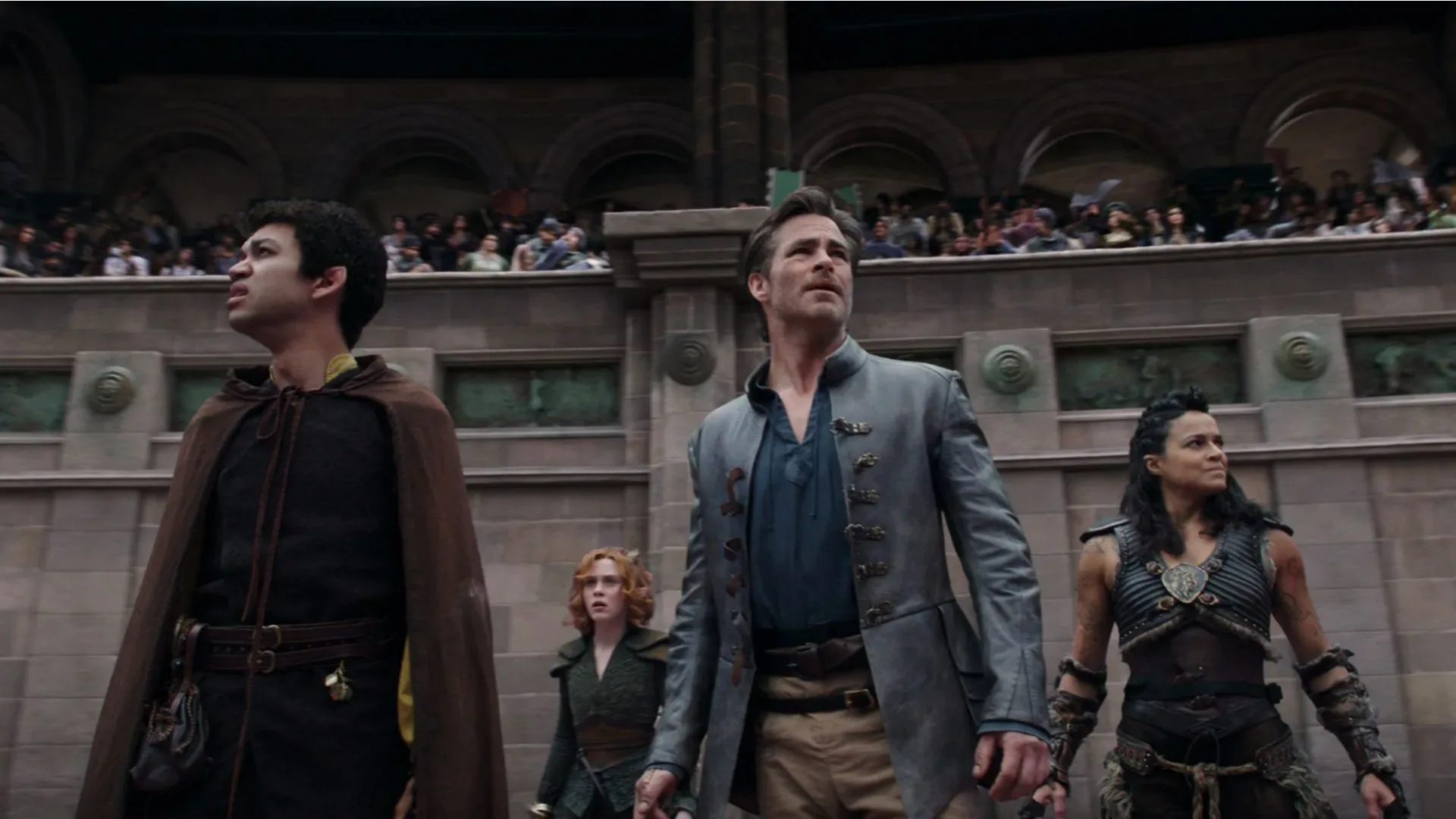
The party has not been wiped out. It is, however, waiting in the tavern while someone tries to find a producer willing to pick up the tab.
A sequel to Dungeons & Dragons: Honor Among Thieves remains a possibility, with a completed script already in place. But its route to the screen is uncertain because the project needs a new studio partner. Co-director John Francis Daley discussed the situation on The Discourse Podcast, saying Hasbro remains supportive of the idea if the company can work out an arrangement that makes the film viable.
That distinction matters. A screenplay being finished means there is material for a potential follow-up, but it does not mean cameras are about to roll, a cast has been reconvened, or a release date exists. The sequel remains contingent on the practical business question at the center of many big fantasy projects: who will finance and distribute it?
Daley also made clear that the filmmakers are proud of the script while acknowledging that it may never be produced. For fans, that leaves a cautiously hopeful answer rather than a hard confirmation. There is a sequel-shaped treasure chest in the dungeon; the key is a studio deal.
A strong reception did not guarantee a sequel
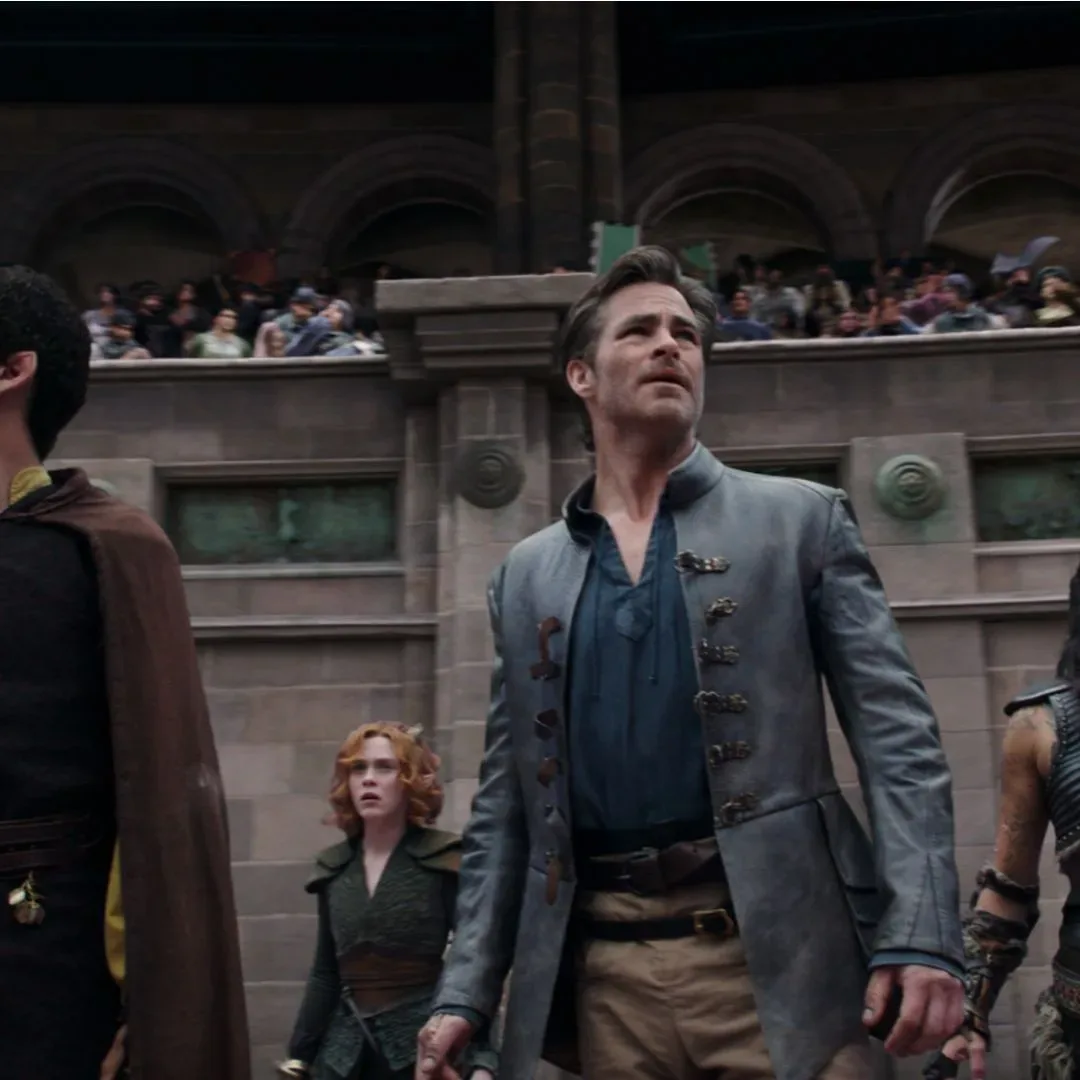
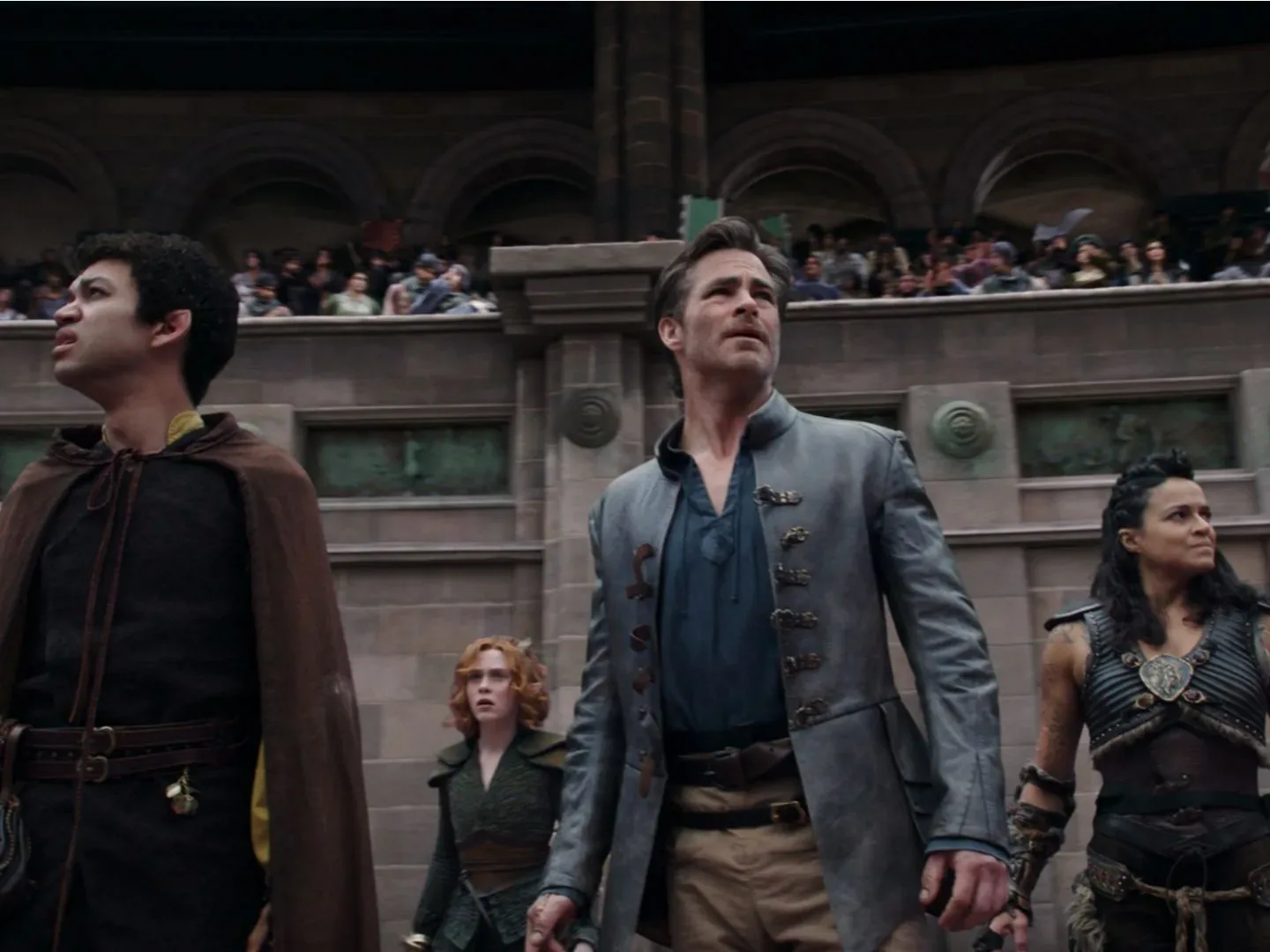
Honor Among Thieves arrived in 2023, written and directed by Daley and Jonathan Goldstein. It adapted the long-running tabletop role-playing universe with a notably comic, team-oriented adventure built around Edgin Darvis, a bard played by Chris Pine, and Holga Kilgore, a barbarian played by Michelle Rodriguez.
Their quest brings together an unusually mismatched party: Justice Smith as Simon Aumar, a half-elf sorcerer whose wild magic causes no shortage of complications; Sophia Lillis as Doric, a tiefling druid; Hugh Grant as rogue Forge Fitzwilliam; and Regé-Jean Page as paladin Xenk Yendar. The story sends its heroes after an ancient, powerful relic, with betrayals, escapes, monsters, and the sort of plans that become much less reliable once the dice metaphorically hit the table.
The film has a 91% score on Rotten Tomatoes and earned $205 million worldwide against a reported $150 million budget. Those figures help explain the strange position the sequel occupies. The first film was well received, and its ensemble gave audiences a version of fantasy adventure that could be sincere without taking itself too seriously. Yet a $150 million production budget sets a high commercial threshold, especially once marketing and distribution costs enter the calculation.
The available information indicates Paramount had initially ordered a sequel but later moved away from it. There is no stated certainty about precisely how any studio viewed every part of the financial outcome, but the basic obstacle is clear: positive reviews and audience goodwill are not always enough to secure another expensive franchise installment.
That tension is familiar to game-adjacent entertainment. Players and tabletop groups can fall in love with a world because of its characters, rules, imagination, and endlessly expandable stories. Studios must also make a spreadsheet believe in owlbears. The spreadsheet is notoriously difficult to charm.
Why the finished script is meaningful—and limited
A completed screenplay is a real asset for a film looking for a new home. It gives a prospective studio a concrete proposal rather than only a broad intention to make “another Dungeons & Dragons movie.” Executives can evaluate the story, scope, likely returning characters, and the kind of production commitment it may require. It also suggests Daley and Goldstein had progressed beyond idle sequel talk.
Still, a script does not solve the costly parts of translating the Forgotten Realms into a large-scale live-action movie. Fantasy effects, elaborate creatures, action staging, location work, costumes, and a recognizable ensemble can all push a project toward a major budget. A studio partner would need to decide whether the potential audience and franchise value justify that investment.
Daley’s comments keep expectations appropriately grounded. He expressed optimism about Hasbro’s belief in the sequel, but also pointed to the financial realities surrounding the decision. No new production company was named, no casting commitments were announced, and no timetable was given. The most accurate status is simple: the sequel script is done, its makers hope it finds a path forward, and the project needs a partner before it can advance.
That is more encouraging than a declaration that the sequel has been abandoned forever, but it is not the same as an official green light. For now, fans should treat any idea of a return for Edgin, Holga, Simon, Doric, Forge, or Xenk as possibility rather than promise.
The wider Forgotten Realms challenge
The difficulty is not limited to this one screenplay. A separate Forgotten Realms series associated with Shawn Levy was ordered at Netflix and later cancelled amid cost concerns. Taken together with the uncertain status of the Honor Among Thieves sequel, that history underlines how expensive this corner of fantasy can be to adapt.
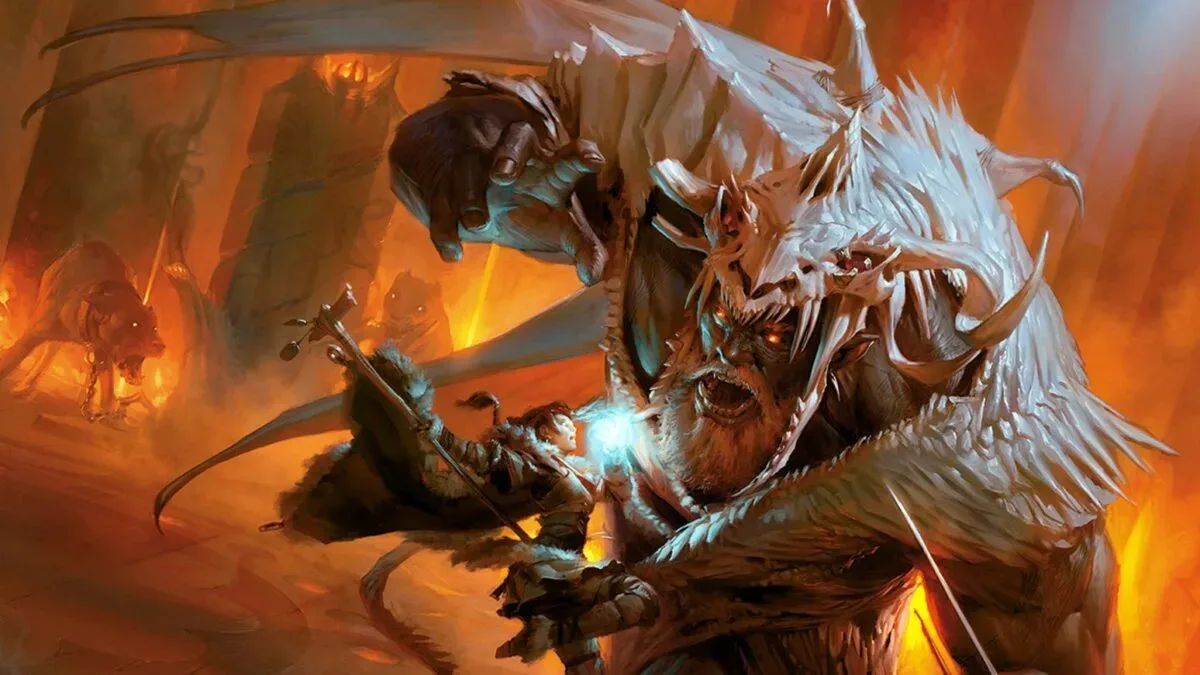
That expense is understandable. Dungeons & Dragons is not built around one fixed hero with one fixed visual identity. Its appeal comes from an enormous world of locations, peoples, creatures, magic, classes, and wildly different tones. A campaign can be grand mythic drama one week and a suspiciously elaborate argument about whether a mimic is legally furniture the next. Capturing that range on screen can require substantial resources, particularly when the production aims for the spectacle expected from theatrical fantasy.
It also creates a balancing act for any future studio. An adaptation must be welcoming to viewers who have never rolled initiative while offering enough of the setting’s flavor for longtime players. Honor Among Thieves was designed around that balance, using party chemistry and an accessible caper structure rather than assuming a viewer arrived with a rulebook under one arm. Its ensemble rhythm is part of what made it distinctive—an energy fans of couch multiplayer’s unwritten rules may recognize immediately, right down to the friend whose bold plan forces everyone else to improvise.
What a sequel would have to preserve
Any sequel that does find financing would face an audience expectation shaped by the first film’s particular personality. The 2023 movie was not merely a generic fantasy effects showcase wearing the D&D logo as a wizard hat. Its hook was the chemistry of a party of imperfect people, each useful in some ways and disastrous in others.
Edgin’s charm and improvisational instincts worked because Holga provided steadfast force and clarity. Simon’s uncertainty gave his eventual moments of competence weight. Doric brought a different perspective and unusual capabilities to the group. Even the supporting cast helped establish a world where classic tabletop archetypes could be played earnestly, affectionately, and sometimes as a wonderfully blunt joke.
A follow-up would not necessarily need to repeat the exact same mission or even center every familiar figure in the same way. But it would likely need to retain that sense of collaborative chaos: a story where success comes less from one invincible chosen hero than from a group somehow turning conflicting abilities into progress. It is the narrative equivalent of a campaign where the party survives because everyone contributes, even if the contribution is occasionally “accidentally releases the dangerous thing.”
There is also value in the franchise’s open-ended potential. The tabletop game has always supported different parties and different corners of its settings. A studio partner could see that flexibility as an advantage, though it would still need a clear creative approach and a sustainable financial plan. As broader entertainment businesses continue to weigh big-budget projects carefully, the continuing search for workable formats and partners remains central to the industry conversation, much like the questions around new technology, shared spaces, and storytelling experiments.
Where fans can revisit the first adventure
While the sequel searches for its next roll of initiative, Dungeons & Dragons: Honor Among Thieves is currently streaming on Paramount Plus. It remains the clearest indicator of what the existing creative team brought to the property: a big fantasy adventure that understood the appeal of both heroic stakes and a party member making a profoundly questionable decision with complete confidence.
The finished sequel script means there is more than wishful thinking behind the possibility of another film. Hasbro’s support, as described by Daley, also means the property’s owner has not lost interest in continuing the story. But the next move belongs to the business side of the quest. Until a studio partner steps forward, the sequel is best understood as prepared but unproduced—waiting for the campaign to resume.