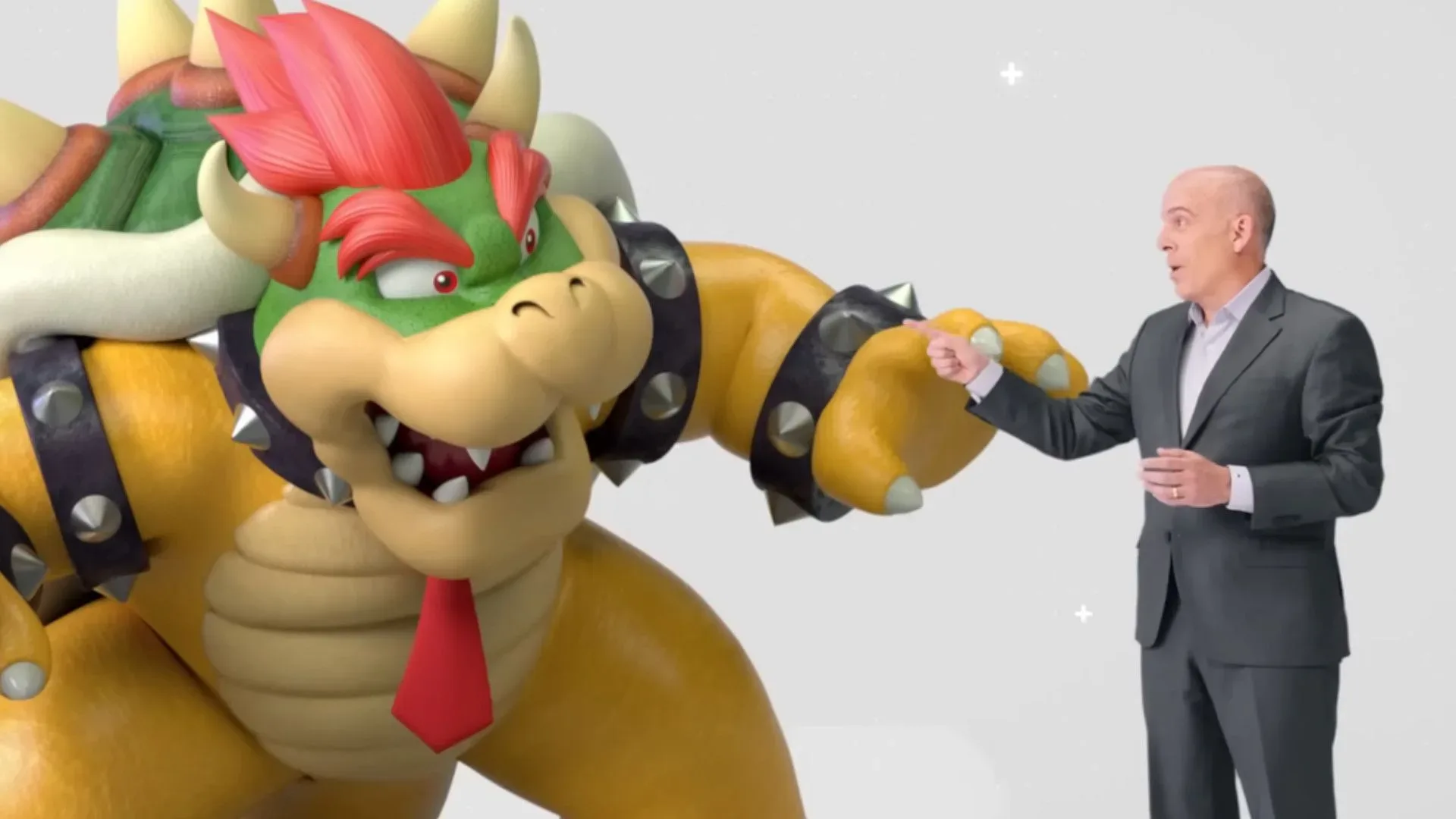
Former Nintendo of America president Doug Bowser has apologized after an AI-generated Thanksgiving image he shared drew sharp criticism online. The now-deleted post depicted Bowser at a holiday table alongside Nintendo’s Bowser and Donkey Kong, but viewers quickly identified it as machine-generated artwork and objected to a high-profile former games executive promoting it.
Bowser’s follow-up did not fully settle the dispute. He wrote:
“Apologies if I offended people with my AI generated post. It was sent to me by a friend and it made me smile.”He also said the underlying message remained a wish for a happy Thanksgiving, while referring to critics as “haters.” That wording became a substantial part of the response, with commenters arguing that people raising concerns about AI imagery and creative labor were being dismissed rather than heard.
A holiday post became a larger argument about AI art
The immediate facts are relatively simple: an AI image was posted, criticism followed, and the image was deleted. The reaction, however, reflects why generative AI images can create a bigger reputational problem than a routine social-media misstep—especially when the person posting has close associations with a company celebrated for its characters, visual craft and game design.
Generative AI is a broad term for systems that create new text, images, audio or other material from prompts. In this case, the relevant issue is AI image generation: software produces a picture based on patterns learned from large collections of data rather than an artist drawing or painting the finished work in the traditional sense. Critics often use “AI slop” as a deliberately dismissive label for low-quality or quickly produced synthetic media, particularly when it appears to substitute for commissioned creative work.
That label was central to the pushback here. The criticism was not simply that the Thanksgiving image looked awkward or contained recognizable signs of AI generation. People also challenged the choice to circulate it at all when artists and other creative workers have voiced ongoing concerns about generative tools being used in place of human-made illustration.
Bowser said the image had been sent by a friend and that it made him smile. That explanation frames the original share as a personal, lighthearted decision rather than a formal statement about Nintendo, AI policy or the creative industry. Still, online audiences rarely separate the personal from the professional quite so neatly when the poster is a well-known former leader of a major game-company division.
Why the language of the apology mattered
An apology can address the action that prompted criticism, but its framing can determine whether people see it as an acknowledgment or a rebuttal. Bowser did apologize for any offense caused by the AI post. Yet the reference to “haters” gave critics a second issue to debate.
For many respondents, the point was not that a cheerful Thanksgiving greeting was inherently objectionable. The concern was that a former Nintendo of America president had amplified imagery made with a tool that is contentious among artists. Describing objectors as “haters,” they argued, reduced a good-faith labor and creativity concern to ordinary internet hostility.
Related coverage includes Doug Bowser apologizes for AI Thanksgiving post, calls critics ‘haters’.
This distinction matters. Online backlash can include everything from insults to detailed criticism, and public figures often encounter both at once. But treating the entire reaction as hostility can make a response feel dismissive to people who are specifically asking for human artists to be valued and hired. In this case, that is why the follow-up became nearly as scrutinized as the deleted image.
One response characterized the situation as tone-deaf given Nintendo’s status as a creatively focused AAA game company. Another focused on the use of “haters,” arguing that criticism of AI use was not the same thing as bad-faith antagonism. Those reactions show the practical communication lesson: intent may explain a post, but it does not erase how a public audience interprets it.
Bowser’s Nintendo role gives the post added weight
Doug Bowser became president of Nintendo of America in 2019, following Reggie Fils-Aimé’s retirement. He led the North American division through most of the Nintendo Switch era before leaving the position in 2025. Devon Pritchard succeeded him and is the current president of Nintendo of America.
That history is important context, but it should not be overstated. Bowser is no longer Nintendo of America’s president, and the Thanksgiving post was his own social-media activity. Nothing in the available information indicates that the image was commissioned by Nintendo, made for an official campaign, or represented a company decision.
At the same time, his former position means the post naturally attracts attention from people who connect him with Nintendo’s public image. Nintendo’s characters—including the two used in the picture—are inseparable from the company’s long-running creative identity. A synthetic depiction of those characters therefore lands differently from an anonymous novelty image shared by an ordinary account.
That does not mean every former executive must avoid every AI-created joke or greeting forever. It does mean that visibility changes the stakes. Someone who once represented a major games business will be judged not only on whether a post was intended as harmless fun, but on what it appears to endorse and whose concerns it overlooks.
What this means for public-facing game-industry figures
The episode is a concise example of why “it was only a joke” is often an incomplete response to controversy around generative media. The poster’s personal intention can be sincere. A friend may send an amusing image, and a holiday message may be genuinely kind. But audiences may still reasonably ask whether sharing the image normalizes a technology they believe threatens professional artists’ work.
For game-industry figures, a few practical distinctions are useful:
- Personal sharing is still public signaling. A casual repost can be read as approval of the tool or process behind it, particularly from an account with an established professional following.
- Deleting a post limits further circulation but does not reset the conversation. Once viewers have reacted, a follow-up needs to address the concern plainly if reconciliation is the goal.
- Intent and impact are different questions. Saying an image was meant to be cheerful explains why it was posted; it does not necessarily answer why artists or fans objected.
- Precision beats defensiveness. Acknowledging that critics are concerned about creative labor is more constructive than grouping them under a hostile label.
The broader games business is still figuring out how public-facing people should discuss AI tools without alienating creators and fans. That conversation is not limited to images. AI is also increasingly marketed in consumer devices and productivity products, such as the AI transcription features described in this Plaud Note Pro overview. But the debate shifts when the technology is used to create character artwork tied, even informally, to a major entertainment brand.
The limited facts—and the clear takeaway
There are boundaries to what can be concluded from this situation. The available details do not establish how the friend obtained or generated the image, what AI service was used, whether Bowser knew its origin before posting, or whether he intends to change how he handles AI-made material. They also do not indicate any Nintendo involvement.
What is clear is that Bowser removed the image after backlash and issued an apology that paired regret with a defense of the original holiday sentiment. The phrase “haters” then intensified the disagreement because it appeared to characterize objections to AI imagery as simple hostility.
For audiences concerned about creative work, the controversy is less about one imperfect Thanksgiving picture than about the standards public figures set when they share synthetic artwork. For public figures, it is a reminder that a short post can trigger a serious conversation when it touches the relationship between technology, authorship and the people who make the art games depend on.