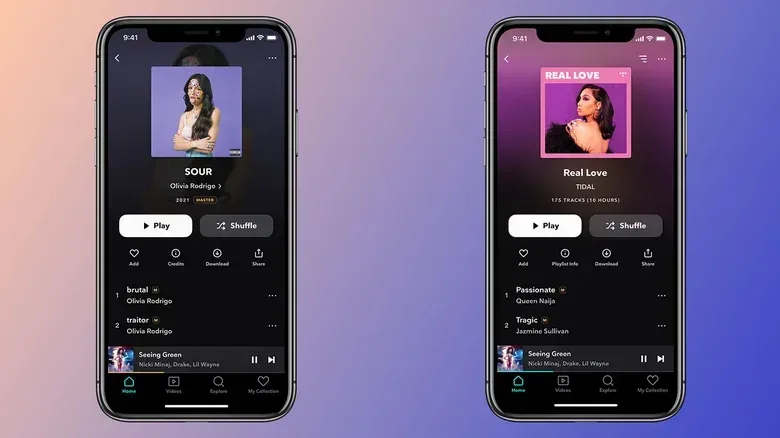
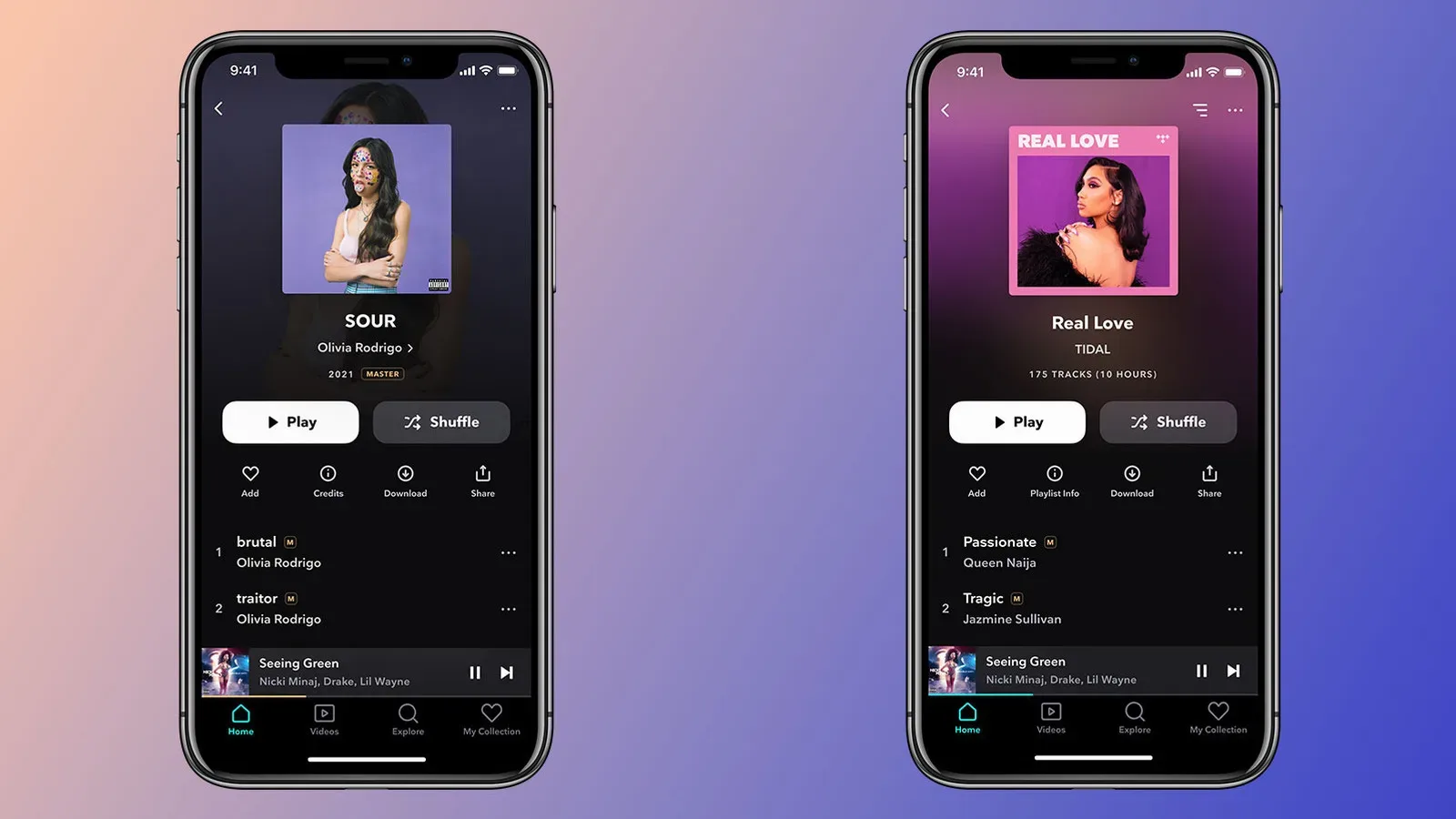
Tidal is preparing one of the clearest platform-level responses yet to the flood of AI-made music: from December 9, the streaming service says it will remove tracks that are wholly generated by AI. The company expects the change to erase roughly 29 million tracks already in its catalog, while its intake systems may reject between 80,000 and 85,000 songs every day.
That is an extraordinary volume, and it explains why Tidal is moving beyond its earlier approach of labeling and demonetizing fully AI-generated material. In the company’s figures, 43% of tracks uploaded during the past 90 days were flagged as AI-generated. Platform lead Robert Anderson also said that 96% of AI-generated songs receive no plays at all.
The policy is consequential not merely because of the number of files involved, but because it draws a hard line between using technology in music-making and submitting a finished recording produced entirely by generative AI. Tidal has previously identified tracks as either AI-generated or AI-assisted. Its new removal policy is directed at the wholly generated category, rather than presenting every use of AI as automatically disqualifying.
What Tidal is changing on December 9
Tidal’s prior policy had two main components for fully AI-generated songs: no monetization and an identifying label. That combination aimed to make the origin of a song visible and to stop such tracks from generating royalties. It did not, however, prevent them from entering or remaining in the catalog.
The December 9 change escalates from restricting compensation to removing eligible tracks entirely. In plain terms, a song that is deemed wholly AI-generated will not be a Tidal catalog item for listeners to find, save or play. The company also expects the rule to work at the upload stage, rejecting a very large daily number of incoming submissions.
The distinction matters. Demonetization means a track can remain accessible but is prevented from earning revenue through the service. Labeling supplies provenance information, telling listeners that AI was involved in the creation. Removal is a catalog and distribution decision: the track is no longer offered on the platform. Tidal’s new position uses the strongest of those tools for fully generated material.
There is still an important boundary in the wording. “Wholly AI-generated” does not necessarily mean the same thing as music that uses an AI tool somewhere in a human-led workflow. A musician might use software assistance while writing, editing, arranging or otherwise producing a recording. Tidal’s earlier AI-assisted label shows that it has treated assistance and full generation as different categories. The reported ban is aimed at the latter.
Why the submission numbers matter as much as the 29 million-track purge
A figure of 29 million removals will understandably grab attention. But the estimate of 80,000 to 85,000 daily rejections may be the more revealing measure of the challenge ahead. Removing an existing backlog is one task; stopping it from instantly rebuilding is another.
Related coverage includes Tidal Plans to Remove Fully AI-Generated Music From Its Catalog.
Streaming catalogs are not curated like a limited physical release schedule. They are huge, continuously updated databases. When a platform receives a high volume of material that earns little or no listening, every additional upload can make catalog management, fraud prevention, search quality and recommendation quality more difficult.
Tidal’s statistic that 96% of AI-generated songs receive zero plays is central to its rationale. It suggests that much of this inventory has not found an audience on the service. That does not settle wider debates over AI and creativity, nor does it prove anything about every individual track. It does show why a platform may judge the scale of uploads to be an operational problem rather than simply a matter of giving listeners more choice.
The company’s 43% upload figure is similarly striking. It refers to tracks flagged as AI-generated over a 90-day period, not necessarily to 43% of all music currently available or 43% of all listening. Still, it indicates that the supply side of streaming can be transformed very quickly when generative tools make it easier to create and submit enormous quantities of recordings.
A different answer to a platform-quality problem
The phrase “AI music” can flatten several separate issues into one argument. There are questions about authorship, listener transparency, rights and compensation. There is also the less glamorous but immediate platform concern of volume: whether a service can identify, organize and surface worthwhile material when a large portion of uploads may be machine-generated at scale.
Tidal’s policy is an attempt to address the volume problem by setting a content boundary. Its previous labels would have helped people understand what they were encountering, while demonetization was designed to limit the economic incentive to upload fully generated tracks. The new decision implies that those measures did not adequately contain the flow.
There is a practical consumer angle, too. Recommendation systems must decide what to put in front of people from a huge pool of songs. If a service is inundated with recordings that gain no plays, it risks expending effort on material that has little evidence of listener demand. Tidal has framed its stance as one that should appeal to both artists and audiences, and the zero-play figure is its evidence for why the catalog reduction may not remove much that listeners actively seek out.
This does not mean detection will be simple. The supplied information establishes the categories Tidal is using—AI-generated and AI-assisted—and the new consequence for wholly generated tracks. It does not detail the specific technical methods used to flag a recording, nor does it describe an appeal process for disputed classifications. Those are meaningful implementation questions, particularly when a policy turns on the difference between complete generation and assistance in a creative process.
How other services have approached AI-made tracks
Tidal is positioning itself as the first digital streaming provider, or DSP, to make this move. A DSP is a service that delivers music digitally to listeners, typically through streaming catalogs and apps. Bandcamp is the other named music platform with an outright ban on music “generated wholly or in substantial part by AI,” while major streaming services have generally selected more limited interventions.
Spotify has said it will continue removing “slop and spam” from recommendations, an approach focused on what gets promoted rather than an announced blanket removal of AI music. It has also said people will be able to remix and cover songs using AI. That creates a notably different posture from Tidal’s: constrain low-quality or manipulative material in discovery systems, while still making room for some AI-enabled creation.
SoundCloud has partnered with AI music-creation companies ElevenLabs and Moises. Its policies seek to balance the removal of spam against allowing AI tools to expand. Deezer has introduced a setting that lets listeners hide AI-made music, rather than deleting it from the service. Apple Music’s reported response is labeling AI-made songs.
Each model assigns responsibility differently. A label puts information in front of the listener. A hide option gives the listener a filter. Recommendation controls target visibility and discovery. A removal policy places the decision with the platform itself. Tidal is choosing the last option for wholly generated tracks.
That variation is part of a much broader argument about how platforms should govern generative technology. The debate is not limited to music, as seen in other efforts to build AI-driven products and services, including questions around control in AI agent platforms. In music streaming, though, the immediate pressure is unusually tangible: a catalog can receive tens of thousands of potentially ineligible tracks in a single day.
An especially notable move for a Block-owned service
Tidal has been owned by Block since 2021. The decision stands out because Block is led by Jack Dorsey, who has publicly emphasized the impact of AI tools on how companies operate. Earlier this year, Block cut 4,000 of its 10,000 employees, with Dorsey attributing that decision entirely to AI and arguing that a much smaller team using the company’s tools could do more.
That context makes Tidal’s restriction a useful reminder that “pro-AI” and “pro-AI content everywhere” are not identical positions. A company may embrace intelligence tools for internal operations or product development while concluding that a particular content marketplace needs stricter limits. Tidal’s decision is not a rejection of every AI-assisted creative workflow; based on the scope described, it is a rejection of wholly generated music as catalog content.
What artists and listeners should take from the change
For artists who make music without wholly generative systems, Tidal’s policy may reduce a source of catalog crowding and clarify that fully AI-produced tracks are not eligible to remain on the service. For creators who use AI in narrower ways, the distinction between “assisted” and “generated” becomes especially important. The available details do not spell out where every edge case falls, so creators will need to watch for platform guidance as enforcement begins.
For listeners, the immediate result may be less visible than the headline number suggests. Tidal says 96% of AI-generated songs get no plays, meaning a substantial share of the removed inventory may never have entered regular listening habits. The potential benefit, from the platform’s perspective, is a cleaner catalog and less opportunity for high-volume, low-engagement uploads to interfere with discovery.
For the wider streaming business, December 9 will be a meaningful test. Tidal is betting that labels and demonetization are insufficient when uploads arrive at the reported scale. Its decision turns a debate often framed around disclosure into a firmer question of eligibility: should a wholly AI-generated song be in a streaming catalog at all? Tidal’s answer is no, and its expected removal and rejection totals show how much material that answer will affect.