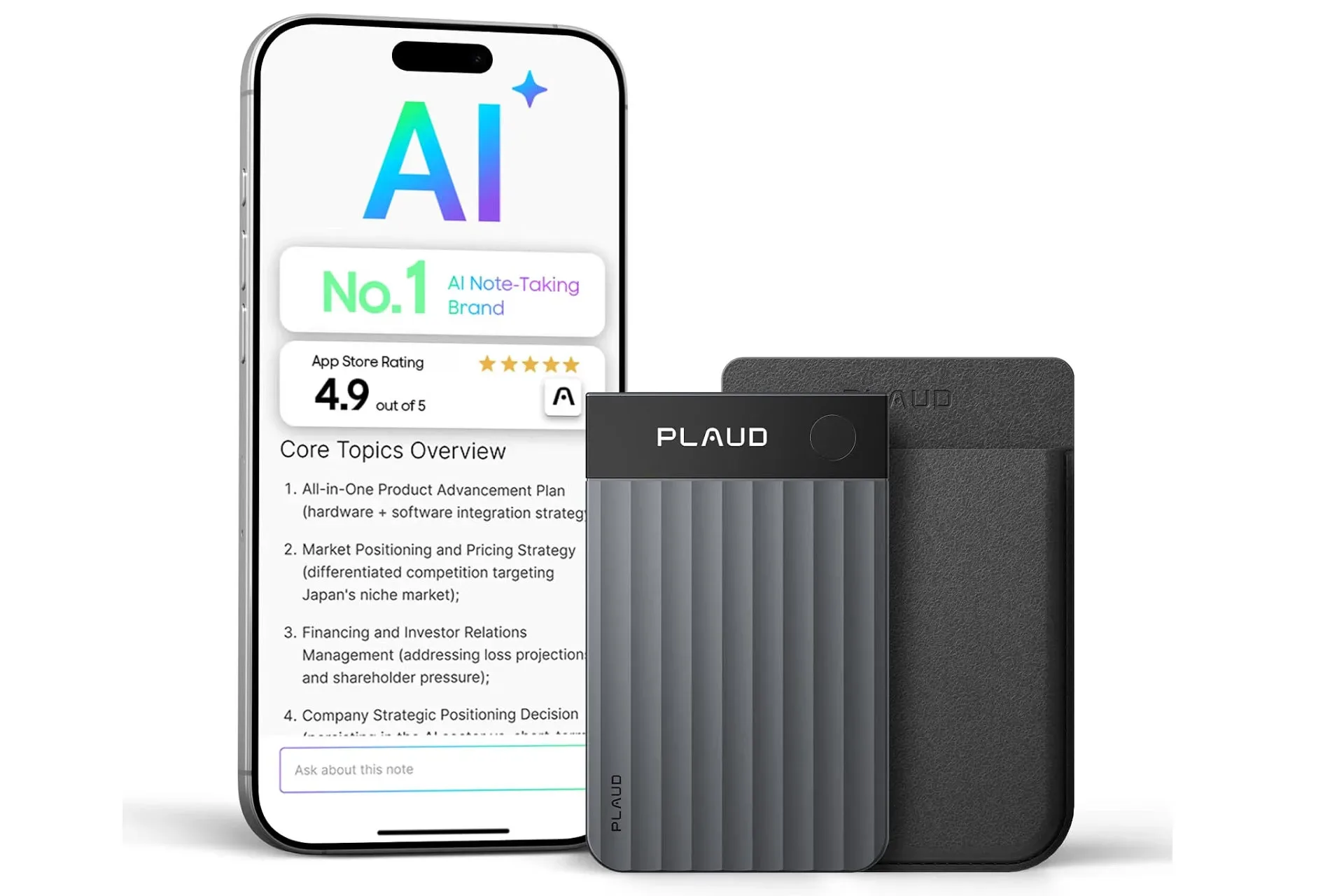
Plaud’s Note Pro AI voice recorder is listed at $149 for Black Friday, a reduction from $189. The portable recorder is positioned as a way to capture conversations without making one person spend the entire meeting looking down at a keyboard. Its headline specifications are four microphones, transcription in as many as 112 languages, 64GB of storage and a claimed maximum of 50 hours of recording in its Endurance mode.
The price cut may be the immediate hook, but the practical question is whether a dedicated recorder makes sense beside a phone or laptop that can already record audio. Plaud’s answer is a purpose-built device designed to be ready at the beginning of a conversation, then turn the recording into a transcript, summary and potentially more polished follow-up material afterward.
What the Note Pro is designed to do
The device weighs 30 grams and is under 3mm thick, making it small enough to keep in a jacket pocket. A magnetic case and ring are included, allowing it to attach to the back of a phone. That detail is less about raw recording quality than reducing friction: a recorder that is packed away, uncharged or forgotten cannot help when a discussion begins.
Plaud says the Note Pro’s four microphones can capture voices from as far as 16 feet away. In the intended use case, that could make the recorder more suitable for a conference table than a device that needs to be placed immediately in front of a single speaker. Distance alone does not guarantee a perfect record of a meeting, however. Room acoustics, multiple people speaking at once and background noise remain important factors when assessing any recording and the transcript that follows it.
The Note Pro is intended for in-person conversations and phone calls. For online meetings held on a computer, Plaud points users to its Desktop app. Taken together, that creates a wider workflow: use the compact hardware when people are physically together or talking by phone, and use the desktop software for computer-based calls.
Transcription, summaries and Plaud Agent explained
After an audio recording is made, the software can transcribe it in up to 112 languages. A transcript is the written version of the spoken conversation. It is useful for searching what was said, checking an exact point later and sharing a record with people who could not attend.
The system can also produce a summary highlighting decisions and next steps. That distinction is worth keeping clear. A summary is an abbreviated interpretation of a conversation, not a replacement for the original audio or a complete transcript. For a consequential meeting, users may want to use the summary as an index, then verify names, commitments, dates and decisions against the underlying record before acting on it.
Plaud Agent extends that workflow by generating drafts of emails, reports or presentations from what was discussed. The appeal is obvious for recurring meeting follow-ups: turning a captured discussion into a starting document could reduce the manual work between a decision and a message sent to the team. The sensible framing is “starting document,” rather than finished deliverable. Generated text should be reviewed for accuracy, omitted context and tone before it goes to colleagues, clients or anyone else who will treat it as an official account.
That review step is particularly important when a meeting includes several speakers, specialized terms or unresolved disagreement. A concise AI-produced action list can be convenient, but concision can also hide qualification and debate. The original recording and transcript remain the best available reference within this product’s workflow when a summary looks incomplete or unclear.
Battery, storage and the recording-minute question
Plaud rates the Note Pro for 30 hours of recording in Enhance mode and 50 hours in Endurance mode. Those are mode-specific ratings, so prospective buyers should not treat the 50-hour figure as an all-purpose guarantee for every setting. What is clear is that Plaud offers a choice between two recording modes with different stated endurance.
The recorder includes 64GB of storage, which Plaud says can hold months of conversations. Its 0.95-inch display shows recording status and remaining battery. A small status display is a modest feature, but it addresses a basic operational problem: knowing whether the recording actually started and whether the device has sufficient charge before the conversation is over.
Storage capacity and transcription capacity are separate matters. The hardware may retain audio, while the service plan determines how many minutes can be processed into transcripts each month. The included Starter Plan covers 300 transcription minutes monthly, equal to five hours. Plaud also offers a Pro plan with 1,200 minutes and an Unlimited plan, both sold separately through the app.
That makes minutes a key part of the purchase calculation. Someone recording a small number of meetings or interviews may stay within the included allowance. A person who wants every lengthy call transcribed, summarized and converted into follow-up material could reach that cap much faster. Before assuming the sale price represents the total long-term cost, it is worth estimating typical monthly recording time and deciding whether the included five hours matches that routine.
Integrations can matter as much as the microphones
The Note Pro connects with Google Calendar, Slack and Notion, while Zapier support can connect it with additional apps. These integrations point toward a familiar work pattern: schedule a meeting, capture it, create a transcript and summary, then move the useful result into the place a team already uses to communicate or track work.
Zapier is an automation service that can link supported apps and services so that information can move between them through configured workflows. In this context, its relevance is flexibility rather than a specific promised automation. Buyers should identify the actual destination they use—such as a calendar, team chat or notes workspace—and make sure it fits their workflow before treating integrations as a deciding feature.
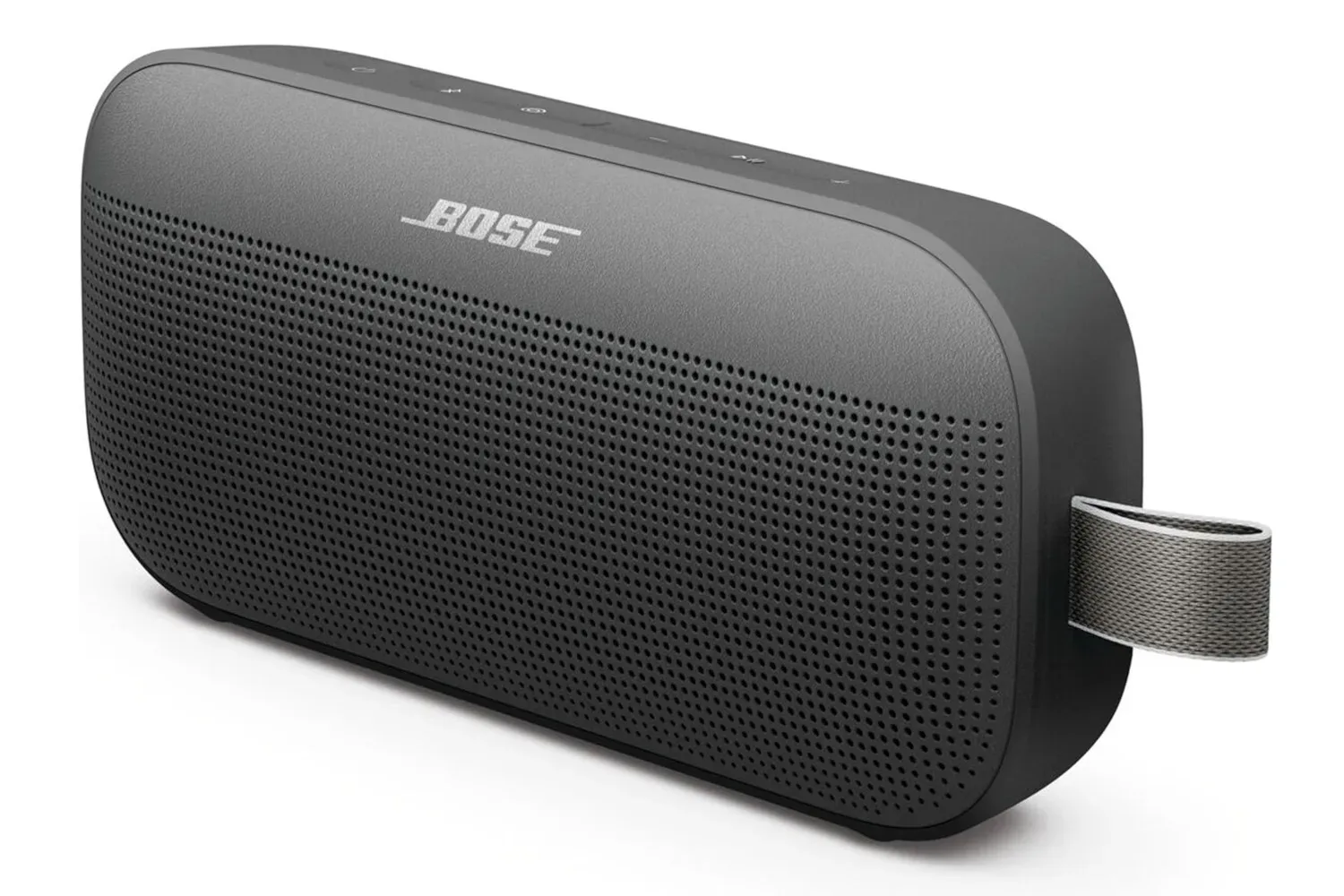
For readers shopping broader Black Friday hardware listings, the Bose SoundLink Flex (2nd Gen) Black Friday listing is a separate example of how a compact device’s specifications can only tell part of the story; the day-to-day use case matters just as much as the discount.
Privacy and consent are not optional details
Plaud says it meets SOC 2, HIPAA and GDPR standards, and says recordings are not used to train AI models unless the user opts in. Those claims address important concerns, especially for people considering recordings that may contain workplace discussions or personal information.
It is still useful to understand what the labels refer to. SOC 2 is a framework associated with controls around the handling of customer data. HIPAA relates to the protection of certain health information in the United States. GDPR is a European Union data-protection regulation. These terms should not be read as a blanket instruction that every conceivable recording is appropriate. The nature of the conversation, an organization’s policies and applicable rules still matter.
Most immediately, participants should be told before recording begins. Plaud itself advises users to notify people, and recording laws can require consent depending on the location and circumstances. The respectful and practical approach is simple: state that the conversation is being recorded, explain why, and make sure the participants understand before relying on the device.
Who the $149 listing suits
At its listed Black Friday price, the Note Pro is best understood as a meeting-capture tool rather than just a tiny recorder. It may be useful for people who regularly need searchable records, written follow-ups and action items from in-person discussions, calls and online meetings. The compact body, magnetic accessories, stated 16-foot pickup range, recording-status display and transcription workflow all serve that same premise: capture first, organize afterward.
Potential buyers should weigh the included 300 monthly transcription minutes against their expected use, and should be prepared to review AI-generated summaries and drafts rather than sending them untouched. They should also establish a clear consent habit before recording others. If those constraints fit, the Note Pro’s $149 listing combines the hardware and software pieces needed to turn spoken conversations into material that can be searched, checked and acted upon.
Shop the products
Check current price, model and availability at the retailer.