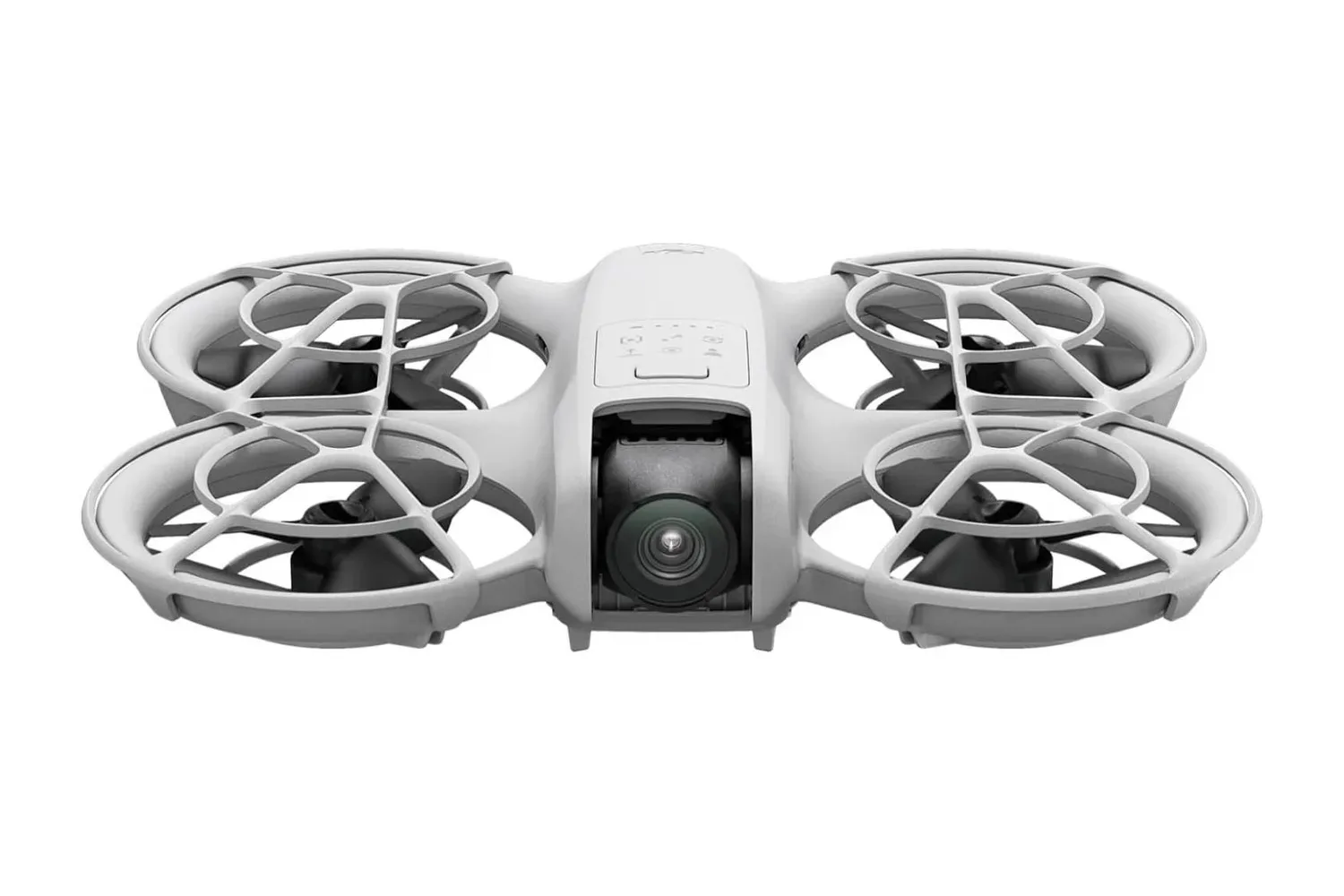
The DJI Neo mini drone is currently listed at $169, a $30 reduction from its stated $199 regular price. That is a 15% discount, and it brings a compact camera drone with 4K UHD capture into a lower entry-price bracket for people who want overhead, moving, or wide establishing shots without starting with a larger aircraft.
The headline number is useful, but it is not the whole buying decision. DJI Neo is framed around accessibility: it weighs 135g, can launch from a palm, works with the DJI Fly app on a phone, supports voice control, and includes several automated shot patterns. Those details suggest a product aimed at short, casual clips and straightforward social-video ideas rather than a user who needs lengthy flights or an included dedicated controller.
As with any retailer discount, the $169 price is a listing price rather than a permanent guarantee. Availability and pricing can change. Buyers should also read the exact package contents before checking out, particularly if they expect a controller or additional batteries.
What the package is offering
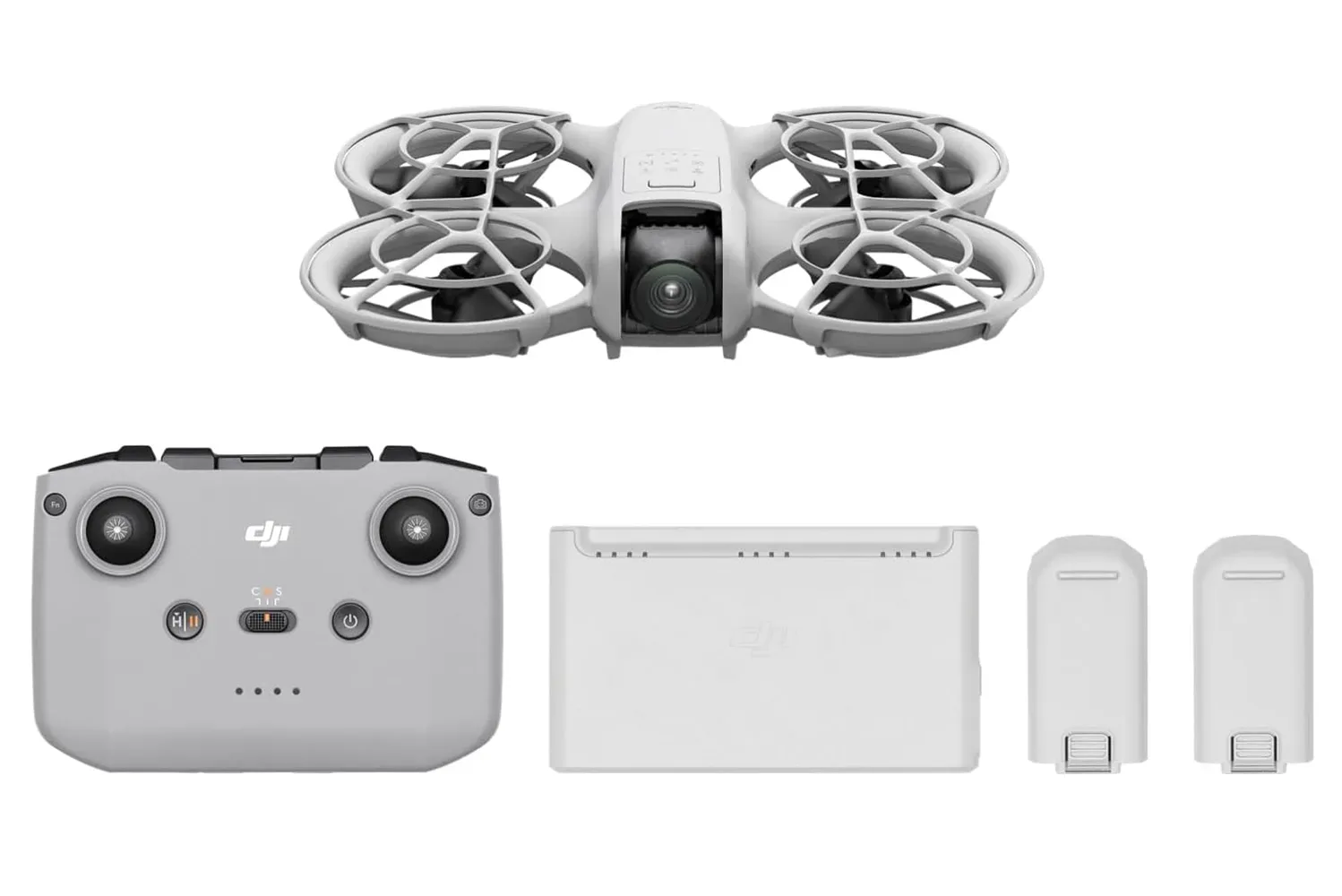
The listed package includes the DJI Neo, one battery, propeller guards, and the items needed to begin flying. It does not include a remote controller. That distinction matters because the drone may be operated through a phone, but a separate controller is an optional extra for anyone who decides that phone-based control is not the experience they want.
The starting process described for Neo is deliberately simple. Owners download DJI Fly through DJI’s official website, activate the drone, choose a filming mode, and can launch it from an open palm with a button press. In practical terms, that lowers the number of steps between setting up and attempting a first clip. It does not mean that preparation becomes unnecessary: a pilot still needs room to launch and land safely, battery charge, awareness of the environment, and a clear plan for what the camera is meant to capture.
The 135g weight is another major part of Neo’s appeal. The listing characterizes it as lighter than a phone and says FAA registration is not required for recreational use. Weight is meaningful beyond travel convenience: a small aircraft is easier to pack for a walk, outing, or day trip, so it is more likely to be available when an aerial angle would actually add something to a video. Rules can vary by location and use case, however, so buyers should verify the requirements that apply where and how they intend to fly rather than treating a general recreational-use statement as a complete rulebook.
4K is the capture format, not an automatic great shot
Neo’s 4K UHD camera is the main creative attraction. “4K” refers to a high-resolution video format, which can preserve more visible detail than lower-resolution capture when the scene, lighting, motion, and recording conditions cooperate. It can make landscapes, group scenes, outdoor movement, and elevated location shots look more expansive than footage taken solely from ground level.
Resolution should not be confused with every aspect of image quality. A 4K label does not itself guarantee a compelling clip, stable composition, ideal light, or a safe flight path. The useful question for prospective owners is simpler: will an airborne camera angle improve the kind of material they already make? For a runner, dancer, traveler, or casual creator, the answer may be yes when a following shot or rising reveal is the point. For someone whose footage stays indoors or whose priority is long uninterrupted recording, the drone’s limits may matter more than its resolution.
Neo’s listed subject-tracking feature is intended to keep a chosen person or object framed as it moves. That can reduce the burden of manually steering the camera while trying to stay in shot. It is especially relevant for solo recording, where the filmmaker and subject are often the same person. Still, tracking is a tool rather than a substitute for choosing an open setting and watching the drone’s path.
Eight automated moves explained
The drone offers eight named shooting modes: Follow, DirectionTrack, Dronie, Circle, Rocket, Spotlight, Helix, and Boomerang. Each represents an automated flight pattern, designed to produce familiar aerial-camera moves without requiring the owner to pilot every motion manually.
- Follow is built around keeping pace with a moving subject.
- DirectionTrack is another subject-focused mode that can help capture motion from a selected direction.
- Dronie creates the classic pull-away perspective, beginning closer to the subject and moving outward.
- Circle moves around the subject for an orbiting viewpoint.
- Rocket emphasizes an upward climb, opening a scene from above.
- Spotlight keeps attention on the subject while the drone’s position changes.
- Helix combines an orbit with a widening or climbing movement.
- Boomerang uses a broader curved path that returns toward its starting framing.
For a newcomer, the benefit is consistency. Instead of trying to coordinate speed, direction, height, and framing at once, a user can choose a move appropriate to the scene. A Dronie may suit a scenic reveal; Circle can work for a static subject; Follow is more appropriate when the person is already moving. The trade-off is that predefined moves are inherently less flexible than manual piloting. They are most useful when the available space matches the movement the mode needs.
Automation also does not remove the need to inspect the surroundings. An orbit, climb, or pull-back has a physical route. Trees, walls, overhead obstacles, people, animals, and changing conditions are still practical concerns. The more ambitious the selected move, the more important it is to ensure that its path is clear.
Flight time is the key limitation to plan around
DJI Neo is rated for about 18 minutes of flight time per full charge. That is enough for short, deliberate sessions, but it is not a large window if a creator wants repeated takes, several automated patterns, travel footage across multiple stops, or time to learn controls on location.
This makes shot planning more valuable than simply taking off and deciding later. A practical first session might identify one location, one subject, and one or two desired moves before launch. Recording a few purposeful clips can be more productive than spending the battery experimenting without a plan. Someone who expects to film longer should consider a spare battery, which is sold separately according to the listing.
The drone is designed to return to its takeoff point after filming, and it can also return automatically when battery is low or the connection is lost. These are useful safety-oriented functions, but they should be understood as protections, not permission to ignore battery level, signal conditions, or launch placement. If the aircraft returns to where it started, the takeoff location itself needs to be chosen carefully.
Who the $169 deal best suits
At the listed $169 price, Neo makes the clearest case for a person who values a small, approachable aerial camera over a traditional controller-first drone setup. Palm takeoff, voice control, app operation, subject tracking, and programmed movements all point toward quick capture with less manual input. Its included propeller guards are also a practical part of a starter package.
It is less naturally suited to a buyer who assumes a remote is included, needs extended time in the air from a single battery, or wants every shot to be manually controlled. Those are not flaws hidden by the discount; they are expectations worth setting before purchase. The discounted sticker price can grow if an owner later adds a remote or spare power.
For readers comparing this with other budget tech purchases, the same advice applies as it does with display deals: focus on the limitation that affects how you will actually use the product. Our look at an Amazon Fire TV deal and its 720p trade-off makes a similar point. A low price is useful, but only when the product’s constraints fit the job.
Here, the major trade-off is clear. DJI Neo’s price, 4K camera, compact 135g body, automated modes, and beginner-friendly launch options make it an accessible route to aerial footage. In exchange, buyers should accept the roughly 18-minute stated flight time and the absence of a bundled remote controller. For casual, planned clips, that may be a sensible balance at $169; for longer or more control-intensive flying, the add-ons and limitations deserve equal weight.
Shop the products
Check current price, model and availability at the retailer.