Disney is pushing back on the idea that it is about to buy Epic Games. Dana Walden, Disney’s president and chief creative officer, said the companies are not having acquisition conversations “right now,” even as their existing partnership continues to expand.
The wording matters. It is not a declaration that Disney and Epic will never discuss a deal, and it does not change Disney’s substantial existing involvement with the Fortnite developer. It is, however, the clearest available indication that a full purchase is not the strategy presently being pursued.
“We had very serious conversations about an investment and an equity stake,” Walden said. “Those are not the conversations we’re having right now, but we have a great partnership and a number of launches coming up over the next two years that are going to demonstrate the value of this partnership.”
For players, the immediate takeaway is less about corporate ownership and more about what that final promise could mean: Disney and Epic expect their relationship to produce more visible projects through the next two years. Walden did not identify those launches, platforms, modes, release dates, or Disney properties involved. That leaves room for anticipation, but not for treating any rumored game as confirmed.
Disney already has a major stake in Epic
Disney announced a $1.5 billion investment in Epic in early 2024. That investment gave Disney an equity stake, meaning it owns a financial interest in Epic rather than owning the company outright. An equity stake can align two businesses’ long-term incentives and provide a seat at the table without turning one into a subsidiary of the other.
An acquisition is a very different arrangement. In a full acquisition, one company purchases control of another. The buyer would generally take on substantially greater authority over the acquired company’s business, alongside the cost, risk, and potential regulatory scrutiny that come with a deal of that size. Disney’s investment and commercial relationship with Epic should therefore not be read as proof that an acquisition was inevitable.
At the time its investment was announced, Disney described the effort as a major entry into games and entertainment, built around bringing Disney brands and franchises together with Fortnite. The stated ambition was a new entertainment universe rather than a single crossover drop. That broader framing is important: Fortnite is the most obvious public meeting point for the two companies, but the partnership was presented as something larger than individual skins, events, or themed minigames.
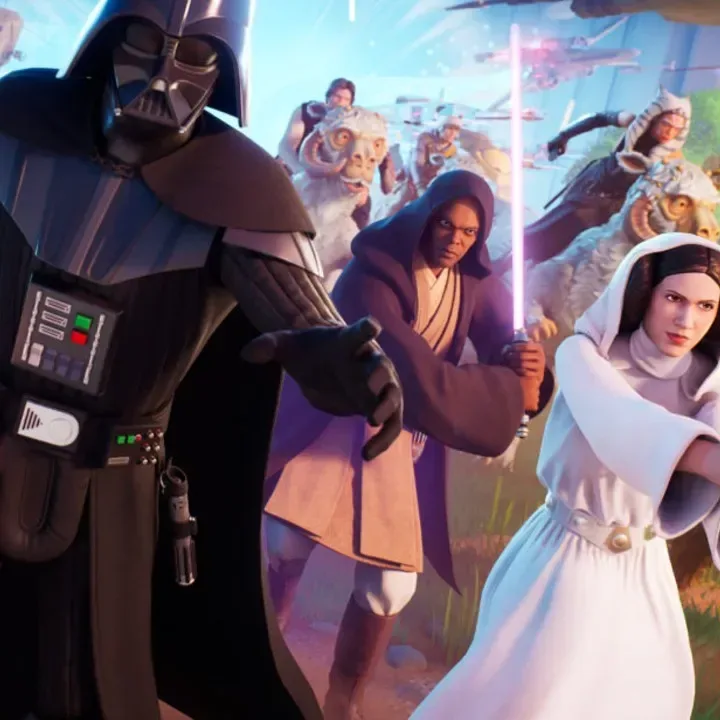
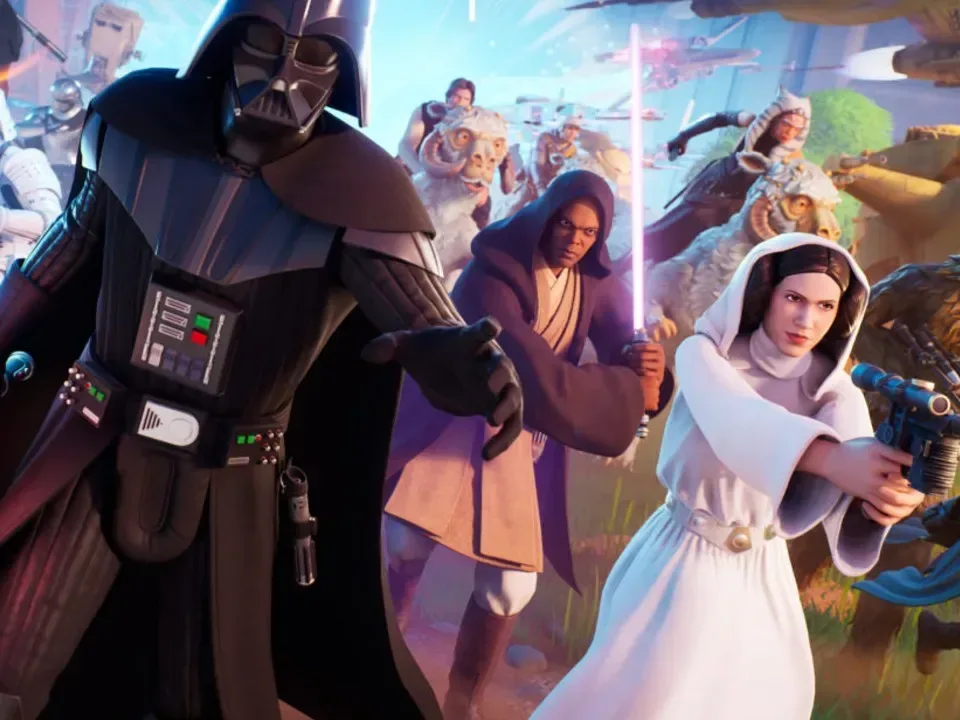
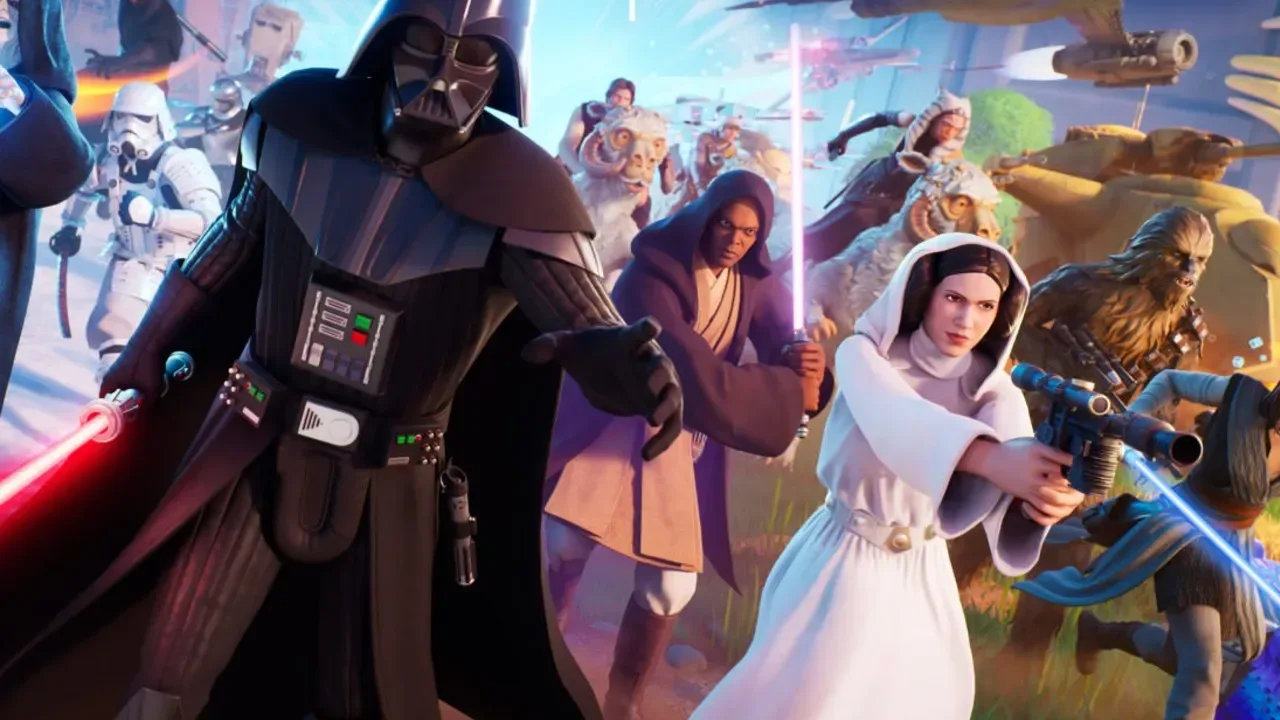
Disney’s existing collaborations with Epic have already included a Disneyland-exclusive Fortnite skin and officially licensed Star Wars minigames. Those projects illustrate the range of possibilities within a partnership: one is a promotional cosmetic tied to a real-world Disney destination, while the other uses Disney-owned fiction in game experiences. Neither one, by itself, defines the scale of the longer-term plan.
Related coverage includes Disney Says It Is Not Discussing an Epic Games Acquisition 'Right Now'.
Why the acquisition question gained traction
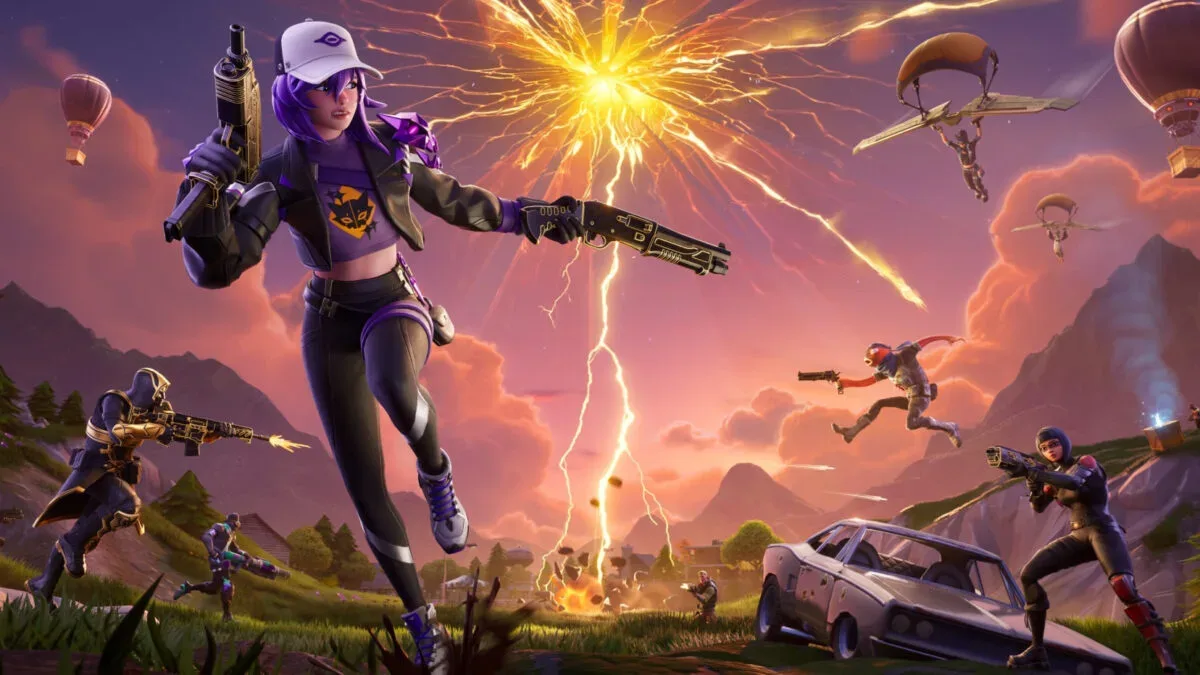
Speculation about a possible buyout gathered momentum in 2026. In March, reporting indicated that some Disney executives were waiting for the right moment to pursue a complete acquisition. Separately, an April report said Epic was working on an extraction shooter featuring Disney characters, with a planned November 2026 launch.
Neither point amounts to an official confirmation of an acquisition or of that reported game. As October begins, there has been no official announcement of the unannounced Disney-character extraction shooter. Walden’s remarks also did not mention it.
The distinction is particularly useful here because an extraction shooter is a specific kind of multiplayer game, usually built around entering a match or dangerous play space, securing loot or objectives, and successfully leaving with them. Failure to extract can carry consequences within the game’s progression systems. That structure would be a notable use of Disney characters, but the project remains unconfirmed based on the information available.
It is reasonable to see why people joined the dots between a large Disney investment, ongoing Fortnite integration, reports of a new Disney-character game, and talk of a potential acquisition. But those dots still do not form an announced deal. Walden’s statement provides a more grounded boundary: Disney is emphasizing partnership launches, not a change in ownership.
What “more launches” could—and cannot—tell players
Walden’s reference to “a number of launches” is the strongest forward-looking detail in the statement. It indicates that more than one Disney-Epic initiative is expected over the next two years. It does not reveal whether those launches will be Fortnite updates, standalone games, persistent social spaces, licensed minigames, new cosmetics, or something outside the usual Fortnite format.
That uncertainty is worth preserving. Fortnite’s flexibility makes it a natural host for many kinds of Disney material, from character cosmetics to game modes and entertainment events. Yet the partnership’s original “games and entertainment universe” language suggests that simply assuming every future launch will be another skin bundle would be too narrow. At the same time, there is no official basis to promise a dedicated Disney game, a new Fortnite mode, or any named franchise appearance.
The practical advice for players is straightforward:
- Treat Disney and Epic’s continued collaboration as confirmed.
- Treat multiple launches over the next two years as confirmed in broad terms, but wait for official details on what they are.
- Do not treat a Disney acquisition of Epic as an active, confirmed plan.
- Do not assume that the reported Disney-character extraction shooter will launch in November 2026 unless Epic or Disney announces it.
There is a difference between a company saying a partnership has a slate of work ahead and a company disclosing a product roadmap. The former establishes intent; the latter supplies names, dates, formats, and player-facing information. Disney has offered the first, not the second.
A partnership can be strategically valuable without a buyout
Walden’s comments also underline a simpler business reality: Disney may be able to pursue many of the benefits people associate with a buyout through investment and collaboration. The company has already put $1.5 billion into Epic, established an equity position, and attached its brands to one of gaming’s most recognizable platforms. Epic, meanwhile, gains a partner with a deep catalog of characters and worlds that can support future entertainment projects.
That does not tell us how either company measures success, how projects are funded, or what each has committed to make. Those details were not provided. Still, the value proposition outlined publicly is clear enough: Disney supplies major franchises and entertainment reach; Epic supplies the Fortnite ecosystem and game-development capability.
In that light, an acquisition is only one possible path, not the necessary endpoint. A partnership can remain extensive while both companies stay independent. Walden’s answer directs attention toward the work already planned rather than a hypothetical transaction.
Disney’s decision to describe the relationship as strong is also significant because it follows months of heightened speculation. Rather than deny the importance of Epic or minimize the investment, Walden reiterated that Disney had serious discussions around its stake and pointed to future releases as evidence of the arrangement’s value. The message is not that Disney is stepping away. It is that the current model is collaboration, backed by ownership investment, rather than a full acquisition.
What comes next for Fortnite and Disney
For now, the most concrete expectation is continued Disney-Epic activity over the next two years. Fans interested in the partnership should watch for official announcements from the companies rather than trying to turn rumors into a release calendar.
That applies especially to Fortnite, where Disney properties have a visible route to players but where the exact form of future work remains unknown. Existing examples—from a Disneyland-linked cosmetic to Star Wars minigames—show that the relationship can cover both promotional and playable material. The next launches may broaden that mix, though Disney has not yet said how.
Disney has not closed the door forever in Walden’s wording; “right now” is deliberately time-specific. But it would be an overread to interpret that as a hint that a deal is imminent. The defensible reading is narrower: Disney is not discussing an Epic acquisition at present, its $1.5 billion equity investment remains the foundation of the relationship, and both companies have more partnership launches ahead.
As the Disney-Epic slate becomes clearer, the bigger question will shift from who owns whom to what players can actually play. Until then, the planned launches—not an unannounced corporate takeover—are the part of this story with confirmed momentum.
For another look at how major entertainment companies are approaching game-related projects, see Sony’s reported talks around a Battlefield movie.