The Directors Guild of America Women’s Steering Committee has unveiled the seventh class in its SQUAD Mentorship Program, pairing 12 mid-career women and nonbinary directors with established filmmakers for a nine-month curriculum focused on career development, community and the particular barriers directors can encounter while moving forward in the business.
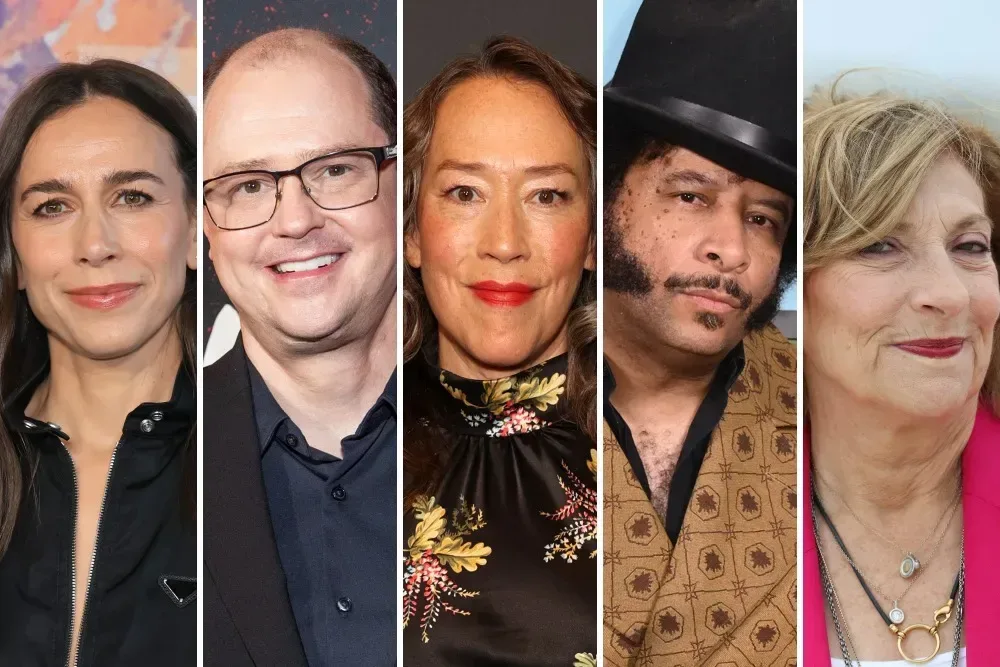
The 2026–27 cohort includes mentors Lucia Aniello, Mike Flanagan, Boots Riley, Karyn Kusama and former DGA president Lesli Linka Glatter. The full roster also brings together directors working across television and film, rather than treating career progression as a single, neatly marked path. That is a useful premise in an industry where a director’s next step can mean a return to episodic work, a first feature, a larger project, or simply a better-informed decision about which opportunity to pursue.
A nine-month program built around peer support
SQUAD began in 2021 and is designed as a nine-month program. Its stated aim is to create a collaborative group of directors with practical tools and knowledge while making room for conversations about the challenges women directors face.
That combination matters. A mentorship program is not just a credit attached to a résumé or a one-off introduction between an emerging director and a famous name. At its strongest, the format creates recurring contact, gives participants a professional sounding board and helps make industry knowledge less dependent on informal access. The “community” component is also significant: directors often work in project-based environments, where professional networks can be difficult to sustain between jobs.
Program co-leaders Karla Braun, Jess Brunetto, Tiffany Frances and Alexis Ostrander said their mission is to cultivate and strengthen the careers of the SQUAD cohort, arguing that the selected directors should have every opportunity to advance. They also pointed to the ongoing contraction across the entertainment business, framing the group’s support structure as especially meaningful at a time of reduced opportunity and uncertainty.
Industry contraction is a broad term for a period in which companies reduce spending, output, staffing or the number of projects moving ahead. In career terms, it can mean fewer openings and more competition for those that remain. A mentorship cannot solve those structural conditions on its own, but it can help participants navigate them with more information, contacts and perspective.
The 2026–27 mentor and mentee pairings
The seventh SQUAD class consists of the following mentor-mentee relationships:
- Lucia Aniello and Carmen Angelica
- Abe Sylvia and Shaz Bennett
- Kat Candler and Sabrina Doyle
- Shannon Murphy and Claire Fowler
- Gandja Monteiro and Saray Guidetti
- Mike Flanagan and Anna Halberg
- Boots Riley and Tiffany Johnson
- Geeta V. Patel and Manjari Makijani
- Karyn Kusama and Kate Sullivan
- Jake Schreier and Alissa Torvinen
- Lesli Linka Glatter and Mallory Thompson
- Laura Belsey and Kristin Windell
The mentor list includes filmmakers with notably different creative and professional backgrounds. Aniello is associated with Hacks and Broad City; Flanagan has been connected with Carrie and the forthcoming The Exorcist: Martyrs; Riley’s work includes Sorry to Bother You and I Love Boosters; Kusama directed Girlfight and Jennifer’s Body; and Glatter’s credits include Mad Men and Homeland.
Those names do not imply a single prescribed creative lane for participants. Instead, their presence suggests the program is built to accommodate directors coming from different genres and production models. Comedy, horror, drama and politically pointed work demand different creative instincts, but a director navigating the industry may face common questions regardless of genre: how to build lasting professional relationships, evaluate opportunities and retain a clear voice as projects increase in scale.
Why the mentor mix is meaningful
Mentorship in directing is often discussed in abstract terms, but the practical value can be easier to understand by looking at what an established director has already navigated. Film and television directors must balance creative authorship with collaboration across performers, writers, department heads, producers and, in television, the wider structure of an ongoing series. Professional guidance can help turn that sprawling set of expectations into a less opaque process.
For mid-career participants, the phrase “early days” should not be mistaken for “new to directing.” The program is specifically for directors who have already developed careers and are working toward the next level. That distinction is important. The obstacles facing a person trying to begin directing are not always the same as those facing someone who has credits, experience and a body of work but is seeking bigger assignments, more consistent opportunities or greater influence over the projects they make.
Glatter’s inclusion carries an additional organizational dimension, given her previous service as DGA president. Meanwhile, the cohort includes people whose careers have crossed feature and episodic work, reinforcing the program’s focus on career navigation rather than one narrowly defined route to advancement.
Support systems like SQUAD also operate alongside other forms of professional exposure, including festivals, industry gatherings and public programming. For instance, Infinity Festival’s announced Los Angeles program illustrates the continuing role that convenings can play in bringing creators and industry figures into the same conversation. SQUAD’s emphasis is different: it is a sustained, smaller-scale mentorship structure rather than an event lineup.
Who runs the committee
Alongside co-leaders Braun, Brunetto, Frances and Ostrander, the Women’s Steering Committee is co-chaired by Shaz Bennett, Jade Jenise-Dixon and Valerie Weiss, with Liz Ryan serving as alternate co-chair.
Bennett is therefore both a committee co-chair and a mentee in this class, paired with Abe Sylvia. That overlap underscores a central idea behind professional community-building: participants do not necessarily have to wait until a career is “finished” before contributing to systems that support other filmmakers. A director can be developing their own next chapter while also taking on leadership work that expands access for peers.
What this announcement does—and does not—signal
The announcement confirms the participants, the mentors and the program’s nine-month framework. It does not outline individual session topics, project outcomes, financing arrangements or future directing assignments for mentees. It would be premature to treat the pairings as a promise of specific productions or jobs.
What can reasonably be taken from the news is that the DGA Women’s Steering Committee is continuing an initiative now in its seventh class, and that it is doing so while explicitly acknowledging an unsettled industry landscape. Its stated goal is not merely to celebrate directors already selected, but to build the relationships and practical knowledge that may help them move further into the next phase of their careers.
For the 12 mentees, the value of the program will ultimately be personal and professional rather than easily reduced to a headline: a chance to learn from a specific mentor, connect with an ongoing cohort and discuss the realities of directing with people facing related pressures. In a business where access and continuity can be as consequential as visibility, that is a substantial piece of infrastructure.