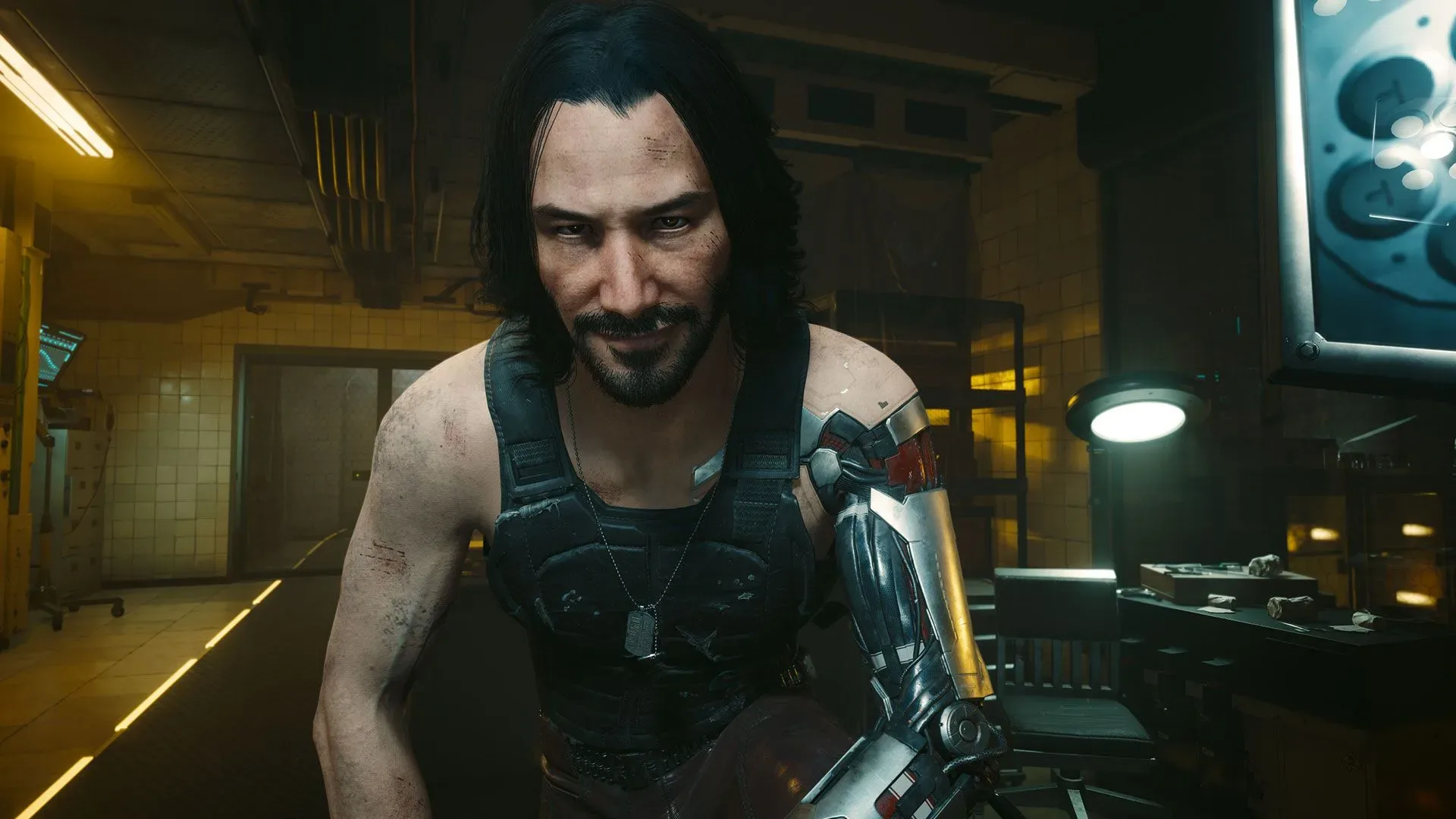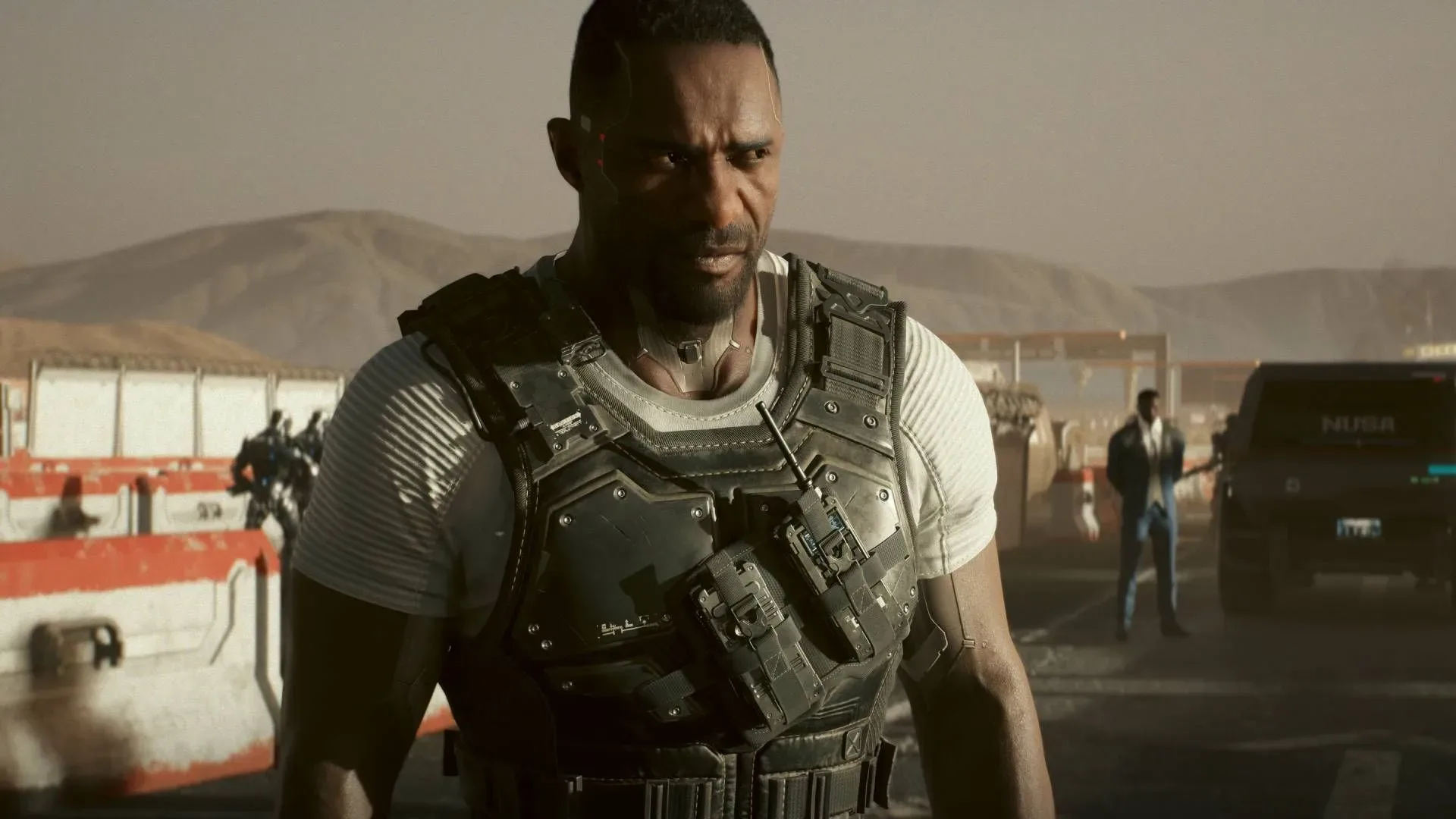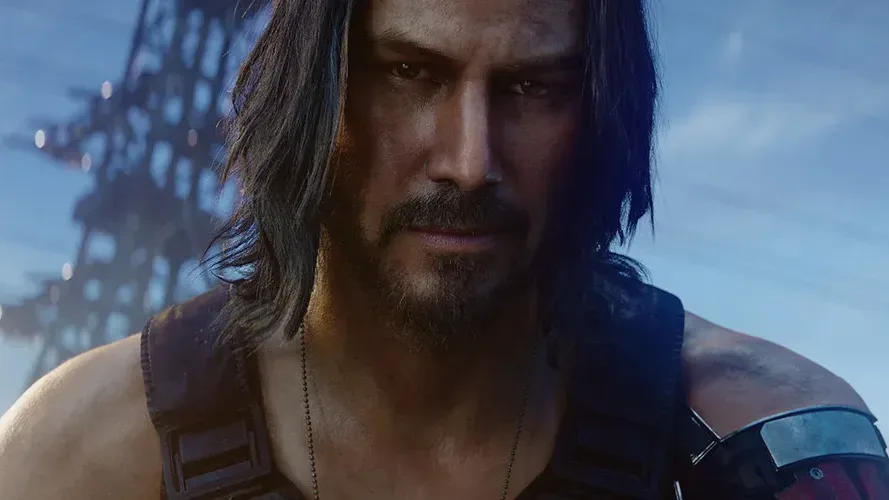
A Cyberpunk 2077 movie is in the works at Paramount. Lorenzo di Bonaventura is attached as a producer, while CD Projekt Red—the developer and rights holder behind the game—will also produce. That is the confirmed shape of the project so far: a major studio, a producer, and the game’s original steward at the table.
For players, the most encouraging part may be CD Projekt Red’s producer role. A game adaptation always has to make difficult choices about what it can carry from an interactive world into a finite film, but direct involvement from the franchise rights holder should give the project access to the setting’s core ideas, characters and lore. It does not, however, answer the largest creative questions. No director, writer, cast, release date, format details or plot have been disclosed.
What the film has to work with
Cyberpunk 2077 is an open-world science-fiction role-playing game set in Night City, a neon-lit dystopian metropolis shaped by extreme inequality and powerful corporations. Players inhabit V, a mercenary who becomes linked to a biochip containing the digital likeness of Johnny Silverhand, a rocker and notorious criminal portrayed in the game by Keanu Reeves.
The central predicament is unusually well suited to a screen story. V and Johnny are not merely allies with conflicting goals; their consciousnesses are entangled. V’s fight to separate them runs alongside a broader conflict with Arasaka, the megacorporation that dominates the city. That combination gives the property a clear emotional engine—two identities forced into an impossible proximity—as well as the expected corporate conspiracy, crime and futuristic urban spectacle.
There is still a major adaptation decision ahead: whether the movie follows V and Johnny’s storyline, borrows their setting while telling a different Night City tale, or takes another route entirely. The announced project has not committed publicly to any of those approaches. Fans should be cautious about treating familiar game characters, performers or story beats as confirmed for the film until further production details arrive.
Why Night City is an attractive film setting
The game’s world offers more than a recognisable skyline. Night City is built around a collision of technology, commerce and identity: bodies can be modified, consciousness can be digitised, and corporations wield power on a scale that eclipses ordinary people. Those concepts are useful dramatic tools because they create conflicts that are personal and systemic at once.
The term megacorporation here means a corporation with extraordinary economic and political influence, not simply a successful business. Arasaka’s role in the game’s dystopian landscape makes it a natural antagonist framework: V’s survival problem cannot be cleanly separated from the institution with the means to control lives, data and technology across the city.
The biochip also matters because it converts an abstract cyberpunk question into a character problem. If a person’s memories and personality can persist digitally, what exactly remains distinct about the person who carries that data? A movie need not unpack every branch of the game’s role-playing structure to engage with that question. In fact, a single sharply defined version of that conflict could be one of the most practical ways to turn an enormous game world into a film narrative.
From a player-defined RPG to a fixed movie story
A role-playing game gives players room to occupy a character, explore a city and approach problems through play. A film cannot reproduce that agency. It instead has to decide whose perspective matters, what V wants, which choices are irreversible and how much of Night City the audience needs to understand.
That constraint is not automatically a weakness. Games and films excel at different things. The game can make the audience participate in V’s journey; a film can focus on performance, pacing and a chosen dramatic arc. The challenge is making that chosen arc feel like it belongs in the same universe without pretending every possible player experience can be represented at once.
Johnny Silverhand’s presence adds another complication. Because the character’s digital likeness is central to V’s story, any direct adaptation would need to establish the relationship between the two voices quickly and clearly. The game’s association with Keanu Reeves does not establish his involvement in the movie. It only identifies the performer who played Johnny in the game.
A commercially proven game, after a difficult launch
The planned film arrives after a complicated but ultimately successful journey for the game itself. Cyberpunk 2077 launched in December 2020 following several delays. Its initial release was affected by widespread performance issues, a difficult beginning that became inseparable from discussion of the game.
Its commercial position later became far stronger. The game has sold 40 million copies worldwide, while its Phantom Liberty expansion has sold 15 million copies. Those figures indicate a sizable audience for the Night City setting and demonstrate that the franchise’s appeal has endured beyond its troubled debut.
An expansion, in this context, is additional game content released after the base game. The 15 million sales figure for Phantom Liberty is therefore separate from the 40 million figure for Cyberpunk 2077 itself. The numbers should not be treated as proof that the same 15 million people bought both, nor do they reveal what form the film will take. They do show that the property is not relying solely on its 2020 launch-era reputation.
Paramount’s game-adaptation slate is widening
The studio’s interest in Cyberpunk 2077 sits alongside its work on other game-derived projects. Paramount also has a Call of Duty movie with Peter Berg attached to direct; Berg co-wrote its script with Taylor Sheridan. A Street Fighter film is scheduled to reach theaters on October 16.
Together, those projects point to a broader effort to work across markedly different types of game properties. Call of Duty is rooted in military action, Street Fighter in competitive combat, and Cyberpunk 2077 in a role-playing world of consciousness, crime and corporate power. The latter could give Paramount an entry aimed at audiences looking for a harsher, more adult-oriented science-fiction story than the family-friendly game movies that have recently attracted large box-office audiences.
The business interest is understandable. Films including Five Nights at Freddy’s, The Super Mario Bros. Movie and A Minecraft Movie have helped demonstrate that game brands can bring audiences to theaters. But those titles do not provide a creative template for Night City. Cyberpunk 2077 has a different tone, different thematic concerns and a distinctly adult dystopian framework. Recognition may open the door; the screenplay and eventual filmmakers will determine whether the setting works on its own cinematic terms.
What is confirmed—and what remains unknown
For now, it is useful to keep the announcement narrow. The movie is in development at Paramount. Di Bonaventura is attached as producer. CD Projekt Red is producing. The underlying game provides a detailed setting and a commercially successful franchise foundation.
Everything beyond that requires patience. There is no announced cast, no confirmation of Keanu Reeves’ participation, no named director or writer, no disclosed production timetable and no stated release date. There is also no confirmation that the story will adapt the game’s V-and-Johnny plot directly rather than introducing a different Night City protagonist.
That lack of specifics is normal for an early project, but it makes precision especially important. The most meaningful future updates will be the ones that establish the movie’s creative leadership and reveal whether it is building around the game’s central identity conflict or using Night City as the stage for a new story.
In the meantime, the announcement reinforces how game worlds have become a central part of modern screen development—and how much fandom now extends beyond the original medium. That broader relationship between entertainment properties and audience communities is also visible in the continuing case for in-person fandom. For Cyberpunk 2077, the immediate next step is simpler: turning an enormous, player-driven vision of Night City into one story a movie audience can follow.