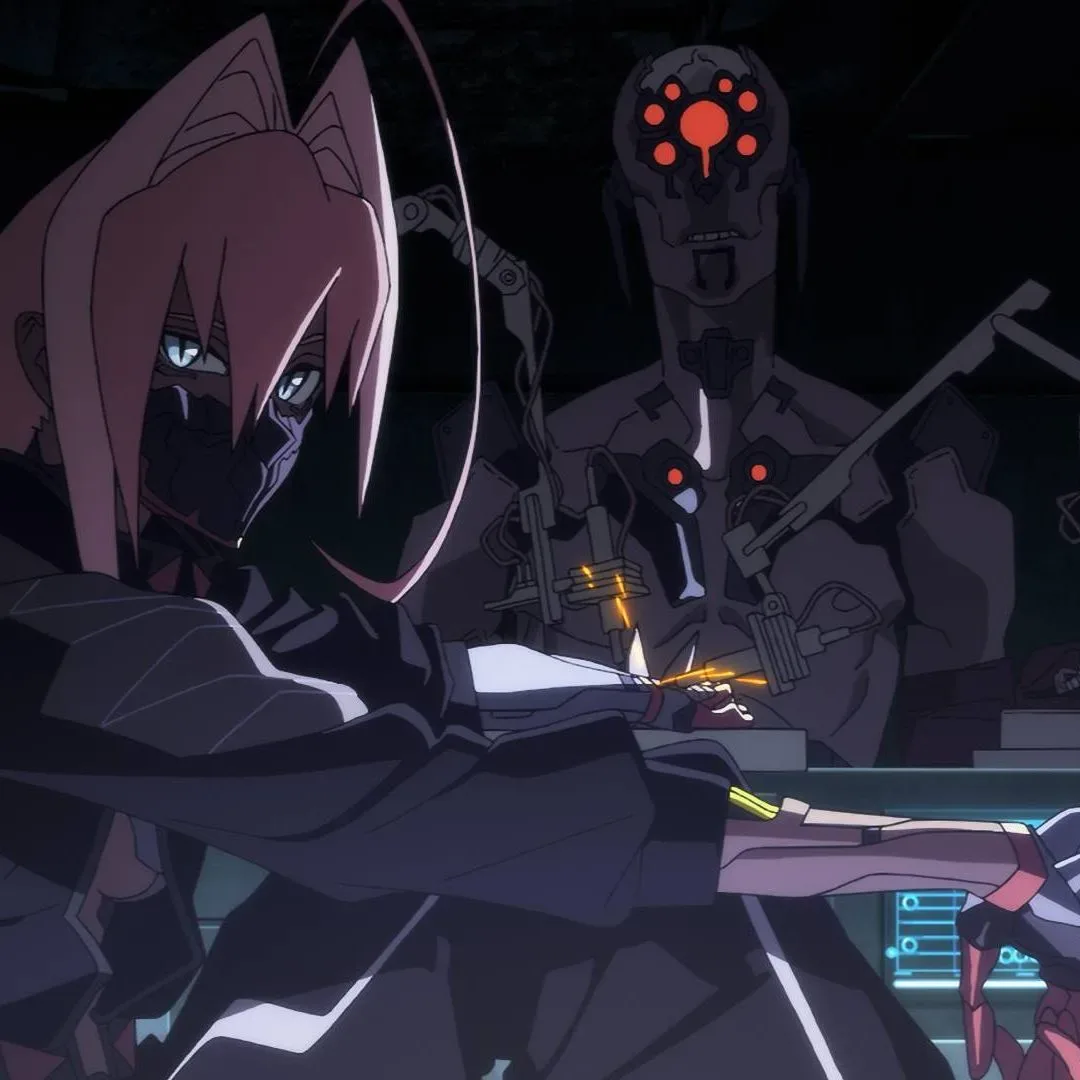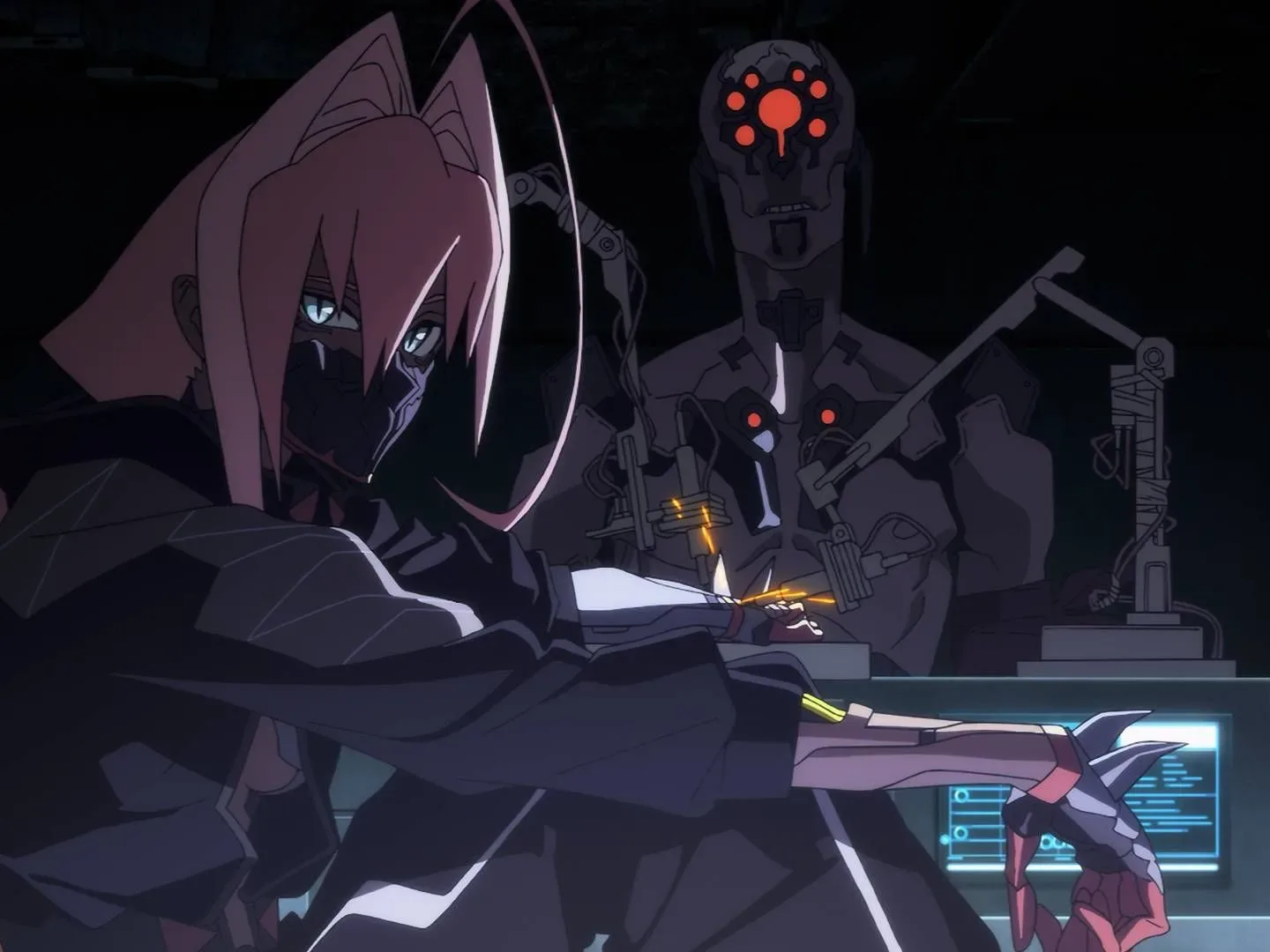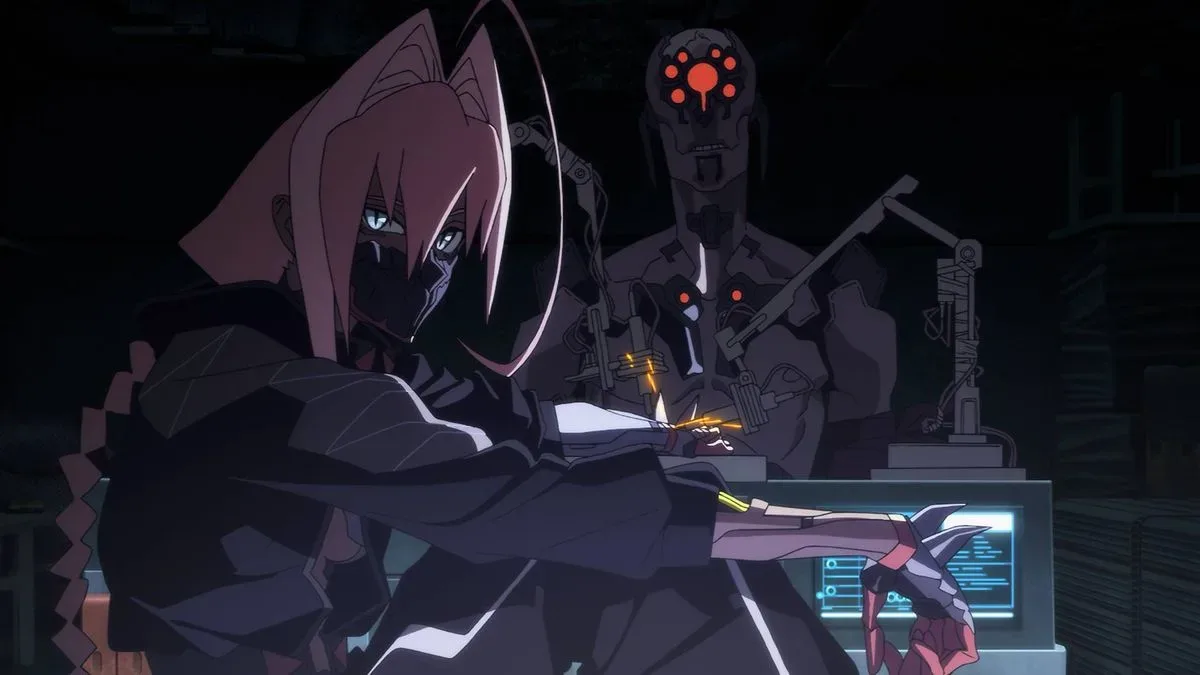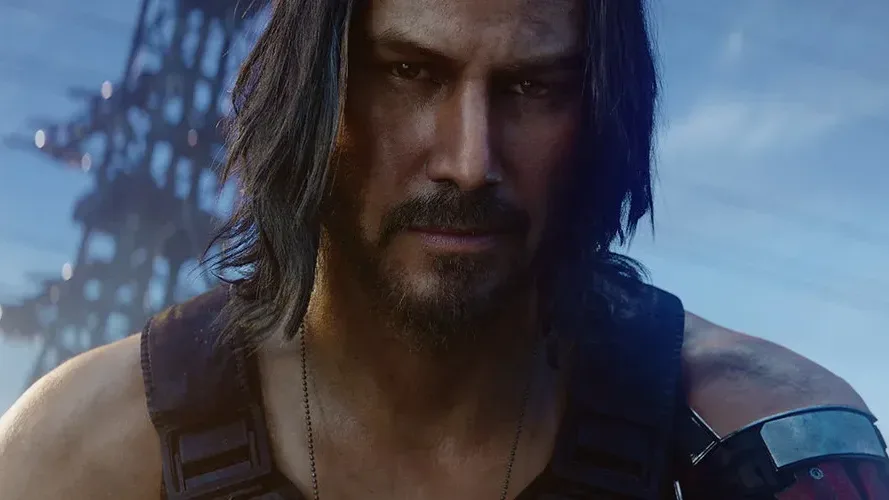
Cyberpunk stories are supposed to dream dangerously. That is part of the genre’s operating system: gigantic corporations, radical technology, desperate people and a city so overbuilt that somebody eventually wonders whether the most honest solution is to knock the whole thing down.
Studio Trigger has apparently asked that question more than once while working in the world of Cyberpunk 2077. The answer from the people safeguarding the setting has been clear: Night City and Arasaka are not available for demolition.
During a discussion about canon, Cyberpunk: Edgerunners showrunner Bartosz Sztybor and executive producer Saya Elder described a creative process designed to find room for audacious animation-studio ideas without breaking the established continuity of the game world. Elder said Studio Trigger is highly enthusiastic about putting Cyberpunk lore into the series. The productive default is not an immediate rejection, but a search for a version of the idea that can belong in the setting.
“We try really hard not to say no to ideas,” Elder said. “We try to be more ‘Yes, and’ people.”
That approach has a very definite limit. Sztybor said Studio Trigger repeatedly asks whether it can destroy both Arasaka and Night City—an impulse that returned in the first week of work on Edgerunners 2. For all the flexibility around individual concepts, razing the franchise’s central city is treated as the line the team will not cross.
Canon is a creative framework, not just a list of prohibitions
In this context, canon means the body of events, characters, places and rules that an official story is expected to respect. It matters especially in a shared setting spread across a role-playing game and an animated series. The anime cannot simply act as though a central institution or the city itself has ceased to exist if the wider world still depends on it.
That does not mean every proposal that initially clashes with established lore is discarded. Sztybor described a process in which an idea may first be flagged as lore-breaking, then reworked with the help of Patrick Mills into something strange but workable. That distinction is important. A strict “no” protects continuity, but a collaborative “yes, and” can preserve the creative spark that made the pitch attractive in the first place.
For an animation studio known for ambitious visual and dramatic swings, the request is understandable even if it is not approved. Destroying Night City would instantly raise the stakes, create a spectacular image and dramatically reshape the power dynamics around Arasaka. It would also overturn the foundation on which this particular Cyberpunk setting is built. The proposed scale of the change is precisely why it is difficult to reconcile with ongoing lore.
Related coverage includes Cyberpunk: Edgerunners Team Reportedly Drew the Line at Destroying Night City.
The reported exchange also offers a useful look at adaptation work that viewers rarely see. A screen project based on a game is not only deciding what looks exciting in motion. It is constantly judging whether a new character, event or revelation has consequences beyond its own episode. The creative challenge is to let a story feel consequential while keeping it connected to a world players already know.
Why Night City is more than a backdrop
Night City is not being protected merely because it is a recognizable skyline. The city is the setting’s organizing place: a location where people pursuing survival, power, revenge or escape run into the systems that define the Cyberpunk world. Removing it outright would not be a local plot twist. It would be a structural rewrite.
Arasaka occupies a similarly important position in the discussion. The corporation is an enduring force in the setting, so wiping it out alongside Night City would make a seismic alteration to the status quo. That kind of outcome could be compelling in a self-contained alternate version of the world, but these comments indicate that Edgerunners is being developed with an obligation to fit the original lore instead.
There is a useful difference between putting Night City in peril and permanently ending it. Stories can expose secrets, topple individual figures, inflict personal loss and shake institutions without declaring that the place at the center of the franchise is gone forever. The latter closes off a huge amount of future storytelling space. The former can create tension while allowing the setting to remain a setting.
That is likely the practical value of the “yes, and” method described by Elder. It does not ask creators to become less imaginative. It asks them to shift an idea until it creates a dramatic effect compatible with the broader world. If the desired effect is chaos, danger or an attack on corporate power, there may be ways to evoke that without turning Night City into rubble.
What Edgerunners 2 is set to explore
The second season’s synopsis points toward an intensely personal conflict rather than civic annihilation. Weak, described as a washed-up cyberpunk legend, is forced to live without chrome while looking for purpose in a world that has moved beyond him. Chrome is Cyberpunk shorthand for cybernetic augmentation; being without it therefore signals a major change for someone whose identity or capabilities may have been tied to implanted technology.
Elsewhere, a deadly nomad known as D begins a pursuit of revenge that leads toward corporate secrets. In Cyberpunk terminology, a nomad is associated with a community and way of life distinct from the urban corporate center, while corpo is shorthand for the corporate sphere and its people. The synopsis sets up two routes into familiar themes: a person dealing with the loss of technological power, and another moving toward information powerful interests may want buried.
Those premises show why continuity guardrails need not make the new season timid. Weak’s circumstances create a question of identity and survival without chrome. D’s revenge plot can place corporate secrets under pressure. Both strands can alter the lives of their characters, reveal new corners of the world and challenge powerful organizations without requiring a permanent reset of the setting itself.
The broader animation business is also continuing to invest in cross-border and cross-media work, as seen in recent animation-industry investment news. For a game-linked animated project, careful stewardship of a recognizable fictional world is not a bureaucratic footnote; it is part of what enables the world to keep supporting stories across formats.
The game and show are being kept in conversation
The connection is not limited to lore discussions behind the scenes. The Cyberpunk 2077 2.5 update included an Edgerunners 2-related quest and added the ability for players to dual-wield weapons. That pairing illustrates two different forms of crossover: a story element that ties the game to the anime, and a gameplay addition that changes how players can approach combat.
Dual-wielding means using a weapon in each hand. In practical play terms, that is a mechanical capability rather than simply a narrative reference. The Edgerunners-related quest, meanwhile, provides a more direct thread between the two works. Together, they show an effort to make the animated series and the game feel adjacent without requiring either medium to become dependent on the other.
For players, the clearest implication is that the anime’s story exists within an actively maintained relationship to the game’s world. A major irreversible event such as the destruction of Night City would be harder to accommodate in that relationship. A quest tie-in is much easier to integrate: it can acknowledge the show while leaving the larger foundation intact.
A third season is not promised
There is also no automatic path from the second season to a third. Sztybor has said a “perfect story” would need to be developed before another season could begin production. That is a meaningful qualification amid the enthusiasm around the series, including the view from some fans that the new season has surpassed the widely loved first one.
The absence of a guarantee makes the lore conversation more revealing, not less. The team is not presenting the setting as an infinite machine that must produce another installment at any cost. Instead, its stated standard combines a story worth telling with an approach that respects the rules and durable landmarks of Cyberpunk.
Night City, then, survives another enthusiastic pitch meeting. Studio Trigger can keep testing the boundaries, while the people responsible for continuity keep looking for ways to transform a difficult “no” into a workable alternative. But the city-wide demolition button remains safely behind glass—probably with an Arasaka logo on the cover.