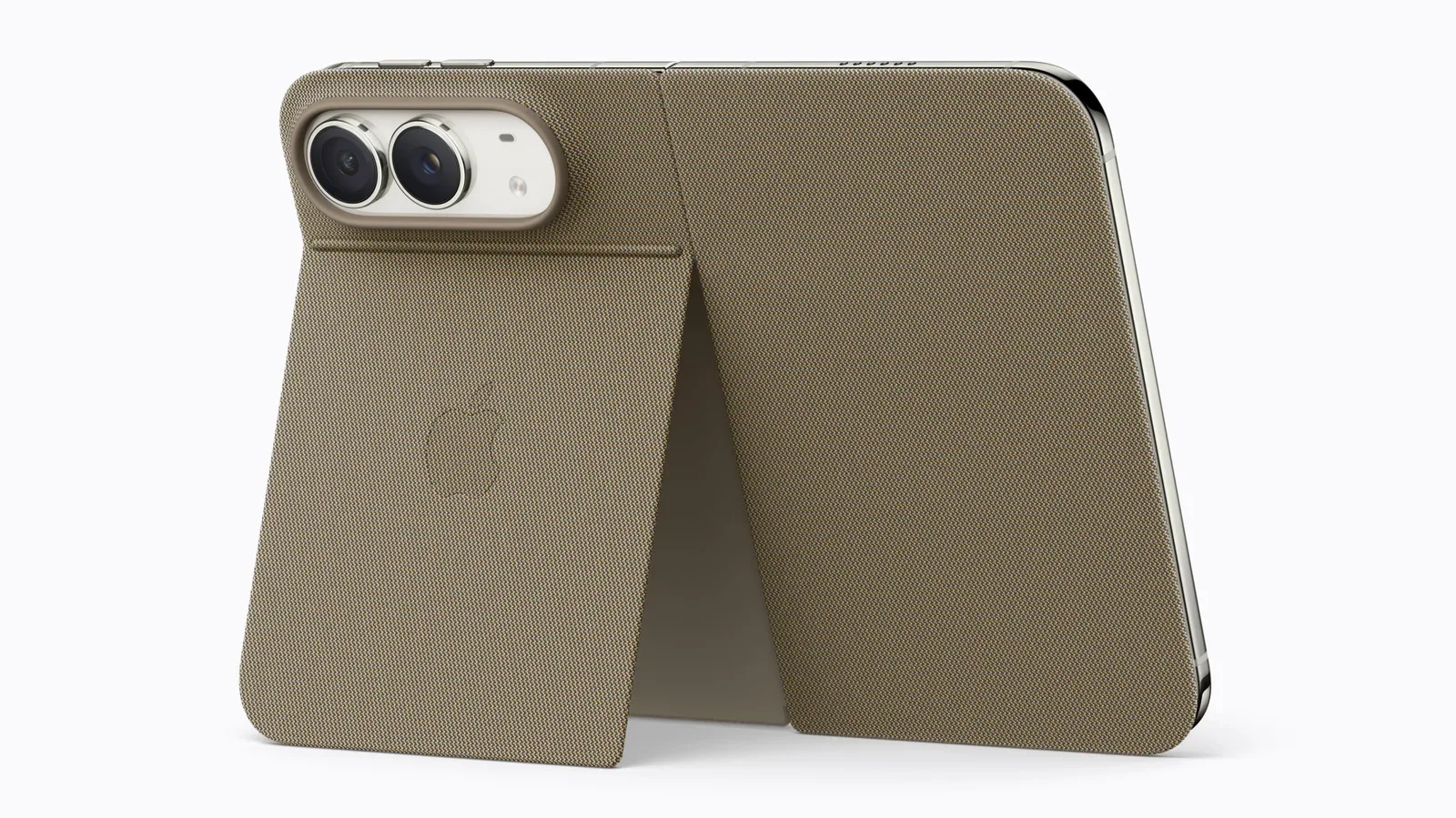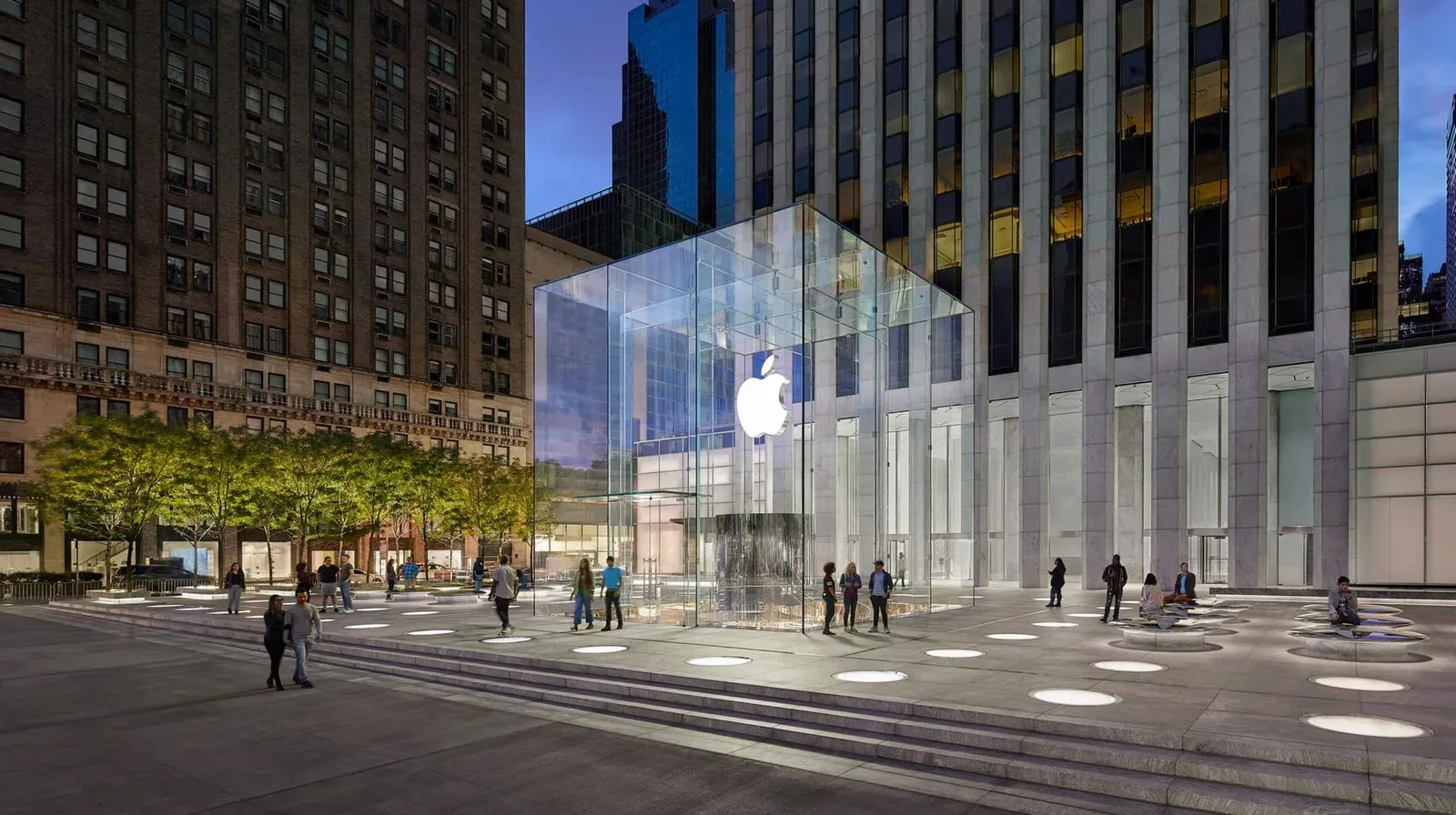
Apple Fifth Avenue in New York appears to be preparing an unusually visible launch-stage setup for the iPhone Duo. Large installations have been spotted on the plaza beside the store’s glass cube, wrapped and covered so thoroughly that their final design is not yet clear. Their timing is much less mysterious: the iPhone Duo is due to go on sale on Friday, October 23.
The structures are a public-facing piece of what looks set to be a major retail push at one of Apple’s best-known stores. Inside, Fifth Avenue is expected to receive more than 150 iPhone Duo units for demonstrations and display. That is a notable concentration beside an expected allocation of roughly 20 units at typical non-flagship locations. It does not establish how many phones will be available to buy at each location, but it does show that Apple is putting considerable floor space and staff-facing hardware behind explaining its new foldable device.
For a product whose central idea is physical transformation, that matters. A conventional phone can be understood quickly from a spec card and a brief look across a counter. A foldable has an extra question that photos cannot fully settle: what does opening and closing it actually feel and look like in daily use? The planned in-store fixtures appear intended to answer precisely that question.
A storefront tease, not yet a revealed design
The outdoor pieces remain concealed beneath wrapping and black coverings. As a result, there is no firm basis to identify their shape, graphics, size beyond their apparent scale, or their exact role in the launch experience. They may become giant device representations, a visual treatment built around the Duo name, or something else entirely. At present, the reliable detail is simply that prominent covered installations have been placed outside the Fifth Avenue store ahead of launch.
That uncertainty is part of the setup’s effect. A covered installation turns a retail decoration into a short pre-release mystery, creating a reason for passers-by to look again when the coverings come off. It also gives a flagship storefront an event-like quality without revealing the final visual message early.
Apple has adjusted the appearance of the Fifth Avenue cube recently. For the September release of the iPhone 18 Pro, the cube received color treatment reflecting the Burgundy and Glacier finishes. The iPhone Duo work means the store’s launch decoration has changed twice in a little over a month, underlining how Fifth Avenue is being used as a highly visible retail stage rather than merely a sales location.
Why the demo plan is more important than the wrapping
The reported in-store plan includes a fixture designed to show the iPhone Duo opening and closing. It also includes a separate MagSafe stand with an unfolded iPhone Duo positioned alongside two conventional iPhones.
MagSafe is Apple’s magnetic accessory and alignment system. In this context, the stand’s practical purpose is display: it can hold the unfolded phone in a stable, repeatable position while the conventional phones provide a direct size reference. That comparative presentation may be more useful to shoppers than an abstract claim about screen area. It lets them see the larger unfolded format beside devices whose basic proportions are already familiar.
The opening-and-closing fixture addresses another fundamental foldable question: the mechanism. A foldable device has a moving joint where a standard smartphone has a fixed body. Demonstrating that movement repeatedly, in a controlled retail setting, makes the defining feature legible at a glance. It is a product explanation, not just a piece of store theatre.
There is a broader lesson for gaming and media use, even though no particular gaming feature has been detailed here. Screen format can affect how a person thinks about a device before any software is opened. An unfolded display may suggest more room for video, reading, maps, social apps, browser windows, game interfaces, or cloud-streaming controls. But “more room” does not automatically mean “better for every activity.” Interface design, app support, aspect ratio, control method, battery behavior and personal comfort all remain important. The planned side-by-side display is useful because it centers a physical comparison rather than asking customers to infer everything from marketing images.
What a display allocation does—and does not—tell us
More than 150 iPhone Duo units assigned to Fifth Avenue sounds substantial, especially against an expected roughly 20-unit allocation for non-flagship stores. Still, the wording matters. These are described as demonstration and display units, not a public count of retail inventory. They should not be read as a promise that more than 150 customers will be able to buy one there, nor as a complete picture of availability across the country.
What the figure does indicate is that Apple expects the Fifth Avenue store to handle a significant amount of product education. A large demo fleet can support multiple display tables, hands-on demonstrations and dedicated fixtures at once. For a first-look product category where the physical form is central, that is a logical retail emphasis.
It may also reduce one basic friction point on launch day: whether visitors can actually see the device rather than only queue for it. That remains an inference from the planned demo allocation, not a guarantee about crowd levels or how a store will manage access. Anyone traveling specifically to see the iPhone Duo should treat store conditions as variable.
Launch-day availability will be tight
Apple has confirmed limited walk-in availability in the United States and several other markets, while warning that launch-day stock is expected to sell out quickly. That language is important for prospective buyers. A walk-in opportunity means some customers may be able to purchase without an advance reservation, but it is not a reliable substitute for planning when inventory is described as limited.
In mainland China, France, Japan and several other markets, customers will need to reserve a pickup time through Apple’s online store. The difference between regions is practical, not cosmetic. Customers should check the purchase and pickup process that applies where they live instead of assuming that a launch-day queue works the same way everywhere.
- For buyers: Verify local ordering, reservation and pickup options before heading to a store.
- For people mainly curious about the form factor: A flagship location such as Fifth Avenue appears positioned to offer the most extensive demonstration environment, though it may also draw the most attention.
- For walk-ins: Limited availability and an expectation of quick sell-through mean there is no implied promise of same-day stock.
- For shoppers comparing devices: The unfolded-device stand beside two conventional iPhones should make physical scale easier to judge than online images alone.
A retail launch built around showing, rather than telling
The iPhone Duo installation and fixture plans point to an approach centered on visibility. The exterior is designed to be noticed from the street, while the interior displays are designed to make the device’s foldable form understandable. Those are different jobs. The plaza structures generate anticipation and visual identity; the opening fixture and comparison stand explain the actual hardware concept.
That distinction is especially relevant to a foldable. The category’s appeal is not solely about a list of components. It depends on a relationship between two states: folded and unfolded. An in-store display can make that relationship immediate by letting a visitor see the closed device, the transition, and the expanded layout in one place. It can also surface a personal preference that technical specifications cannot decide: whether the unfolded size feels compelling, unnecessary, or awkward for an individual’s routine.
For players who use phones as part of a wider entertainment setup, it is worth separating the hardware curiosity from assumptions about capability. A larger unfolded panel might be attractive for touch-controlled games or watching streams, while a conventional phone may remain simpler for one-handed use and portability. No performance, game compatibility, controller support or software behavior has been detailed in the available information, so those questions remain open rather than settled by the retail presentation.
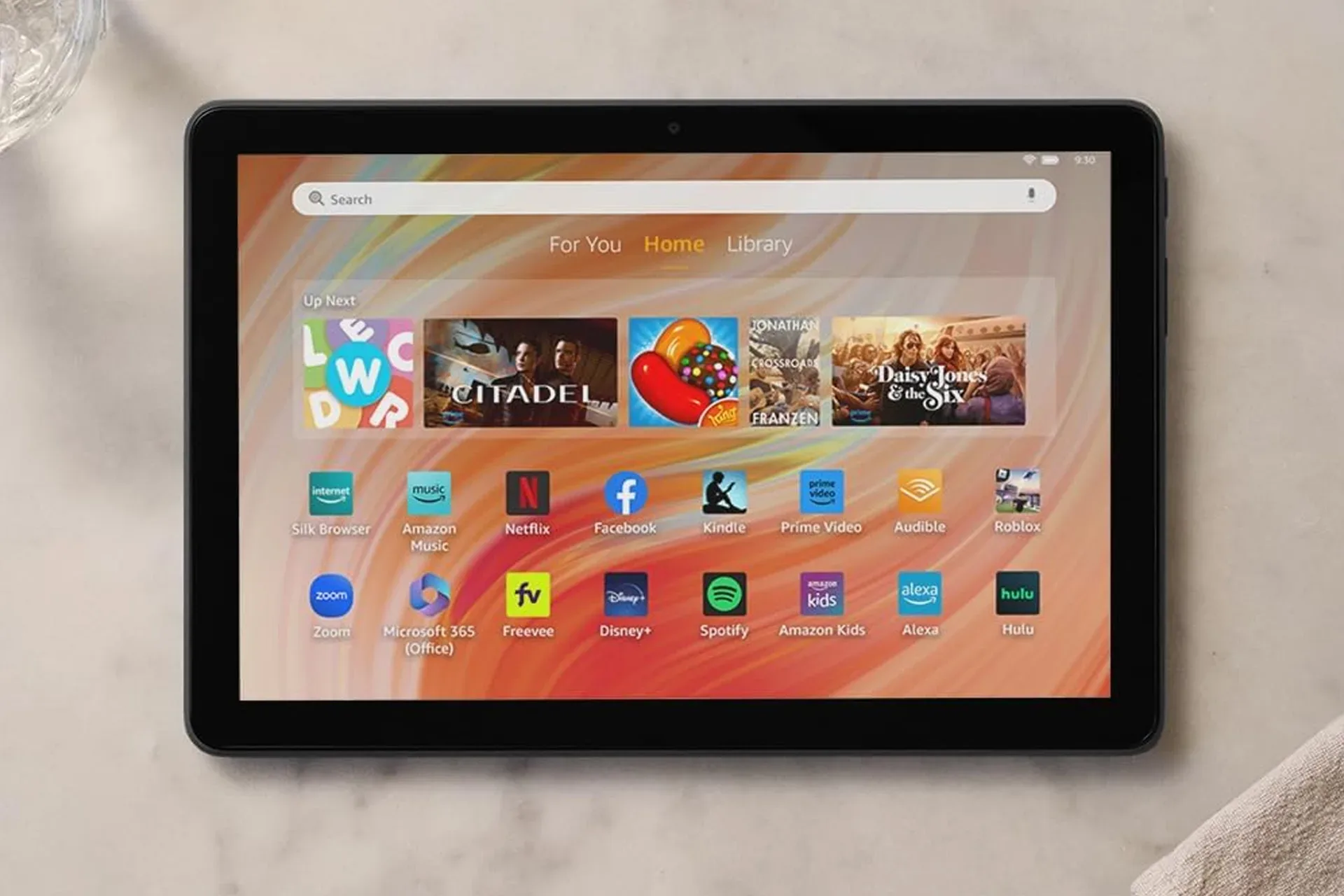
Those who are weighing other portable screens for streaming, reading and light play can also compare the different role of a tablet in this space; the Amazon Fire HD 10 deal illustrates the more traditional large-screen alternative. The iPhone Duo’s pitch, by contrast, appears to hinge on changing form between a phone-sized device and a larger open display.
What remains unknown before October 23
The covered Fifth Avenue structures should not be mistaken for a final product reveal. Their visual treatment has not been shown. The exact presentation of the outdoor displays therefore remains unknown until the coverings are removed.
There are also limits to what can be concluded from the reported retail allocation. A large number of demo units at Fifth Avenue signals priority for showcasing the device, but does not reveal total launch supply, demand, store-by-store customer inventory, or how long stock will last. Apple’s own warning that launch-day inventory is likely to disappear quickly is the clearest available guidance for anyone hoping to purchase immediately.
What is clear is the timeline. The installations are in place ahead of Friday, October 23; Fifth Avenue is expected to host an outsized in-store demonstration effort; and customers in some territories will need online pickup reservations rather than relying on walk-in buying. By launch day, the covered plaza structures and the foldable-focused fixtures should turn one of Apple’s highest-profile stores into a very public explanation of what the iPhone Duo is meant to be.