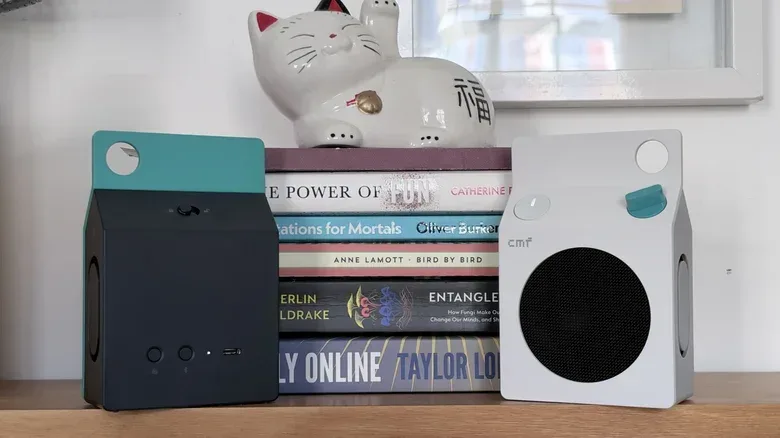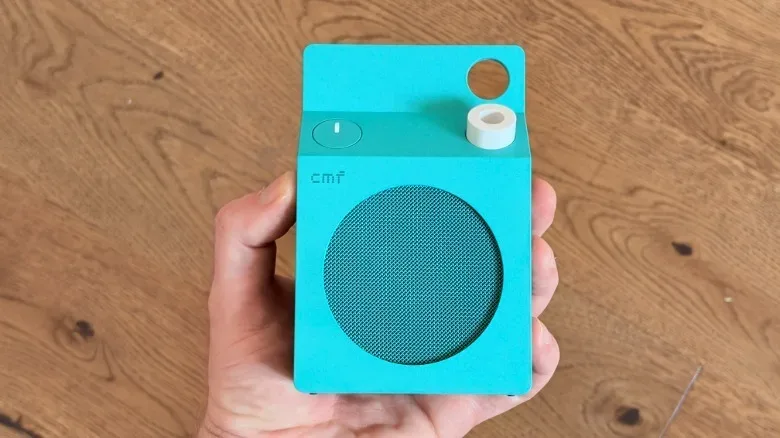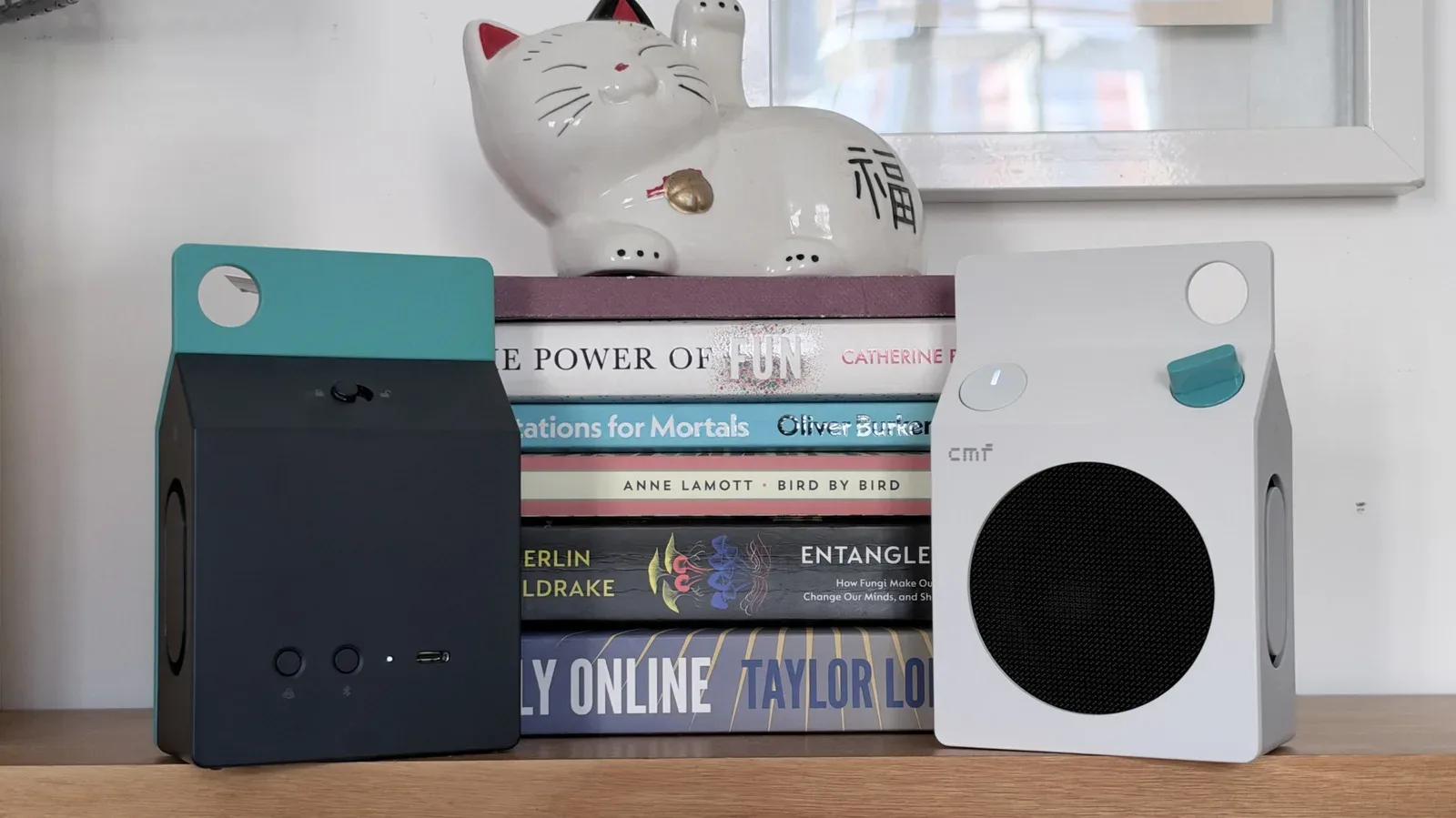
CMF has made its first move into portable speakers with two unusually cheerful little boxes that look more prepared to hold oat milk than a playlist. The CMF Speaker S and CMF Speaker M use a tall, rectangular, carton-like silhouette, vivid color options and physical controls designed to be part of the object’s personality rather than hidden as an afterthought.
The pair are available now through Nothing’s retail site. The smaller Speaker S is priced at $59, while the larger Speaker M costs $109. Both arrive in orange, turquoise, or white, and CMF has included an uncommon degree of visual customization for products at these prices: their cover plates and control knobs can be swapped between devices.
That makes the launch about more than a speaker attempting to disappear onto a shelf. CMF is treating these as portable gadgets that can be displayed, modified and clipped onto everyday gear—without abandoning practical basics such as dust and water resistance, USB-C charging and a wired audio-input option.
Two sizes, two different audio layouts
The Speaker S is the compact option. It uses a 45mm full-range driver alongside two passive radiators. A full-range driver is intended to handle a broad portion of the audible spectrum from one speaker unit. The passive radiators are not independently powered drivers; instead, they move in response to air pressure generated inside the enclosure. Their job here is to reinforce lower-frequency output, helping a small speaker produce a fuller sense of bass than the main driver alone might manage.
The Speaker M is roughly twice as tall as its smaller sibling and has a more involved component list. CMF specifies a 10W tweeter, dual drivers, a 25W woofer and two speaker outlets. In plain terms, a tweeter is built for higher frequencies, while a woofer is intended for lower frequencies. Separating those roles can give a larger portable speaker more room to address different portions of a track, though the supplied specifications alone do not establish how either speaker will sound in every room or outdoor setting.
One early reported impression described a pair of Speaker S units as richer-sounding than their size and price might suggest. That is encouraging, but it should be treated as a subjective listening impression, not as a substitute for broader comparisons or for the published hardware details.
What both CMF speakers share
Despite the difference in size and driver configuration, the Speaker S and Speaker M share several headline features:
- Bluetooth 6.0 connectivity
- IP68 dust and water resistance
- Up to 18 hours of claimed music playback
- USB-C charging and USB-C audio input
- NFC pairing, Google Fast Pair and Microsoft Swift Pair support
- A physical knob for volume and track control
- A top-corner opening for attaching the speaker to a bag or tent
The 18-hour number is a manufacturer claim, so prospective buyers should understand it as a maximum rather than a fixed promise for every listening session. Actual endurance can vary with volume, source device and how the speaker is used. Still, CMF is clearly positioning both products as all-day portable devices rather than short-burst desktop accessories.
The IP68 rating is another important part of that positioning. IP ratings describe resistance to intrusion from solids and liquids. In this case, the “6” denotes dust protection, while the “8” denotes a high level of water protection under conditions specified by the manufacturer. The rating is useful reassurance for a speaker that may be hanging from a backpack or placed near a campsite, but it does not make sensible care unnecessary. Charging ports, accessories and usage conditions still matter.
A knob that does more than raise the volume
CMF’s circular control knob is the most conspicuous interaction point on each speaker. It handles volume but can also skip forward through tracks or rewind them. The knob itself comes in different shapes and colors, matching the broader modular visual approach. Buyers can exchange knobs and cover plates between devices, allowing an orange-and-white or turquoise-and-orange combination without buying an entirely separate speaker finish.
There is a practical detail under the playful exterior: an opening in the upper corner provides an attachment point for a bag or tent. It is a small feature, but it makes the carton form more than a visual gag. Instead of needing an added case, clip or strap just to carry the speaker externally, owners have a built-in place to secure it.
CMF also says it intends to release design files for 3D-printable custom handles and accessories. That promise could extend the system beyond the supplied shells and knobs, particularly for people who have access to a 3D printer or a printing service. The significant point is that these would be user-made add-ons rather than official bundled accessories, and CMF has not detailed the full range of designs in the available information.
Pairing works best when buyers choose a lane
Both models can be paired with another unit of the same model. Two Speaker S units can pair together, and two Speaker M units can pair together. That matters for listeners who want a more expansive setup than a single compact enclosure can provide.
There is one limitation worth knowing before choosing between sizes: the Speaker S and Speaker M cannot be paired with each other. A buyer who begins with the less expensive S and later wants a two-speaker arrangement will need a second Speaker S, not the more powerful M. Similarly, a Speaker M owner needs another M for the supported two-unit combination.
The speakers also support Auracast, a Bluetooth audio broadcasting feature that is increasingly appearing in devices from different companies. The supplied information confirms support, but does not spell out exactly which listening configurations CMF will expose through its controls or companion software. The practical takeaway is that Auracast is part of the speakers’ connectivity toolkit, rather than a reason to assume every multi-speaker scenario is automatically supported.
Setup should be relatively flexible across phones and computers. NFC pairing lets a compatible device begin a pairing action through close-range contact. Google Fast Pair is intended to streamline Bluetooth setup in the Google ecosystem, while Microsoft Swift Pair performs a comparable convenience role for compatible Windows devices. Those additions are especially welcome on portable audio products, where the act of digging through Bluetooth menus can be more tedious than the listening session itself.
USB-C does double duty, but the cable is separate
The USB-C port is not limited to replenishing the battery. CMF says it can also accept audio input, offering a wired listening route in addition to Bluetooth. That is a practical inclusion for a product aimed at portability, since a wired connection can be useful when Bluetooth is undesirable or when a compatible source device is nearby.
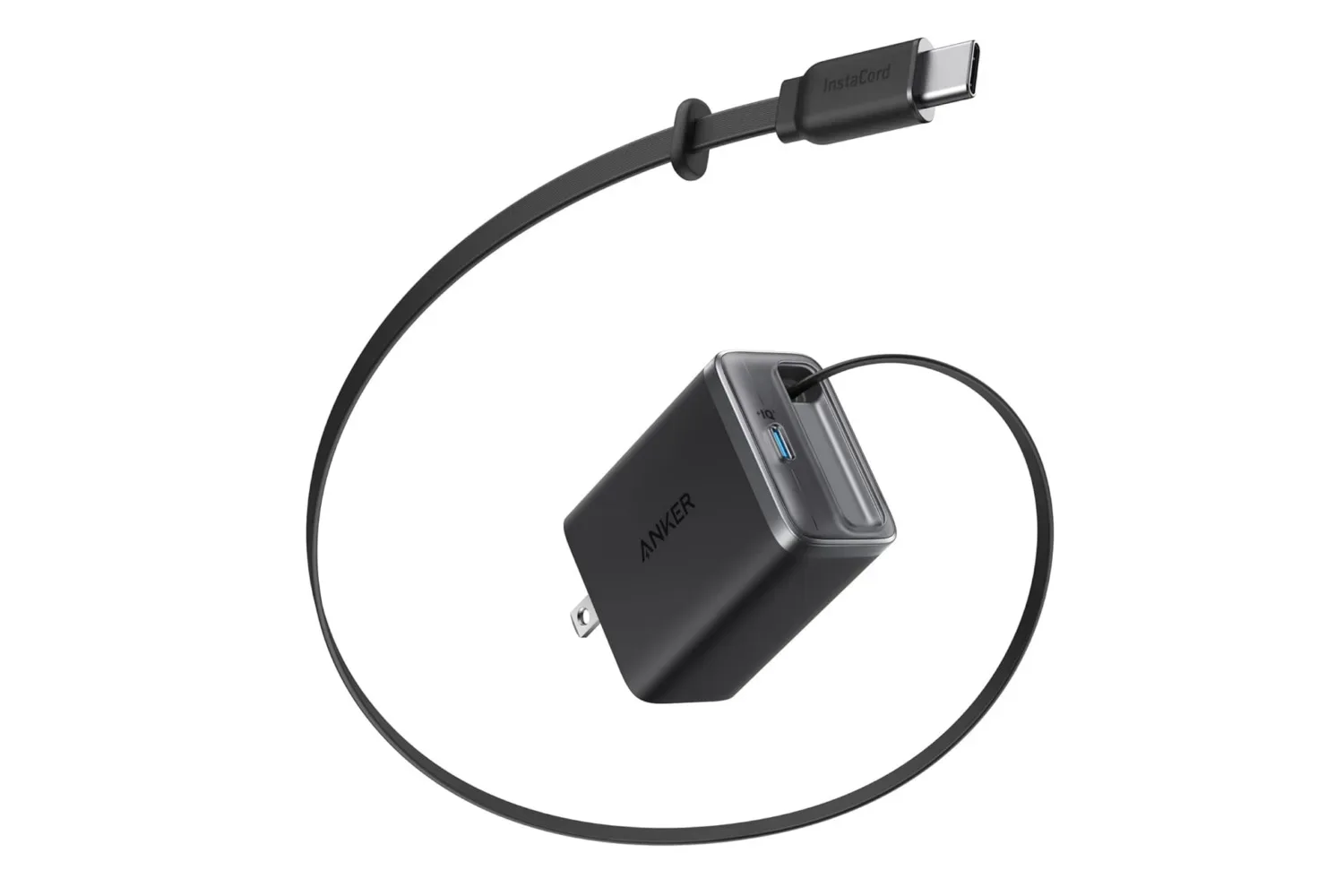
There is a small but important box-content caveat: neither speaker includes a USB-C cable. Many buyers will already have one, but it is still something to account for before the first charge or any planned wired setup. Anyone who needs an additional cable or charging solution should check device compatibility and power requirements; a compact accessory such as the Anker Nano retractable USB-C charger illustrates the sort of cable-and-charger combination that may be relevant, though it is a separate product and is not included with CMF’s speakers.
Who each speaker appears to suit
The $59 Speaker S is the straightforward choice for someone prioritizing compactness, a lower entry price and the ability to build a matched pair later. Its 45mm full-range driver and passive radiators indicate a design focused on extracting a rounded sound from a small enclosure, while its attachment opening and IP68 rating align with travel, casual outdoor use and bag carry.
The $109 Speaker M is aimed at buyers who want a physically larger option with a tweeter, dual drivers and a 25W woofer specified in its audio layout. Its height and added components distinguish it from the S, but the matching-model pairing rule means it is best considered as the start of a Speaker M setup rather than as an upgrade that will link with an existing Speaker S.
For either model, the distinguishing appeal is the blend of familiar portable-speaker necessities and a deliberately visible design language. CMF has put tactile controls, interchangeable pieces and future printable accessories at the center of the package. The result is a pair of speakers whose defining feature may not be a single specification, but the effort to make a common gadget feel less anonymous—right down to the point where it resembles a tiny carton ready to pour out some music.