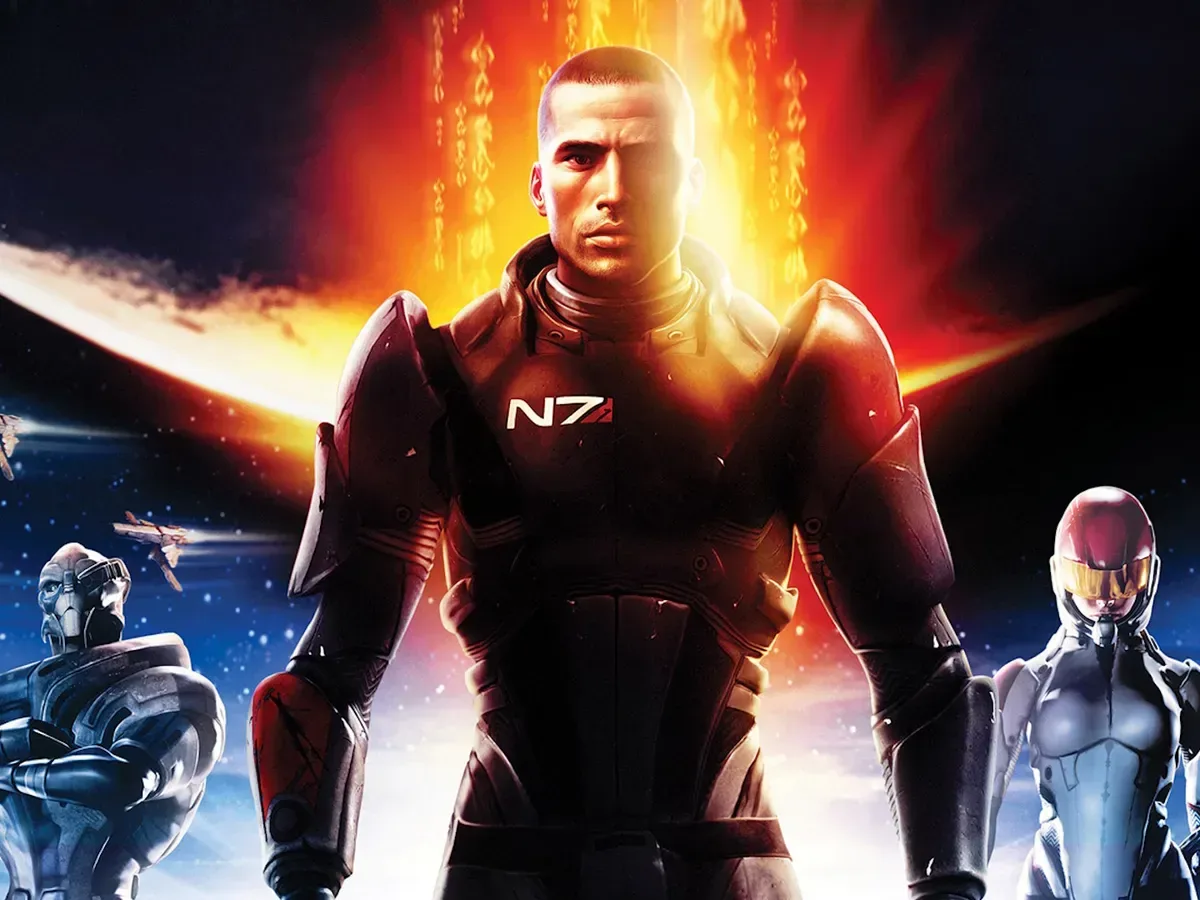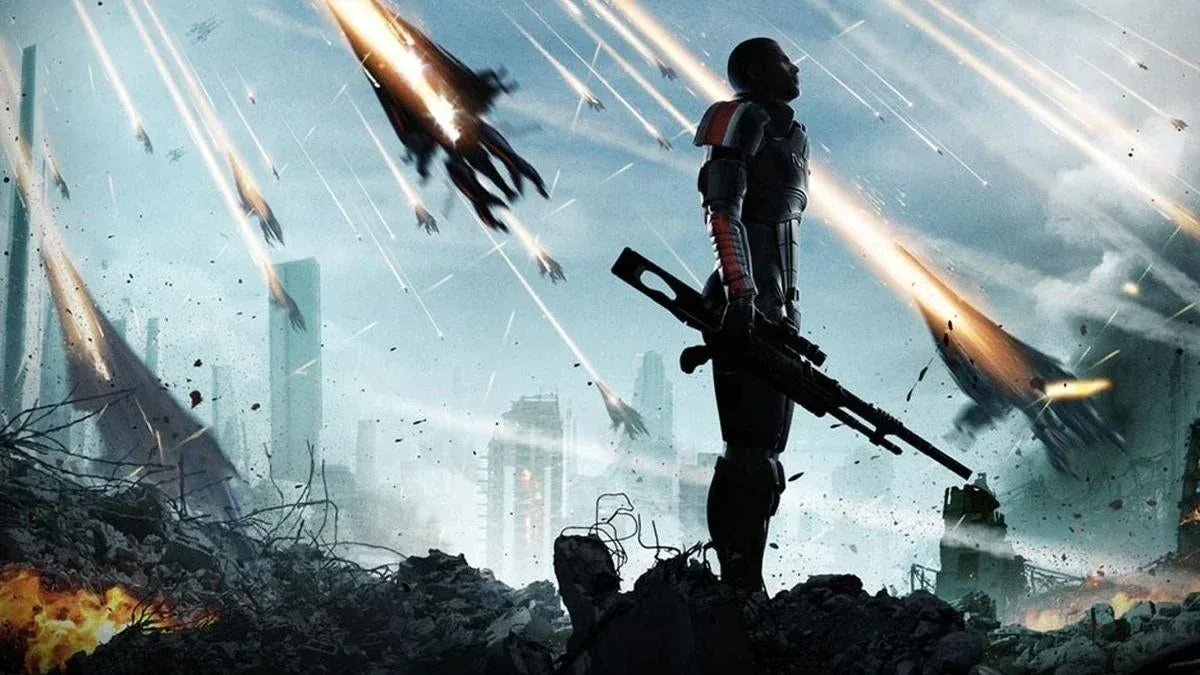
Jennifer Svedberg-Yen, a writer on Clair Obscur: Expedition 33, has paid tribute to BioWare following the studio’s closure, describing the news as heartbreaking and returning to the first two Mass Effect games in its honor.
Her comments center on the element that made the science-fiction RPG series especially distinctive: the way player decisions and story states could carry from one entry to the next. For Svedberg-Yen, the care put into those narrative threads—and the degree to which imported saves let players retain a personal version of the story across a trilogy—remains a notable accomplishment.
“I’m playing Mass Effect and Mass Effect 2 right now, in honor of BioWare. That broke my heart,” Svedberg-Yen said of the closure.
Why the Mass Effect trilogy’s continuity still stands out
Svedberg-Yen’s point is not that every game needs a large, choice-driven narrative. She specifically acknowledged that she enjoys games without narrative at all. Instead, her argument is that story should not be treated as an optional concern for franchises and intellectual property with ambitions beyond a single release. In that context, Mass Effect is a powerful example because its storytelling was not merely present alongside the role-playing systems; player agency was built into the series’ wider structure.
In practical terms, a save import allows a later game to read decisions recorded in a previous game’s save file. That can mean dialogue, plot flags, relationships, outcomes, or other story information are recognized rather than reset. The supplied information does not identify every decision that carried over in the trilogy, but it does establish the central appeal Svedberg-Yen is highlighting: choices could be imported through all three games, helping players form a continuous story of their own.
That approach changes the emotional contract between a game and its audience. A decision made early in a series does not have to remain an isolated branch that disappears once the credits roll. It can become part of the next chapter’s starting point. The result is not simply more dialogue or more content. It is the feeling that a player’s history has been recognized.
Svedberg-Yen praised both “the attention to detail in the narrative and the storylines” and the way those storylines play out across the trilogy through imported saves. She called the achievement remarkable and said she would like to see more games pursue that kind of design.
That is an important distinction. Save importing is a technical feature, but its purpose is narrative. The technology matters because it supports continuity: the persistent sense that prior actions, relationships, and decisions continue to belong to the player when the next installment begins.
Related coverage includes Clair Obscur: Expedition 33 Writer Honors BioWare, Calls Mass Effect's Legacy Remarkable.
A closure with implications beyond one studio
BioWare’s closure also arrived with the cancellation of a new Mass Effect project, previously described as Mass Effect: Universe. The loss therefore extends beyond the end of a studio: it ends a planned continuation of a franchise closely associated with branching, player-led science-fiction storytelling.
A former developer said the Universe name was partly inspired by the concept of connecting saves and choices to create parallel universes. That description suggests the planned project was thinking in terms related to the series’ established identity, where different players’ accumulated decisions could produce different versions of the same fictional setting. It is not confirmation of particular mechanics, story content, or implementation in the canceled game, but it does make the title’s apparent intent clearer.
The cancellation is particularly resonant beside Svedberg-Yen’s praise. The aspect she celebrates is not just a remembered feature from earlier games; it is an example of how a long-running RPG series can give meaning to player investment over time. When a project built around a major legacy series is canceled, audiences lose not only a potential new story but also the possibility of seeing how that legacy might have been interpreted for a new era.
For a related look at Clair Obscur’s awards presence, see the discussion of its Game Awards nominations record.
What “player choice” means in this context
“Player choice” can describe many things, from selecting equipment to changing a line of dialogue. In the context of Svedberg-Yen’s comments, it refers most importantly to authored narrative choices that persist across installments. A player is not only choosing a momentary response; the game is tracking a version of events that later entries can acknowledge.
This is more demanding than including a few alternate endings. Developers must account for multiple possible states when writing scenes and plotting future events. Characters, alliances, unresolved conflicts, and past actions may need to be handled differently depending on what a player did earlier. The more meaningful those decisions are, the more narrative detail has to be maintained across the series.
That is why Svedberg-Yen’s admiration for the trilogy’s execution is significant. Her praise is aimed at the combined result of narrative planning and continuity management, not simply at the fact that save files existed. The series made those records feel connected to its storylines.
Analysis: The lasting appeal of that model is its respect for memory. Many games ask players to make decisions, but fewer are designed around preserving those decisions over several major releases. A save-import structure tells players that their earlier time with the series is not disposable. Even when the broad direction of a story remains authored, personal continuity can make the journey feel specifically theirs.
It also demonstrates why discussions of a franchise’s value cannot be reduced to its recognizable name. A franchise is not only characters, settings, and branding. It can also be a set of design expectations. For Mass Effect, the ability to import a story through a trilogy is part of the legacy Svedberg-Yen is honoring.
The uncertain future of the Mass Effect property
What happens to Mass Effect now remains unsettled. Former BioWare developers have offered differing views on whether Electronic Arts could sell the property to another studio or company. One former developer expressed the belief that EA does not sell its properties. Former BioWare executive producer Mark Darrah offered a more conditional assessment: with nobody at EA actively working on the series, that situation could make a sale more likely, but it could also lead to the property being left unused.
Neither view establishes a future plan. They instead underline the uncertainty following the studio closure and the project cancellation. A dormant franchise can remain valuable as intellectual property while still having no active game in development, and the supplied information offers no confirmation that a sale, revival, or new internal project is planned.
There is also a substantial financial question around any effort to revive the canceled game. A BioWare co-founder has said saving Mass Effect 5 would cost more than $200 million because fans would expect the highest level of AAA development.
AAA is an industry label commonly used for large-scale, high-budget productions. In this case, the estimate frames the difficulty of a rescue: a continuation of a major RPG franchise would likely be judged against the production values, scope, and narrative ambitions associated with a top-tier release. Acquiring a name or an unfinished concept would therefore be only one part of the challenge. Funding development to a level audiences consider worthy of the series would be another.
Analysis: That cost estimate helps explain why a straightforward “someone should save it” response is more complicated than it first appears. A new custodian would face expectations around story, choice, and technical scale at the same time. It would need to decide what continuity means for a series celebrated for players carrying their histories forward, while also meeting the standards attached to a blockbuster franchise.
A tribute to narrative ambition, not a claim that every game must do the same
Svedberg-Yen’s comments are ultimately a defense of narrative ambition in games, delivered without treating story-first design as the only valid approach. Her appreciation for games with no narrative is a useful part of the statement: games can be compelling for countless reasons. But for franchises built on character, consequence, and long-term audience attachment, storytelling can be central to what makes the property matter.
Her return to Mass Effect and Mass Effect 2 gives that argument a personal dimension. BioWare’s closure has prompted her to revisit work whose narrative detail and interconnected choices she considers exceptional. At a moment when the studio is gone and its next Mass Effect project has been canceled, that praise also serves as a reminder of what players and developers continue to value in the trilogy: not only its science-fiction premise, but the unusual care taken to let a player’s version of the story endure.