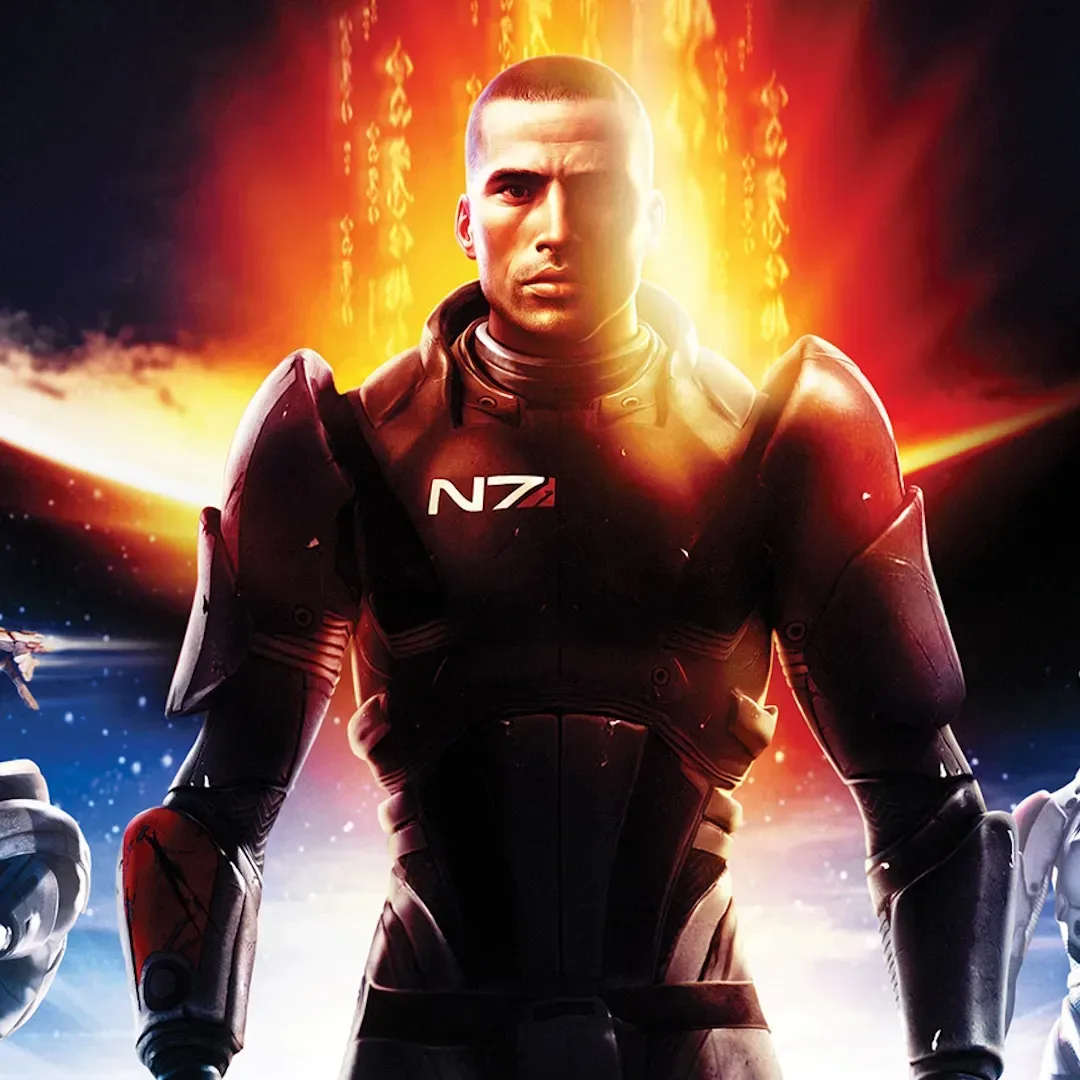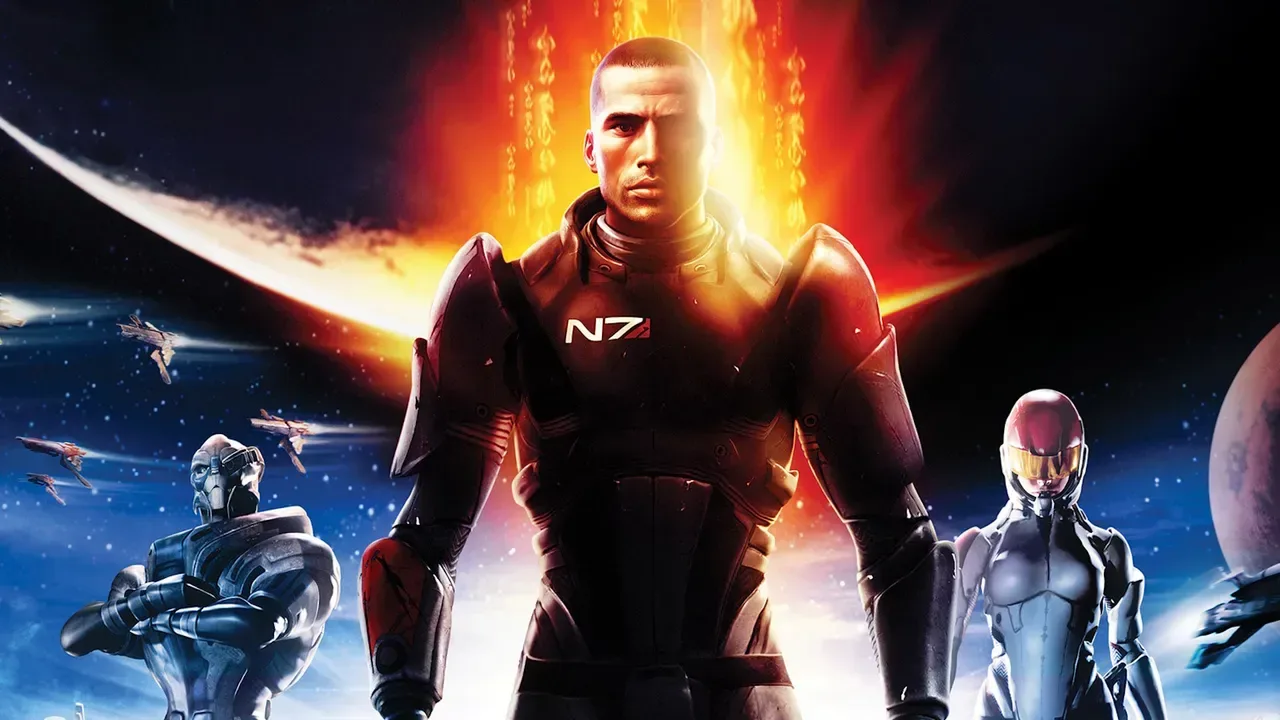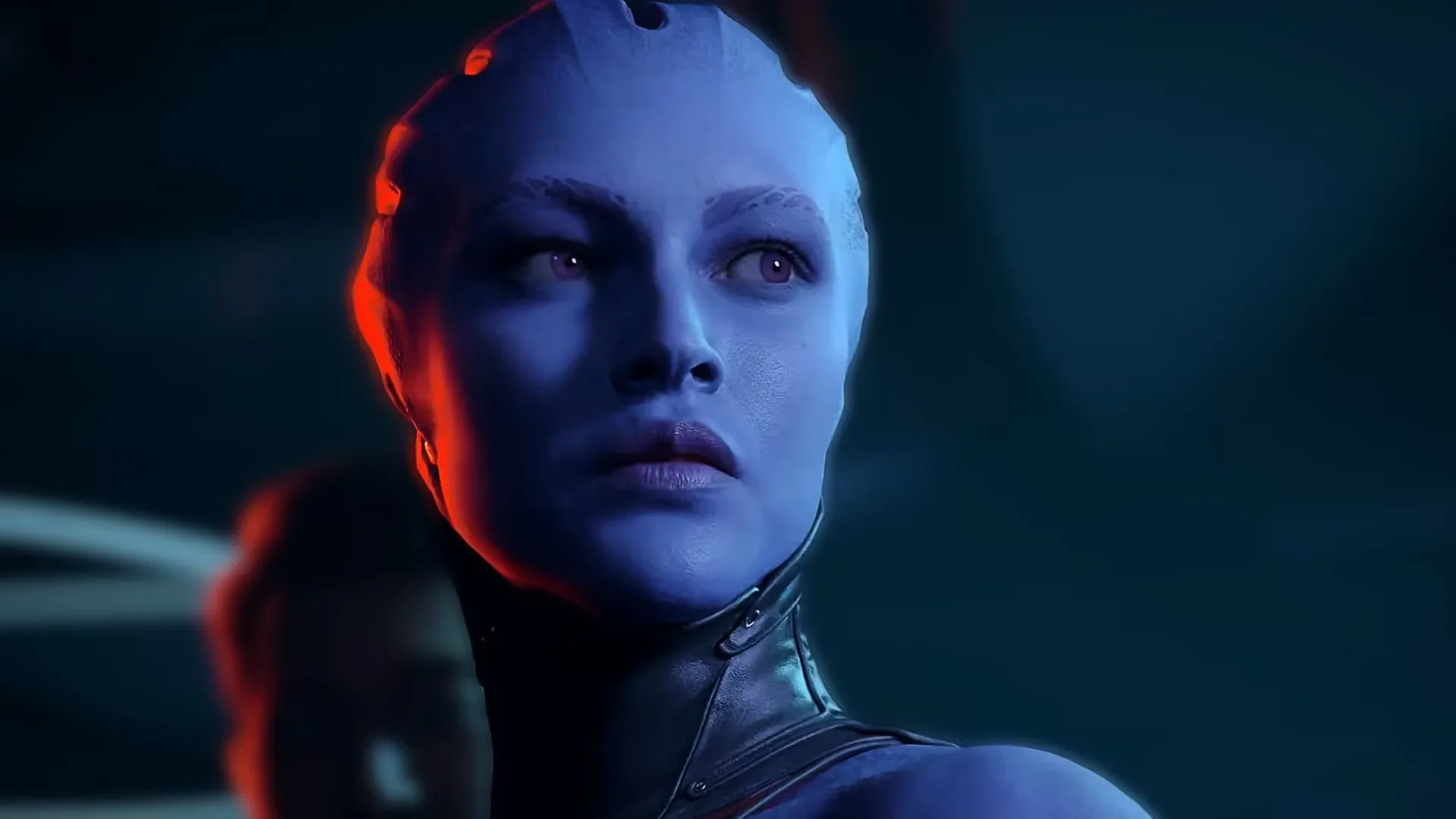
The conversation around Mass Effect’s future has quickly become a conversation about scale. Following EA’s shutdown of BioWare and the cancellation of the in-development Mass Effect Universe, former members of the studio have offered sharply different estimates of what it would take to bring the space-RPG series back.
Former BioWare co-founder Trent Oster recently put a broad, contemporary-market estimate of more than $200 million on completing the canceled project at the level fans may have expected. Christina Norman, a former lead programmer and lead designer on the original Mass Effect trilogy, sees a much less expensive path. Her suggestion: a new Mass Effect could be made for roughly $50 million, or around five times the reported sub-$10 million budget of Clair Obscur: Expedition 33.
Neither figure is a confirmed budget proposal from EA, and neither means a new game is currently in production. They instead outline two different ideas of what a Mass Effect return could be: one built to a huge, modern AAA scope, and another designed around clearer limits, a smaller team and more deliberate priorities.
The $200 million question is about scope, not just a famous name
Oster’s estimate was framed as a rough comparison to contemporary projects, rather than a disclosed cost for Mass Effect Universe. His point was that a commitment above $200 million would be a substantial upfront bet, particularly if the publisher did not have a wider plan for making the intellectual property work financially.
That wording matters. “AAA” is commonly used for big-budget games, but it is not a precise price bracket. In practical terms, it usually describes a production model with large teams, lengthy development, elaborate visuals, wide-reaching marketing expectations and a broad set of features. Once a project is structured around that model, its costs can climb through the combined weight of content, production support and the need to meet a very high technical and presentation bar.
A major series can raise those expectations further. Players may reasonably expect the next Mass Effect to offer a dramatic new galaxy-spanning story, an extensive party of companions, cinematic conversations, combat systems, exploration and the kind of polish associated with a flagship release. But expectations are not automatically a checklist. The key issue is deciding which parts are essential to Mass Effect’s identity and which are expensive expansions that can be reduced, reshaped or omitted.
Oster later acknowledged that a Mass Effect game could be made more cheaply than $200 million. His caveat was just as important: it would not be the same as the Universe concept previously described by the team. That is a useful distinction for anyone treating the two cost estimates as a simple disagreement. A cheaper Mass Effect is not necessarily a cheaper version of the canceled game. It could be an entirely different project with different ambitions.
Norman’s case: focus can be a production strategy
Norman pointed to Clair Obscur: Expedition 33 as evidence that a much lower overall budget can still support a game that resonates. The reported total budget for that French-made RPG was below $10 million. Norman’s proposed Mass Effect figure, around $50 million, is therefore not an argument that BioWare’s series should be made for the same amount; it is an argument that multiplying that budget several times over could provide ample room for a carefully scoped entry.
Related coverage includes Former BioWare Lead Says a New Mass Effect Could Cost Far Less Than $200 Million.
Her underlying claim is about efficiency. A clever, smaller team, she argued, can achieve more than a giant production built without sufficient restraint. That does not mean that development is easy, or that a $50 million RPG would be small in every sense. It means the team would have to make hard decisions early and protect them throughout production.
For Mass Effect, that could mean prioritizing the elements most associated with the series: authored characters, player conversations, consequential-feeling choices, a strong central plot and satisfying moment-to-moment play. This is analysis rather than a disclosed plan, and there are no confirmed design details for any prospective replacement project. Still, it follows directly from the contrast Norman and Oster have drawn: budget changes are ultimately made through scope decisions.
Norman has particular experience with the franchise’s defining systems. During more than six years at BioWare, she was a lead programmer behind Mass Effect’s conversation system before becoming lead designer on Mass Effect 2 and Mass Effect 3, where she worked on gameplay improvements. That background lends weight to her view of what a focused team might preserve, though it does not settle whether EA would share that view or fund such a project.
What “smaller scope” would actually require
Budget discussions often sound abstract because the results are expressed in one large number. In development terms, a smaller scope usually means establishing boundaries before a team begins building content at full speed. A game cannot simply promise every major feature and then be made cheaply through efficiency alone.
A focused production might make choices about the number of locations, the complexity of branching content, the size of the supporting cast, animation volume, technical targets or the amount of bespoke material required for optional activities. Those are examples of the kind of decisions that affect cost; they are not claims about a specific Mass Effect design.
The trade-off is not automatically a loss for players. More content does not always create a stronger role-playing game. A contained setting, a smaller number of companions and fewer but better-developed missions can give writers and designers more control over pacing and character payoff. Conversely, cuts can be felt if they reduce the variety, reactivity or spectacle that players value. The difficult work is finding the point where discipline sharpens the experience rather than making it feel incomplete.
This is also why comparisons to Clair Obscur: Expedition 33 need care. A budget figure does not make two games directly comparable. Different genres, technology needs, art directions, team structures and design goals can demand different resources. Norman’s comparison is best read as a challenge to the assumption that every high-profile RPG must cost $200 million or more, not as proof that Mass Effect could duplicate another game’s production approach feature for feature.
LLM work is part of Norman’s career, not a proposed shortcut
Since leaving BioWare, Norman has worked at Riot Games, at a startup she co-founded and as a machine-learning engineering consultant focused on LLM-directed character conversations. LLM stands for large language model: a type of AI system trained to generate and interpret language patterns.
That professional background may invite speculation about AI-driven dialogue as a way to reduce the cost of a future Mass Effect. The available information does not support that conclusion. There is no indication that Norman proposed LLM technology as part of a lower-budget Mass Effect, nor that it would be needed for one.
It is an important line to keep clear. Mass Effect’s conversation systems are central to how players encounter characters and make decisions, and a discussion about building a focused game does not automatically become a discussion about replacing authored writing or performance work. Norman’s public point was about team size and smart production choices, not a technology prescription.
For a broader look at the practical costs created when games must accommodate different hardware targets, the ongoing debate around platform feature parity offers a useful adjacent example in this report on Xbox Series S development concerns. It is not a Mass Effect-specific issue, but it illustrates how technical requirements can influence the resources available for creative work.
Ownership may be the bigger obstacle
Even if the budget case for a smaller Mass Effect is persuasive, the decision is not simply a matter of former developers identifying an efficient approach. EA owns the franchise rights. Oster has argued that freeing the IP would be the major push, while also recognizing that the company may have little interest in surrendering a property it is not actively using.
That is the central practical constraint. A passionate team, fan enthusiasm and a viable lower-budget pitch are not enough by themselves to create a new Mass Effect. The rights holder must choose to license, fund, sell or otherwise revive the property. Nothing in the current discussion indicates that such a step is underway.
There is, however, evidence of sustained public interest. The most recent N7 Day included a video message in which the Normandy cast and crew asked fans to help save Mass Effect. Footage and details from the canceled Mass Effect Universe have also appeared online. A petition asking EA to reconsider has passed 325,000 signatures, while a Canadian politician has begun a government petition connected to saving BioWare.
Those efforts show a community unwilling to quietly move on, but they do not alter the ownership reality. They may demonstrate demand; they cannot determine a publisher’s strategy or revive a canceled project by themselves.
A TV series keeps the brand in view, but not the game’s future
A Mass Effect television series remains in the works, which gives the franchise a presence beyond games. It also supports Oster’s broader point that a major IP can be considered across multiple projects and formats rather than as a single release. Yet the existence of a TV adaptation should not be mistaken for confirmation of a new game or a substitute for one.
The most grounded takeaway is not that Mass Effect has been saved, or that a $50 million sequel is waiting to be approved. It is that the cancellation has exposed a real creative and business question: does the series need another enormous AAA production to meet player expectations, or could a more contained RPG retain its essential strengths while taking less financial risk?
Norman believes the latter is possible. Oster’s comments suggest it would require a different vision from the canceled Universe project. Both positions leave the future in EA’s hands, but together they make the case that cost alone does not have to end the conversation.