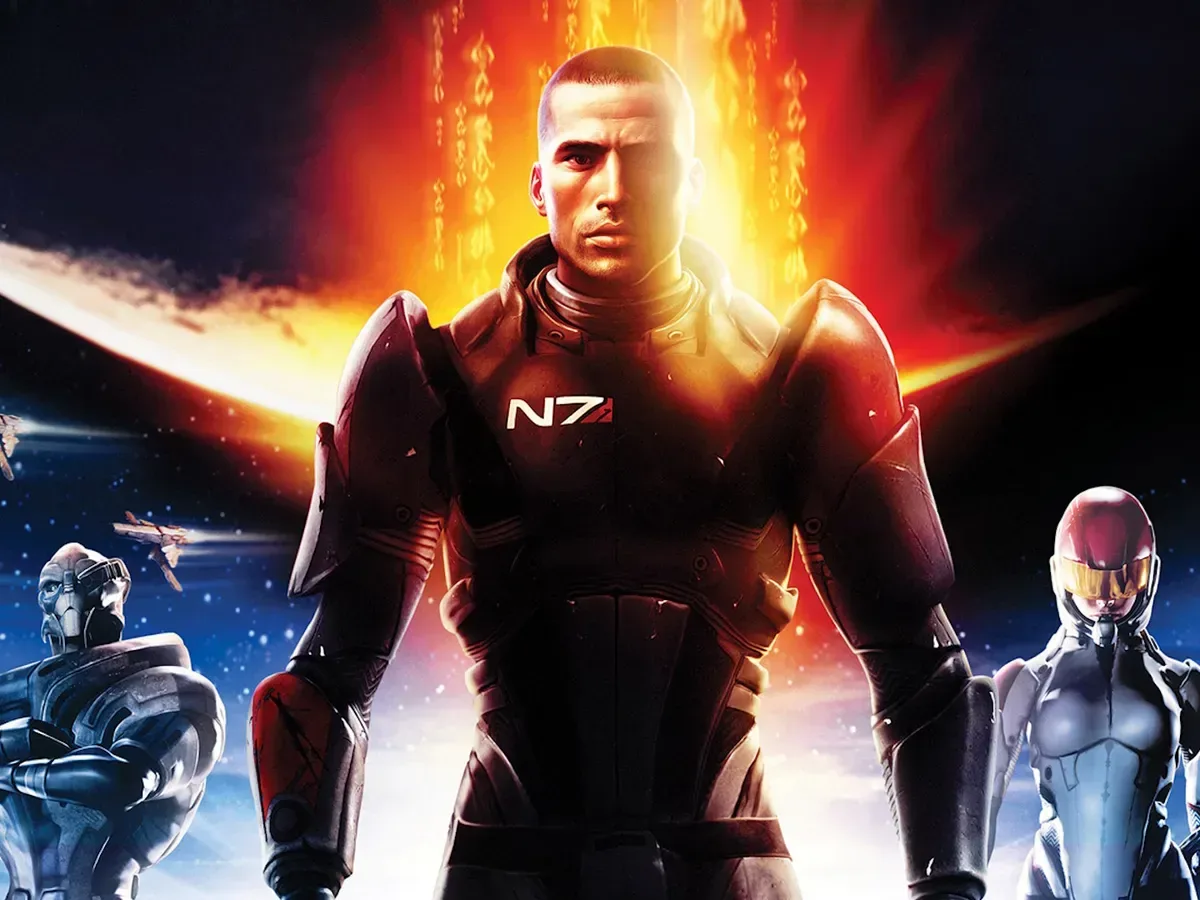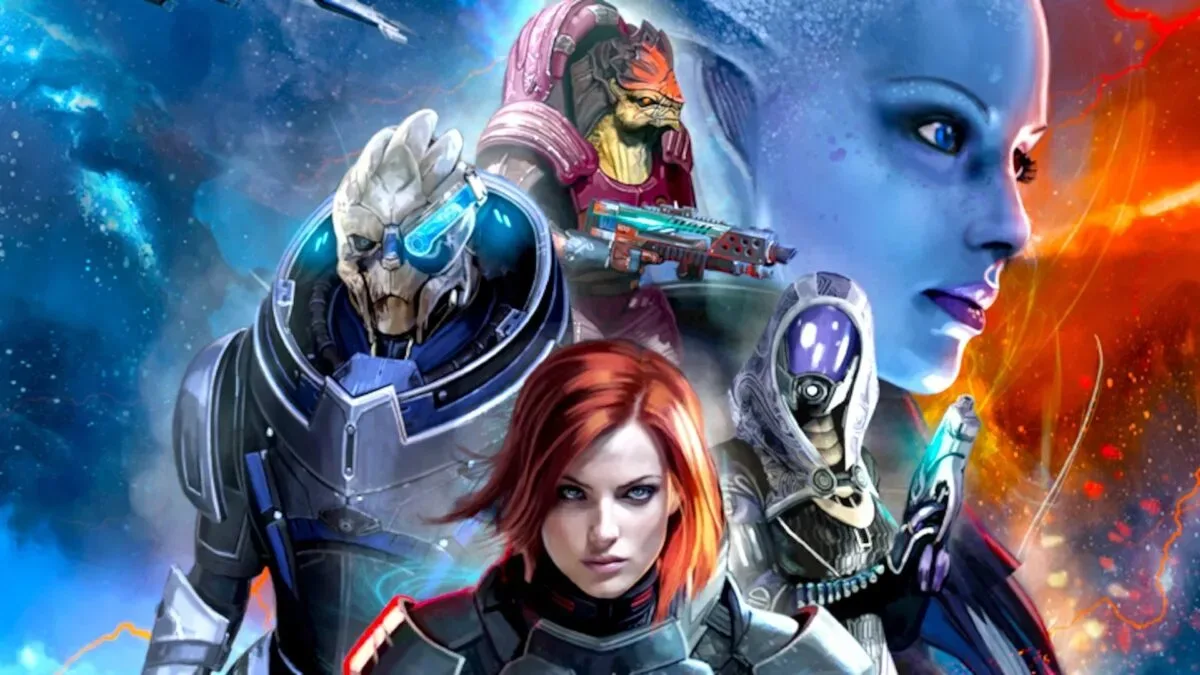
N7 Day is usually built for celebration: a date on the calendar for Mass Effect players to revisit a beloved science-fiction RPG series, share favorite crew memories and watch closely for a signal about what might come next. This year, the mood is sharply different. In the wake of BioWare’s reported closure last month, November 7 has become a focal point for an organized, public push to preserve Mass Effect and argue that its future should not simply disappear with the studio that created it.
The campaign has reached beyond the usual social-media tribute cycle. Fans have organized a petition, bought prominent advertising space and sent billboard trucks to locations connected to EA. Series alumni, voice performers and other game-industry figures have added their names and videos. Canadian political figures have also weighed in. The result is an unusually broad response to a studio shutdown: not a confirmed recovery plan for the franchise, but a highly visible statement that Mass Effect still has an audience, a creative legacy and people willing to advocate for both.
Why N7 Day carries extra weight this year
BioWare established N7 Day on November 7 fourteen years ago, initially marking the fifth anniversary of the first Mass Effect. “N7” is the in-universe designation associated with Commander Shepard, the protagonist most closely identified with the original trilogy. Over time, the date became a recurring fan observance and, importantly, a moment when players expected even a small indication of where the franchise might be headed.
That expectation makes the timing of the reported closure particularly painful. A day that might have carried a teaser, a developer message or a burst of ordinary anniversary nostalgia instead became an occasion for fans to press for the series’ survival. It is a meaningful shift in emphasis. The argument is no longer simply that Mass Effect deserves another game. It is also that the people who shaped the series and its world should not be erased from the conversation about what follows.
“The hardworking people who made Mass Effect deserve to see their vision through,” composer Sam Hulick said in a video statement joined by much of the game’s cast. “I’m not ready to see the story end either.”
That distinction matters because a game franchise is more than a recognizable title controlled by a corporate owner. Its identity is formed through writing, art, design, music, performance and the accumulated choices of development teams. Hulick’s statement frames the campaign in human terms: preserving Mass Effect is inseparable, for supporters, from recognizing the workers whose labor made it resonate.
What the Save Mass Effect campaign is actually doing
The effort has deliberately moved outside the spaces where game-fandom campaigns usually live. After advertising in Times Square, Save Mass Effect billboards and trucks have appeared in Wales, Texas, California and Edmonton. Edmonton has special significance as BioWare’s home base. Billboard trucks have also been seen near EA’s Redwood headquarters, while EA’s Madrid offices have been tagged.
Public advertising does not itself establish a route to revive a project, reopen a studio or transfer a property. What it does is create visibility that is harder to ignore than a single trending topic. It gives supporters a common message, signals that the campaign has organizers and funding behind it, and puts the issue in physical spaces attached to the companies and cities involved.
Related coverage includes N7 Day 2026 Becomes a Fight to Protect Mass Effect's Future After BioWare Closure.
In this context, a petition functions differently from a business proposal. Its value is as a measure of organized attention: it provides an easy way for people to register support and gives the movement a figure it can point to. Fans are also trying to produce a high count of simultaneous players on the original Mass Effect. That is an attempt to make the same case through participation rather than signatures—showing that, even amid uncertainty, people are willing to spend time with the game itself.
Neither metric can promise a particular corporate decision. Player counts and petition totals cannot reveal the internal financial, legal or staffing realities behind a closure. But they can demonstrate continuing engagement, which is why the campaign has emphasized both. The message is straightforward: Mass Effect is not merely being remembered; it is still being actively played, discussed and defended.
Support extends beyond Mass Effect’s immediate community
The response includes people with direct ties to the series as well as developers and performers from elsewhere in games. Kellen Goff, known for work in Five Nights at Freddy’s, has spoken about the importance of Mass Effect and the campaign. Owlcat Games also released a video looking back on the series. Owlcat recently hired Dragon Age writer David Gaider for Osiris Reborn, its role-playing game based on the science-fiction series The Expanse.
These contributions do not mean the companies involved are participating in a rescue attempt. They do, however, show the breadth of Mass Effect’s influence among people working around role-playing games and voice performance. The support is about an influential creative tradition as much as a particular product line. For fans, seeing peers of BioWare’s former teams speak up can validate the sense that the loss reaches beyond one studio’s staff directory.
The political dimension is unusual—and limited
One of the more unexpected elements of this N7 Day campaign comes from Canada’s New Democratic Party. Party leader Avi Lewis criticized EA and private equity when the closure was announced, raised the prospect of stronger measures to protect Canadian businesses and suggested federal intervention in BioWare’s future. Member of Parliament Don Davies has amplified the petition and posted an image placing his own head on Commander Shepard.
This is notable because it reframes the discussion from fan disappointment to questions about cultural industries, employment and ownership. BioWare is not just a label associated with games; it is a Canadian studio with a local workforce and a major place in the country’s game-development history. The source material also notes that Canada already has significant public funding connected to the video-game sector, including Ubisoft.
Still, political expressions of support should not be mistaken for an announced intervention or a guaranteed remedy. There is no described policy action that would restore BioWare or secure Mass Effect’s development future. The practical significance, at least for now, is attention: elected officials are treating the closure as worthy of public discussion rather than as an entirely private entertainment-business decision.
The ownership backdrop has intensified that debate. EA’s acquisition by a consortium of private-equity holders, including the Saudi Arabia Public Investment Fund and Jared Kushner’s Affinity Partners, has been controversial. In broad terms, private equity refers to investment ownership outside publicly traded stock markets, often involving funds that buy or take stakes in companies. The term alone does not explain any specific decision at EA, and it should not be used as a substitute for evidence about a closure. But it has become central to how critics interpret the moment, particularly where they fear that long-term creative stewardship may lose out to financial restructuring.
A back-catalogue announcement meets a different audience
EA’s announcement of a major restoration of its back catalogue arrived amid the escalating campaign. Under other circumstances, news about preserving and restoring older games could have been received as a welcome nod to gaming history. Here, reactions were reportedly overwhelmed by comments centered on BioWare and Mass Effect.
That response illustrates the difference between preservation and continuation. Preservation concerns keeping older work accessible and functional. Continuation concerns whether a series will receive new creative work, and under what stewardship. Both matter to players, but one cannot automatically replace the other. A restored catalogue can protect access to games people already love; it cannot settle the question of what happens to a world whose future had been anticipated.
For players who are revisiting older console libraries as part of the wider N7 Day moment, platform compatibility remains its own practical question. Joking Joystick’s guide to what discs a PS5 can play explains the supported formats and the discs the system rejects. That kind of detail may seem mundane beside a campaign of this scale, but it reflects the immediate, player-level side of preservation: being able to return to the games people are trying to keep visible.
What can—and cannot—be claimed now
The strongest evidence available from this N7 Day is evidence of mobilization. Fans are coordinating petitions, advertising and play activity. Creative figures are lending support. Politicians are amplifying the issue. Comment sections and public demonstrations are keeping the BioWare closure connected to every related conversation. That is a substantial change from passive nostalgia.
What it does not establish is a defined path forward. There is no confirmed course correction described here, no announced new Mass Effect developer, no disclosed plan for BioWare’s former teams and no guarantee that public pressure will result in the outcome supporters want. Being clear about those limits is important. Overstating a campaign’s leverage can make its real accomplishments easier to dismiss.
Yet the campaign’s objective is not difficult to understand. Its participants are making a case that Mass Effect is too important to be treated as a dormant corporate asset, and that a studio closure should not be the final word on the people and worlds behind it. N7 Day has therefore become less about waiting for news and more about generating a demand that decision-makers cannot easily overlook.
For now, that demand is being expressed through familiar Mass Effect language—Shepard imagery, N7 symbols, reunions of creative voices—and through distinctly real-world tools: petitions, billboards, trucks, political messages and people returning to the original game together. Whether that pressure changes anything remains uncertain. Its immediate accomplishment is clearer: it has turned a commemorative date into a highly public insistence that Mass Effect’s future deserves a fight.