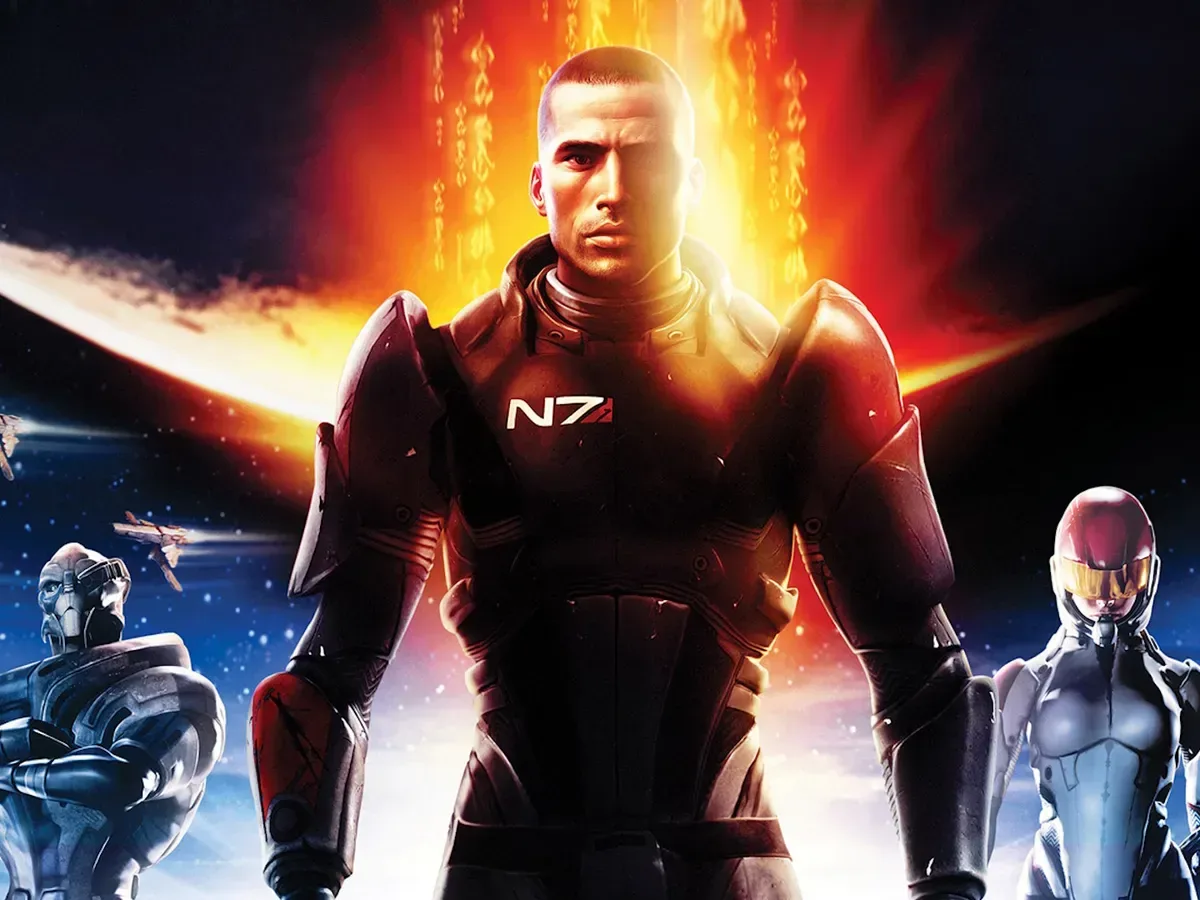

Mass Effect fans have revived one of the series’ most memorable protest symbols: cupcakes. Organizers in the Save Mass Effect campaign arranged for a dozen N7-decorated cupcakes to be delivered to EA’s Redwood City headquarters on Friday, using a small, unmistakably themed gesture to draw attention to their effort to save the sci-fi franchise after BioWare’s closure.
The pastries are not simply branded fan food. They are a deliberate callback to the 2012 backlash over Mass Effect 3’s ending, when a separate fan movement sent 400 cupcakes decorated in red, green and blue icing to BioWare. The joke was pointed: despite their different colors, the cupcakes reportedly tasted the same inside. That was meant to criticize how the game’s divergent player paths were perceived to converge on closely similar conclusions.
In 2026, the message behind the dozen cupcakes is broader and far more difficult to solve. The issue is not a disputed ending that can be expanded through downloadable content. It is the closure of the studio associated with Mass Effect and the prospect of the series’ future being cut short. The current campaign has also used petitions, billboards, banner trucks and video reunions to keep the issue visible.
A small delivery with a very specific history
Illustrator Kala Elizabeth and other Save Mass Effect organizers coordinated the N7 cupcake delivery. N7 is the familiar in-universe military designation closely tied to the Mass Effect series, making the decoration an immediate signal of what the delivery represented without needing a long explanation at EA reception.
For more context, explore U2, Usher, Wu-Tang Clan and a Sea of Fake Beards Power Rock Hall’s 2026 Ceremony.
The campaign account WeAreMassEffect said the delivery person faced several questions from staff, who indicated they already knew about the #SaveMassEffect movement. The account said reception ultimately accepted the cupcakes. The report establishes that the delivery reached EA’s headquarters reception; it does not establish any response from EA beyond that reported acceptance.
That distinction matters. Symbolic campaigns often aim to create visibility, community and pressure, but receipt of a delivery is not the same as a policy change, a commitment to reopen a studio, or a promise regarding a game series. The organizers’ choice of a dozen cakes appears built around recognition and historical memory rather than an expectation that baked goods alone could change a corporate decision.
For a closer account of the reported delivery and its connection to the earlier protest, see the campaign’s N7 cupcake action in context.
Why the 2012 cupcakes still resonate
The earlier cupcake campaign became an enduring shorthand for the Mass Effect 3 ending controversy because it translated a complicated creative complaint into a physical visual gag. Fans objected to the perception that choices and paths with major differences throughout the trilogy ultimately fed into endings that were too alike. Red, green and blue icing represented that apparent distinction, while identical interiors represented the criticism that the ultimate outcomes lacked meaningful separation.
The movement around the ending, known as Retake Mass Effect, was not confined to cupcakes. Still, the confectionery stunt was memorable precisely because it was legible: different outside, same inside. It gave fans a way to make a critical argument without treating developers as faceless targets or relying on a purely abstract social-media complaint.
BioWare later released downloadable content that expanded upon the ending choices. DLC, or downloadable content, is additional game material released after launch; in this case, it was used to add context and further detail around the conclusion. The resolution remained controversial, and the added material did not erase disagreement about the original ending. But the episode demonstrated that organized player criticism could help keep a creative issue in public view long enough to receive a substantive response.
The studio reportedly redirected the 400 cupcakes to a local youth shelter rather than trying to consume an enormous number of protest desserts. That detail gave the 2012 stunt an unexpectedly constructive afterlife, even as the debate that produced it stayed contentious.
The new campaign is confronting a different kind of decision
Reusing the cupcake symbol also highlights the difference between the two situations. In 2012, fans were asking for an expansion or reconsideration of a released game’s ending. The company could respond with additional content while the studio continued to operate. The present campaign follows EA’s October closure of BioWare, an event described by organizers and supporters as effectively ending the studio behind Mass Effect.
That makes the requested outcome considerably less clear-cut. A post-launch ending expansion is a defined production task. Reversing a studio closure, preserving teams, or securing the future of a long-running property involves corporate ownership, staffing, production resources and strategy. None of those steps is resolved by public sentiment alone, even when that sentiment is widespread and sincerely expressed.
EA’s closure of BioWare came after EA was acquired by a private-equity consortium that includes Saudi Arabia’s Public Investment Fund and Jared Kushner’s Affinity Partners. The reported strategic rationale was to concentrate resources on safer bets, including Star Wars tie-ins. That reported context is central to why Save Mass Effect supporters are treating the closure as more than a single cancelled plan or disappointing creative direction: they see it as an example of a major publisher’s priorities changing under new ownership.
Private equity generally refers to investment ownership outside public stock markets. In this story, the relevant practical concern for fans and labor advocates is not a technical definition but the potential for ownership strategy to reshape which teams, projects and risks are considered worthwhile. The campaign’s criticism is directed at that perceived shift toward more predictable franchise investments and away from the work associated with BioWare.
Petitions, public symbols and political attention
The cupcake action is one part of a larger effort. A public petition connected to the campaign has gathered more than a quarter of a million signatures. Petitions do not compel a company to take a specific action, but a large total can show the size of an organized audience, give supporters a shared focal point and make it harder to dismiss concern as isolated online frustration.
Billboards, banner trucks and video reunions serve a similar purpose in different forms. They create public-facing moments that can travel beyond the existing fan community. A petition measures participation; a billboard is designed for visibility; a reunion invokes the human and creative legacy that supporters believe is at risk. The cupcakes add a fourth element: an object tied directly to the franchise’s own history of fan advocacy.
The issue has also moved beyond fan spaces. Leadership in Canada’s New Democratic Party has cited the fate of the Edmonton-based developer while advocating for stronger labor protections against private equity. That does not mean a political expression of support can itself restore BioWare or guarantee future Mass Effect development. It does show that the closure has been used in a wider argument about what protections workers may need when investment structures and corporate plans change.
What the cupcakes can—and cannot—do
There is an understandable temptation to read the 2012 precedent as proof that a repeat gesture will yield the same type of result. The precedent is more limited than that. The first campaign occurred around a specific finished game and was followed by ending-related DLC. The current effort concerns the fate of a closed studio and an uncertain series. Those are not equivalent problems, and the available remedy is not comparable.
Yet the reference is not meaningless nostalgia. It gives today’s organizers a shared language for explaining why Mass Effect fans have chosen a conspicuously odd form of protest. A dozen N7 cupcakes make the campaign recognizable to longtime players while communicating that the group remembers an earlier moment when fan dissatisfaction produced at least some movement.
The most immediate practical effect may be solidarity. Long-running campaigns need symbols that supporters can understand, circulate and discuss without reducing the stakes to a slogan. Here, the cakes connect concern over a studio’s closure to a franchise history in which player choice, consequence and different paths have always been central themes.
Whether that symbolism can influence a decision of this magnitude remains uncertain. What is clear is that Save Mass Effect is using the 2012 cupcake protest not as a claim that history will automatically repeat, but as a reminder that fans have organized around this universe before—and that they are determined to make the loss of BioWare impossible to ignore.