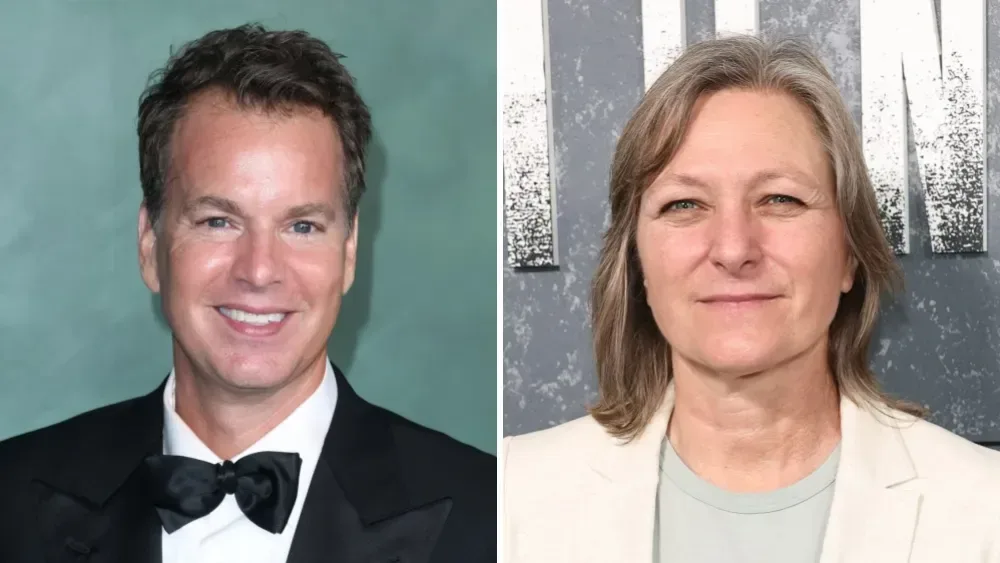
Paramount’s streaming operation is heading into a major leadership transition just as its parent company approaches the close of its proposed Warner Bros. Discovery acquisition. Cindy Holland, who led Paramount+ and the wider direct-to-consumer portfolio, told staff that she is departing. HBO chief Casey Bloys is poised to oversee streaming across the combined Paramount and Warner businesses once the merger is completed.
The change puts one of television’s most durable brand stewards at the center of a much larger streaming organization. It also closes a comparatively short Paramount chapter for Holland, whose staff memo says she joined David Ellison’s team in January 2025 with three broad priorities: advising on the Warner Bros. Discovery deal, transforming Paramount+ and reviving Pluto TV, and building a senior team for the work ahead.
A streaming leadership shuffle before a huge corporate combination
Paramount Skydance is days away from closing its $110 billion acquisition of Warner Bros. Discovery. In Holland’s message, she said CEO David Ellison had made a decision on streaming leadership as the company prepares for its next phase. She did not name Bloys, but described the goal as protecting HBO’s stability through the transition.
That point is meaningful because HBO is not merely another streaming content label inside the planned combined company. It is an established premium-TV brand, while HBO Max is a subscription streaming service with its own product, distribution and programming demands. Paramount brings a different but complementary set of businesses to the combination: Paramount+, its paid subscription platform, and Pluto TV, its ad-supported streaming service.
Direct-to-consumer, often shortened to DTC, means media services that reach viewers directly rather than solely through a cable or satellite distributor. In this case, the umbrella includes paid streaming such as Paramount+ as well as Pluto TV’s free, advertising-supported offering. Combining leadership over these businesses does not by itself reveal what will happen to their brands, apps, libraries or subscription plans. It does establish where operational authority is expected to sit during the integration.
Bloys has spent nearly 25 years at HBO and has already navigated three major corporate ownership changes in eight years. That background appears to be central to the rationale emerging around his wider role: the company is seeking continuity for HBO while folding together streaming operations of substantial scale.
What is confirmed, and what remains speculation
Holland’s exit and her final day at the company are confirmed by her memo. Her stated account also confirms that Ellison made the decision about the future streaming leadership structure. The expectation that Bloys will lead the broader Paramount and Warner streaming portfolio has been widely anticipated, but the supplied information describes him as poised for that role rather than announcing a formal title or detailed org chart.
There is also discussion that JB Perrette could work alongside Bloys in managing HBO, HBO Max and Paramount+. Perrette currently oversees Warner Bros. Discovery’s streaming business operations and gaming. That remains speculative, and there is no confirmed description of his prospective responsibilities in the merged company.
For players and people who follow the business behind games, Perrette’s current remit is worth watching, but it should not be overstated. His present portfolio includes gaming; the available information does not establish any post-merger gaming strategy, staffing decision, release plan or change to Warner’s game studios. The immediate news is a streaming leadership transition, not a confirmed restructuring of games.
That distinction matters in an era when entertainment-company mergers can invite sweeping assumptions. A single executive structure can affect budgeting priorities, coordination and brand planning, but it does not automatically answer what will happen with individual franchises, studios or projects. For now, any implications for Warner Bros. Discovery’s gaming business remain unannounced.
Holland’s tenure: subscriber growth, sports and Pluto TV changes
Holland framed her exit around accomplishments she credits to the direct-to-consumer team. She said Paramount+ reached an all-time subscriber high, recorded its best retention in the service’s history, and achieved double-digit growth in engagement and revenue. Retention refers to the ability of a subscription service to keep customers rather than lose them through cancellations. It is a particularly important metric for streaming because a service can add many new subscribers while still struggling if large numbers quickly leave.
She also pointed to more than 40 newly greenlit or returning series and said Landman became Paramount+’s most-watched series. Dutton Ranch, meanwhile, was described as the platform’s biggest original-series debut. Those programming claims help explain why content leadership is often inseparable from platform strategy: the service needs shows that attract sign-ups, but it also needs a consistent release pipeline capable of keeping viewers around.
Live sports was another centerpiece of Holland’s account. She said Paramount+ secured agreements involving UFC and Zuffa Boxing, expanded its WNBA and UEFA Champions League rights, and set platform records with UFC events. UFC Freedom 250 was described as Paramount+’s largest audience for an exclusive live event, while UFC 329 set a record for peak concurrent streams for an exclusive event.
Peak concurrent streams measures the greatest number of simultaneous streams occurring during an event. It is not the same thing as total viewers across a full broadcast, but it is a useful measure of the acute technical and audience demand generated by live programming. Live rights can make a streaming service more habitual for viewers, while also raising the stakes for product reliability and capacity during high-interest moments.
At Pluto TV, Holland said the business completed its largest product transformation in a decade, which increased registered viewing and video-on-demand consumption while producing strong financial performance. Pluto TV is positioned differently from Paramount+: rather than depending principally on paid memberships, it is a free service supported by advertising. Video on demand, or VOD, is programming selected by a viewer to watch at a chosen time, rather than a scheduled live channel.
Those different models may be strategically important in the combined business. Subscription streaming seeks recurring customer payments and lower churn; free ad-supported streaming seeks audience scale and advertising income. The supplied facts do not say how the company will organize the services after closing, but they show why the merged portfolio presents a management task broader than simply choosing which shows go on which app.
Bloys inherits a complicated portfolio, not a single platform
The potential elevation of Bloys would put HBO, HBO Max, Paramount+ and Pluto TV within a leadership picture shaped by different identities and revenue models. HBO has long been associated with premium original programming. HBO Max carries that brand into the broader streaming market. Paramount+ combines originals, catalog programming and live sports. Pluto TV operates as an ad-supported destination with both channels and on-demand viewing.
Managing them collectively will likely require decisions about where teams overlap and where they remain distinct. However, the evidence available here does not indicate whether any brands will be merged, renamed, bundled or kept entirely separate. It likewise offers no confirmation of changes for users, including prices, account access, device apps or content availability.
That uncertainty should be the practical takeaway for subscribers. There is a leadership transition underway and an acquisition nearing completion, but there is no announced consumer action to take. Viewers should not infer that they must cancel, resubscribe, migrate an account or expect immediate catalog changes solely because of this news.
There is a useful precedent for why organizational changes deserve attention without inviting panic: management structures tend to determine who sets the priorities, while consumer-facing changes normally require their own public explanation and implementation. Until such details are formally provided, the meaningful facts are Holland’s departure, Bloys’s expected expanded responsibility and the approaching corporate combination.
Two different executive histories converge
Holland arrives at this moment with a significant streaming background of her own. Before Paramount, she spent 18 years at Netflix, including nine as vice president of original content. Her work there included helping establish the original-programming strategy and overseeing teams responsible for major titles including House of Cards, Stranger Things, The Crown, Icarus, When They See Us and The Queen’s Gambit. She later served as CEO of Sister, the production company formed by Elizabeth Murdoch.
Her Paramount memo emphasizes both business measures and team-building during a period she characterized as unusually uncertain. “I have never been more proud of a group of people,” she wrote, pointing to the organization’s resilience while it delivered quarterly results and prepared for a merger of extraordinary magnitude.
“I joined Paramount because I believe in these businesses, and because I believe wholeheartedly that the combination of Paramount and Warner Bros. Discovery serves the best interests of artists and audiences worldwide,” Holland wrote to staff.
Bloys, meanwhile, represents continuity on the HBO side. His anticipated move reflects the pressure facing the combined company: it has to integrate operations without destabilizing a premium brand whose identity carries unusual weight in the television market. Holland’s description of the rationale—optimizing for HBO stability—suggests that this is the balancing act behind the leadership call.
What to watch after closing
The next concrete signals will be organizational rather than speculative. A formal announcement could clarify Bloys’s title, the reporting structure around HBO Max, Paramount+ and Pluto TV, and whether Perrette will have a defined position in the new streaming operation. It may also offer a better sense of how streaming and gaming are situated in the enlarged company.
For the moment, the story is not that a new all-in-one service has been announced, nor that the game business has been redefined. It is that Paramount is changing the person responsible for its direct-to-consumer future on the eve of an enormous acquisition—and that HBO’s longtime leader is expected to become one of the key figures shaping what comes next.
As broader media ownership changes continue to intersect with games, streaming and hardware ecosystems, readers can also follow the separate platform shifts around physical and digital access in our look at Xbox Disc-to-Digital and why eligible discs are still worth keeping.