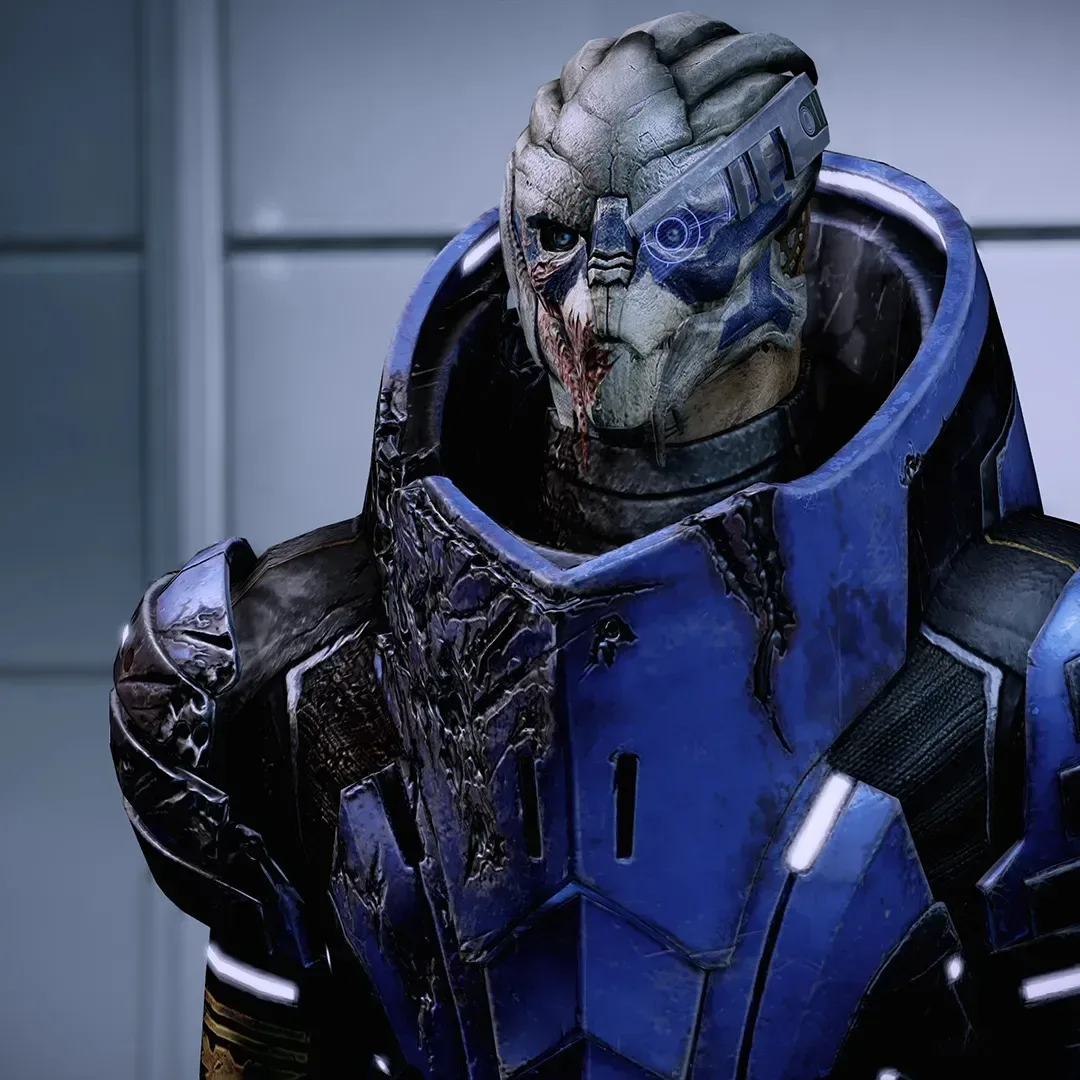
The canceled next Mass Effect was reportedly being built around an ambitious promise: give players an unprecedented degree of autonomy and choice without losing the identity of BioWare’s original trilogy.
That picture comes from former members of the team after EA announced that BioWare was closing and development on the project had ended. Roughly 50 people were reportedly assigned to the game before its cancellation. The comments cannot tell players exactly what the finished game would have contained—there is no released build, feature list, or gameplay demonstration—but they do offer a meaningful glimpse of the design direction the team believed it was pursuing.
Former cinematic supervisor Tony de Waal described the project as something special and said it would have offered a level of player autonomy and choice unmatched by other games. He also said the team had studied what Larian and CD Projekt had achieved with their recent RPGs and was attempting to move Mass Effect forward while remaining faithful to the trilogy.
That is a huge aspiration, and it deserves to be read as an account of an unfinished game’s ambition rather than proof of a feature that was completed, tested, or ready to ship. Still, it establishes a clear creative target: the new Mass Effect apparently was not intended merely to revisit familiar characters, locations, and dialogue-wheel decisions. Its team wanted the player’s choices to have broader and more reactive consequences.
What “autonomy and choice” can mean in an RPG
In role-playing games, player autonomy is the practical freedom to decide how to approach the world and its problems. It can include choosing dialogue, alliances, character builds, quest order, tactics, or whether to engage with an encounter at all. Reactivity is the other half of the equation: the game recognizing those decisions and changing dialogue, outcomes, relationships, later quests, or the wider world as a result.
Those ideas have long been central to BioWare’s reputation. The original Mass Effect trilogy made choice part of its appeal through relationships, moral alignment, squad dynamics, and decisions that could carry from one game to the next. But the standard implied by de Waal’s remarks is considerably higher than simply including multiple conversation responses or a handful of alternate endings.
Larian’s recent success has helped raise expectations that an RPG can acknowledge unusual plans, unexpected experimentation, and decisions outside the most obvious quest path. CD Projekt’s work has likewise become a major point of reference for sprawling narrative RPGs, whether through the fantasy world of The Witcher 3 or the science-fiction setting of Cyberpunk 2077.
For a future Mass Effect, the difficult part would have been marrying that scale of response to a cinematic space opera. A game can promise many choices, but choices only feel substantial when they receive enough narrative follow-through that players can see, hear, or otherwise experience their effect. That requires a large amount of writing, performance, cinematics, quest design, and testing. Every additional path can create more combinations for a studio to support.
Related coverage includes Former BioWare Developer Says Canceled Mass Effect Aimed to Push Player Choice Further.
De Waal’s wording suggests the developers understood that challenge and were deliberately trying to answer it. It does not reveal which systems they planned to use, how far development had progressed, or whether the intended level of reactivity was technically achievable. Those distinctions matter. An internal creative direction is not the same thing as a confirmed final design.
A return to the Milky Way, far beyond the Reaper war
Before the cancellation, BioWare had confirmed some broad setting information. The next game was to take place hundreds of years after Mass Effect 3, return the series to the Milky Way, and occur long after the Reapers’ defeat.
That premise had a natural balancing act built into it. Moving the story centuries forward could create room for new conflicts and characters rather than forcing the narrative to immediately resolve every consequence of the trilogy. Re-centering the Milky Way, meanwhile, would reconnect the series with the setting most associated with its defining locations, species, and history.
It is easy to see why “remaining true to the Trilogy” could matter alongside that setup. The phrase does not necessarily mean revisiting the same plot or rebuilding the old games. It can just as plausibly point to preserving their tone: a party-driven science-fiction adventure in which decisions shape personal relationships and the fate of major factions.
However, the available statements do not confirm returning characters, a protagonist, combat systems, platforms, release timing, or any specific decision mechanic. They also do not settle how the game would have addressed the branching conclusions of Mass Effect 3. Claims beyond the broad setting and the former developers’ descriptions would be speculation.
The vacuum left by the shutdown has also created room for material that needs careful scrutiny. An alleged Mass Effect trailer circulating after the closure remains unverified, underscoring the difference between confirmed project information and content that merely appears plausible online.
The RPG bar BioWare was trying to clear
The comparison points named by de Waal are not arbitrary. Larian’s Divinity: Original Sin games earned critical and commercial recognition, while 2023’s Baldur’s Gate 3 reached a much wider audience and sold millions of copies. Its success has been widely treated as a reset of expectations for how much player experimentation an RPG can accommodate.
CD Projekt has also had an outsized influence on the genre’s modern expectations. The Witcher 3 is regarded by some players as one of the medium’s defining fantasy RPGs. Cyberpunk 2077 had a disastrous launch but later became widely regarded as one of the strongest science-fiction RPGs. Both studios’ work demonstrates why a new Mass Effect would be evaluated not only against BioWare’s earlier games, but against the very best recent examples of reactive, large-scale RPG design.
That does not mean all three studios make the same kind of game. Larian’s games are associated with a particular form of systemic freedom and player experimentation. CD Projekt’s work is often discussed in terms of authored storytelling and expansive world-building. Mass Effect has its own legacy, especially its cinematic presentation, squadmates, and galaxy-spanning political stakes. “Taking it to the next level” could have meant learning from contemporary peers while applying those lessons to a distinctly Mass Effect structure.
For fans, that makes the loss more specific than the cancellation of an unnamed sequel. The former team members’ comments describe a project trying to meet a changed RPG landscape head-on. They point to a studio that recognized the new benchmark and was attempting to respond with a more flexible, consequential version of a beloved formula.
Why the claim must remain qualified
At the same time, an unfinished game should not be converted into a mythical one. Former developers are speaking about work they cared about and colleagues affected by layoffs and closure. Their pride in the project is understandable, and their perspective is valuable, but it cannot verify how every system would have performed together in a completed product.
The claim that the game could have offered more autonomy and choice than any other is especially bold. No shared industry measurement decides that question. A title may have a vast number of branching outcomes but limited tactical flexibility; another may allow countless approaches to a single encounter while keeping the main story comparatively fixed. Different players value different expressions of freedom.
It is also possible for a project to set an ambitious goal and encounter hard limits during production. The more a game reacts to player action, the more difficult it can be to ensure that all paths are coherent, polished, and emotionally satisfying. This is not a criticism of the canceled game; it is the basic production reality behind the ambition being described.
What can be said with confidence is narrower, but still significant. Former team members characterize the project as an attempt to build on the original trilogy’s foundations, take inspiration from Larian and CD Projekt, and push further on meaningful player choice. Catherynne M. Valente, another former contributor, also indicated that the team believed it had found a path to a great sequel.
BioWare’s difficult recent context
The project was developing against a complicated backdrop for BioWare. After the franchise-best sales of Dragon Age: Inquisition, the studio pursued live-service success with Anthem. It then spent much of a decade on the troubled Dragon Age: The Veilguard. Both games underperformed against EA’s expectations.
Mass Effect itself has had a mixed recent record. Mass Effect Andromeda is widely seen by fans as a disappointment, while the Mass Effect Legendary Edition remaster was better received. That history helps explain why a return to the Milky Way and an emphasis on the trilogy’s core strengths would have been so meaningful to the audience.
It also makes the cancellation particularly painful for people who had hoped the series could reclaim a central position in the RPG conversation. Rather than a modest course correction, the project described by its former developers appears to have been aiming for a difficult but compelling proposition: honor what made Mass Effect matter while competing with the genre’s most influential modern successes.
Players will not get to judge whether it could have accomplished that. The game is canceled, BioWare is shutting down, and the work will remain an incomplete possibility. But the comments from the people involved preserve one clear idea of what the team was trying to make: a new Milky Way story built to give players more control over its outcomes than the series had offered before.