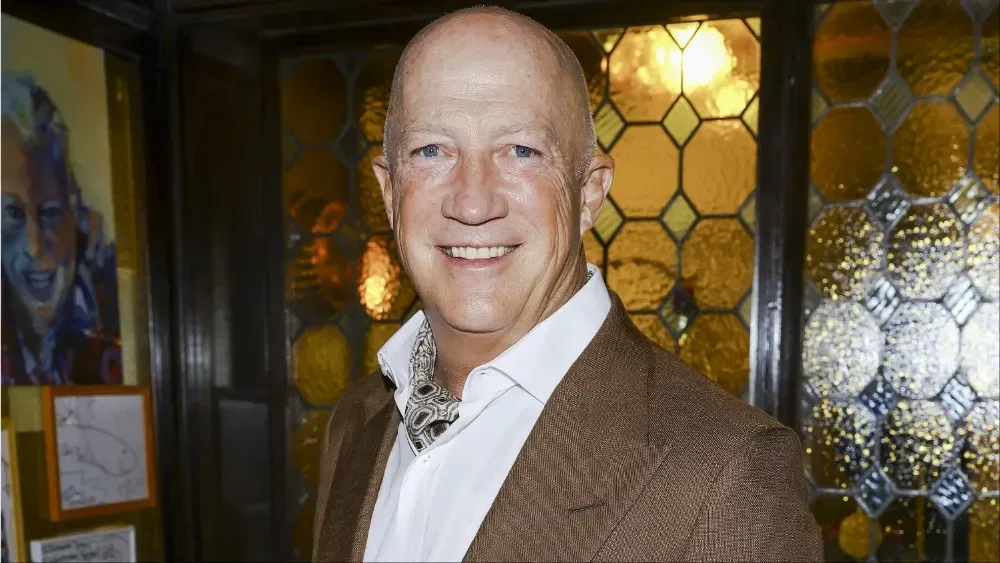
Creative Artists Agency CEO Bryan Lourd has called on Congress to pass the NO FAKES Act, framing the legislation as a needed federal response to unauthorized AI-generated uses of people’s voices, faces and performances.
The central argument is straightforward: a person should be able to refuse an unwanted use of their likeness. But the practical issue is considerably wider than a single misleading ad or celebrity impersonation. AI-generated media can make a person appear to say, endorse or perform something they never approved. For entertainers, that can affect reputation and paid work. For everyone else, it can create a false impression of participation, approval or authorship.
Lourd’s position comes from the dealmaking side of the entertainment business. Talent agencies already negotiate licenses for clients’ likenesses and performances, including in some agreements involving AI companies. That existing market matters because it demonstrates a key distinction often lost in broader AI arguments: the question is not simply whether AI should be used, but whether the people whose identity or work is involved have a meaningful choice and, where appropriate, a negotiated deal.
What the NO FAKES Act is meant to address
The proposed NO FAKES Act was introduced by Sen. Chris Coons in May after an earlier attempt at the bill the prior year. It advanced through the Senate Judiciary Committee in June and has bipartisan co-sponsors, but the full Senate has not yet taken it up.
Its proposed purpose is to create a federal standard around three connected ideas: control, consent and compensation. In plain terms, control concerns whether a person gets to decide how their identity is used; consent concerns permission before that use happens; and compensation concerns the terms of a legitimate commercial arrangement when a likeness or performance is licensed.
A federal standard would be significant because the alternative described by Lourd is a patchwork of state laws that may not map cleanly onto modern synthetic media. Laws made for an earlier, analog media environment may not provide a direct answer when software can generate a new-seeming video, voice clip or image at scale.
That does not mean every AI-made work is identical. A licensed digital performance, for example, raises fundamentally different questions from a deceptive imitation created without permission. The point of a consent-centered framework is to make that difference legible in law rather than leaving participants to infer their rights from rules that were not designed around this technology.
Deepfakes, explained without the jargon
A deepfake is synthetic media designed to depict a real person in a way that can appear authentic. The format can be video, audio or imagery. In the context at issue here, it can involve a recognizable face, voice, performance or other elements associated with an individual.
The harm is not limited to whether a fake is convincing enough to fool every viewer. A misleading use can still trade on recognition. If an ad puts a familiar actor’s simulated face or voice beside a product, it can imply an endorsement that never existed. That is why consent matters even in cases where viewers might eventually recognize that the material is artificial.
Lourd pointed to Tom Hanks’s 2023 warning about a dental-office advertisement that used an AI-generated younger version of him. The example puts the dispute in practical terms. The issue is not only whether the ad was technically generated by AI; it is that Hanks may not have chosen to participate in or endorse it. The proposed legislative approach would seek to establish a clearer rule around that missing permission.
The entertainment industry has particular reasons to focus on this problem. An actor’s physical likeness, an artist’s voice and a performer’s distinctive delivery can be commercially valuable. They are also tightly linked to professional identity. Unauthorized synthetic media can therefore blur both economic and personal boundaries: it may substitute for paid work while associating someone with a message or product they would reject.
A licensing market is already part of the picture
Discussion around AI sometimes treats regulation and innovation as opposite choices. Lourd’s argument instead rests on the existence of AI-related licensing negotiations. If a company wants permission to use a performer’s likeness or performance, parties can discuss scope, approval, payment and other conditions. A rule aimed at unauthorized use would not erase that kind of transaction; it would make consent a more central dividing line.
That distinction has implications beyond movie stars. Performers, musicians and other creative workers may have different bargaining power, but each can face the same baseline question: who has authority to authorize a digital replica or synthetic version of their work? A consistent federal approach, if enacted, could matter because it would provide a common starting point rather than requiring people to navigate varying state-by-state standards.
It would also matter to businesses seeking legitimate permissions. Clearer boundaries can help separate an authorized project from a use that merely assumes public visibility equals permission. Recognition is not a blanket license. In a market where appearances, performances and brand associations can have commercial value, a formal agreement is a materially different proposition from scraping or generating a likeness without the person’s approval.
The wider fight over AI and creative control
Deepfakes have remained a persistent concern since large-language-model-era AI tools emerged in 2022. Unauthorized depictions of actors, singers and other public figures have included explicit material as well as non-explicit commercial and promotional uses. The range of possible misuse is one reason this is not solely an entertainment-industry issue, even though entertainment provides especially visible examples.
CAA has been active in efforts against unauthorized deepfakes. The agency has worked with the Human Consent Foundation, which is backed by Cate Blanchett, on questions of permissions when likenesses are scraped by AI models. It has also joined the foundation and other entertainment organizations in an amicus brief connected to litigation involving The New York Times and OpenAI, emphasizing that a licensing market for likenesses has emerged in the AI era.
An amicus brief is a filing from an individual or organization that is not one of the central parties in a case but wants to offer a court information or an argument relevant to the dispute. In this instance, the involvement highlights a broader industry claim: likeness licensing is not merely theoretical, and unauthorized AI use can affect real commercial arrangements.
Support for the NO FAKES Act spans labor, technology and media interests. Organizations and companies backing it include SAG-AFTRA, the Motion Picture Association, the Recording Industry Association of America, the Recording Academy, the National Association of Broadcasters, OpenAI, the AFL-CIO, YouTube and IBM. That coalition does not settle every policy question, but it signals that the concern crosses groups that do not always share the same priorities.
Why this matters to games and interactive entertainment
The immediate public conversation often centers on film, television and music, where a familiar face or voice can be placed into a conventional ad or video. Interactive entertainment has its own stake in the underlying principle. Games bring together performances, character work, voice acting, marketing and increasingly sophisticated digital presentation. As synthetic-media tools develop, the question of who can authorize the use of a performer’s identity becomes relevant wherever those elements meet.
This should not be confused with a claim that the pending bill dictates any particular game feature or production practice; the information available does not establish that. The more direct implication is conceptual. A performer’s consent is not a technical afterthought. It is part of deciding whether a digital use is authorized in the first place.
That principle also sits alongside ongoing debates about creative ownership in entertainment generally. Questions about who controls the movement of recognizable properties and identities between media are never purely abstract, as seen in the separate discussion around control over Grand Theft Auto’s path to the movie screen. AI deepfakes make the same broader concern more urgent because creating a convincing-seeming use of a person may require far less conventional access than producing an officially authorized adaptation.
What Congress would need to clarify
The debate now moves from broad agreement about harm to the difficult work of setting a durable legal standard. Lourd has argued for a bright-line rule: people should have the right to say no to unwanted AI use of their likeness. The appeal of that formulation is its clarity. It identifies consent as the core threshold rather than asking individuals to absorb the burden after a synthetic depiction has already spread.
For creators and performers, the practical value of a federal framework would be greater predictability. For companies, it could define the difference between a rights-cleared use and an unauthorized one more clearly. For the public, it could reinforce a basic expectation increasingly challenged by generative tools: seeing or hearing a person is not, by itself, proof that they participated.
The bill’s eventual fate remains unresolved because the full Senate has not taken it up. But the pressure behind it is tied to a problem that does not wait neatly for policy calendars. Synthetic media is already part of the internet’s everyday information environment, and the dispute over deepfakes is increasingly about whether consent can remain meaningful as creating an imitation becomes easier.