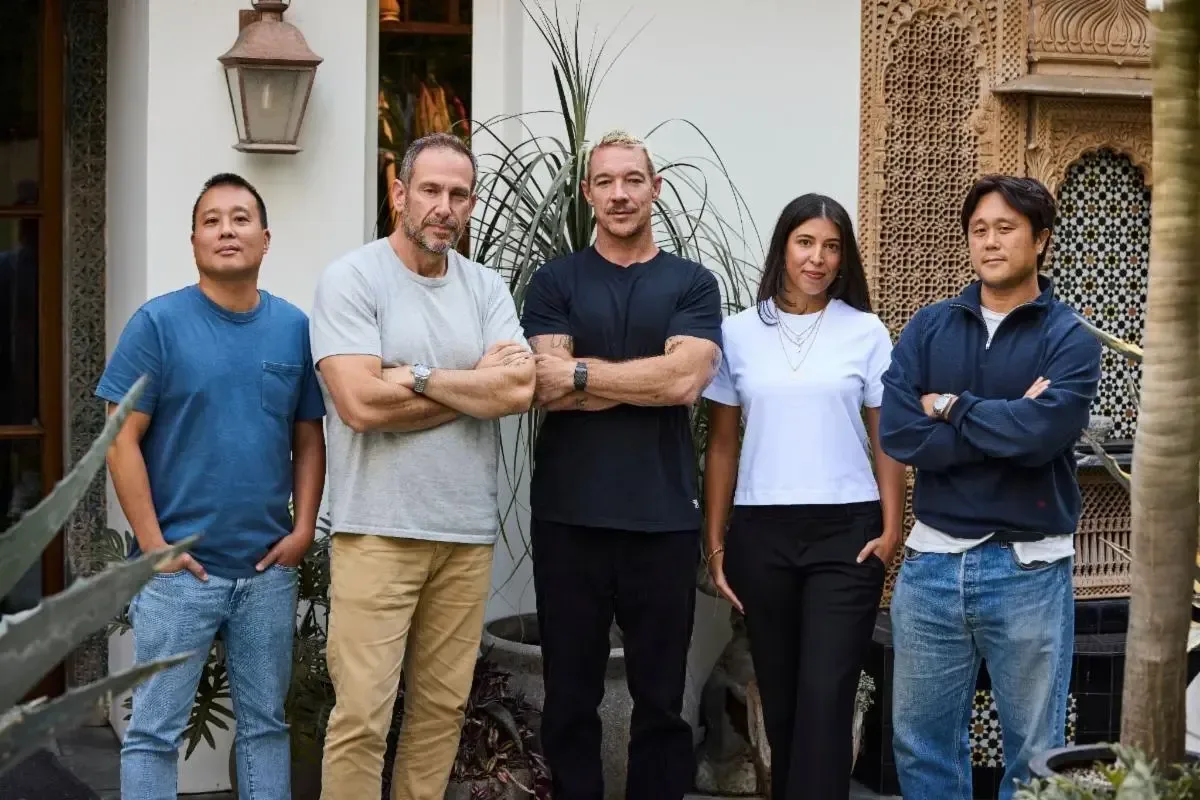
Creative Artists Agency (CAA) and Hybe have launched a strategic partnership intended to broaden the creative and commercial opportunities around Hybe’s artist roster, brands and intellectual property. The arrangement brings together Hybe’s artist network with CAA’s international agency infrastructure and is planned to cover content, brand partnerships, sports, live experiences, licensing, and merchandising.
That list is deliberately broad, but its practical meaning is straightforward: the companies are looking beyond any single release, tour or campaign. They intend to develop more ways for audiences to encounter Hybe artists and the brands connected to them, while creating commercial opportunities that can travel across markets and formats.
Hybe CEO Jason Jaesang Lee characterized the partnership as an expansion of creative possibilities for the company’s artists. He said the two organizations’ complementary strengths and global networks could extend the reach and value of artists and their IP through content, brands and live experiences, with the aim of creating experiences that feel more immersive and meaningful for audiences.
What the partnership covers
The announced scope consists of six connected areas: content, brand partnerships, sports, live experiences, licensing, and merchandising. No individual projects, artist-specific campaigns, financial terms or release timetable were disclosed. That distinction matters. The announcement establishes a framework for collaboration, rather than confirming a particular show, product line, screen production or sports activation.
Content is the widest category in the agreement. In entertainment-business terms, it can describe work built around artists or their brands for different media and audience formats. The announcement does not specify what form that work will take, so it would be premature to treat the partnership as confirmation of any film, television, game, album or other project.
Brand partnerships typically mean collaborations between talent or an entertainment property and a commercial brand. Their value is not limited to putting a familiar face on advertising: an effective partnership can introduce an artist to a new audience while allowing a brand to borrow cultural relevance and fan attention. Whether any future collaborations are global or market-specific will depend on the initiatives the companies choose to pursue.
Live experiences point toward audience-facing events. These can be especially important for artist-driven businesses because the encounter is direct: fans do not simply see a campaign; they participate in an environment connected with the artist or brand. Still, the companies have not announced any particular event plans.
Licensing and merchandising concern the authorized use of names, images, marks and other intellectual property on products and experiences. Licensing is the permission and business structure behind a third party’s authorized use of IP; merchandising is the consumer-facing product activity that may follow from it. The distinction is useful because an artist-related product can be part of a broader rights strategy rather than a stand-alone retail item.
Related coverage includes CAA and Hybe Partner to Expand Global Artist, Brand and Live Opportunities.
The inclusion of sports is notable because it signals that the collaboration is not framed solely as music representation or standard entertainment marketing. The available details do not explain which sports opportunities may be in view, or how they would be structured, but the category gives the partnership room to pursue cross-sector work if suitable ideas emerge.
Why global coordination is central
The companies said they want to accelerate strategic and commercial initiatives in Korea, Japan, the Americas, China and India. Those markets make the international focus of the deal explicit. Instead of describing growth as a single global campaign, the announcement identifies several major regions where artists, brands, content and live ideas could be developed.
For Hybe, a partnership with an agency that has a worldwide footprint can potentially support expansion across those territories. For CAA, Hybe’s artist network and established fan relationships offer a foundation for opportunities built around audience connection. CAA CEO and co-chairman Bryan Lourd described Hybe as having created a cultural movement, emphasizing the way its artists connect with audiences and the overlap among art, influence and fandom.
That emphasis on fandom is significant. In this context, fandom is more than passive recognition of a performer. It is the active relationship between audiences, artists and the wider set of experiences or products surrounding them. The companies’ focus on content, brands, live events and merchandise suggests an attempt to build in several places where that relationship can be expressed.
Global scale also creates a practical challenge: an opportunity may need to make sense in more than one territory without becoming so generic that it loses the artist identity that drew fans in. The partnership’s value will therefore depend on execution as much as reach. The announcement supplies the categories and markets, but not a formula for how every artist or initiative will be handled.
IP is at the heart of the commercial strategy
Both companies repeatedly put intellectual property at the center of their stated goals. IP, short for intellectual property, refers here to the creative assets and recognizable identities connected with artists and brands. It can be valuable because it gives a company a definable foundation for content, partnerships, events and licensed goods.
In practical terms, IP expansion is not automatically about producing more things. It is about deciding which uses of an artist’s identity fit their creative direction, audience and commercial goals. A strong IP strategy can create continuity between a live experience, a partnership and a licensed product. A poorly matched one risks treating a fan relationship as mere attention to be monetized.
Lee’s framing of the deal places creative possibilities alongside commercial ones, rather than setting them in opposition. That is a meaningful point in an agreement that includes merchandising and licensing. The stated objective is to expand reach and value while making the audience connection closer and more meaningful. Whether future projects meet that standard cannot yet be assessed, because no projects have been revealed.
The same caution applies to the word “immersive.” It often describes experiences designed to make an audience feel surrounded by, involved in, or closer to a creative world. In this case, it is an ambition articulated by Hybe, not a description of a specific announced installation, event or technology.
Momentum behind Hybe’s expansion plans
The partnership arrives after a strong financial quarter for Hybe. Earlier in the month, BTS’ world tour helped drive the company to the highest quarterly revenue and operating profit in its history. Third-quarter revenue was reported at $1.13 billion, while operating profit reached $140.2 million.
Those figures supply important context for the agreement. They show that Hybe is pursuing expanded opportunities from a position of recent commercial strength, with major live activity contributing to its results. They do not, however, establish what revenue or profit the new partnership itself will generate. There are no projections in the announcement, and no breakdown has been provided for any future CAA-Hybe initiatives.
The connection between touring and the new deal is also worth separating carefully. The stated financial results are tied to the impact of BTS’ world tour on Hybe’s quarter. The CAA partnership is a newly launched collaboration aimed at future work across several categories. The two facts complement each other as context, but the announcement does not say that the partnership was created for that tour or that it will manage it.
What audiences and collectors should watch for
For fans, the immediate news is structural rather than consumer-facing. There is no newly announced merchandise collection, ticketed event, brand campaign or licensed product to buy. The useful takeaway is where future announcements could appear: projects may emerge from the overlap of live experiences, brands, content and authorized products, potentially across the listed key markets.
For collectors, the reference to licensing and merchandising is an area to monitor, but not a reason to presume rarity, exclusivity or product details. Authorized merchandise can range widely in format and scale, and the partnership announcement does not establish any collecting program. Details such as release territories, edition size, retailer, authentication or availability would need to come with a specific product announcement.
For the broader entertainment business, the arrangement illustrates how artist development, global representation, live programming and consumer products can be addressed under one strategic relationship. The partnership is built around an idea that contemporary artist brands can move across borders and formats, provided the creative identity and fan connection remain coherent.
There is also a clear music-and-screen-adjacent dimension to the content side of the plan, even though no format has been confirmed. That makes the wider ecosystem of music-related visual work relevant context; the recent loss of filmmaker and music-video director Ray Tintori is a reminder that creative work around artists can span disciplines and rely on distinct artistic voices.
What remains unknown
The announcement answers the “who” and the broad “what,” but leaves many operational questions open. The companies have not identified which Hybe artists will be involved first, whether opportunities will be exclusive, which markets will see early initiatives, or what the first concrete results will be. There is no disclosed financial investment, ownership change or timetable.
That uncertainty is not unusual for a strategic partnership. These deals often provide a structure for teams to identify and develop opportunities over time. The eventual measure of this one will be the work that emerges from it: whether the companies can turn their stated global ambitions into projects that serve artists, fit local markets and give fans substantive reasons to participate.
For now, CAA and Hybe have committed to explore that path together. The immediate significance lies in the breadth of the mandate—content, commerce, sports, live activity and IP—paired with an explicit focus on Korea, Japan, the Americas, China and India. Specific results are still to be announced.