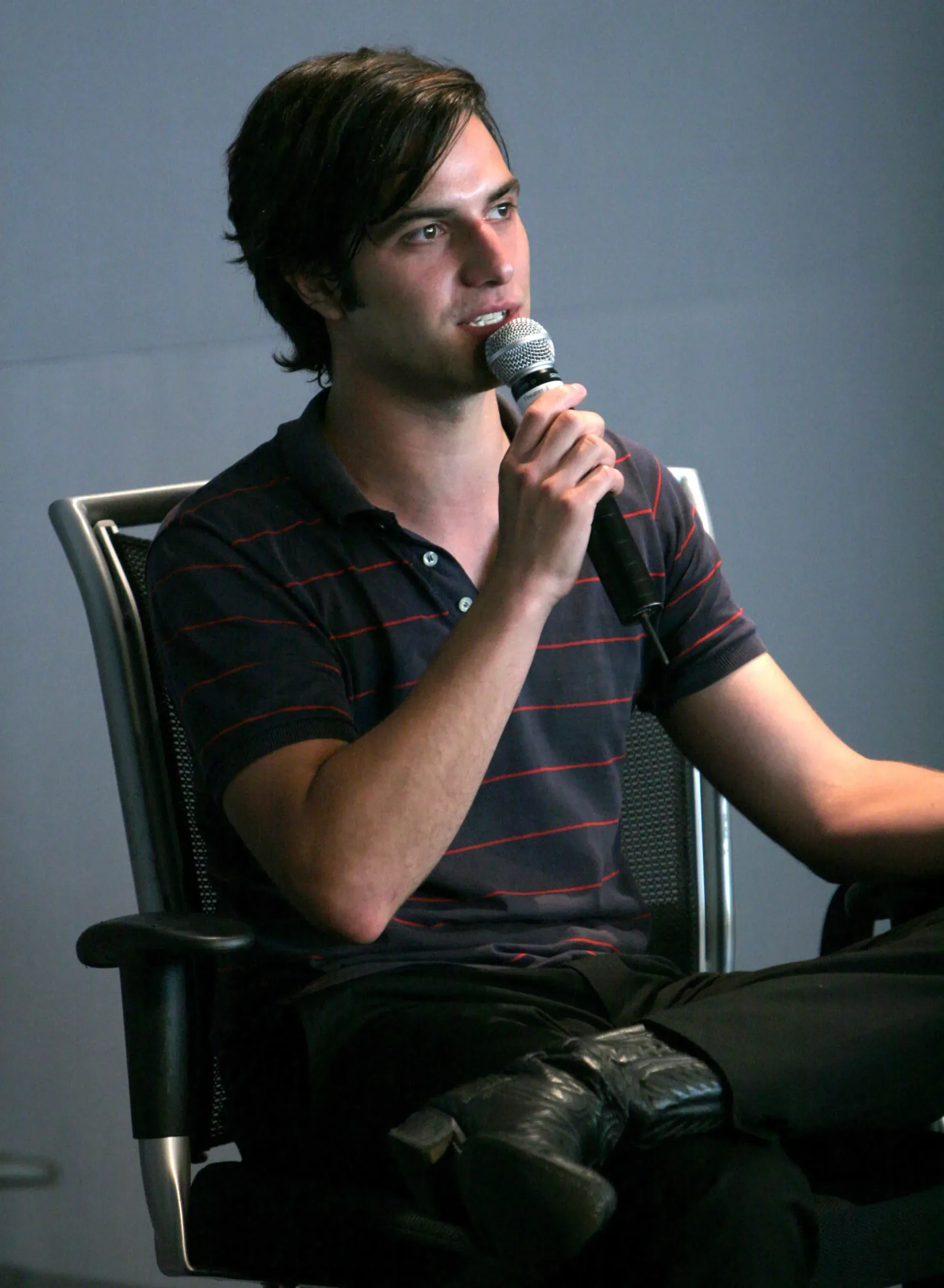
Ray Tintori, the filmmaker, screenwriter and music-video director whose career moved freely between independent film, practical-production departments, performance and short-form visual work, has died in New York. The New York City Office of Chief Medical Examiner has said the death is under investigation; a cause has not been disclosed.
Tintori’s credits connected him to a broad set of filmmakers and musicians, but one of his most enduring screen associations is Beasts of the Southern Wild. He was a founder of Court 13, the filmmaking collective behind the feature, and served as its special effects unit director. The film went on to receive four Oscar nominations.
He also directed music videos for Arcade Fire, MGMT, Chairlift, Bonnie Prince Billy, The Cool Kids, The Killers and Solange. That list reflects a body of work that did not sit in a single industry lane: Tintori worked as a director and writer, but also took on acting, special-effects and art-department work across film and television projects, including Eon Flux.
A collaborative career built across formats
The Court 13 connection is central to understanding Tintori’s work on Beasts of the Southern Wild. Film collectives are not merely loose groups of names attached to a project; at their best, they are creative and production networks in which participants can take on multiple responsibilities as a project develops. Tintori’s role as a founder and as special effects unit director illustrates that kind of overlap between organizing a creative community and contributing a specialized piece of a feature’s production.
“Special effects” can mean several things depending on a film’s production. In this context, the credit identifies a dedicated unit—an organized crew or production function—rather than a general statement that one person made every visual effect in a movie. It is an important distinction, especially for audiences accustomed to treating all effects as computer-generated imagery. A special effects unit is part of the practical machinery of filmmaking: a defined responsibility inside a much larger collaborative process.
That cross-disciplinary approach appears throughout the credits described in Tintori’s career. He could direct a music video, work in an art department, handle a special-effects assignment, appear on screen, or take part in a specialized camera unit. Rather than suggesting a scattered résumé, those shifts point to a filmmaker comfortable with the interconnected crafts that shape what ultimately reaches the screen.
His thesis film, Death to the Tinman, premiered at Sundance and won a short-filmmaking award. A thesis film is typically a culminating project made during a degree program, but its practical significance can be much greater: it can introduce a director’s voice to festival audiences and create momentum for future collaborators. In Tintori’s case, it stands among the early markers of a career that later extended into features, music videos, stage work and audio conversation.
Recent work included a period-style 16mm unit
Most recently, Tintori co-directed a New York performance of Ethan Coen’s play Waiting with Jordan Fish. Tintori and Fish also hosted To the White Sea, a podcast centered on an unproduced Coen brothers screenplay. Together, those projects underline an interest in material beyond conventional feature-film release cycles: live performance and close discussion of an unrealized script are both forms of engaging with filmmaking as process, not just finished product.
Tintori also appeared in Josh Safdie’s Marty Supreme as a newsreel photographer. Before the film’s release, he described his work there as a “dream filmmaking/acting role,” explaining that he shot black-and-white 16mm footage for the newsreel sequence while appearing as a cameraman in the Wembley finals. He identified his behind-the-camera title as Newsreel Unit Producer.
The description offers an unusually direct look at the construction of a screen sequence. A newsreel is a short filmed report historically shown to audiences, and a movie can evoke that visual language through choices in film stock, equipment, camera movement and staging. Tintori’s account specifically identified black-and-white 16mm footage, a format associated here with the production’s intended newsreel material. The significance is not simply that older cameras were present; it is that the unit was assembled to make footage with a distinct internal identity inside the larger film.
He wrote that certain setups used an old crank Bolex camera previously used on early Red Bucket Films shorts. Ryan Marie Helfant used an Arriflex 16SR, while Tintori operated an Arriflex 16S. Tintori also said the unit filmed a scene involving Endo working in a clock factory.
Those camera names are meaningful because they show that the unit’s approach was specific rather than abstract. A Bolex is a motion-picture camera associated in Tintori’s account with hand-cranked operation, while the Arriflex models were the cameras named for the respective crew members. The available details do not establish every creative or technical choice made for the sequence, and they should not be stretched into claims about the entire production. They do, however, document Tintori’s hands-on role in a carefully defined piece of the film.
Tintori explicitly connected that work to an earlier 16mm unit assignment on Ang Lee’s Taking Woodstock. He said the group embedded with cast members in costume and shot handheld material that was edited into the film. The comparison is revealing because it describes a filmmaking method designed to merge a specialized unit’s footage into the main feature. “Handheld” here refers to a camera operated without a fixed support such as a tripod, allowing the operator to move with the action. Tintori’s recollection makes clear that the unit’s footage was intended for inclusion in the finished movie, not simply as behind-the-scenes documentation.
His comments named Jordan Fish, Jeff Delauter, Dave MacNutt and Bob Weisz among the participants in that earlier unit, while also crediting Helfant on Marty Supreme. In an industry that frequently foregrounds stars and directors, Tintori’s own account emphasized the crew around him. That focus is a useful reminder that visual texture, especially in a deliberately period-inflected sequence, is often built by a network of collaborators with separate but aligned duties.
Music videos, film craft and creative range
Tintori’s work with artists including Arcade Fire and MGMT placed him in a music-video space where directors must convey an idea within the compact duration of a song. His credits with Chairlift, Bonnie Prince Billy, The Cool Kids, The Killers and Solange further demonstrate the range of artists with whom he collaborated. Music video direction is a distinct form, even when it overlaps with cinema: the imagery has to work in conversation with an already-existing track, while also creating a visual identity of its own.
That breadth matters because Tintori’s career cannot be reduced to one title or one job description. He had a foundational role in a collective connected to an Oscar-nominated feature; he directed work for musicians across different styles; he participated in technical departments; he made a recognized short; and he continued moving between theater, podcasting and screen work. The pattern is one of a maker who understood filmmaking from several angles.
For readers interested in the relationship between music, film and screen culture, Joking Joystick has also covered a recent moment in which an artist’s catalog connected strongly with a live audience in Future’s reflection on a renewed “Throw Away” singalong. Tintori’s video work belongs to a different medium and context, but both examples point to how artists’ work can acquire new life through the spaces in which audiences encounter it.
Family and education
Tintori graduated from Wesleyan University. He was the son of film editor and NYU Kanbar Institute chair John Tintori and the late script supervisor Mary Cybulski. Those family ties place his upbringing close to film production, although his own career was defined by his individual work and the collaborations he built across projects.
Film editing, script supervision, art direction, special effects and camera-unit work are often discussed as separate professions. Tintori’s career is notable precisely because he worked amid several of those production worlds while also retaining a directorial and writing identity. The available record presents a creative life defined less by a single fixed role than by a willingness to help make the work in whatever form it required.
With the cause of his death still unknown and the investigation ongoing, the most responsible account is limited to what has been confirmed. What is clear is the extent of Tintori’s contribution: from Court 13 and Beasts of the Southern Wild to Sundance-recognized short filmmaking, music videos, 16mm production work, theater and podcasting, his career left traces across many of the collaborative disciplines that make film and visual culture possible.