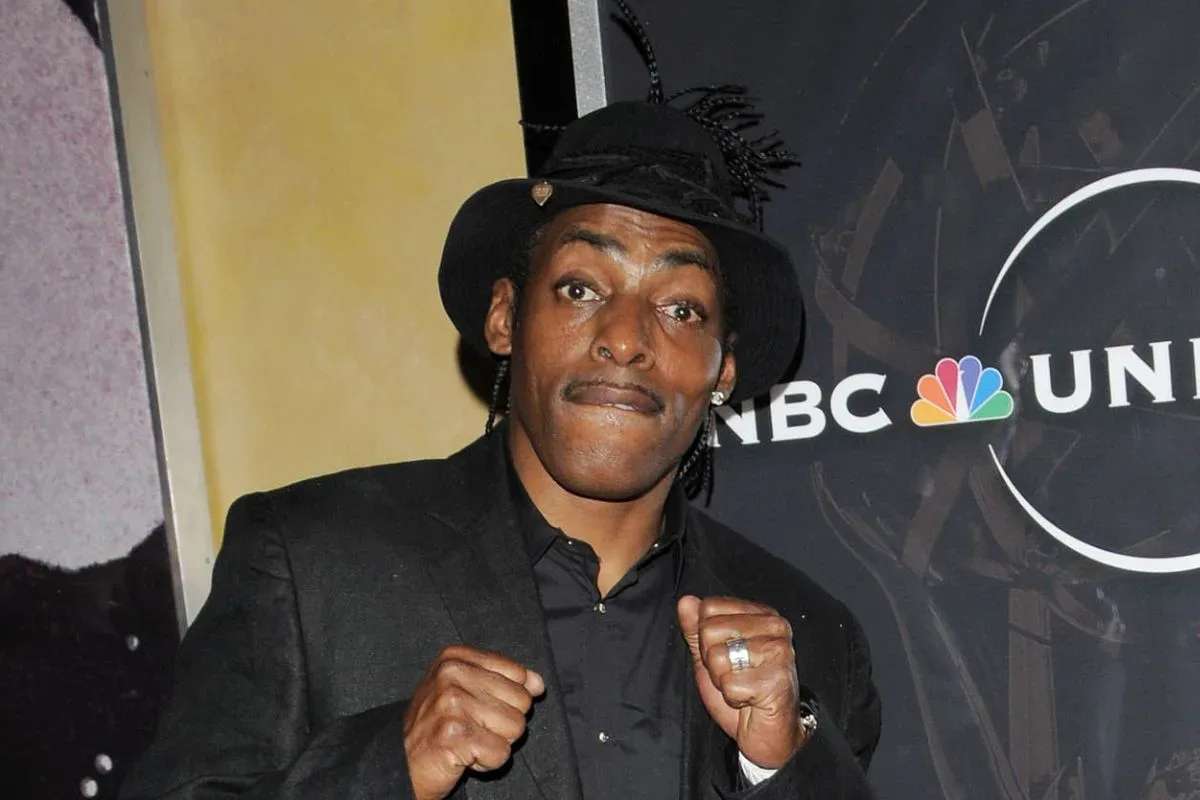
Coolio appears in a newly assembled music video through “Shoot For The Moon,” a collaboration with Australian rapper Dheezy that uses previously unreleased footage recorded during Coolio’s lifetime. The space-themed visual places archival green-screen material alongside newly filmed Dheezy performance footage, making the late rapper part of a contemporary release without presenting the appearance as a newly recorded one.
Dheezy’s team says it worked closely with Coolio’s estate on the video. That detail matters: a posthumous appearance can involve both artistic choices and permissions around a performer’s recorded image, voice and legacy. Here, the available information points to an authorised project built from existing material rather than a synthetic recreation or a performance created after Coolio’s death.
“Shoot For The Moon” closes Dheezy Does It LP, an album developed through four years of sessions split between Australia and Los Angeles. M-Strange produced the track, while KXNG Crooked served as executive producer for the broader album, which opens with an introduction from Eminem.
How archival footage becomes a shared performance
The video’s basic technique is straightforward in principle, even if the execution requires careful visual work. Coolio’s archival material was shot against a green screen, a backdrop used so that filmmakers can remove the original background and replace it with a new digital setting. The team then created the space-themed environment with 3D effects and filmed Dheezy’s new performance to fit with Coolio’s footage.
Two details are particularly important to making that composite credible: camera angles and lighting. Matching the camera angle helps make people filmed at different times appear to occupy the same visual space. Matching lighting helps prevent one performer from looking as though they were dropped into a scene from a different production. Those elements can be easy to overlook when they work, but they are the connective tissue of an edited collaboration such as this one.
3D effects in this context refer to digitally constructed objects and environments with simulated depth, rather than a flat image simply placed behind the performers. The space theme gives the production room to embrace artifice rather than conceal it completely. It can operate as a stylised setting for the archival footage, instead of requiring the footage to pass as a naturalistic scene captured in the same room and at the same time as Dheezy.
That is also why the project is distinct from broader discussions about artificial intelligence and celebrity likenesses. The stated building blocks here are unreleased footage, new live-action material and visual-effects work. Nothing in the available details indicates that Coolio’s performance was generated by AI. The difference is material: this video works with a recorded performance that existed during his life, then gives it a new setting and editorial context.
An album built around a wide collaborator list
Dheezy Does It LP brings together an unusually broad group of guests. Beyond Coolio, the album includes contributions from the late Nate Dogg, Proof and Chino XL. Snoop Dogg, Kurupt, E-40 and Planet Asia also appear, alongside Onyx and Big Twins.
Related coverage includes Dheezy Builds Space-Themed Coolio Video From Unreleased Footage.
Its guest list has a clear through-line to Dheezy’s stated influences. His team identifies Eminem as his biggest musical influence, and several participants have links to Eminem’s Detroit orbit. Dheezy had already worked with D12 member Bizarre on the six-track Killah Kombo EP in 2023. Kuniva and Swifty McVay were involved with that release as well, and Obie Trice also appeared. K.E. on the Track contributed production.
That earlier EP included “Flip Em All The Bird,” which gave Dheezy’s D12 connections a prior music-video platform. The new album therefore does not arrive as a one-off collection of disconnected features. It extends a pattern of collaborations that Dheezy had been building before bringing the LP together.
“Dheezy Does It LP is more than an album—it’s the culmination of years of hard work, sacrifice, and a lifelong love for Hip-Hop,” Dheezy said.
He also framed the release as a meeting point for the artists and influences that shaped his own path. In practical terms, the album’s four-year development period helps explain how a project can span performers from different regions and eras, including artists whose contributions were recorded before their deaths.
Coolio’s place in the video
Coolio died in September 2022 at age 59. His catalogue has nevertheless continued to gain new entries built from recordings completed during his life. “A Star Is Born,” a posthumous collaboration with Treach and DJ Wino, followed in 2023.
His best-known career landmarks include “Fantastic Voyage,” “C U When U Get There” and “Gangsta’s Paradise,” the crossover hit that became his biggest success. “Shoot For The Moon” is not positioned as a revision of those records. Instead, it gives a previously unreleased filmed performance a role in a new Dheezy track and wraps it in a deliberately cosmic visual concept.
For listeners, that distinction sets sensible expectations. The value of the video is not that it erases the distance between the archival shoot and the present-day production. Its interest lies in the opposite: it is a constructed encounter between material recorded in Coolio’s lifetime and an artist carrying that footage into a fresh setting. The estate’s involvement provides an important layer of stewardship, while the visual-effects approach provides the technical bridge.
Why the production choices matter
Posthumous collaborations can be emotionally complicated because they ask audiences to decide what they are seeing and hearing. Was a vocal left unfinished? Was an image generated? Is a surviving estate involved? Does the finished work acknowledge that it combines different moments in time? “Shoot For The Moon” has relatively clear answers to several of those questions: it uses unreleased footage, the estate worked with Dheezy’s team, and the video construction relies on compositing techniques designed to place old and new performances together.
That clarity is useful in an era when digital tools can obscure a work’s origins. Green-screen compositing is not new, but it remains a fitting tool for archival performance footage because it preserves the performer’s original captured movement while allowing a later creative team to design the context around it. In this case, the context is a 3D space world whose stylisation suits the title and avoids the need to pretend the collaboration was filmed conventionally.
The release also illustrates how a music video can do more than promote a song. It can supply a visual frame for a track’s collaborators and explain, without lengthy exposition, why performers from different sessions and circumstances appear connected. Dheezy is physically present in newly created material; Coolio is present through footage filmed while he was alive; the effects work makes the exchange legible onscreen.
That use of visual language is part of a wider pop-culture conversation around performance, presentation and the value of work made for an audience in real time. For another angle on artists making the case for live art, see Jinkx Monsoon and BenDeLaCreme’s holiday-show return.
What ‘Shoot For The Moon’ represents for Dheezy Does It
As the album closer, “Shoot For The Moon” carries more than one function. It is a Dheezy song produced by M-Strange, a technical showcase for an effects-driven video, and a posthumous Coolio collaboration assembled from archived footage. Its placement at the end of the LP makes it a final statement for a project that Dheezy describes as the product of sustained work, sacrifice and a long-standing love of hip-hop.
The album’s larger personnel list makes that ending feel especially intentional. Dheezy’s stated Eminem influence, prior work with Bizarre and other D12-connected artists, KXNG Crooked’s executive-producer role, and an opening introduction from Eminem all establish one set of creative connections. Coolio’s appearance adds a different but equally recognisable hip-hop legacy to the project, while Nate Dogg, Proof and Chino XL underscore that the record reaches across contributions from artists who are no longer alive.
“Shoot For The Moon” ultimately depends on the care of its framing. The footage is archival, the setting is newly built, and Dheezy’s performance is contemporary. Rather than collapsing those facts into a claim that Coolio has somehow returned, the video’s production approach gives an existing performance another authorised life on screen.