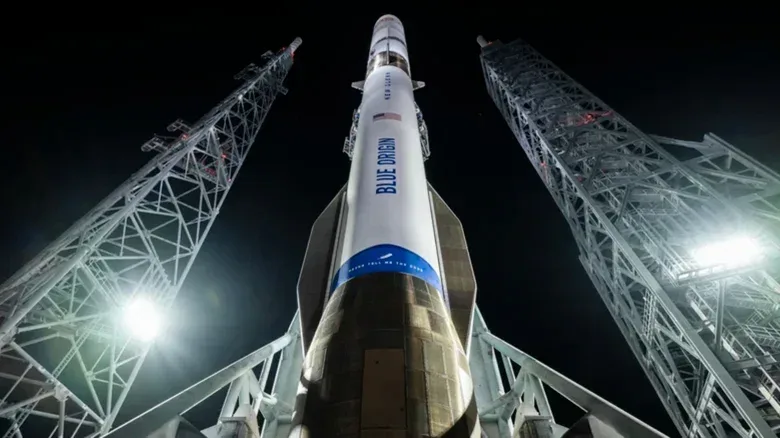
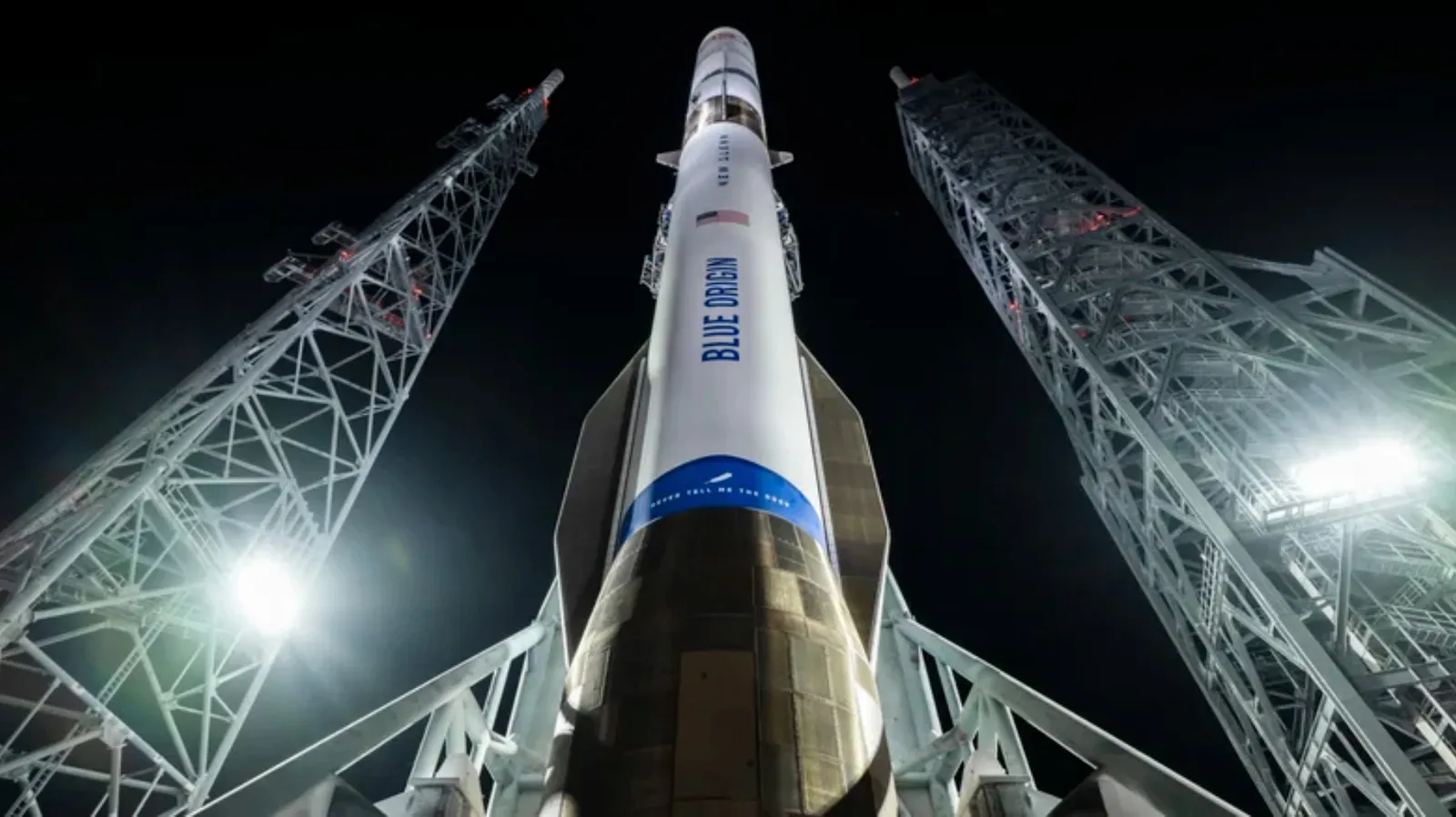
Blue Origin’s New Glenn rocket is now expected to return to flight in January 2027, extending a pause that began after an explosion during a hot-test at the company’s Florida launch site in May 2026.
The company had previously targeted another launch before the end of 2026. But an internal memo from chief executive Dave Limp indicates that repair work at the damaged site has taken longer than hoped, with weather identified as a factor in the revised schedule.
The updated target is significant because the delay is not presented as a change to the New Glenn program’s broader goals. Instead, it reflects the practical difficulty of returning a launch complex to service after an on-pad incident damaged supporting infrastructure. Blue Origin has work planned for New Glenn that includes supporting Amazon’s Leo satellite broadband service, while the company has also secured a NASA contract connected to a Mars telecommunications network.
What changed in the New Glenn schedule
The immediate event behind the delay was a May 2026 explosion during a hot-test, a ground-based test in which rocket systems are operated without an actual launch. The incident caused notable damage to Blue Origin infrastructure in Florida and halted further activity there.
For more context, explore Lionsgate Reports Revenue Surge as Michael, Library Sales and TV Deliveries Lift the Studio.
Following the explosion, Blue Origin initially indicated that repairs could be completed quickly enough for the next launch to happen before 2026 ended. The January 2027 expectation moves that return beyond the earlier window.
Limp’s memo credits the team’s repair work while acknowledging that weather slowed progress. He wrote that the team had accomplished work in six months that many people believed would require years. That framing suggests the rebuild has involved more than a simple cleanup or replacement of a single component, even though the available details do not specify every repair or the status of the rocket itself.
The repaired infrastructure: tower and launch bridge
Two pieces of ground equipment are specifically described as restored: the Vehicle Access Tower has been repaired and restacked, and the launch bridge has been restored.
A Vehicle Access Tower is the tall structure beside a rocket that gives teams and equipment access to the vehicle while it is on the pad. It is part of the practical machinery of launch operations rather than the rocket itself. A tower can support access, servicing and other pad activities needed before a vehicle can fly.
The launch bridge is another pad-side connection used to reach the rocket. Restoring it matters because rockets require coordinated support from multiple systems on the ground. A vehicle may be ready in one sense, but a flight cannot proceed until the site can safely support the full launch sequence.
That is the key distinction in this delay: a rocket launch program depends on both the vehicle and the surrounding launch infrastructure. Damage to either can put operations on hold. In this case, Blue Origin’s stated progress on the tower and bridge shows that the Florida site has been a central part of the return-to-flight effort.
Why weather can affect a repair timeline
Weather is often discussed in connection with launch-day conditions, but it can also influence construction, restoration and outdoor equipment work. Blue Origin has cited weather issues as a reason repairs moved more slowly than expected.
That does not establish a detailed breakdown of which tasks were delayed or by how much. It does, however, underscore why an early timetable after a major pad incident can change. Ground infrastructure repair requires work around a large, specialized site, and the company’s new January target indicates its earlier expectation did not leave enough room for the conditions it encountered.
The revised timing also provides a clearer dividing line between what has been completed and what remains. The access tower has been restacked and the bridge restored, but Blue Origin is not yet back in flight. Completion of prominent repairs is an important milestone; it is not, by itself, confirmation that every step required for a launch has concluded.
What the delay means for Blue Origin’s planned work
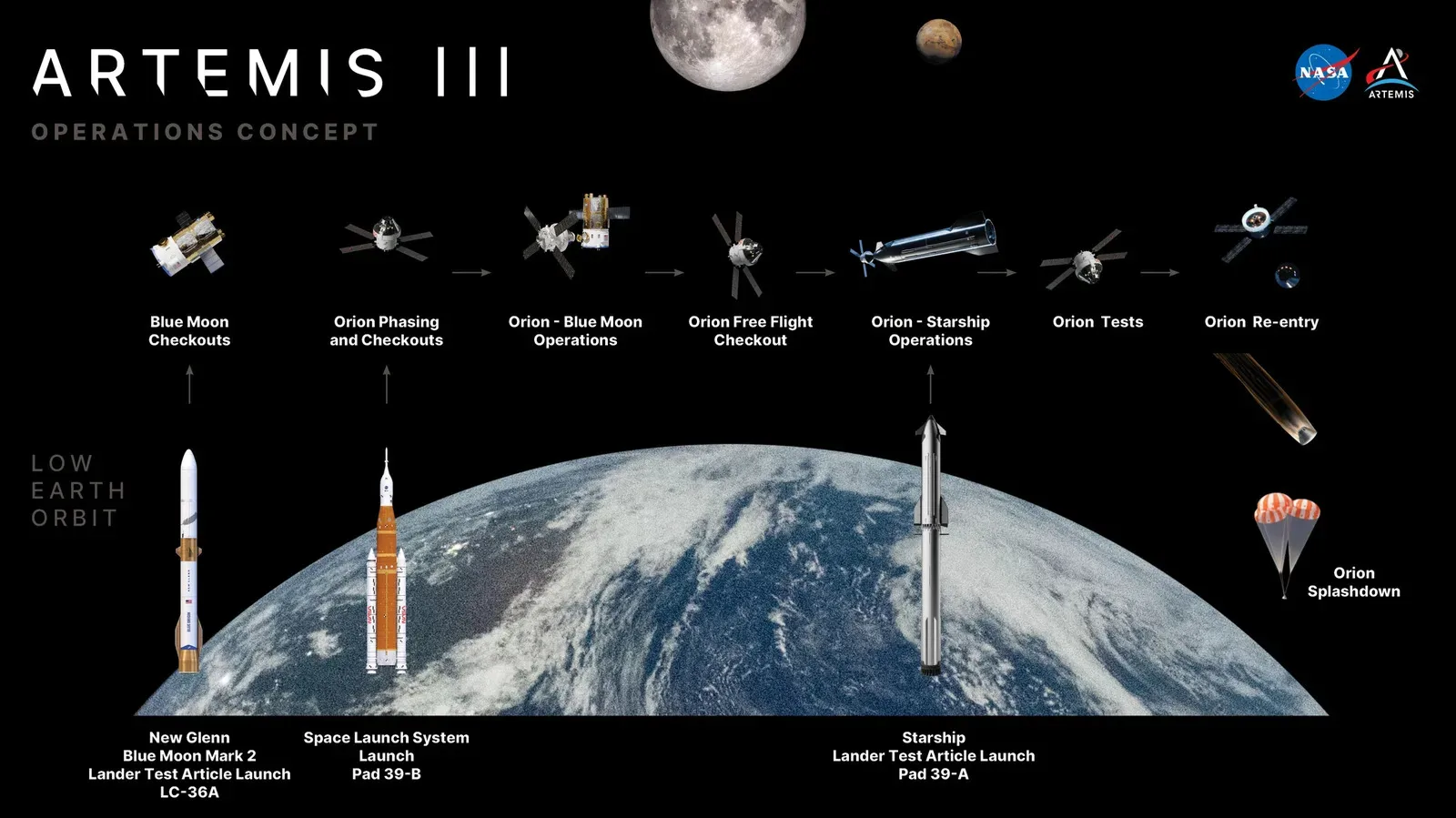
The New Glenn pause arrives as Blue Origin prepares for a larger role in space activity. In September, NASA awarded the company a contract to establish a telecommunications network for Mars. Separately, New Glenn rockets are slated to carry equipment intended to support Amazon’s Leo satellite broadband service.
Those plans make the return date more consequential than a routine schedule adjustment. Launch vehicles are the means by which hardware reaches space, so a delayed return to operations can shift the point at which future missions can move forward. The supplied information does not assign new dates to the Mars telecommunications work or to Amazon Leo-related launches, and it would be premature to assume how the January target changes any individual mission.
Still, the relationship is straightforward: Blue Origin’s intended expansion depends on New Glenn being able to resume launches. January 2027 is now the company’s expected next opportunity to demonstrate that the repaired Florida infrastructure can again support that role.
A return-to-flight target, not a guarantee
The important wording is that the next launch is expected in January 2027. Spaceflight schedules are inherently subject to change, and the record here already includes one move from a before-year-end target to a later one. The information provided does not state a precise January date, a planned payload, or whether the company has set a formal launch window.
For observers, the practical takeaway is to separate confirmed repair milestones from a completed return to normal operations. Blue Origin says the Vehicle Access Tower and launch bridge have been restored, and its leadership has now set January as the next anticipated launch period. Until a launch occurs, though, the program remains in its return-to-flight phase.
The delay also illustrates the scale of a launchpad accident. Attention often gravitates to the rocket, but the equipment surrounding it is just as important to an operational launch site. The tower, bridge and other ground systems are the connective layer between a finished vehicle and a liftoff attempt. Rebuilding that layer after an explosion can be a lengthy technical and logistical undertaking, even when a company describes progress as rapid.
Blue Origin’s next major test will therefore be broader than simply getting New Glenn off the ground. A January 2027 launch would mark the point at which the company’s repaired site, its operational preparation and its launch vehicle come together after the May incident. That milestone will carry added weight given the company’s planned work for NASA and Amazon’s Leo service.