The US Federal Communications Commission has approved Amazon Leo’s $11.5 billion acquisition of mobile-satellite operator Globalstar, clearing a significant step in Amazon’s attempt to become a larger force in satellite connectivity.
The deal is about more than adding satellites to a corporate collection. Globalstar brings an established role in mobile satellite services, including the emergency satellite connectivity used by supported iPhone and Apple Watch models. Amazon has said the acquisition is intended to expand Leo’s space-based footprint and support direct-to-device service: connectivity sent from satellites to ordinary consumer devices rather than relying solely on dedicated satellite hardware or a fixed home terminal.
For Apple customers, the practical headline is continuity. As part of the transaction, Leo will power satellite services for supported iPhone and Apple Watch models. Apple had held a 20 percent stake in Globalstar before the takeover, so the ownership change shifts an important piece of that satellite-service arrangement into Amazon’s orbit.
What the FCC approval actually clears
The FCC’s approval allows the acquisition to proceed under US communications regulation. In its assessment, the agency said Globalstar’s assets complement Amazon Leo’s plans and could strengthen Leo’s entry into the direct-to-device market.
That language matters because satellite communications are not simply a matter of putting hardware into space. Operators use radio spectrum, operate networks across borders and must meet regulatory requirements. An acquisition involving a mobile-satellite company therefore has consequences for the communications infrastructure behind a consumer-facing service, not only for the brands attached to it.
The FCC also said the transaction could serve the public interest by improving data coverage in underserved areas. That is a potential benefit rather than a promise that every coverage gap will immediately disappear. Satellite connectivity can extend communications beyond the reach of conventional terrestrial networks, but the scale, availability and services offered after the acquisition will depend on how Leo deploys its network and partners.
Direct-to-device, explained without the orbital jargon
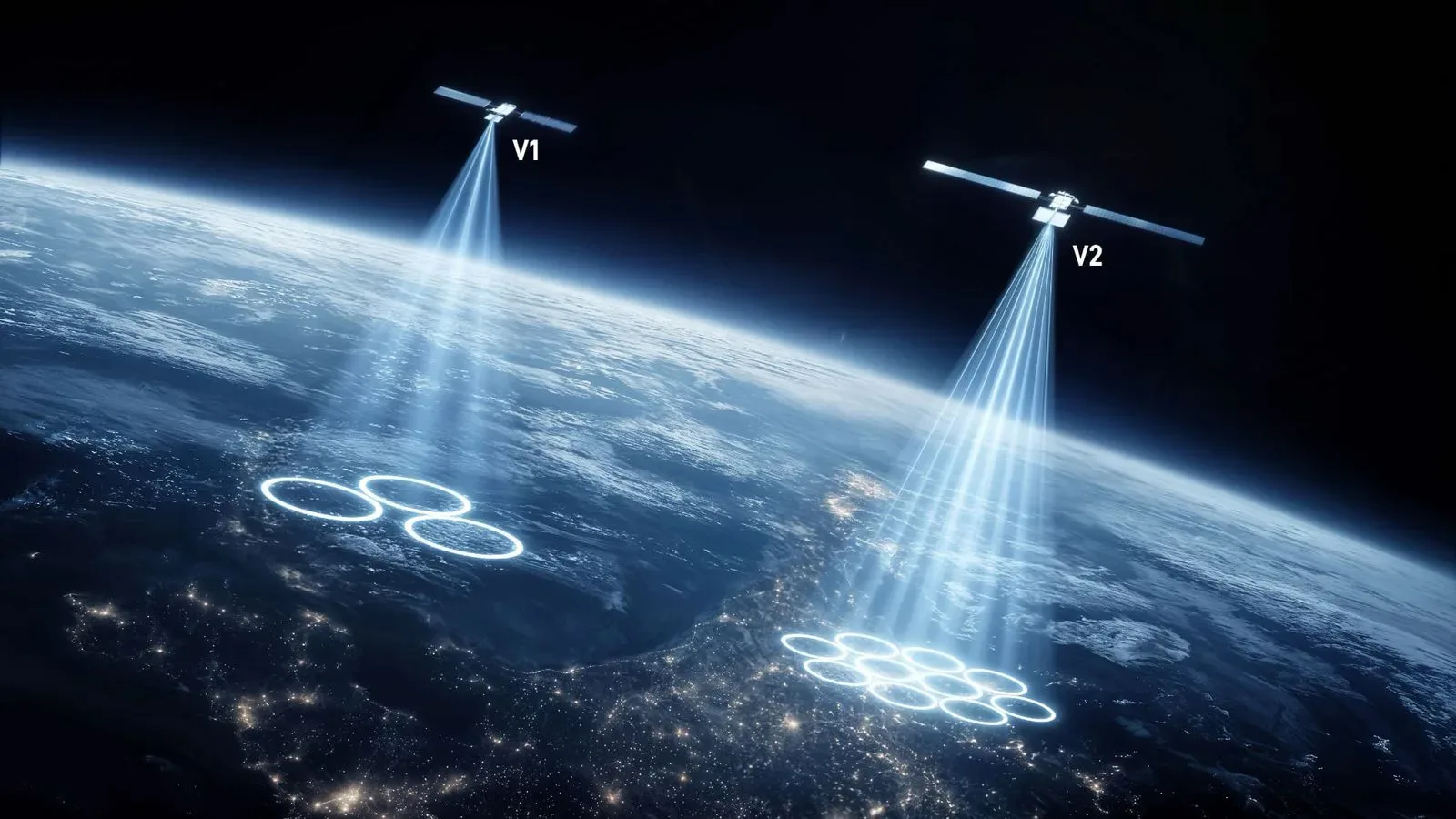
Direct-to-device describes a satellite service designed to connect with a consumer device, such as a phone or watch, instead of requiring a specialized satellite handset or a larger dedicated terminal. In this case, the concept is central to why Globalstar is strategically valuable to Leo: Globalstar already has a role in satellite services used by Apple hardware, while Leo is building a much broader low-Earth-orbit network.
It is important not to confuse direct-to-device service with an automatic replacement for a normal cellular plan or home broadband connection. The supplied details establish Leo’s goal to offer direct-to-device service, but they do not define future service tiers, device compatibility beyond supported Apple products, performance levels, geographic coverage or launch timing. Those distinctions remain important for anyone reading the merger as a sign that every smartphone will soon have full satellite data everywhere.
What can be said now is narrower and more useful: Amazon is gaining a company already tied to emergency satellite functionality on supported iPhones and Apple Watches, and Leo is set to power that service after the deal. The transaction gives Leo a more direct path into a segment where satellite connectivity meets mainstream personal devices.
Why Globalstar matters to Apple users
Globalstar may not be a household name, but it has supplied Apple’s emergency satellite connectivity for compatible iPhones and Watches. That makes it more familiar in practice than its brand recognition might suggest. For people with supported devices, the immediate significance is not a newly announced feature or a change to the device in their pocket. It is that the infrastructure relationship behind an existing class of satellite service is changing hands.
The supplied information does not say that Apple is adding new satellite capabilities, changing compatible models, revising its emergency-service terms or altering how customers use those features. Nor does it establish a timetable for any broader Leo-branded phone service. Readers should separate the confirmed business and network arrangement from assumptions about a future product rollout.
That distinction is especially useful in satellite news, where a merger, an orbit count and a device feature can all sound like the same development. They are not. The acquisition is a corporate and infrastructure move. The Apple connection identifies a service relationship that will continue with Leo as provider. Any eventual expansion into broader direct-to-device offerings would be the next stage, not something established merely by regulatory approval.
Leo’s network is growing, but it is still catching up
Leo is Amazon’s rival to SpaceX’s Starlink. Amazon recently said it had 400 satellites in orbit and has set an aim of more than 3,000 low-Earth-orbit satellites in the near future. It also added six new Arianespace launches, an indication that getting satellites into orbit remains one of the core practical requirements of the project.
Low Earth orbit, often shortened to LEO, refers to satellites positioned relatively close to Earth compared with traditional high-orbit communications satellites. Large LEO constellations use many satellites moving across the sky to maintain service coverage. The reported figures underscore the competitive gap Leo faces: SpaceX has about 11,000 satellites, far above Leo’s current 400 and even above its stated near-term goal of more than 3,000.
Raw satellite totals do not, by themselves, determine what a customer receives. Service depends on network design, ground systems, spectrum, regulatory permissions, device support and how an operator structures its offerings. Still, the numbers illustrate the central challenge. Amazon is scaling a network in a market where Starlink already has a much larger orbital presence.
Globalstar gives Leo something different from a simple boost in launch cadence: an established mobile-satellite operator and an existing connection to Apple’s supported iPhone and Apple Watch satellite services. Taken together, Leo’s expanding constellation and the Globalstar acquisition suggest Amazon is pursuing several types of satellite connectivity rather than only one consumer internet use case.
Fixed internet, mobile connectivity and the airline angle
The FCC described the combined operator as one that could offer fixed and mobile services to residential, business and government customers. Those are broad customer categories, but they point to the multiple markets a satellite network can address.
- Fixed service generally means connectivity delivered to a stationary location, such as a residence or workplace.
- Mobile service concerns connectivity for moving people or devices, a category that aligns with the direct-to-device ambition described for Leo and Globalstar.
- Government and business service can involve organizations that need data coverage where conventional networks are unavailable or insufficient.
Leo has also announced a partnership with Delta intended to eventually bring satellite internet to flights. That effort is separate from the Apple service relationship, but it reinforces the breadth of Amazon’s satellite ambitions. A company can use one orbital network to pursue home or business internet, mobile-oriented connections and aviation connectivity, though each application has different technical and commercial demands.
Leo has also launched high-quality satellite internet service in Uzbekistan. That deployment shows the project is progressing beyond satellite launches alone and into live service, while also emphasizing that availability is not automatically uniform worldwide. Satellite operators must still build out service market by market and work within the relevant regulatory frameworks.
What is confirmed, and what remains open
The confirmed facts are substantial: the FCC has approved the $11.5 billion Globalstar acquisition; Leo intends to expand into direct-to-device service; Globalstar has provided Apple’s emergency satellite connectivity for compatible iPhones and Watches; and Leo will power that satellite service for supported Apple hardware after the deal.
Several consumer-facing questions are not answered by the approval. There are no supplied details on a new Amazon Leo phone plan, the precise capabilities of any future direct-to-device offering, pricing, wider device compatibility or a date for an expanded service. There is also no stated change to the scope of Apple’s existing supported-device satellite features.
For now, the deal is best viewed as a meaningful infrastructure move in a competitive satellite market. Leo gets Globalstar’s mobile-satellite experience and its Apple service connection while it continues building a much larger low-Earth-orbit constellation. Apple users with supported hardware have an identified path for continued satellite service, while the longer-term question is how Amazon turns this combined position into broader direct-to-device connectivity.
For more on Apple-related hardware developments where the details are still emerging, see this look at what an Apple teaser does—and does not—confirm.