Apple CEO John Ternus has posted a short, atmospheric video showing an Apple logo projected onto a dark wall with a nighttime city skyline in view. On its own, it reveals no product name, specifications or launch plan. Its timing, however, has made it a notable signal: new MacBook models with touch-enabled OLED displays are widely expected to be the focus of Apple activity today.
That distinction matters. The video is a teaser, not a technical briefing, and the more specific claims surrounding the machines remain unconfirmed until Apple formally presents them. Still, the expectation is unusually detailed: two larger MacBook variants, a new display technology, direct touch input, revised thermal hardware, thinner screen borders and M5-class professional chips are all in the mix.
Selected technology reporters and creators have been invited to a Los Angeles event called “Pro and tell” at 10 a.m. Pacific Time. The anticipated hands-on setting strongly suggests that the day’s MacBook news is meant to be evaluated as a physical product experience, rather than merely previewed in a video. The same gathering is also expected to include the new iPad mini, iMac and 14-inch MacBook Pro models Apple announced earlier in the week.
For players, creators and PC-minded buyers who use a Mac alongside a console, handheld or gaming PC, the headline is not simply that a screen may respond to a finger. The more consequential question is whether Apple has redesigned the laptop around that change rather than bolting touch onto an existing chassis. The rumored hinge, cooling changes and operating-system work would be central to that answer.
What is expected from the touchscreen MacBooks
The prospective lineup is said to consist of 14-inch and 16-inch models. These sizes matter because they place the rumored touch implementation in Apple’s larger, performance-oriented laptop territory, where keyboard, trackpad, screen real estate and cooling all have significant roles. A touch screen on a compact everyday notebook creates one set of trade-offs; touch on larger machines intended for demanding workloads creates another.
The most prominent rumored change is an OLED display. OLED, short for organic light-emitting diode, is a display technology in which individual pixels emit their own light. In practical terms, that can enable very high contrast because pixels can be turned off to produce deep blacks. The expected benefits here are higher contrast, more vivid colours and greater maximum brightness.
Those are potentially meaningful qualities for work that lives on screen: editing imagery, watching video, inspecting dark game scenes or simply working in apps with dense visual interfaces. But “OLED” should not be treated as a complete quality verdict by itself. Brightness behavior, color tuning, resolution, refresh characteristics and the software experience all help determine how a display feels in real use. None of those additional details have been established by the teaser.
Touch input is expected to work alongside the keyboard and trackpad, rather than replacing either. That is an important framing. A MacBook’s keyboard remains the fastest way to enter substantial text, while a trackpad supports precise pointer movement and gestures without reaching up to the display. Direct touch is more naturally useful for quickly selecting an on-screen control, manipulating a visual element, scrolling through a page, marking something up or using an application designed around larger touch targets.
The rumored software component is macOS Golden Gate, which is said to include touchscreen optimizations and touch-specific controls. “Optimization” is doing a lot of work in that phrase. A desktop operating system designed primarily for pointer input can technically accept taps without always feeling comfortable to use by touch. Controls may be too small, menus may depend on hover behavior, and workflows can assume a pointer’s fine precision. Touch-specific controls would suggest Apple is addressing at least some of those differences, although their scope is not yet clear.
The hinge may be the least glamorous and most important change
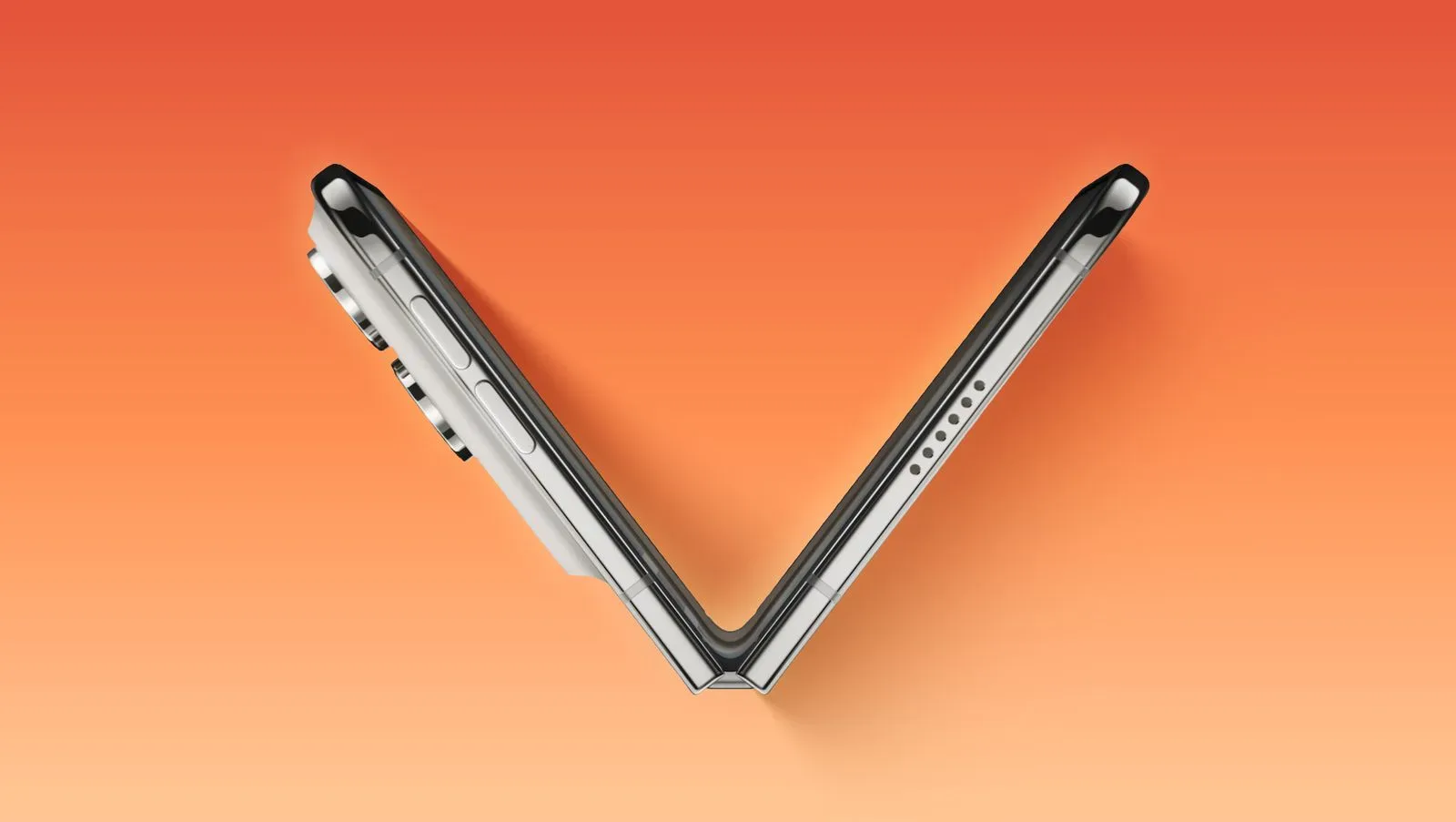
One reported hardware alteration is a firmer hinge intended to keep the display from wobbling when touched. It sounds like a small engineering note, but it gets to the practical problem that makes touchscreen laptops feel either intentional or awkward.
On a conventional clamshell laptop, the screen is designed to remain at a comfortable viewing angle while the user works from the keyboard and trackpad. Pressing the panel introduces force at the far end of the device. If the hinge is too loose, the display can bounce away from a fingertip and then settle back, which makes repeated direct interaction feel imprecise. A stiffer hinge is meant to counter that motion.
There is a balancing act, though. A hinge cannot simply be made rigid without affecting the ease of opening and adjusting the laptop. The value of the rumored redesign will depend on how it handles both tasks: stable when touched, but still natural when a user changes the screen angle. That is exactly the sort of point a hands-on event can clarify, but it should not be assumed from a specification list alone.
Another expected change is a cooling-system redesign that improves airflow through the hinge. Cooling is the process of moving heat away from high-performance components so they can operate reliably. In a thin notebook, that is a particularly difficult packaging problem: the chassis has limited room, and designers have to account for the display, battery, ports, speakers, structural parts and processor thermal needs.
If the airflow-through-the-hinge claim proves accurate, it may show that the new hinge is more than a response to touch-screen wobble. It could be part of a broader internal layout intended to support higher-performance hardware in a slimmer or lighter design. That is analysis rather than confirmation; the actual thermal design, fan behavior and performance limits have not been detailed.
Dynamic Island, slimmer borders and a lighter chassis
The machines are also expected to replace the familiar display notch with a Dynamic Island. The term describes a screen cutout treatment used to house necessary front-facing hardware while integrating it more deliberately into the visual interface. Here, it is reportedly expected instead of a notch. The teaser itself does not establish how it will look on these MacBooks, how much screen area it occupies or what Mac-specific functions it might support.
Thinner bezels are also rumored. A bezel is the border around the active display area. Reducing it can make a laptop look more modern and can increase the sense that the panel fills the lid, but the useful result depends on the overall chassis dimensions and screen placement. Touch introduces a further consideration: users often need somewhere to grip or adjust a display without accidentally interacting with the panel. A thin border is visually appealing; its ergonomics have to be judged in the finished hardware.
The report also points to noticeably lower weight and a slightly thinner design. Those claims are appealing because the anticipated models are 14-inch and 16-inch machines, sizes where portability can be the deciding factor between carrying a laptop every day and leaving it behind. No exact weight or thickness figures have been provided, so there is no basis yet for a model-to-model comparison or for declaring how dramatic the reduction would be.
Buyers should therefore view the physical-design rumors as a package rather than a scorecard of isolated wins. A touchscreen adds a new layer to the display assembly. A stronger hinge and altered airflow could address the design consequences of that addition. Slimmer borders, less weight and a thinner body would be welcome, but their significance depends on whether the system remains comfortable to carry, cool and stable under the workloads its chips are meant to serve.
M5 Pro and M5 Max are expected, but capabilities are unknown
Apple is expected to use M5 Pro and M5 Max chips in the new touchscreen machines. The “Pro” and “Max” labels imply different performance tiers within the same generation, but the available information does not provide processor-core counts, graphics specifications, memory configurations, battery estimates or performance measurements.
That absence is worth emphasizing, especially for readers who run demanding creative tools, development workflows or games. A chip name does not answer how long a system sustains its output, how much memory a particular configuration can carry, or how a redesigned cooling setup affects behavior. Those are all areas where confirmed specifications and independent testing will eventually matter more than the suffix printed on the product page.
For now, the most defensible reading is that Apple may be pairing a major interaction change with its next rumored professional silicon tier. It would make sense for the company to position such machines as premium products, but it would be premature to infer a full performance story from the names alone.
Price and preorder timing remain expectations, not commitments
In the United States, the rumored starting prices are at least $2,899 for the 14-inch model and at least $3,399 for the 16-inch model. Those figures, if accurate, would place the touchscreen OLED models firmly at the high end of Apple’s notebook range. They also mean prospective buyers should pay careful attention to what the base configurations include once details are official. A starting price rarely describes every buyer’s final configuration, particularly in a professional laptop family with multiple chip and memory options.
Preorders are expected to begin at 10:10 a.m. Pacific Time today. That timing has not been confirmed by the teaser, so anyone considering a purchase should treat it as a possibility rather than a calendar certainty. The same applies to the product name. An earlier look at the teaser’s possible naming implications found that any “MacBook Studio” reading was suggestive rather than a reveal; the case for that name remains unproven.
What to watch for when Apple provides details
The teaser has put attention on an Apple logo and a dark skyline, but the useful information is still likely to be in the practical specifics. A clear announcement would need to answer several questions:
- Which MacBook models receive touch-enabled OLED panels, and are both 14-inch and 16-inch sizes included?
- What does touch add to macOS Golden Gate beyond basic tapping and scrolling?
- How does the revised hinge feel when the display is pressed, adjusted and opened?
- What are the exact dimensions and weights behind the claims of a lighter, thinner design?
- How do the M5 Pro and M5 Max configurations differ in real specifications?
- What memory, storage and port options come with the advertised starting prices?
- When do preorders and deliveries actually begin?
Until those points are answered, the sensible position is excitement with restraint. A touch-enabled OLED MacBook would represent a substantial departure from the familiar MacBook interaction model, particularly if the operating system, hinge and internal thermal layout have all been reworked around it. Ternus’s brief video appears designed to build anticipation for that possibility. It does not, by itself, settle the product’s name, its full specifications or the experience of using it every day.