Apple’s “Pro and Tell” presentation arrives after a remarkably busy run of product news, and the central question is straightforward: will the Mac finally get a touchscreen?
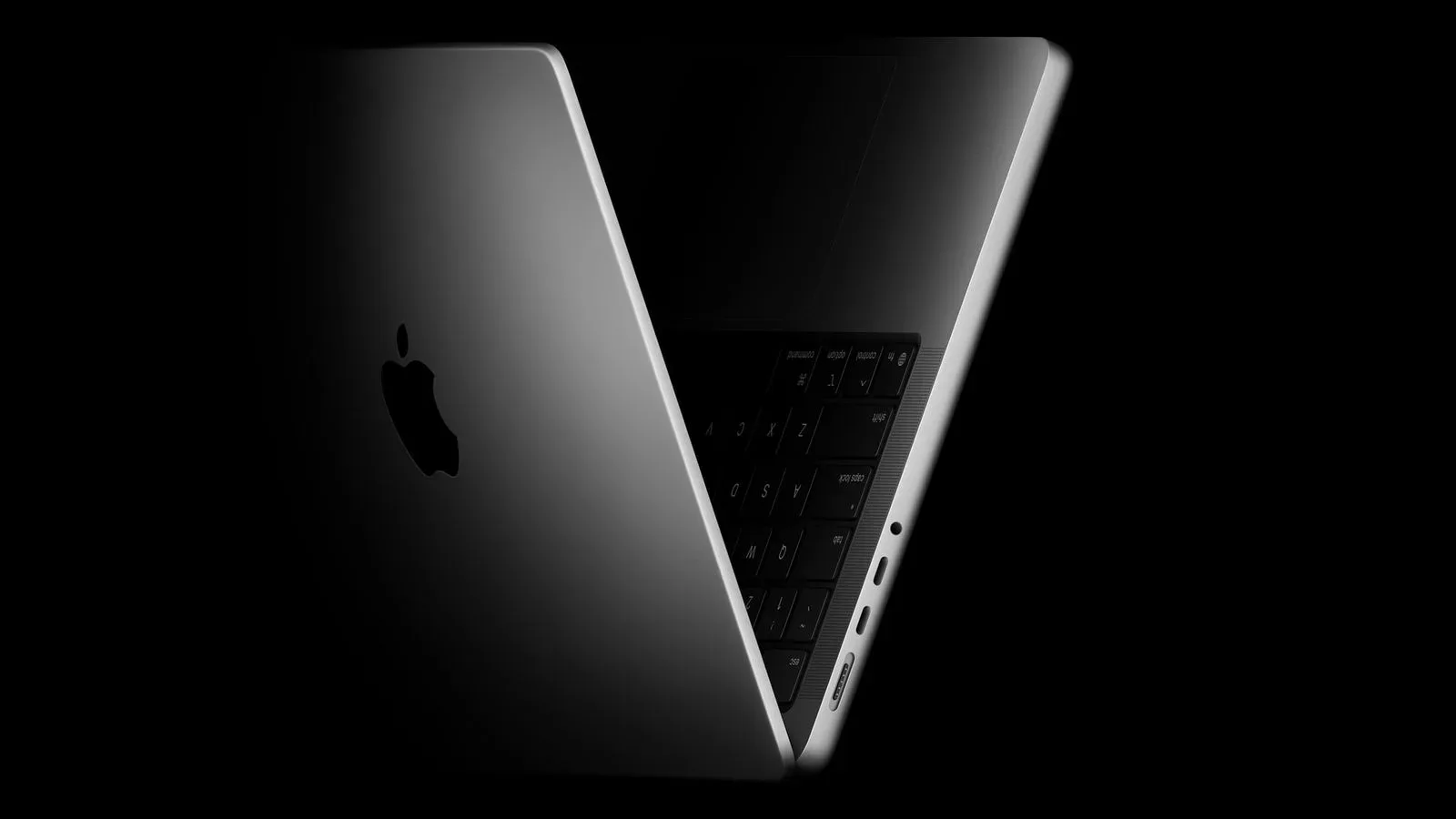
The strongest expectation going into the Los Angeles event is a new high-end MacBook with a touch-sensitive display. Reports and pre-event discussion have used the name “MacBook Ultra,” but that name remains unconfirmed. It is equally unclear whether the product, if announced, will wear MacBook Pro branding, introduce a fresh tier, or take another route entirely. A teaser posted by Apple executive John Ternus points toward a MacBook, but it does not settle the model name, specifications or touch implementation.
That uncertainty matters. A touchscreen is not a minor port refresh or a processor-bin change. It would alter the basic interaction model of Apple’s laptops, a category that has long relied on a trackpad, keyboard and pointer-driven macOS interface. For people who make games, edit footage, draw, stream, develop software or simply spend all day navigating a desktop, the question is not merely whether a screen can register taps. It is whether touch meaningfully improves a Mac workflow without turning the display into a smudge museum or making accidental input a recurring nuisance.
For now, this is an expectation piece, not confirmation of a product. Apple had not provided official specifications for a touchscreen MacBook in the material available before the event.
What Apple has already put on the board
The anticipated laptop would not appear in isolation. Apple has already announced several hardware updates this week, creating a useful snapshot of where its current Mac and iPad lineup stands.
- 14-inch MacBook Pro: A new M6-equipped version has been announced, starting at $1,999 with 16GB of unified memory and a 1TB SSD. The M6 update applies to the 14-inch model; the 16-inch MacBook Pro is listed with M5 Pro or M5 Max options.
- iMac: Apple has announced an M6 version of its all-in-one desktop, succeeding the M4-powered 2024 model. It starts at $1,499 and is scheduled to open for preorder today. Apple has emphasized faster on-device prompt processing among its AI-related claims.
- iPad mini: The small tablet has been updated with an 8.5-inch OLED display, an optional nano-texture coating and an A20 chip. It starts at $699, with preorders opening today and broad availability slated for November 6.
“Unified memory” is Apple’s term for memory shared across processing duties rather than divided into separate pools for the CPU and graphics processor. In practical terms, memory capacity can be especially relevant to demanding creative applications, large projects and some local AI workloads. An SSD, or solid-state drive, is the laptop’s internal storage; the announced base MacBook Pro configuration includes 1TB.
The M6 appears to be the connective tissue in this set of announcements. It had already reached the Mac mini and Mac Studio weeks earlier, and now it has moved into the iMac and one 14-inch MacBook Pro configuration. That does not establish what chip any rumored touch model would use, but it does make this a particularly interesting moment for the upper end of the portable Mac range.
For more on the pre-event clues and the significant gaps that remained before the presentation, see our look at Apple’s teaser and the touchscreen OLED MacBook questions it leaves open.
Why touch on a Mac is a bigger deal than it sounds
Touch-capable laptops are hardly a new concept across the PC world. The notable development here would be Apple applying the idea to macOS after maintaining a clear division: touch-first interaction on iPhone and iPad, conventional desktop input on Mac.
That division has shaped expectations around Apple’s devices. The iPad is designed for direct manipulation: users tap controls, swipe through content and draw on the display. MacBooks are designed around the trackpad and keyboard, with menus, windows and small interface targets that assume pointer precision. Adding a touchscreen to a MacBook would therefore invite a design question as much as a hardware question: would macOS remain primarily pointer-led, or would Apple adjust system behavior and app interfaces around a more mixed input model?
No software changes have been confirmed in advance, so it would be premature to assume that a touch-sensitive MacBook means a radically touch-optimized macOS. A touchscreen can be useful even when the operating system still centers the trackpad: quick scrolling, direct selection, moving through timelines, tapping playback controls or using certain creative apps can all be more immediate with a finger. But usefulness is highly dependent on how the software treats touch and which tasks the user performs.
There are trade-offs as well. A laptop screen sits farther from the user than a tablet screen, so reaching forward repeatedly can be less comfortable than using a trackpad. Touch also creates the possibility of unintended input when adjusting the lid or carrying an open laptop. That concern is not theoretical to people accustomed to non-touch Mac displays: a passive screen can be handled without worrying that a stray finger will trigger an action.
A successful implementation would need to preserve the precision, keyboard shortcuts and multi-window workflow that define the Mac while providing touch as an option rather than an obligation. That is likely why the rumored device is being discussed as an expansion to the lineup rather than an immediate replacement for every MacBook Pro.
OLED, nano-texture and the display question
The iPad mini announcement also keeps attention on Apple’s display strategy. Its OLED panel is significant because OLED, short for organic light-emitting diode, allows individual pixels to emit their own light. Unlike a conventional backlit LCD, pixels can turn off to produce very deep blacks. The practical appeal is usually contrast: dark UI elements, video scenes and colorful art can appear more distinct when a display can tightly control light at the pixel level.
However, an OLED iPad mini does not confirm an OLED MacBook. The pre-event discussion points to a touch-enabled MacBook, while exact display technology for any such machine has not been established in the available information. It is important not to merge those separate facts into a specification that has not been announced.
The iPad mini’s optional nano-texture coating deserves similar clarification. Nano-texture is intended to reduce glare and reflections. It may be especially appealing in bright spaces, but it is a display treatment, not a processor feature and not proof of what Apple will do with a future laptop. Still, its appearance in an iPad update shows Apple continuing to make screen finish part of the purchasing conversation for higher-end configurations.
The possible shape of the lineup
The most sensible interpretation of the pre-event picture is not that every MacBook is suddenly going touch-first. Instead, the rumored model could occupy a separate, premium space above or alongside the existing Pro range.
That reading fits the product situation Apple has already created. The company has a new 14-inch M6 MacBook Pro at a clearly stated $1,999 starting point, while the 16-inch MacBook Pro remains available with M5 Pro or M5 Max chips. If an additional touch-focused MacBook appears, the standard non-touch models could continue to serve people who prefer traditional Mac interaction, want particular screen sizes, or simply do not see a reason to pay for an additional display capability.
There is also a reason to be cautious about assumptions tied to the word “Ultra.” Apple’s naming has been a source of pre-launch speculation before, and a rumored label is not an official product category. “Ultra” can suggest a top-end tier, but it does not tell prospective buyers the screen size, chip, memory ceiling, ports, weight, battery behavior or price. Those are the details that will determine whether the device is a niche creative workstation, a new flagship laptop or just an expensive experiment in input flexibility.
The same restraint applies to suggestions that a new 14- or 16-inch MacBook Pro with a more powerful M6-family chip might arrive later. That is plausible lineup speculation, not a confirmed schedule. The official product information available before the event establishes the M6 14-inch MacBook Pro, not a complete map of every future M6 Pro or M6 Max configuration.
What creators and players should actually watch for
The Los Angeles setting has fueled the idea that creators could be a target audience, but location is not a specification. The practical evidence will come from the product’s stated capabilities and demonstrations.
For creative professionals, the key issue is whether touch complements existing tools. A video editor might value direct timeline control; a designer might want to pan, zoom or make quick selections on-screen; a music or streaming workflow might benefit from tappable controls. Yet none of those uses automatically requires a touchscreen, and some users will still favor a trackpad, mouse, keyboard shortcuts or dedicated input hardware for speed and precision.
For game players, a touchscreen MacBook would not inherently mean better Mac gaming performance. Input is only one part of the equation. Game support, hardware performance, controller compatibility and the underlying platform remain central. Touch could be relevant for certain apps or game interfaces, but it should not be mistaken for evidence of a broad Mac gaming strategy.
Buyers should look beyond the headline feature and focus on a short set of questions:
- Is touch an optional high-end configuration or a core feature of an entirely new laptop family?
- Does Apple describe any macOS changes designed specifically for finger input?
- What screen sizes, display technologies and coatings are actually offered?
- Which chip and memory configurations are available, and how do they compare with the newly announced 14-inch M6 MacBook Pro?
- Does the launch alter availability or positioning of non-touch 14-inch and 16-inch MacBook Pro models?
- What is the starting price, and what does it include?
Those answers will be more useful than an unverified model name. Apple has already made clear that M6 is spreading across its computer lineup, while the week’s iPad mini update reinforces its interest in premium displays. A touch-enabled MacBook could be the most conspicuous next step, but the event needs to establish what the machine is, who it is for and whether touch is a genuinely practical addition rather than a flashy new way to collect fingerprints.