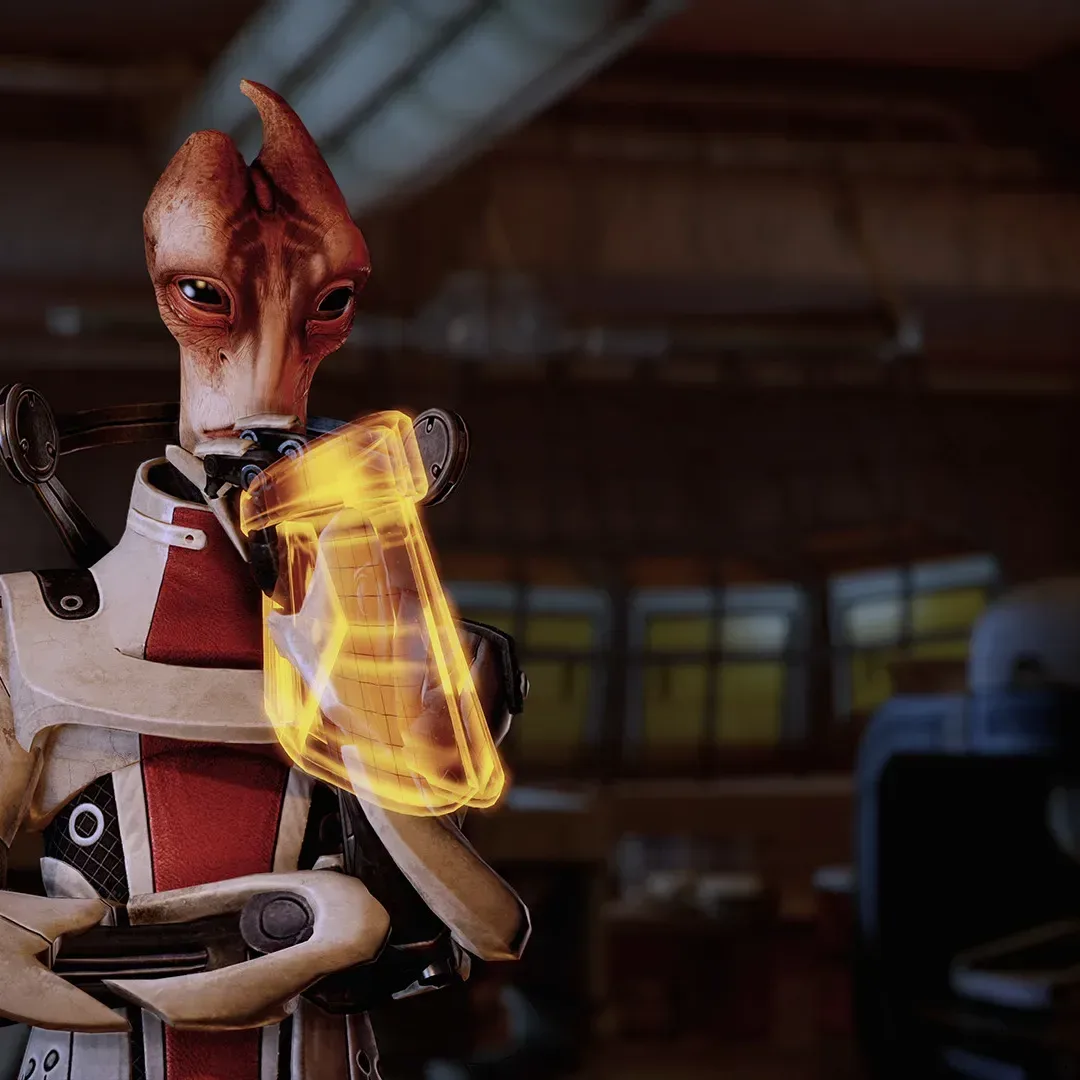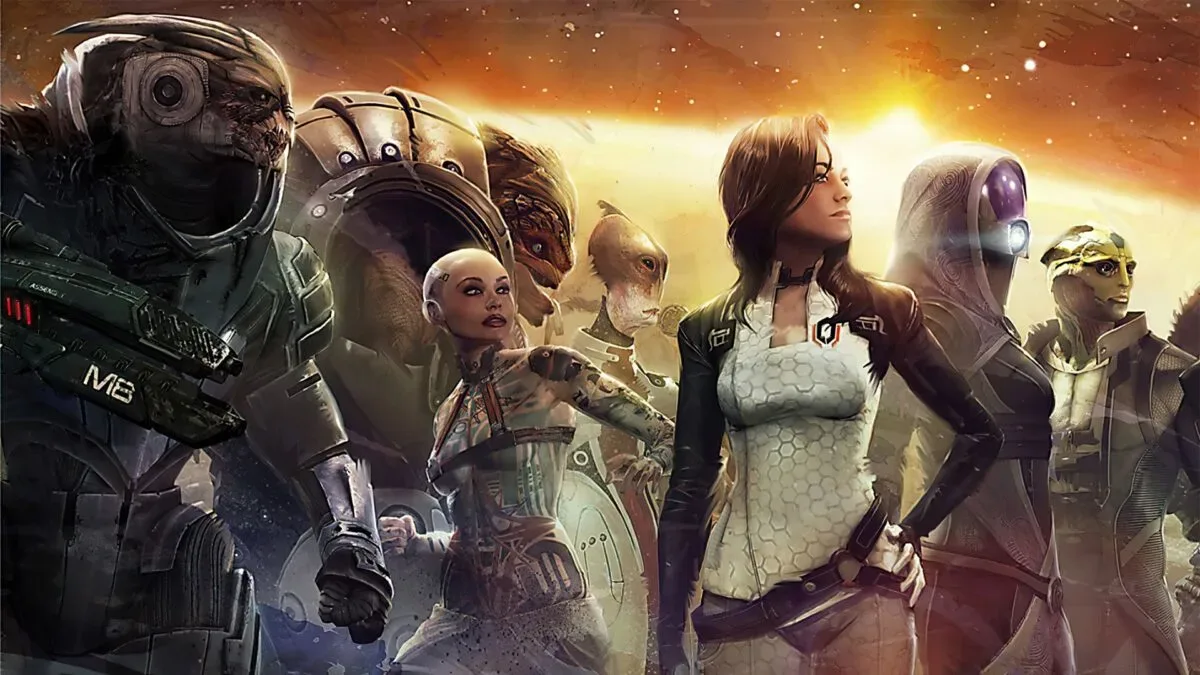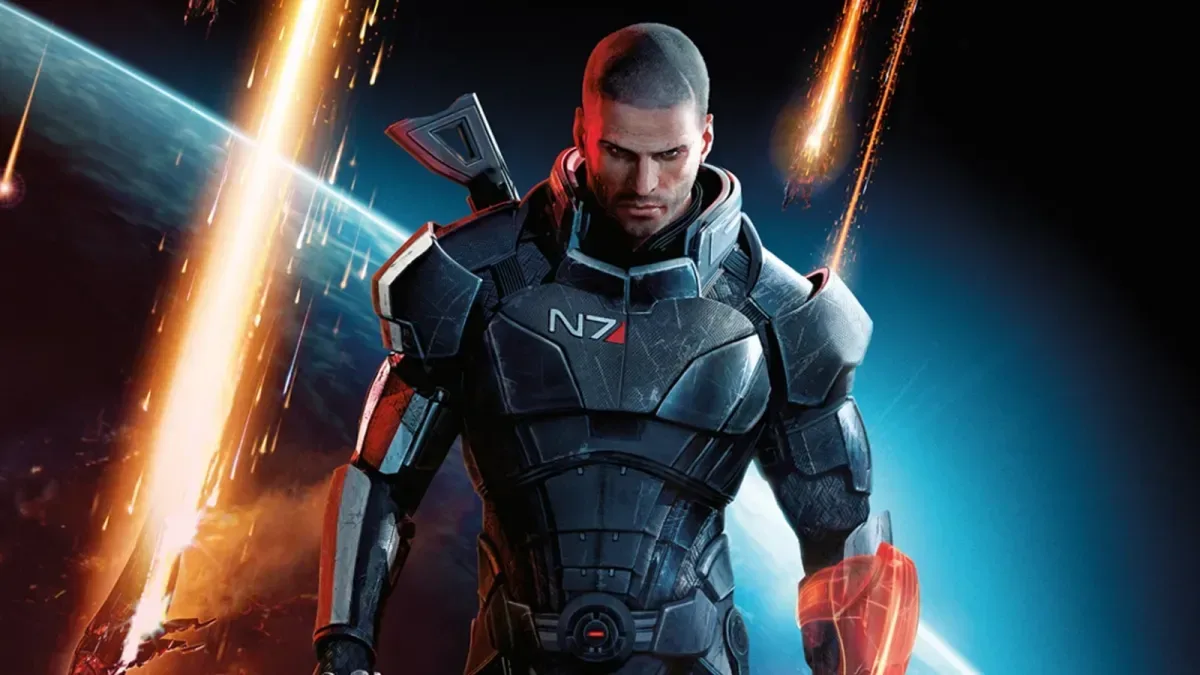
BioWare’s closure is a painful change for players who associate the studio with party-based role-playing games, branching stories and worlds built to be revisited. It is also a stark example of how a well-known game franchise can become commercially difficult to justify inside a much larger company. EA’s October 21 restructuring includes cancelled projects, BioWare’s shutdown and a reported 400 job losses. The immediate question for fans is straightforward, if unpleasant: what happens to Mass Effect, Dragon Age and the studio’s other properties now?
The honest answer is that their futures are uncertain. The next Mass Effect was revealed at The Game Awards in 2020, and former BioWare executive producer Mike Gamble said on N7 Day last year that it remained in development. At that point, he also said EA and BioWare remained committed to more stories in that universe. The new restructuring makes that earlier commitment impossible to treat as a roadmap. A leaked internal trailer connected to Mass Effect Universe has made the loss feel especially immediate for a community that had reason to expect another game.
Why analysts see a financial decision, not a verdict on the fans
Analysts examining the closure have focused on EA’s ownership structure and debt burden rather than treating BioWare’s legacy as protection. Joost van Dreunen and Piers Harding-Rolls each characterized the outcome as predictable in the context of a leveraged buyout.
A leveraged buyout is an acquisition funded substantially with borrowed money. The company that emerges from the deal must then meet large interest payments while also satisfying lenders that it can reduce costs or improve cash flow. That changes the internal logic applied to games in development. A project can be creatively desirable, tied to a famous name and loved by an established audience, yet still look risky if it needs years of investment before it can generate revenue.
Van Dreunen estimated that EA now carries roughly $18 billion in debt and faces approximately $1.8 billion in annual interest costs. He placed annual EBITDA at about $1.5 billion and said EA had told lenders it would find $700 million in annual savings. EBITDA is a business measure meaning earnings before interest, taxes, depreciation and amortization. It is commonly used as a rough indicator of a company’s operating performance before financing costs are considered. Here, the contrast is the key point: interest obligations can exert enormous pressure when they exceed the EBITDA figure cited by the analyst.
That does not make the closure less consequential for the people affected. It does explain why a comparatively small team attached to a game far from launch could be vulnerable. In a cost-cutting exercise, long development schedules are liabilities: they require continued spending now, while any potential payoff remains years away and uncertain.
What “prestige project” means in this context
Van Dreunen described legacy series such as Mass Effect as possible “prestige projects” within EA’s new priorities. The phrase should not be mistaken for an insult. A prestige project is typically culturally meaningful, high profile and capable of enhancing a company’s creative reputation. The problem is that those qualities do not automatically produce the predictable, recurring revenue that a debt-heavy owner may prioritize.
His assessment is that EA had already been pursuing recurring revenue, while the new ownership focus is sports, live-service games and markets including Asia. Recurring revenue is money that returns over time, rather than depending primarily on one large sale at launch. Live service generally describes a game supported and monetized on an ongoing basis through continuing updates and player engagement. Neither label proves that a narrative RPG cannot succeed. The concern is about fit: a large, single-player-focused role-playing game has a different cost profile, time horizon and commercial pattern from businesses built around regular repeat spending.
Related coverage includes BioWare's Closure Puts Mass Effect's Future in Doubt as Analysts Examine EA's New Priorities.
That distinction helps explain the seemingly contradictory status of a franchise like Mass Effect. It can be one of gaming’s most recognizable science-fiction names and still struggle to meet a corporate demand for predictable cash flow. Brand value and short-term financial value are not identical measurements, particularly when debt servicing is central to strategy.
Recent releases made the margin for patience smaller
The closure cannot be reduced to the acquisition alone. Harding-Rolls pointed to BioWare’s recent big-budget releases as another major factor. He said Ampere data estimated Dragon Age: The Veilguard had sold 1.9 million units globally across PlayStation, Xbox and Steam through the end of September, well below internal targets. The game launched at the end of 2024.
The broader recent record cited by analysts also includes Mass Effect: Andromeda, released in 2017, and Anthem, released in 2019; neither met EA’s expectations. Those results do not erase the studio’s earlier work or its influence. But they matter when executives decide whether to fund another expensive production cycle. Under cost pressure, recent commercial performance can outweigh a back catalogue that remains deeply admired.
David Gibson similarly identified several overlapping pressures: the need for stronger margins and returns after EA went private, the relative cost of developing AAA games in Western markets, and the sales threshold required for role-playing games such as Mass Effect to be sufficiently profitable. AAA is industry shorthand for large-scale productions with major budgets, broad ambitions and substantial staffing. Such projects can attract huge audiences, but their size also raises the consequences when sales land below expectations.
The practical lesson is not that RPGs are inherently unviable. Rather, the evidence here suggests that expensive RPGs may face a harsher test when their publisher is reorganizing around debt reduction and dependable returns. A beloved series is not an exemption from that test.
Could EA sell Mass Effect or Dragon Age?
It is possible, but there is no indication that a sale has been decided. Fan hopes have naturally centered on the idea that another company might acquire BioWare’s properties and continue them. Van Dreunen’s view was cautious: famous IP can be too costly and time-consuming for many buyers to take on. A purchaser would not merely be buying a recognizable title. It would need to decide how to build a team, develop a credible new game and carry the expectations attached to decades of audience investment.
That is an unusually demanding proposition. Existing major publishers already have their own pipelines and commitments. The more established the franchise, the higher the expectations around its writing, production values and scope may be. In that sense, the properties’ fame is both an advantage and a complication. It offers instant recognition, but it raises the cost of getting the comeback wrong.
Former BioWare executive producer Mark Darrah has expressed more optimism than before about a possible IP sale, while remaining skeptical. The other scenario is stasis: EA retains the rights but does not actively use them. For fans, that may be the most frustrating outcome—neither a confirmed continuation nor a clean transfer to a new steward.
There is also a separate discussion around whether former employees could play a role in preserving the studio’s work. A proposal for public support for developers seeking to buy their studio has already entered the conversation; the idea of helping BioWare developers pursue a purchase illustrates how strongly the closure has resonated beyond one cancelled game. Still, a proposal is not a completed deal, and ownership of staff, a studio name and underlying game rights can involve different questions.
The cultural loss is real, even when the balance sheet is cold
Harding-Rolls emphasized why this news has generated such an emotional reaction. BioWare spent more than 30 years making narrative RPGs that formed powerful connections with players. Its catalogue includes the original Baldur’s Gate games, Neverwinter Nights, Star Wars: Knights of the Old Republic and the later Mass Effect titles. For many players, these are not simply old products; they are formative experiences tied to particular characters, choices and communities.
That cultural footprint is important, but it is distinct from the financial logic detailed by the analysts. The closure shows the distance between those two perspectives. Players can reasonably value a studio for imaginative worlds and long-lasting memories. A company under leveraged-buyout pressure may instead judge an unreleased project by its cost, risk, projected timing and ability to support recurring income.
For now, the clearest facts are the closure, the cancelled projects and the uncertainty surrounding BioWare’s franchises. There is no confirmed sale of Mass Effect or Dragon Age, no confirmed successor team, and no dependable basis for treating the next Mass Effect as an active future release. The most useful way to read the situation is not as proof that the series lacked value, but as evidence that value is being measured through a much narrower and more immediate financial lens.