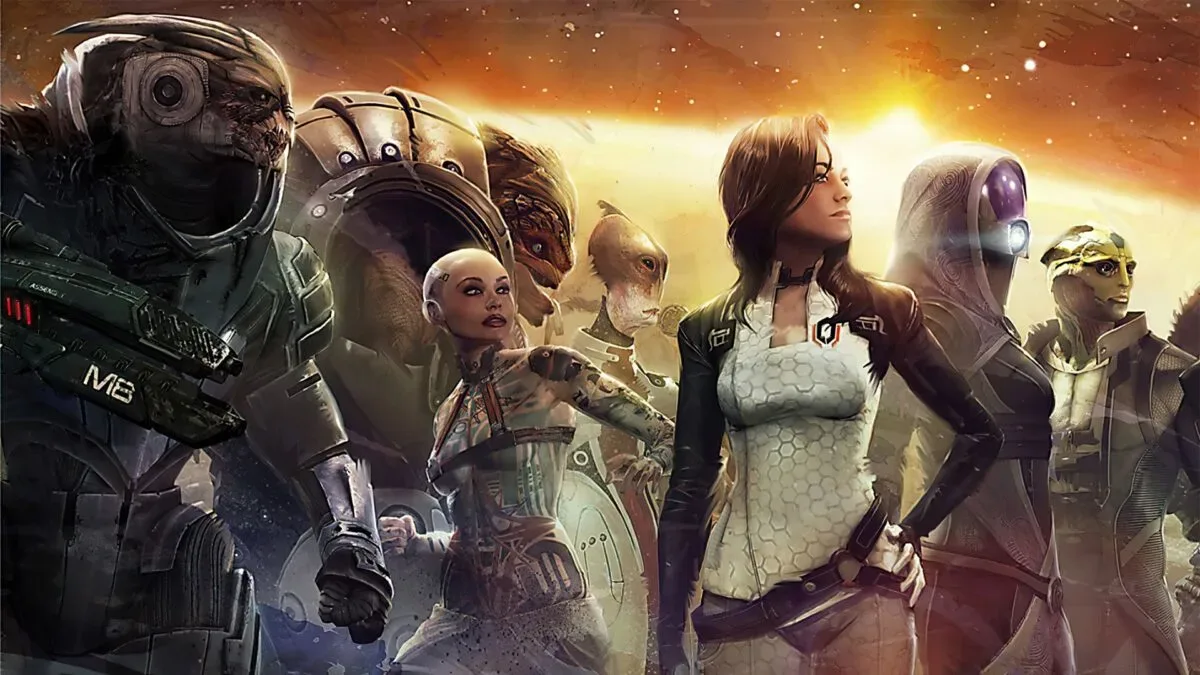
Avi Lewis, leader of Canada’s New Democratic Party, has called for BioWare’s developers to be given an opportunity to buy and operate the Edmonton-based studio with federal support following its reported closure.
Lewis framed the proposal as an answer to consolidation in the games business and to the ownership changes at BioWare parent Electronic Arts. His argument is direct: the people who make the games and understand the studio’s work should be first in line to preserve it, rather than seeing the business dismantled in pursuit of shorter-term returns.
“This is private equity, this is what it does. Buy up businesses, run them into the ground, and rip them apart for short-term profit,” Lewis wrote. “The developers at BioWare know how to run the studio. They know how to make the games we all love. They should be given the first opportunity – and the federal support – to buy it and run it themselves.”
What Lewis is proposing
The suggested intervention is not simply a call for BioWare to be reopened by its existing corporate owner. Lewis’s stated idea is that the development team should be supported in acquiring the studio themselves and continuing its work, including the cancelled Mass Effect: Universe.
In practical terms, that would mean an employee-led ownership model: the workers who build games would control the studio’s future rather than operating under a conventional large-publisher structure. Federal support could conceivably mean assistance that helps a team make an acquisition possible, but no specific mechanism, funding amount, or formal government program was identified in Lewis’s statement.
That distinction matters. Supporting a studio’s workers in a buyout is a much more involved proposition than expressing sympathy for people who have lost jobs. It raises questions about who would sell the studio assets, what exactly would be included in any transaction, and whether rights connected to BioWare’s games could be transferred. None of those details has been established here.
Private equity is at the center of the political argument
Lewis linked BioWare’s situation to the acquisition of EA by the Saudi Arabia Public Investment Fund, Silver Lake Partners, and Jared Kushner’s Affinity Partners, which he said concluded in August. He characterized that ownership shift as a private-equity-driven move that prioritizes extracting near-term profit over supporting the people and creative work that sustain a company over time.
Private equity broadly refers to investment firms or funds buying stakes in companies that are not generally traded on public stock exchanges, often with a goal of increasing financial returns. It is not, by itself, a complete explanation for every business decision at every acquired company. Lewis’s point is political and structural: he believes this ownership model creates incentives that are hostile to long-term studio stewardship.
Related coverage includes Canadian NDP Leader Calls for BioWare Developers to Get Support to Buy Their Studio.
His warning was that BioWare could be among the first casualties rather than an isolated case. That is a prediction and an argument, not a confirmed roadmap for EA’s future. But it explains why his suggested remedy reaches beyond one beloved developer or one cancelled project: Lewis is using the studio’s fate to argue for keeping private equity out of Canadian business more broadly.
Why BioWare carries unusual weight in this debate
BioWare has been a Canadian game-development fixture for roughly three decades, and its Edmonton identity gives the closure a local economic and cultural dimension beyond the loss of a single game team. The studio is closely associated with Mass Effect and Dragon Age, series with communities that extend well beyond Canada.
That legacy also helps explain why a discussion about studio ownership has spread outside normal games-industry circles. When a long-running developer is lost, fans tend to focus immediately on the games that may never arrive. Lewis’s intervention shifts the focus toward the employees and the ownership structure around them: who gets to decide whether the people with the production knowledge can continue their work?
The distinction is important. Intellectual property, studio names, teams, tools, and publishing rights can all be treated differently in a corporate transaction. A developer-owned BioWare would not automatically guarantee the return of every franchise associated with the old studio. Continuing Mass Effect: Universe, specifically, would depend on rights and arrangements that have not been detailed.
The argument rejects a culture-war explanation
Lewis also pushed back against claims that the situation was caused by the presence of a non-binary character in Dragon Age: The Veilguard. He described that line of reasoning as conspiratorial and instead located the underlying issue in corporate acquisition and financial incentives.
That is a notable part of the statement because it rejects an attempt to turn a business and labor story into an argument about a game’s character representation. Lewis’s position is that the relevant questions are ownership, consolidation, job security, and whether a creative team has the resources to control its own work—not one individual creative decision in a Dragon Age release.
For players, the practical consequence is that debates around the closure may be less useful when they reduce a complicated studio outcome to a single talking point. The known proposal concerns a potential worker-led acquisition and public assistance. Its viability would turn on business, legal, and policy realities that are far more concrete than online speculation.
How realistic is a federal-backed buyout?
Lewis’s support does not itself create a path for a purchase. The proposal remains an expression of political advocacy, and he does not hold the institutional authority to directly put funding in place or compel a sale. There is no announced federal package, employee bid, purchase agreement, or confirmation that BioWare’s assets are available for acquisition.
That makes it essential to separate the appeal of the idea from evidence that it is underway. A worker-owned continuation could preserve institutional knowledge and give developers more agency over schedules and priorities. At the same time, a game studio needs financing, leadership, a sustainable production plan, and clarity over any brands it hopes to use. Those are substantial hurdles even before a team begins developing a major role-playing game.
Still, the proposal provides a clear alternative to the usual framing of a closure as final. Rather than asking only whether another publisher might buy and revive BioWare, Lewis argues that the developers themselves should get the first opportunity to do so. It is a labor-centered vision of preservation: retain the people who know the studio’s craft, then give them a chance to build the next chapter on their own terms.
The broader industry context makes the idea easy to understand, even if its route to implementation is uncertain. Major game productions depend heavily on accumulated expertise, from writers and artists to programmers, producers, quality-assurance staff, and technical specialists. When a studio closes, that knowledge can scatter quickly. A team-led rescue would be intended to keep more of that experience together instead of treating it as disposable.
For now, though, the proposal is best understood as a public call for action rather than an announced rescue plan. It puts a pointed question to Canadian policymakers and industry owners: when an established local studio is at risk, should the people who built its games have a meaningful chance to own its future?
The conversation also lands during a period when the economics of successful games and the stability of the people making them can feel sharply disconnected. Recent reporting on the scale of major PC-driven game revenue illustrates why disputes over ownership, risk, and where financial gains flow remain central to the industry conversation.