Aqara has revealed a five-product smart-lighting lineup built around Matter compatibility and support for Apple Home. The collection reaches from an indoor floor lamp and retrofit-minded downlight to a cuttable LED strip, weatherproof string lights, and permanent outdoor lighting intended to stay up year-round.
Every newly detailed light supports Matter, Thread, and Zigbee, giving the range an unusually broad list of smart-home connection options on paper. Aqara also says the products can work alongside its own sensors and switches. For people building automated rooms rather than simply replacing a bulb, that last part may be as important as the colour-changing party trick that inevitably turns every living room into a boss arena for at least five minutes.
The announcement is specifically notable for Apple households because the lights are compatible with Apple Home. No pricing, release dates, regional availability, or product-by-product setup requirements were included in the information provided, so interested buyers will need to wait for those practical details before deciding which part of their ceiling, shelf, patio, or unsuspecting roofline is about to become programmable.
Five lights, five different missions
Rather than presenting five versions of the same light with slightly more aggressive naming, Aqara’s range divides the jobs up clearly. There is an ambient floor lamp for washing a wall with light, a slim ceiling fixture, a high-density strip for tighter interior runs, and two outdoor options with different installation ambitions.
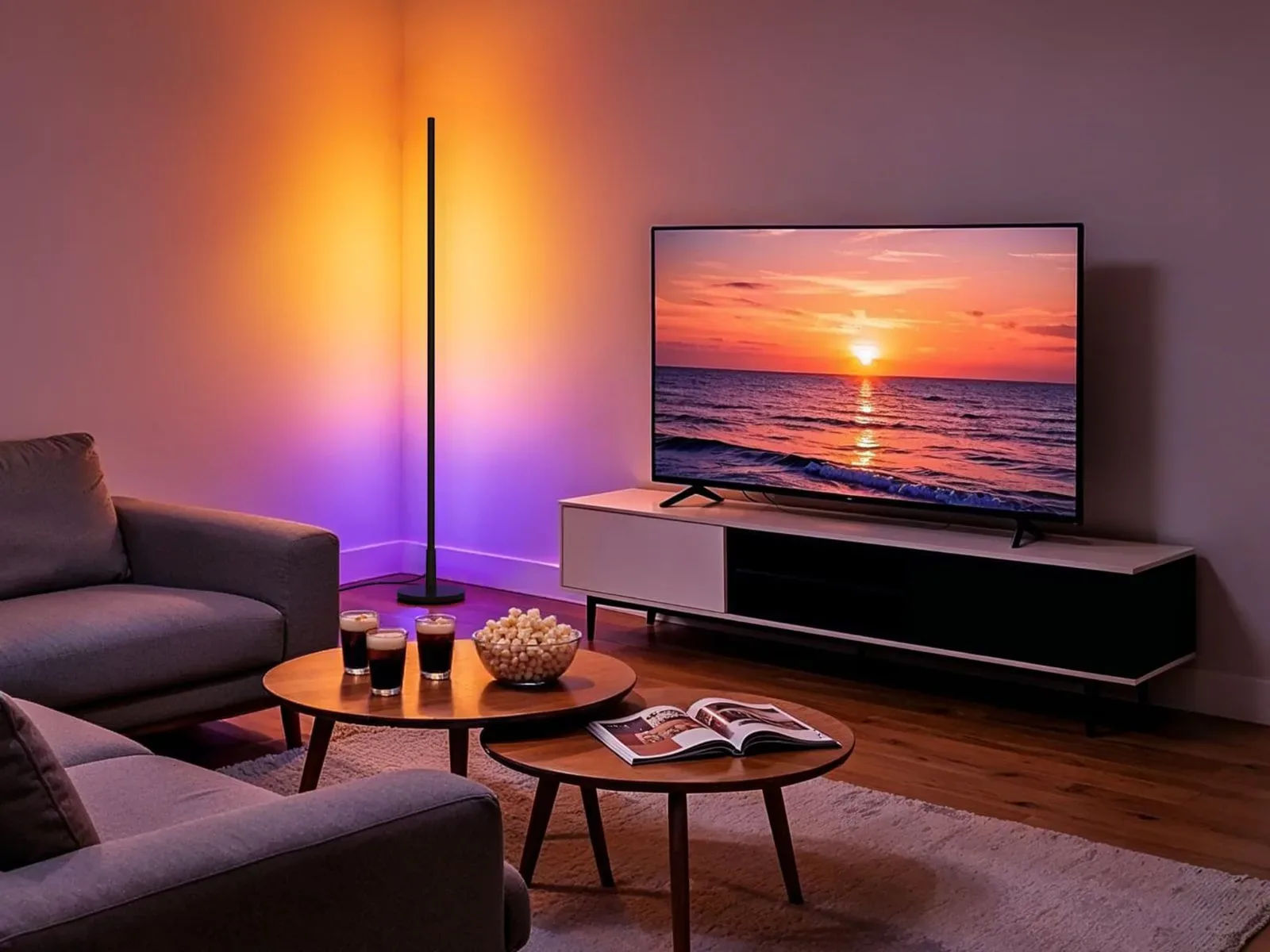
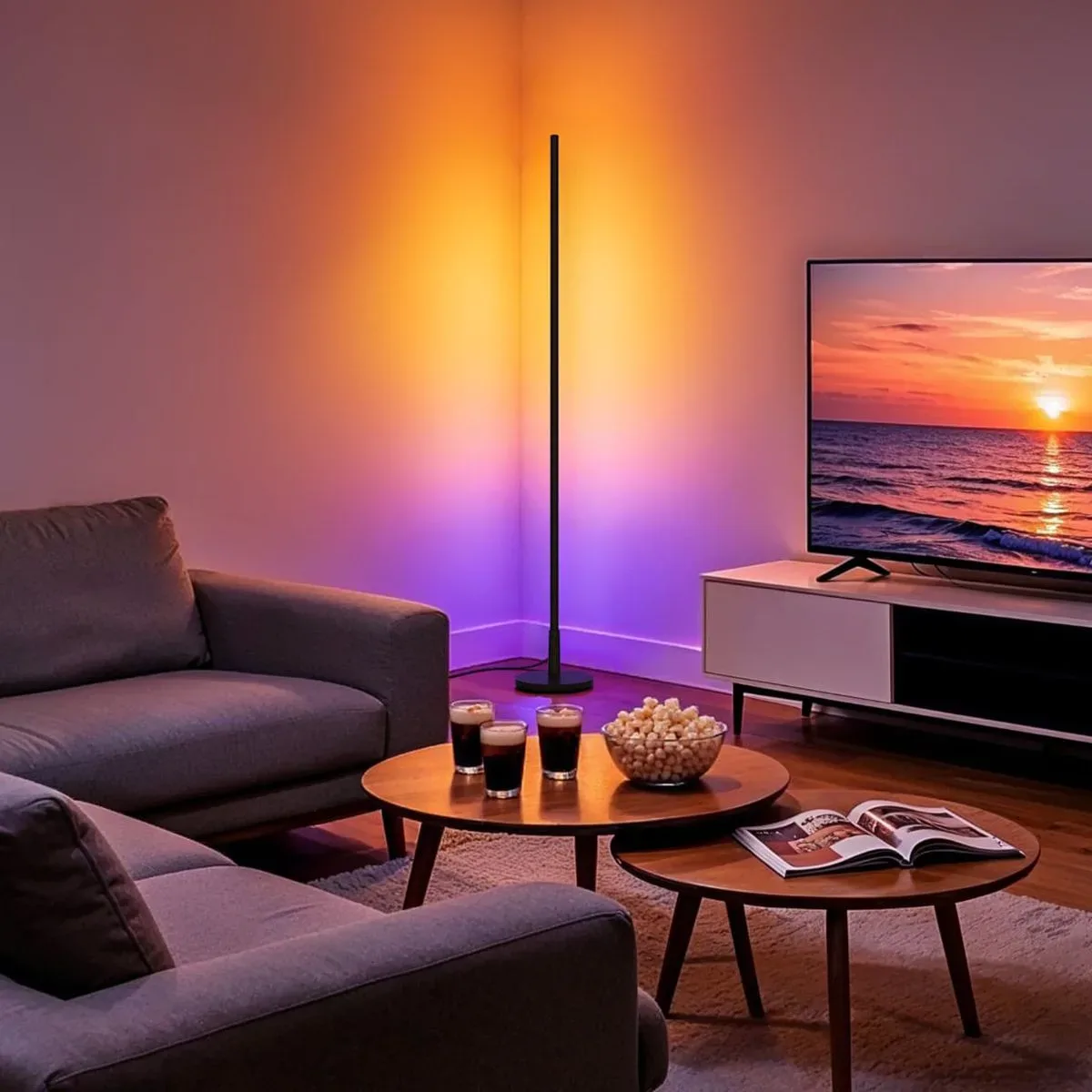
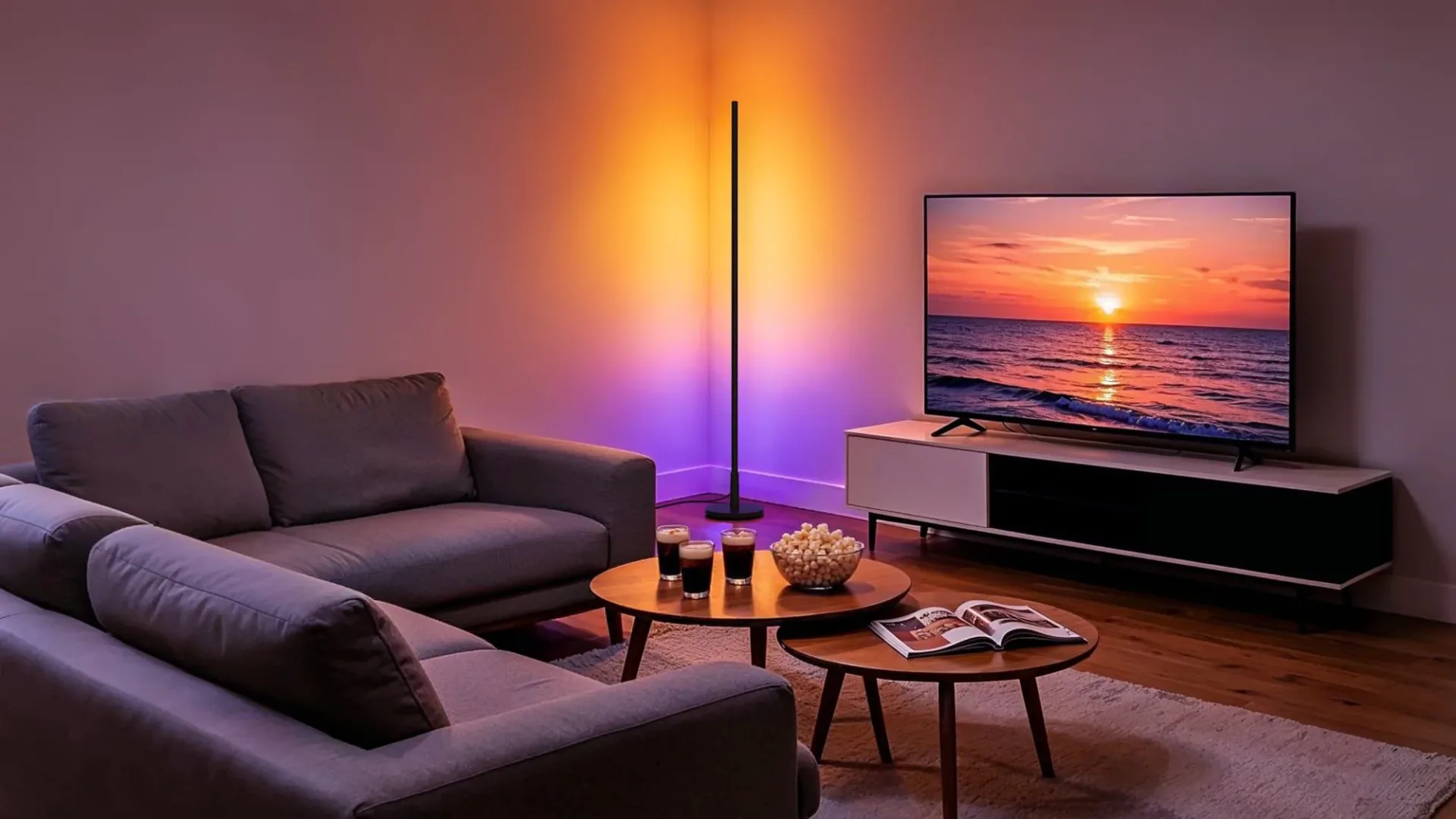
- Floor Lamp T1: A tall, rod-shaped lamp designed for a wall-wash lighting effect.
- LED Downlight T2: A slim downlight positioned for low ceilings and retrofit projects.
- LED Strip T2: A trimmable strip for locations such as beneath cabinets or along shelving.
- Outdoor String Lights H1: Weatherproof lights for patios and decks.
- Permanent Outdoor Lights H1: A year-round exterior lighting option that can be extended or trimmed for a roofline.
That variety matters because smart lights are not all asked to do the same thing. A lamp can create a soft backdrop behind a display, while a downlight has to cooperate with the physical constraints already lurking above a ceiling. A strip needs to make its individual LEDs feel less obvious. Outdoor products face the much less romantic question of whether they belong outside in the first place.
Floor Lamp T1 aims for the dramatic wall wash
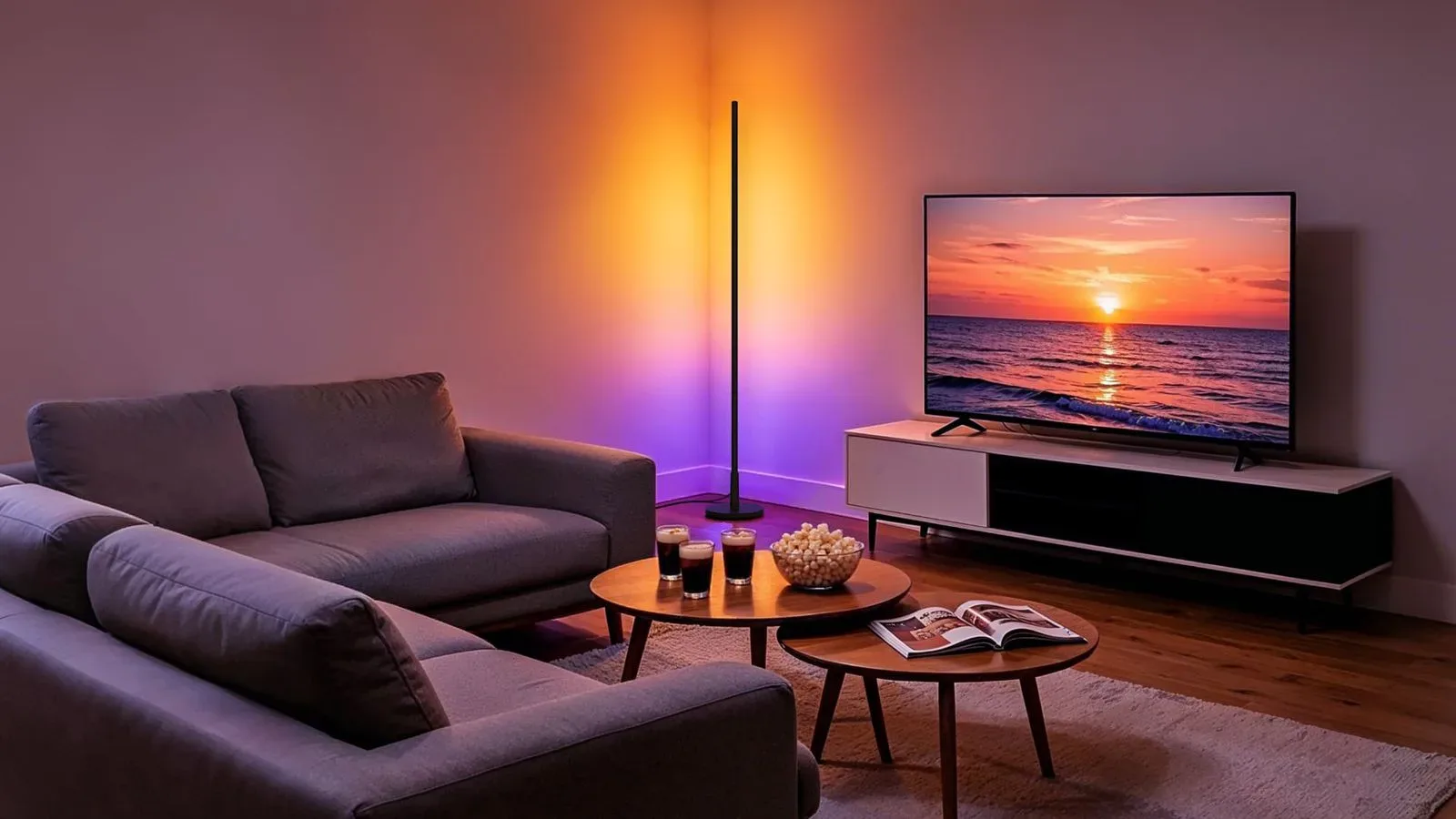
The Floor Lamp T1 is the most theatrical entry. Aqara describes it as a tall, rod-like fixture that throws light across a wall rather than merely illuminating a corner. It offers 18 independently controllable zones, allowing different portions of the lamp to display different colours.
Its white-light range runs from 2,000K to 9,000K, and its stated maximum brightness is 1,000 lumens. In practical terms, the listed colour-temperature span gives users room to choose from very warm-looking white light through much cooler white tones, while the zoned design puts gradients and multi-colour scenes on the menu.
For a game room, media shelf, or collecting display, the attraction is obvious even without pretending that a floor lamp will magically improve anyone’s win rate. A wall-wash effect can provide atmosphere without aiming a bright point of light directly at the room’s occupants. The separate zones also mean a single fixture can be set up with a more elaborate palette than a standard one-colour lamp.
Downlight and strip target the places where fixtures disappear
Aqara’s LED Downlight T2 takes the opposite approach. Its thin form factor is intended for low ceilings or retrofit installation, situations in which a bulky fixture would be a poor fit. It supports 16 million colours and the same 2,000K-to-9,000K white-light range as the rest of the newly announced lights.
That makes the Downlight T2 the quiet member of the family in a visual sense: it is meant to integrate into a ceiling, not become the furniture. Yet its colour support means it can still be part of a wider scene when the occasion calls for something more flamboyant than normal room lighting.
The LED Strip T2 is aimed at the surfaces smart-light users routinely try to make look more expensive: cabinet undersides, shelving, display units, and similar edges. It is trimmable and uses 108 LEDs per metre. Aqara says this density is designed to create even illumination without conspicuous hotspots.
It also has 18 controllable zones for every three metres, supporting smoother colour transitions over a longer run. That specification is particularly relevant to shelves and cabinets, where a harsh visual break between colour segments can turn a carefully arranged display into something resembling a loading bar. The goal here is a continuous effect rather than a row of LEDs loudly introducing themselves one by one.
Anyone plotting a more elaborate room setup may also appreciate the overlap with the social side of gaming. Lighting scenes can be part of setting the stage before friends arrive, although the real laws of local competition remain untouched: see The Unwritten Rules of Couch Multiplayer, Now Written Down for the far more dangerous technology of deciding who gets which controller seat.
Outdoor H1 products take the setup beyond the room
The Outdoor String Lights H1 are intended for patios and decks, with a weatherproof construction for exterior use. Aqara says they include individually controllable zones and offer the same 2,000K-to-9,000K white-light range as the other newly introduced lights.
More significantly for automation-minded users, Aqara says the string lights can adjust based on the time of day, the surrounding environment, and triggers from other smart-home devices. The company has also said the wider lighting range can be paired with Aqara sensors and switches. The exact routines, controls, and requirements for such setups were not detailed, but the stated direction is clear: these lights are positioned as parts of an automated home rather than isolated accessories.
The Permanent Outdoor Lights H1 are the more committed exterior option. Aqara says they are made for year-round use and use independently controlled LEDs. They can be extended or cut to fit a roofline, a specification that suggests the product is intended to adapt to different home shapes rather than force every installation into one fixed length.
It is worth keeping the distinction between the two outdoor products in mind. The String Lights H1 are framed around patios and decks, while Permanent Outdoor Lights H1 are described for all-year use and roofline fitting. Similar names do not mean identical installation plans, and anyone considering them should wait for the full specifications before measuring anything twice and cutting anything once.
Matter, Thread, Zigbee, and Apple Home are the connective tissue
The headline specification across all five products is Matter support, alongside Thread and Zigbee. Aqara additionally lists Apple Home compatibility. Taken together, those details make connectivity central to the launch rather than a footnote placed beneath a giant list of colours.
For shoppers, the sensible takeaway is not that every smart-home question has already been answered. It is that these lights are being introduced with multiple supported standards and Apple Home in the compatibility picture. Specific setup paths can depend on the rest of a household’s equipment and software, and the announcement does not spell out every possible configuration.
Still, the lineup has a coherent pitch. The Floor Lamp T1 offers a wall-focused centrepiece with 18 zones and up to 1,000 lumens. The Downlight T2 is designed to fit where ceiling depth is limited. The Strip T2 concentrates on dense, even-looking accent light. The two H1 products carry the concept outdoors, from deck-ready strings to roofline-ready permanent lighting.
Aqara has supplied the broad strokes, but several buying essentials remain unknown: pricing, launch timing, markets, lengths and package details for the outdoor products, and the full installation guidance. Until those details arrive, this is best read as a wide-ranging smart-lighting reveal rather than a reason to begin a midnight ladder quest. The hardware may be built for automated scenes; the planning should remain gloriously manual.