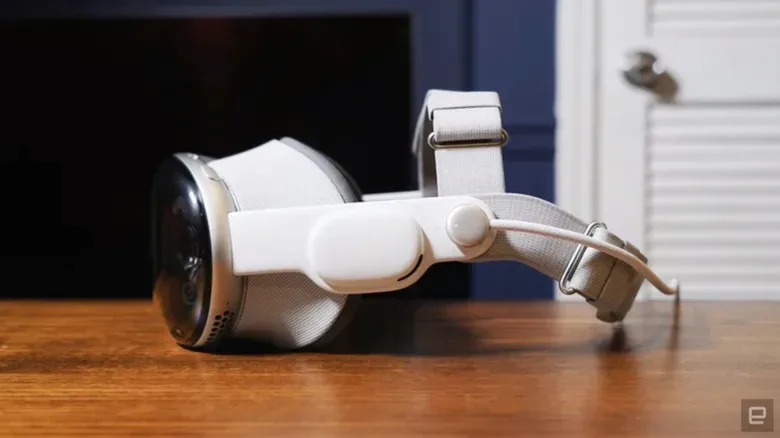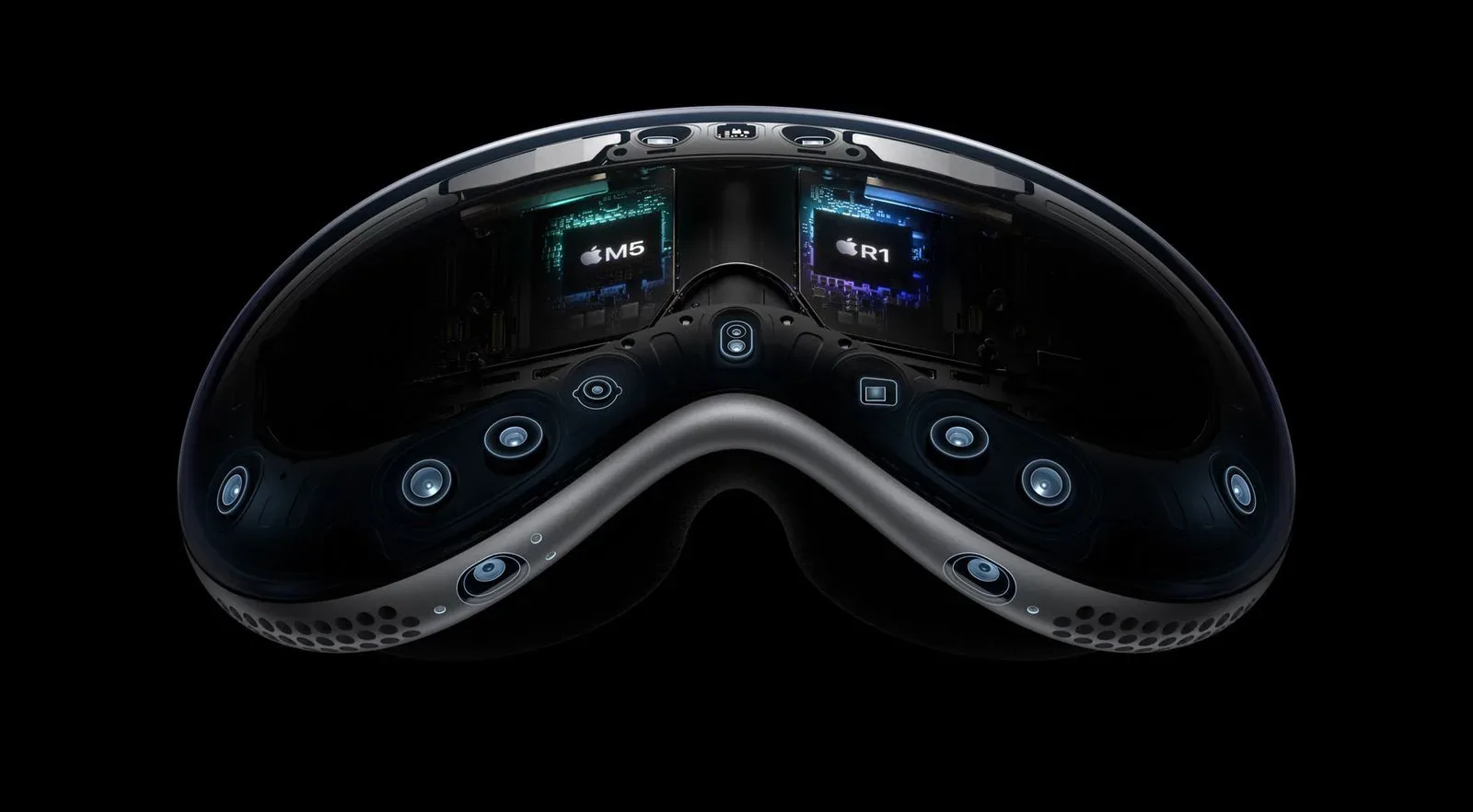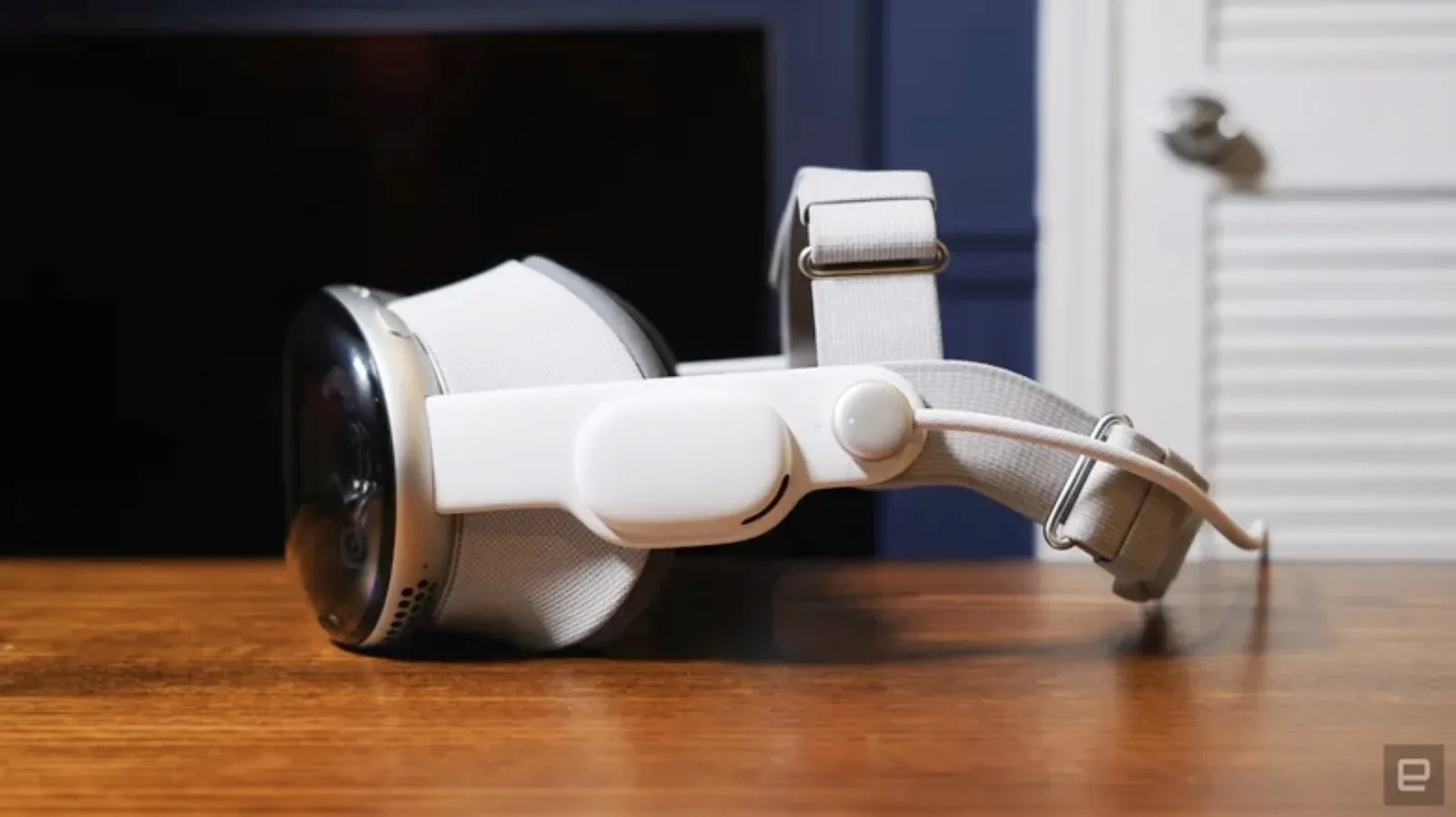
The Apple Vision Pro has spent much of its life prompting a very reasonable question: what, precisely, is this headset for? It can present giant virtual screens, blend apps with the room around a wearer and turn spatial computing into an impressive demonstration of hardware ambition. But demonstrations are not the same thing as a daily purpose. A new use in an operating room offers one of the clearest examples yet of a setting where that unusual combination of digital overlays and real-world awareness may have practical value.
Medical technology company Stryker says its SportSuite Vision application for Apple Vision Pro was used during a hip arthroscopy at Duke Health. The company characterizes the procedure as the first real-world use of the software. Orthopedic surgeon Dr. Chad Mather III performed the operation using the headset-supported system, bringing surgical-planning material and imaging into the workflow during the procedure.
The news is significant not because a headset has suddenly become ordinary hospital equipment—it plainly has not—but because it puts the device in a task where information placement can matter. In a complex procedure, clinicians need to remain attentive to the patient, the sterile field, instruments, imaging and the rest of the operating-room setup. Spatial computing’s central pitch is that useful digital material can remain visible in a chosen position without asking the user to repeatedly look away toward a conventional monitor.
What SportSuite Vision Was Used to Display
Stryker’s SportSuite Vision is designed around orthopedic workflows. During the Duke Health hip arthroscopy, it gave the surgeon access to orthopedic planning tools, arthroscopic imagery and CT scans. A hip arthroscopy is a minimally invasive procedure in which a surgeon uses small instruments and a camera to examine or treat problems within and around the hip joint. That makes imaging and planning references especially relevant, but it also makes the organization of those references important.
Rather than replacing the surgical work itself, the Apple Vision Pro served as a spatial interface for the information surrounding it. The distinction matters. Nothing in this milestone means a headset is autonomously operating, diagnosing a patient or eliminating the judgment of trained medical staff. Its stated role was to let the surgeon arrange essential clinical information in a way that suited the procedure.
Dr. Mather described being able to tailor the position of clinical data to his workflow and view it within the sterile field. He said that arrangement made for a more comfortable and streamlined operating-room configuration while retaining visibility of the information he needed. It is a focused claim, but also a useful one: a well-placed reference can be more valuable than an entirely new category of data.
The compelling part of this application is not that the operating room becomes a science-fiction set. It is that a surgeon can potentially keep relevant visual context closer to the task at hand.
FDA De Novo Authorization Is a Key Part of the Story
Stryker said SportSuite Vision received De Novo authorization from the U.S. Food and Drug Administration on July 17. That regulatory detail is more consequential than the novelty of wearing a headset in surgery. Healthcare software and connected hardware operate in an environment where intended use, safety and oversight are central concerns. A software product reaching De Novo authorization is not equivalent to declaring every imaginable future use validated, but it establishes a meaningful regulatory milestone for this particular product.
For readers accustomed to consumer-tech launch language, it is worth resisting the temptation to translate “FDA authorized” into “ready to appear in every clinic.” The reported milestone concerns Stryker’s SportSuite Vision software and the use case it was cleared to support. Hospitals and practitioners still face practical decisions involving training, procurement, integration, sanitation procedures, physical comfort, institutional policies and the specific needs of each specialty.
That is why this operation is best understood as an early deployment signal rather than a broad transformation of healthcare overnight. Still, real clinical use is more revealing than a polished demo. It begins to test whether the spatial-computing concept fits an environment with high stakes, limited tolerance for friction and no appetite for technology that merely looks futuristic.
A Better Fit Than the Living Room?
Apple’s headset has always been difficult to frame as a mass-market gadget. Its capabilities are ambitious, but the original Vision Pro was not positioned as a product likely to become commonplace for the average consumer. The more powerful M5 version has not changed the basic question of who needs a premium mixed-reality computer in everyday life. Games, films, workspaces and virtual displays all make sense as possible uses, yet none automatically creates a universal need.
Specialized professional settings are different. In medicine, engineering, design, training and certain field operations, a device does not have to appeal to everyone to justify itself. It needs to solve a particular problem better than the equipment already in place. The potential benefit in surgery is not escapism, nor a larger virtual movie screen. It is the ability to see the physical environment and carefully positioned digital content at once.
That opportunity does not make the headset ideal in every operating room. Surgical teams have established processes, and existing displays, image systems and instrument setups are already deeply embedded. Any wearable system must be reliable, cleanable, comfortable enough for its role and compatible with the demands of the procedure. Even then, the value may vary widely depending on the type of operation and the clinician’s preferred workflow.
But that is also why the Duke Health procedure stands out. It moves the discussion from a hypothetical “could this help?” toward a more concrete “how did it fit into an actual case?” The reported answer is narrow, appropriately so: it helped place planning and imaging information where the surgeon could access it while performing a hip arthroscopy.
Mixed Reality’s Most Useful Trick Is Context
Virtual reality often asks users to step away from their surroundings. Mixed reality is more interested in preserving those surroundings and adding carefully selected digital objects or displays to them. For entertainment, that can mean playful effects. In a professional context, it can mean preserving awareness of a real patient and operating room while maintaining access to scans, planning data or camera imagery.
The idea is not confined to medicine. Across extended reality, developers continue to explore situations where virtual material works best as a layer on top of a shared physical setting rather than a replacement for it. That broader search for practical spatial experiences is also visible in efforts to make XR more social, wearable and purposeful. Surgical visualization is a distinctly serious version of that same core challenge: make the digital layer useful without obscuring the reality that matters most.
For surgeons, customization may be the feature that turns the concept from impressive to worthwhile. Monitor placement has physical constraints. A virtual display can, at least in principle, be positioned where it is most useful for a wearer’s line of sight. Of course, that flexibility raises its own questions about visual clutter, fatigue and standardization. A system that offers more information than a clinician can comfortably process would be a setback, not an advance.
The Limits Remain Real
There is no reason to expect a sudden rush of Apple Vision Pro headsets into routine primary-care appointments. Cost remains a consideration, and creating specialized software for a relatively limited hardware base is demanding. Medical adoption also moves on different timelines than consumer electronics, for understandable reasons.
Apple’s wider Vision Pro strategy has faced uncertainty as well. Reports last month indicated that the company may have reduced a substantial portion of the team working on the headset. That does not erase the significance of a clinical deployment, nor does one surgical use settle the device’s commercial future. It does underline a split that has shadowed spatial computing from the start: its most convincing applications may be highly specific, while the economics of building and supporting the platform still demand clarity at a much larger scale.
Stryker’s milestone therefore should not be treated as proof that mixed-reality headsets have solved healthcare, or that Vision Pro has found one definitive audience. It is stronger as evidence of a credible professional use case. In the Duke Health procedure, the technology was reportedly used to arrange critical planning and imaging material around a surgeon’s real task. That is a modest description, but in an operating room, modest improvements in access, focus and setup can be the entire point.
For Apple Vision Pro, the path to relevance may not run through replacing a laptop or becoming a universal entertainment accessory. It may run through carefully designed applications such as SportSuite Vision, where spatial computing has a specific job, a measurable workflow and very little room for gimmicks.