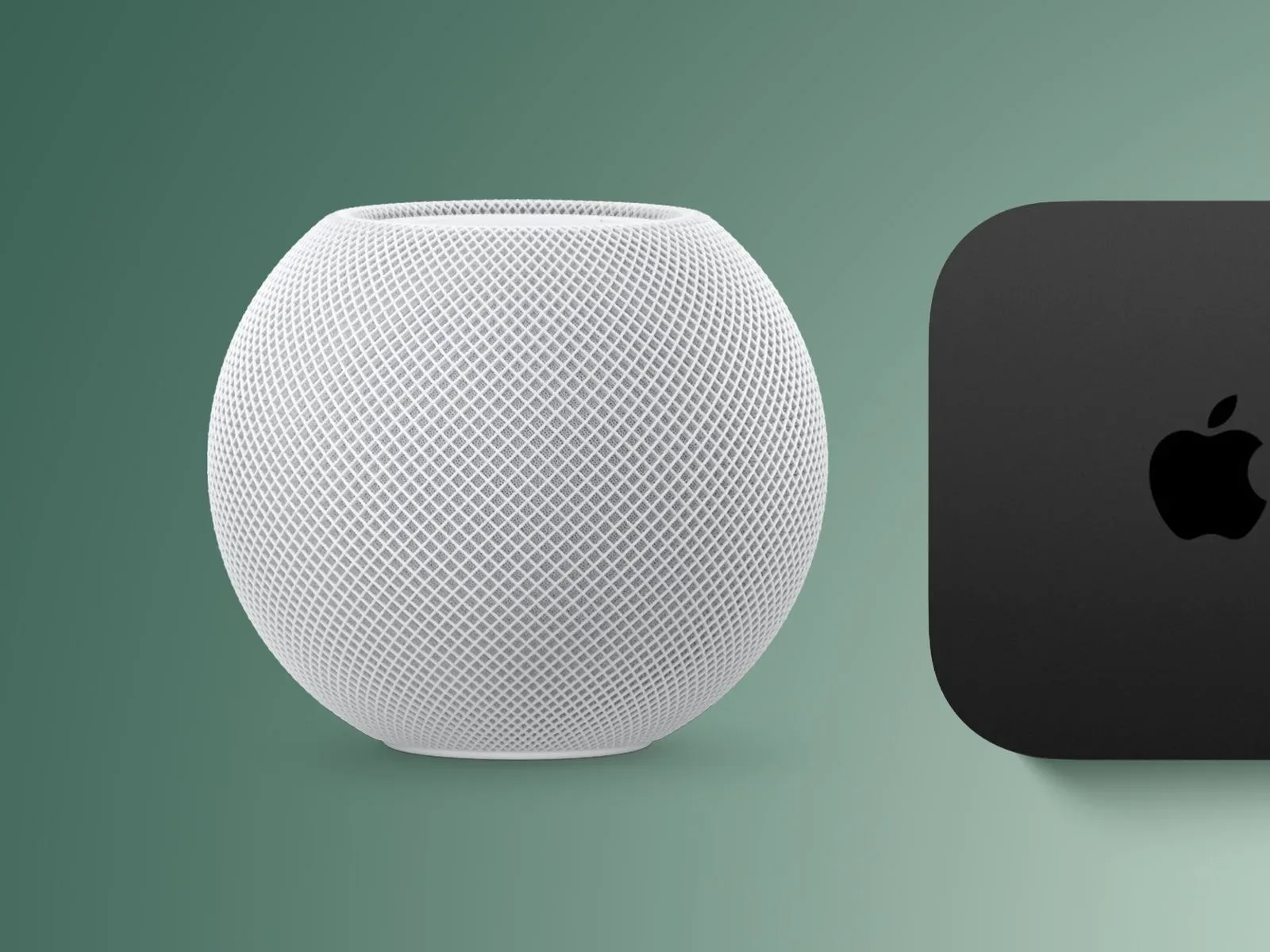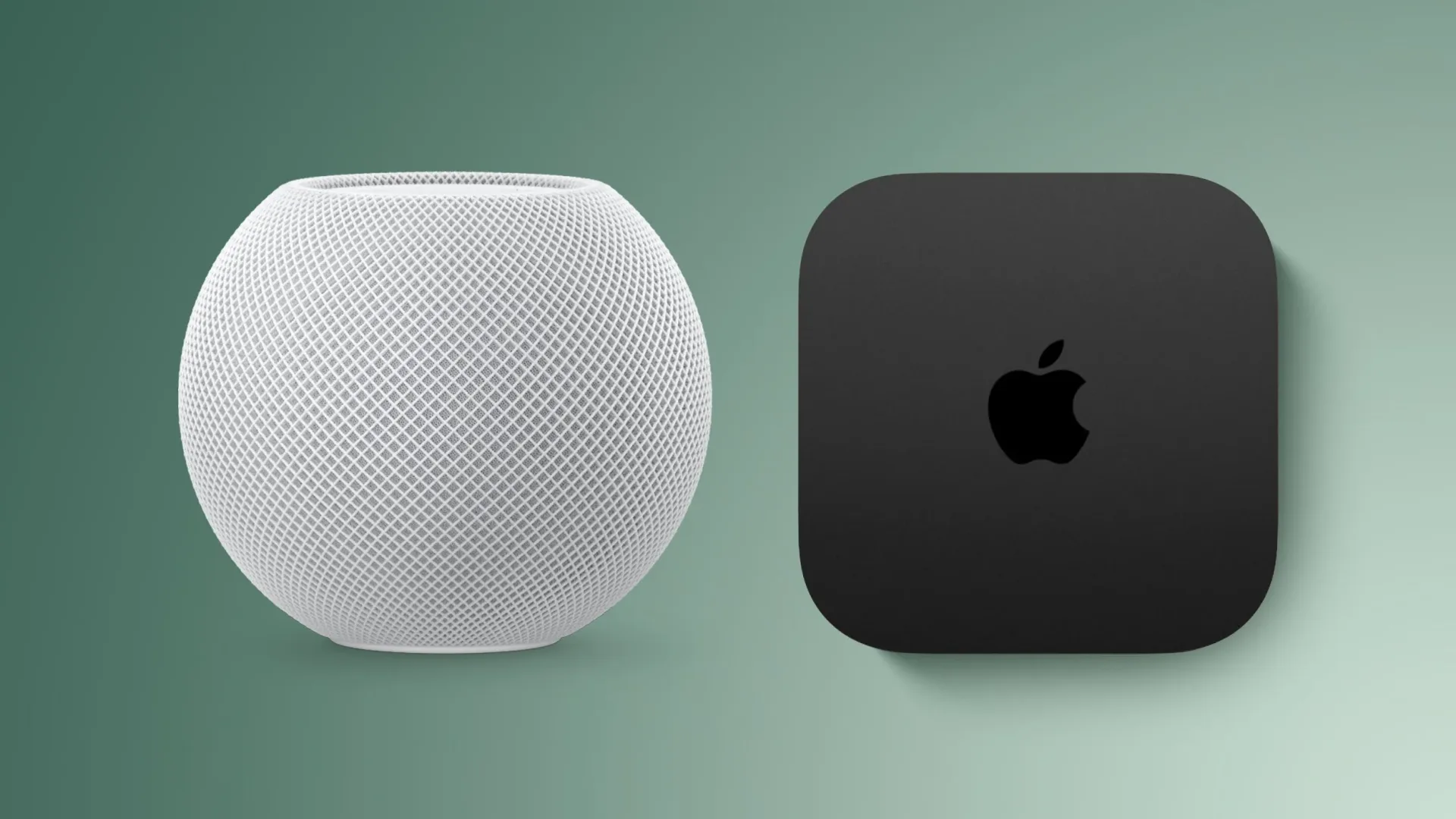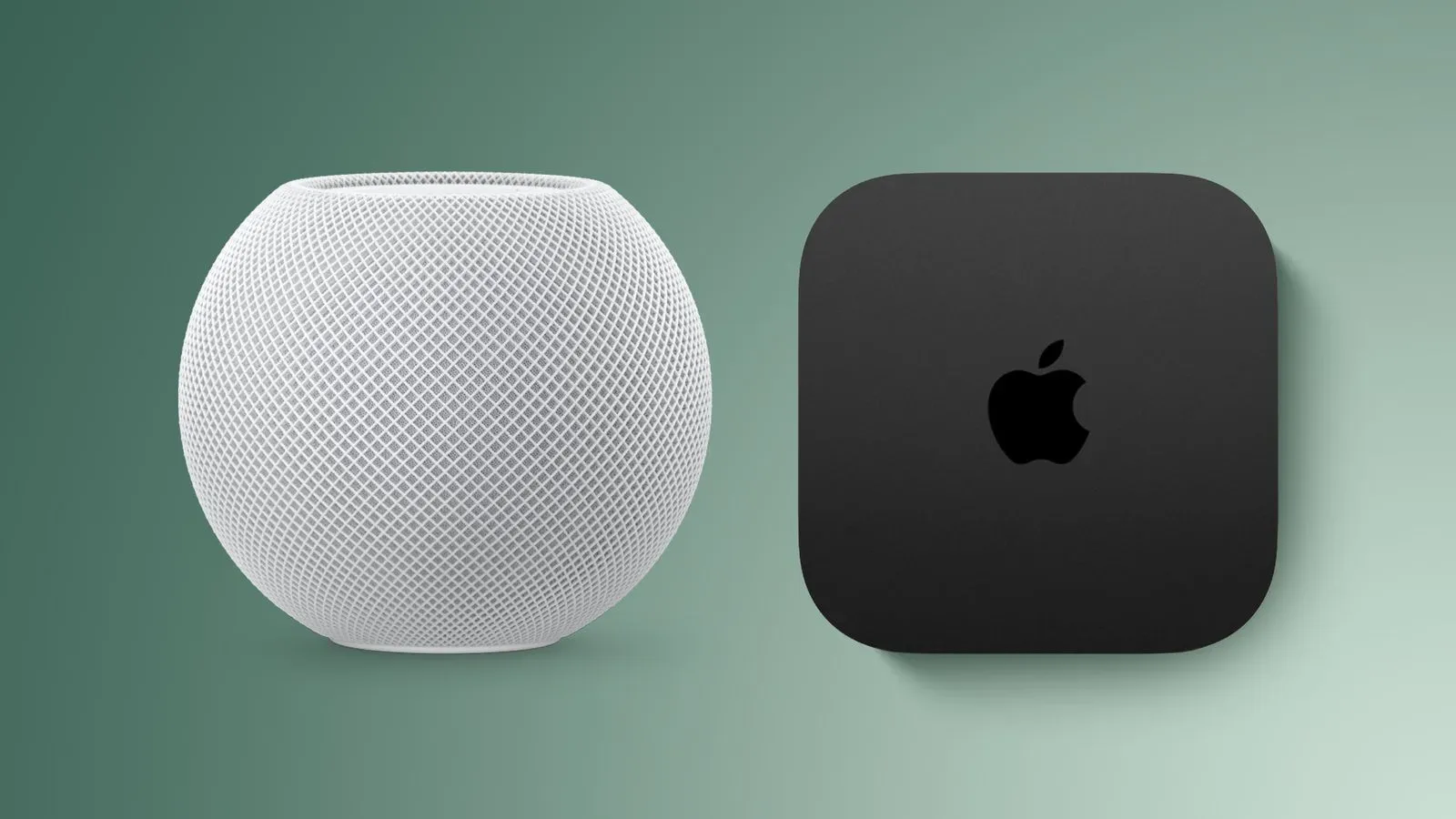
The Apple TV and HomePod mini may be preparing for another lap around the rumor track, and this time the finish line is said to be 2026. A fresh report maintains that updated versions of both home-focused devices remain expected before the year ends, with support for Siri AI named as a central part of the anticipated refresh.
That is the key phrase to keep highlighted with a neon marker: expected. There has been no formal product reveal, no confirmed launch date, no published pricing, and no hardware specification sheet. But the report’s outlook is notable because the next Apple TV and HomePod mini have spent a long time in the peculiar tech-news waiting room, where products can be “coming soon” long enough to qualify for a commemorative plaque.
Also reportedly on the 2026 slate are an all-new Apple home hub, an entry-level 14-inch MacBook Pro powered by an M6 chip, an M6 iMac, and an iPad mini moving to an OLED display. It is a broad collection of prospective hardware, but the home products are especially relevant to people whose living-room setup already contains a console, a streaming box, a smart speaker, and at least one remote that has chosen a life of independence beneath the couch.
The repeated promise of a new Apple TV
Apple TV updates matter to a narrower crowd than a new phone, but that crowd includes players who use a television as the center of a multi-device setup. Apple’s streaming box exists in a world of smart-TV apps, consoles, handheld docks, cable boxes, and inexpensive streaming sticks, so any next model has to justify occupying another HDMI port and another section of the input menu.
The reported addition of Siri AI support suggests that the potential update could be concerned with more than simply running familiar streaming apps. Voice assistance has long been part of the pitch for TV platforms, generally helping users search for a show, control playback, or ask an uncomplicated question. AI-oriented Siri features could potentially make that relationship more conversational or context-aware, though the specific capabilities for an Apple TV have not been described. It would be premature to assume how game discovery, media search, home control, or on-screen navigation might change.
For gaming audiences, the Apple TV’s significance is not necessarily about replacing dedicated hardware. A streaming device with game support has always had a different job from a console built around major releases, local installs, controllers, and an established multiplayer ecosystem. Still, a smoother home interface can be useful around the edges of a gaming routine: switching to a stream, controlling connected lights, finding something to watch after a difficult boss, or keeping the television setup from becoming its own optional puzzle dungeon.
There is no indication that a rumored Apple TV would receive a radical gaming-specific redesign, new controller arrangement, expanded game catalog, or other feature of that nature. Those possibilities should not be read into an expectation of updated hardware. At present, the supported claim is simply that a new model with Siri AI support is still believed to be on track for this year.
HomePod mini may finally get its turn
The HomePod mini is also reportedly due for an update, again with Siri AI support attached to the expectation. Its potential arrival would be important in a different way. Small smart speakers are often less visible than phones or laptops, yet they become unusually noticeable once they are placed in the kitchen, bedroom, office, or gaming corner and asked to handle timers, music, basic questions, and smart-home commands every day.
An improved assistant could be the biggest reason for a new model, assuming the report proves accurate. That does not tell us what Apple may alter about audio, internal components, colors, connectivity, sensors, or price. It does tell us where the rumored emphasis lies: more capable voice interaction rather than a cosmetic excuse to reintroduce a familiar orb in a slightly different shade of “definitely not blue.”
The lingering uncertainty is worth respecting. “Siri AI support” is not a full feature list, and it does not establish when every capability would be available or how it would work across products. AI functions can also vary by region, language, account, software version, and service requirements. Until Apple lays out the details itself, shoppers should treat the report as a reason to watch rather than a reason to count features before they hatch.
Anyone following Apple’s broader smart-home ambitions may find the rumored HomePod mini most interesting as part of a larger picture. A speaker is not merely an audio endpoint when it is tied to home controls and voice commands. It is an access point to the system. That makes the reported companion product, an entirely new home hub, potentially the wild card in the group.
The rumored home hub could be the connective piece
An all-new Apple home hub is also expected in 2026. No detailed design, functionality, or release schedule was provided in the report, so there is ample space for speculation and very little reason to fill it with pretend certainty. What can be said is that a dedicated hub would fit alongside refreshed Apple TV and HomePod mini hardware if the company is trying to make its home ecosystem more visible and more coordinated.
A central home device could put control of connected accessories, media, communication, and voice features closer together. Whether it would be screen-based, speaker-based, portable, wall-oriented, or something else is unknown. It is also unknown how it might relate to existing products in the lineup. The useful takeaway is not that a particular imagined gadget is guaranteed, but that Apple’s reported home-device plans appear to extend beyond refreshing two established products.
That ecosystem framing has relevance for players too. Gaming spaces increasingly overlap with smart-home spaces: display lighting, audio gear, climate controls, streaming services, and networked accessories all compete for attention in the same room. A hub that simplifies those pieces could be appealing, but only if it earns its place instead of becoming another glowing rectangle demanding setup permissions at 11:47 p.m.
The surrounding software conversation is already active. Apple’s AI direction has been tied to questions of privacy, subscriptions, device compatibility, and practical usefulness in the home. For another look at one adjacent pressure point, see the discussion around AI camera summaries and a HomeKit camera subscription gate. That separate issue does not confirm anything about the rumored hardware, but it illustrates why the details of feature access matter as much as the hardware announcement itself.
M6 Macs and an OLED iPad mini round out the reported plan
The report does not stop at the living room. An updated entry-level 14-inch MacBook Pro with an M6 chip and an iMac using the same chip are both expected this year. Those are straightforward-sounding entries on paper, but “entry-level” should not be mistaken for a complete specification. The report does not establish memory configurations, ports, display changes, storage tiers, benchmark performance, pricing, or launch timing.
Likewise, an iPad mini with an OLED display is expected. An OLED panel would be a meaningful screen change for a compact tablet, particularly for people who care about contrast and dark scenes in games, video, comics, or late-night browsing. Yet display technology is only one item. The report does not provide resolution, refresh rate, brightness figures, chip information, battery expectations, dimensions, or a release date. OLED is the rumored detail; the rest remains unannounced.
Put together, the alleged lineup suggests a busy year across home hardware, desktops, laptops, and tablets rather than one isolated launch. It also reinforces why an October window will draw attention. Apple often introduces products during that month, making it a plausible period to watch. Plausible is not the same as confirmed, however, and the report does not lock any individual product to an October event.
What to watch for before treating any of this as settled
The sensible approach is patience, particularly for anyone deciding whether to buy current hardware. A report that products are on track for a given year is useful context, but it cannot answer the questions that determine a real purchase: how much a new model costs, whether an old model is discounted, what software features work at launch, and whether the changes matter to a particular setup.
- Watch for official confirmation of the Apple TV and HomePod mini.
- Look for a clear explanation of what Siri AI support means on each device.
- Wait for compatibility details rather than assuming every AI feature reaches every region or language immediately.
- Compare confirmed specifications and pricing with existing models once those facts exist.
- Keep the home hub, M6 MacBook Pro, M6 iMac, and OLED iPad mini in the rumor column until Apple addresses them directly.
For now, the central story is durability. The next Apple TV and HomePod mini are still said to be on the way in 2026, despite having spent years as recurring characters in the hardware-rumor extended universe. If the expected launches do arrive, the real test will not be whether they can appear on a product page. It will be whether Siri AI and the larger home-device strategy give them a clear reason to exist beside the screens, speakers, consoles, and smart devices people already own.