September may have delivered a substantial Apple hardware wave, including the iPhone 18 Pro, iPhone Duo, AirPods 5, Apple Watch Series 12, Apple Watch Ultra 4 and Beats 360, but the company is still rumored to have a busy end to 2026. A possible October presentation could cover several products, while other devices may instead appear through quieter press releases.
The key word is rumored. Neither an October event nor the devices below are confirmed. Apple has introduced products in November and December before, even if that is less typical, and a rumored product list should not be read as a release schedule. Still, the breadth of the reported lineup makes for an interesting picture: revised Macs and an iPad mini on one side, and a stronger attempt to connect the TV, speaker and smart-home experience on the other.
For players and households that use Apple hardware around games, streaming, voice control and video calls, the potential Apple TV, HomePod mini and Home Hub are especially notable. They would not necessarily arrive with radical exterior changes, but the reported internal changes could matter much more than a new shell.
What may arrive before the end of 2026
The rumored hardware spans portable devices, desktop Macs, laptops and the home. Here is the reported list at a glance:
- iPad mini: an A19 Pro or A20 Pro chip, OLED screen, a speaker system without holes, and water resistance.
- 24-inch iMac: an M6 chip and new colour options.
- 14-inch MacBook Pro: a new base model with an M6 chip.
- 14-inch and 16-inch MacBook Pro: a larger redesign reportedly pairing M5 Pro and M5 Max chips with OLED, a touch screen, Dynamic Island and a thinner design.
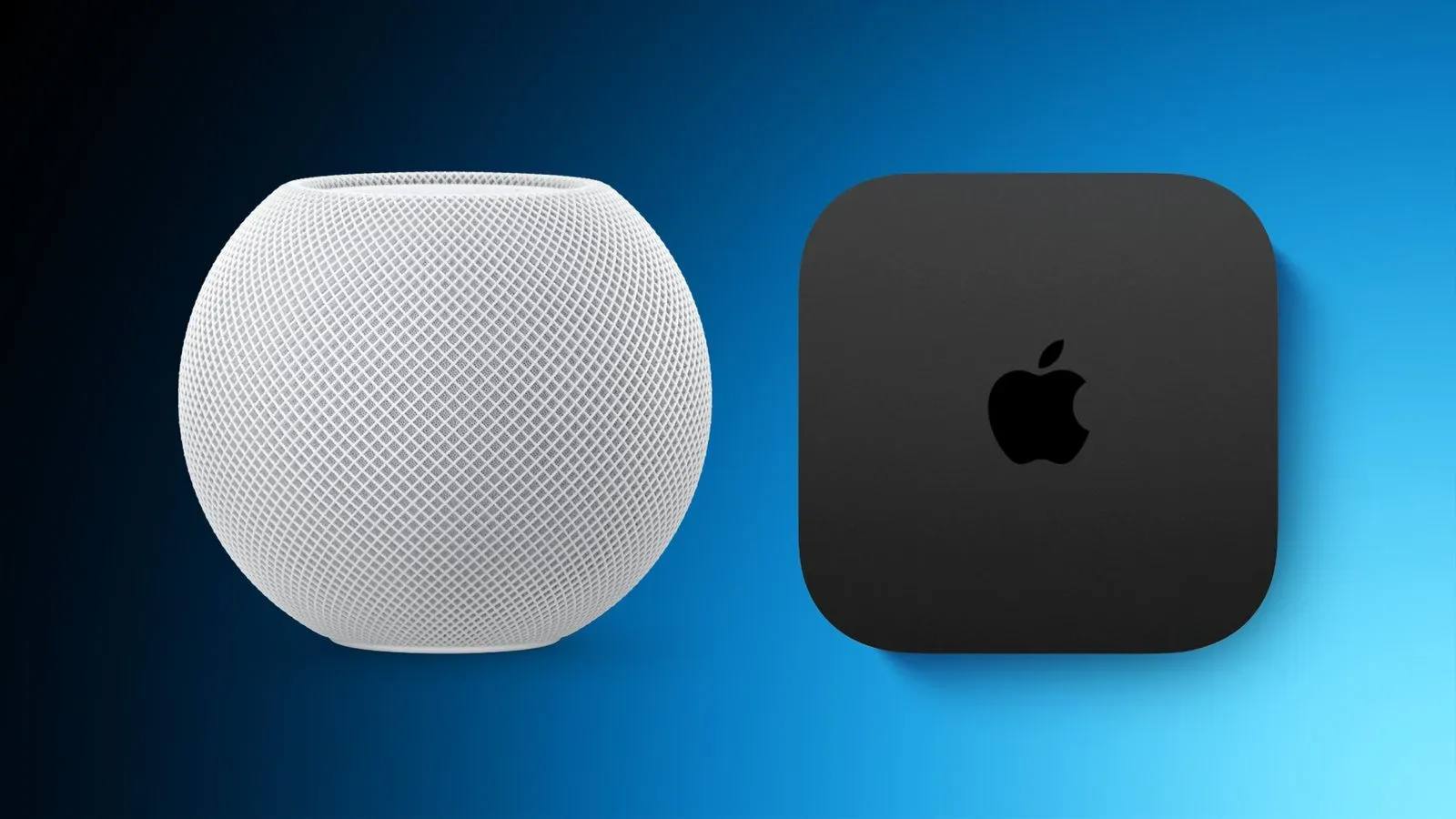
- Apple TV: an A17 Pro-class chip or newer, 8GB of RAM, Apple Intelligence support for Siri, an Apple N1 wireless chip with Wi-Fi 7, and an updated Siri Remote.
- HomePod mini: a newer chip, Siri AI support, improved sound, N1 with Wi-Fi 7, a second-generation Ultra Wideband chip and potentially colours including red.
- Home Hub: a new smart-home device with Siri AI, a square 6-inch to 7-inch display, an A18-class chip or newer, FaceTime, widgets and clock faces. Tabletop and wall-mounted versions are reportedly planned.
Not every item needs to be tied to the same announcement. The important practical distinction is between a shared stage, which can establish a connected product story, and individual releases that may receive far less explanation. With this many reported devices, it remains plausible that Apple would split the rollout even if October does become a launch month.
The home devices are the clearest shared story
Apple TV and HomePod mini are both said to retain designs similar to their current forms. That is worth stressing because a lack of a dramatic physical redesign would not mean the update is minor. The rumored upgrades concentrate on processing, wireless connectivity, memory and Siri.
The reported 8GB of memory in Apple TV is specifically tied to Apple Intelligence. In simple terms, RAM is working memory: the fast, temporary space a device uses while apps and system functions are active. More RAM can support more demanding software workloads, though a number alone does not tell us exactly which features will ship or how well they will run. The source material connects the reported increase to Siri AI, not to a promised gaming performance boost.
Likewise, an A17 Pro or newer chip would represent a modern processor foundation for the set-top box. A processor is the primary component that carries out a device’s computing tasks. The rumored Home Hub would use an A18 chip or newer, while the HomePod mini is simply described as getting a newer chip. Those claims suggest an effort to make Siri’s AI-oriented capabilities more central across multiple rooms and screens, rather than treating voice interaction as a separate accessory feature.
The possible Home Hub and its shared-dashboard potential is particularly relevant here. A 6-inch to 7-inch square display, clock faces and widgets point toward information that can be glanced at by more than one person. FaceTime adds a communication angle, while the proposed tabletop speaker-base version and wall-mounted option indicate two different placement ideas: a device that sits in a room and one intended to stay visible at a fixed household location.
Those details do not confirm a final interface, a launch date or how Apple’s services would be presented. They do show why the Home Hub could be more significant than a simple screen added to a smart speaker. If the report proves accurate, it would be a new category in the lineup rather than a routine refresh.
Wi-Fi 7 and Ultra Wideband, explained without the spec-sheet fog
Both the rumored Apple TV and HomePod mini include Apple’s N1 chip with Wi-Fi 7 support. Wi-Fi 7 is a newer generation of Wi-Fi technology. Support does not automatically transform a home network: the benefit depends on the router, internet connection, other devices and local conditions. But including it in two living-room-oriented products would give Apple a current wireless baseline for devices expected to stay in homes for years.
The N1 is described as Apple-designed. On its own, that tells us only that Apple is reportedly handling this connectivity component itself. It does not establish real-world range, throughput, stability or compatibility, and none of those performance measures should be assumed ahead of an official reveal.
The HomePod mini is also rumored to get a second-generation Ultra Wideband chip. Ultra Wideband is a short-range wireless technology used for precise proximity awareness between compatible devices. The supplied details do not specify new uses for it, so it would be premature to declare a particular feature. Its inclusion does, however, fit a wider home-device direction in which placement, nearby hardware and handoffs can matter alongside ordinary Wi-Fi connections.
For game players, the most sensible takeaway is not that either product is suddenly a replacement for a dedicated console. No such claim is supported. The potentially meaningful change is that an Apple TV with newer processing, more memory and revised remote hardware could offer a more capable platform for the streaming, media and voice-control tasks already associated with a television setup. What it means for specific games, controllers or services remains unknown.
Mac reports point to both a refresh and a redesign
On the computer side, the reported 24-inch iMac and entry-level 14-inch MacBook Pro are straightforward-sounding updates. Both are linked to Apple’s M6 chip, with the iMac also said to gain new colour choices. Nothing in the report defines performance, ports, display changes, battery life or release timing for either machine, so the M6 reference should be viewed as the central rumor rather than a complete specification sheet.
The higher-end 14-inch and 16-inch MacBook Pro claims are much broader. They are reportedly due for a major redesign in late 2026, using M5 Pro and M5 Max chips rather than M6, with OLED panels, touch input, Dynamic Island and a thinner construction. The split is notable: a base-model 14-inch machine could reportedly move to M6 while the more extensive redesign is associated with M5 Pro and M5 Max. Product names and chips do not always map neatly to a single launch moment, which is another reason not to collapse all of these rumors into one assumed October keynote.
OLED is a display technology in which each pixel produces its own light. That differs from display approaches using a separate backlight. The report does not give display measurements or image-quality claims, but OLED and touch screens would be meaningful changes in how a MacBook Pro screen is specified. Dynamic Island refers to a display-area design element, while “thinner” is a physical-design claim whose eventual trade-offs cannot be assessed without official dimensions and specifications.
For creative work, PC gaming adjacent workflows and everyday use, an OLED touch-screen MacBook Pro would be one of the more consequential possibilities on this list. But it is explicitly positioned as a late-2026 redesign, not necessarily an October product. Anyone holding off on a purchase should avoid treating a rumor as a guarantee, especially where the report itself separates “before the end of 2026” from what could actually be shown next month.
An iPad mini update could be unusually ambitious
The iPad mini rumor combines several changes that affect both capability and physical design: an A19 Pro or A20 Pro chip, OLED display, a new speaker arrangement without holes and water resistance. The chip description contains uncertainty between two possible processors, so there is no firm basis to choose one today.
Water resistance is not the same thing as permission to submerge a device or use it carelessly around liquids. Any meaningful interpretation would require an official rating and Apple’s own usage guidance, neither of which is included in the current report. Similarly, a speaker design without holes suggests a change to the device’s construction, but does not establish audio quality. These are the sorts of claims that need final technical documentation before buyers can compare them responsibly.
The OLED portion is easier to understand at a high level: it would bring the same broad display technology reported for the redesigned MacBook Pro to a much smaller device. Whether that leads to a better purchase depends on specifications and on how someone uses a compact tablet; the available details do not supply brightness figures, storage options, accessory support or pricing.
What to watch for if an October event happens
If Apple does hold an October event, the most revealing question may be whether it presents the products as isolated annual updates or as pieces of a common Siri AI and home-computing strategy. Apple TV, HomePod mini and Home Hub reportedly share several connective themes: newer processing, Siri AI and N1 networking in the first two products. A staged presentation would be a natural place to explain how those products are meant to work alongside one another, but that remains analysis, not confirmation.
There are also several important unknowns that any formal announcement would need to settle:
- Which rumored products, if any, are actually ready for October rather than November or December.
- Whether the Home Hub arrives in both reported forms, and what differentiates the tabletop and wall-mounted versions.
- What Siri AI functions are supported on Apple TV, HomePod mini and Home Hub.
- Whether Wi-Fi 7 support changes hardware requirements elsewhere in a household.
- What “updated” means for the Siri Remote.
- Whether the OLED MacBook Pro redesign really belongs to late 2026 and how its chip options are structured.
- What exact durability and audio claims accompany the iPad mini changes.
For now, the durable conclusion is modest. Apple is rumored to have a potentially wide-ranging slate still waiting after September, and the home category could be the unifying thread. The prospective iMac, MacBook Pro and iPad mini updates matter individually, but the reported Apple TV, HomePod mini and Home Hub suggest a larger effort to make screens, speakers, wireless hardware and Siri operate as a more connected household system. Until Apple says otherwise, every product name, feature and timing window should be treated as provisional.