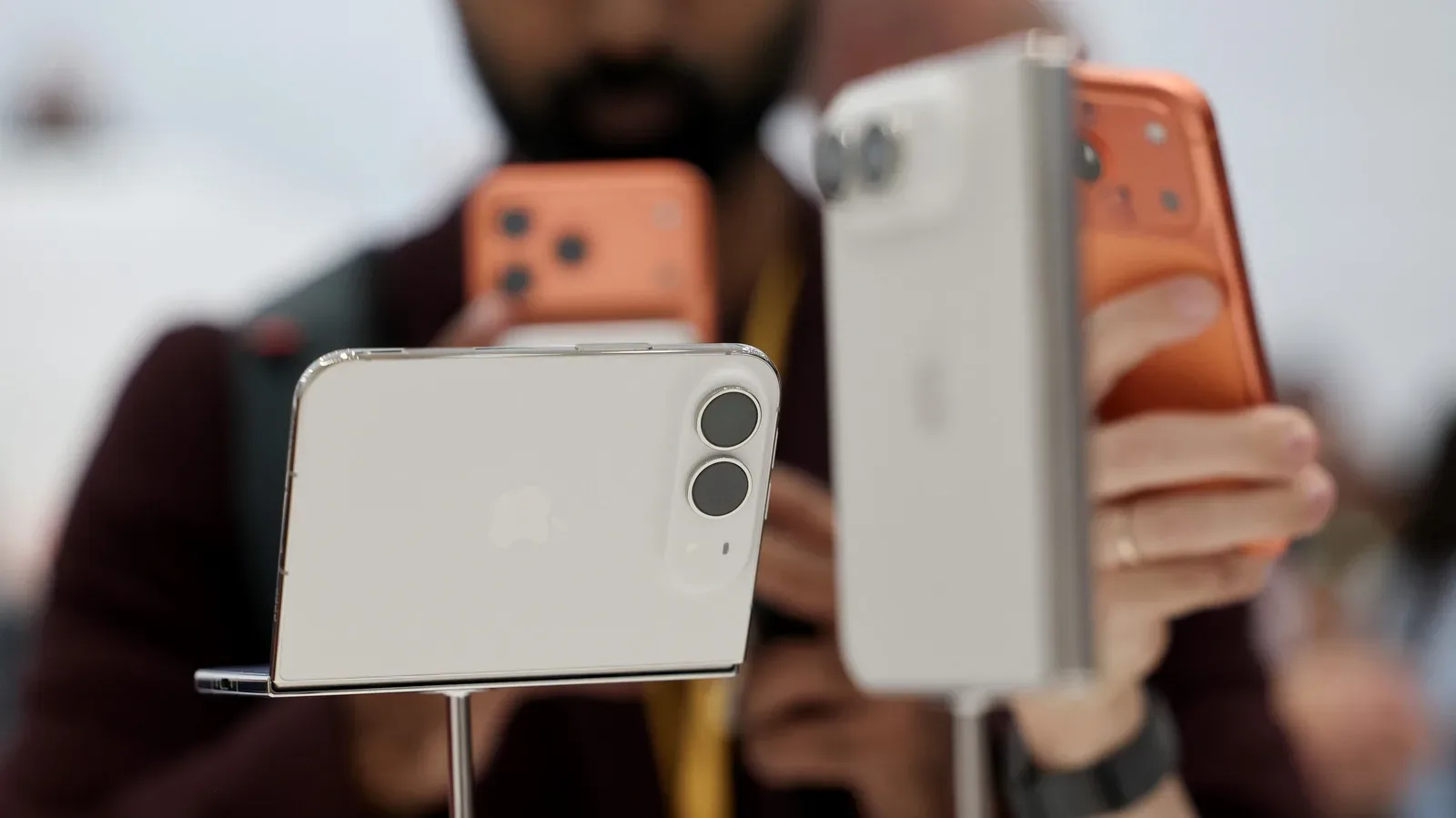
Apple CEO John Ternus has offered a blunt explanation for why the company did not rush into foldable smartphones: some of the earliest examples simply did not feel good enough.
In a recent interview, Ternus characterized early foldable handsets as “kind of cheap and crappy,” drawing a sharp line between being first to a category and believing a product has reached a satisfactory level of finish. Samsung released its first foldable in 2019, while Apple stayed on the sidelines. Now, Apple is preparing the iPhone Duo, a foldable it says emphasizes a premium design and a display crease that is barely noticeable.
The iPhone Duo will be available to pre-order this Friday at 5 a.m. Pacific Time. Beyond that timetable, Ternus’s comments frame the device as a statement of approach: Apple appears to be arguing that its delay was not hesitation for its own sake, but time spent pursuing a higher bar for both the hardware’s appearance and its physical construction.
A crease is more than a cosmetic detail
On a foldable phone, the crease is the visible or tactile line around the portion of a flexible screen that repeatedly bends. It is an unavoidable focal point because the display must do something conventional phone glass does not: open and close around a hinge. A crease that catches light, can be felt while scrolling, or looks pronounced when the screen is bright can make an otherwise sophisticated device seem less refined.
That makes Apple’s “barely-noticeable” crease claim central to the iPhone Duo’s identity, not a minor specification-sheet flourish. It speaks to the part of foldable design that users encounter constantly: looking at the screen and touching it. The statement does not provide measurements, durability figures, or a description of the hinge mechanism, so it should not be read as a broad technical comparison with every competing foldable. But it does clarify the design target Apple wants associated with its first model.
For players and other heavy handheld-device users, screen feel matters in an unusually practical way. Touch controls, menus, messaging, video, cloud-streaming interfaces, and companion apps all involve frequent swipes and taps across the panel. A visible center line may not change whether software runs, but it can change whether a device feels like a cohesive premium object rather than two screens joined together.
Apple is selling restraint as an engineering choice
Ternus’s criticism of early foldables is also a positioning move. Foldables are no longer a new idea in the abstract; the category has existed commercially for years. Apple therefore cannot plausibly sell the iPhone Duo on the notion that it invented the form factor. Its more credible pitch is that the company waited until it could deliver its preferred version of it.
That is why the language around manufacturing is as important as the language around industrial design. Ternus said he gave Apple’s design team the confidence to push boundaries in innovation and manufacturing. In this context, manufacturing is not merely the process of producing units at scale. It is the work of turning a desired physical result—such as a premium feel and a reduced crease—into a repeatable product.
There is a meaningful distinction there. A concept can demonstrate that a folding display is possible. A consumer device must make that display look and feel consistent enough to carry a flagship identity. Apple is using the iPhone Duo’s arrival to underline that the difficult part was not recognizing that phones could fold; it was getting the perceived quality of the finished object where the company wanted it.
The iPhone Duo is being framed around a premium design, aggressive attention to the crease, and a willingness to make manufacturing part of the product story.
What “premium” means here—and what remains unknown
“Premium” is a broad word, and the information currently available supports only a specific reading of it. Apple is connecting the term to the iPhone Duo’s design and to the effort required to manufacture it. The nearly invisible crease is the concrete feature attached to that positioning.
It does not, on the information available, establish the phone’s price, display size, cameras, battery, durability rating, software behavior, release date, carrier support, or gaming performance. None of those details should be assumed from the premium label alone. Nor does Ternus’s assessment of early foldables automatically describe every modern foldable phone on the market.
That uncertainty is useful for prospective buyers. The iPhone Duo’s current case rests on a promise of fit, finish, and manufacturing confidence. Those are important qualities, especially in a device category where the folding screen and hinge are core to the experience. Still, the fuller value proposition will depend on information Apple has not detailed here.
A foldable’s physical design can shape its gaming role
Foldable phones are naturally interesting to gaming audiences because their basic proposition is spatial flexibility. A compact device can unfold into a larger surface, potentially changing how game libraries, streaming services, touch controls, chat, guides, and video content are viewed. But the practical result depends on factors not yet outlined for iPhone Duo, including screen dimensions and aspect ratio, app behavior when the device changes position, performance, and how comfortably the hardware works with external controllers.
The available details do support a narrower point: Apple is putting tactile and visual polish at the center of its first foldable message. That focus could matter for entertainment as much as ordinary phone use. Gaming hardware earns goodwill when its physical compromises fade into the background. On a foldable, the crease is one of the compromises most likely to stay visible—unless the design successfully minimizes it.
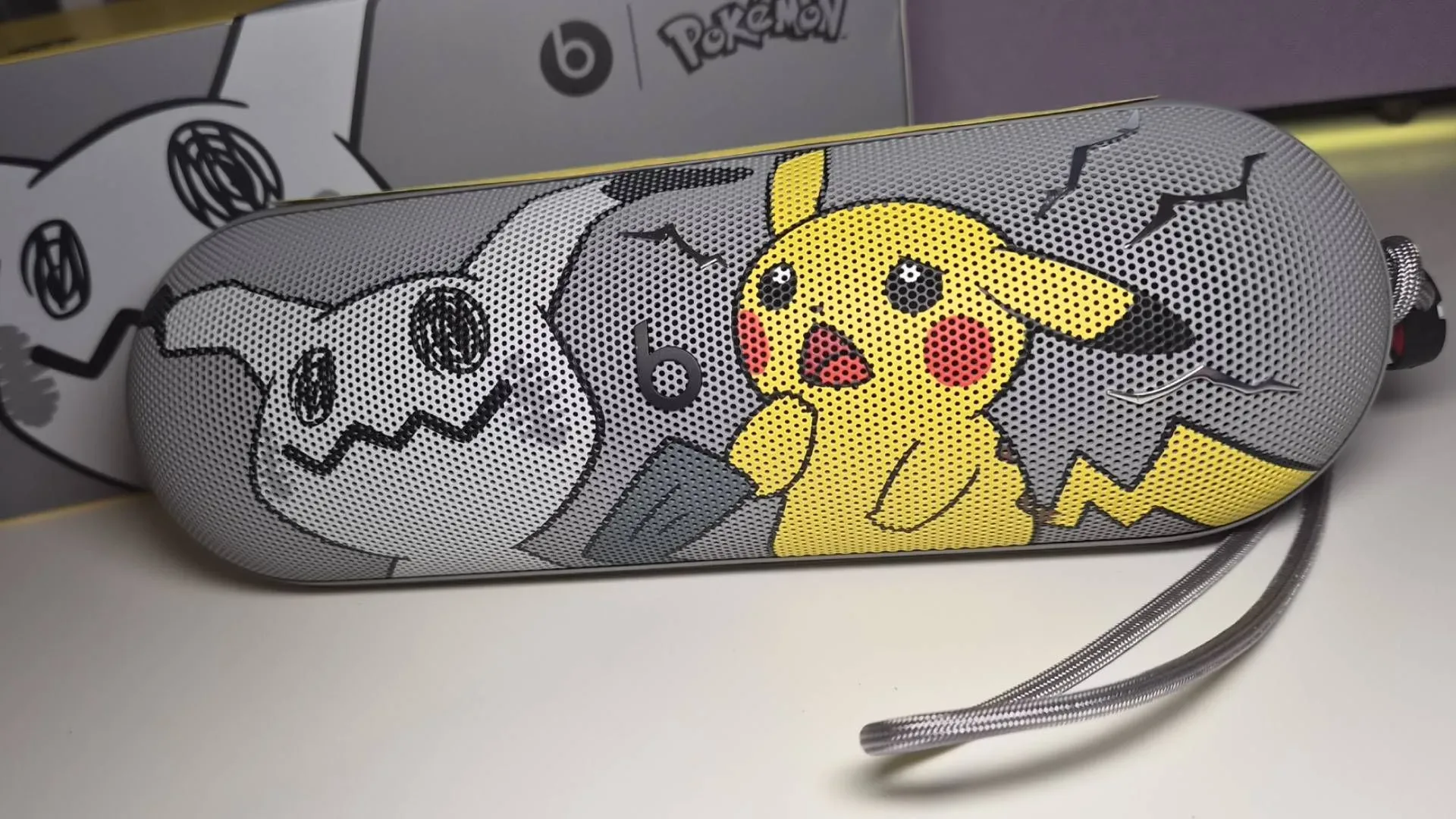
Apple has previously used its wider device ecosystem for entertainment-oriented collaborations, including the Pokémon special-edition Beats Pill. The iPhone Duo is a different kind of product, but its debut similarly puts hardware design at the forefront of a broader consumer-tech conversation.
The risk of making the crease the headline
There is an upside and a downside to emphasizing a nearly imperceptible crease before customers can place pre-orders. The upside is clarity. People immediately understand why a smoother-looking folding display would be desirable, and it gives Apple a simple way to explain its years-long absence from the segment.
The downside is expectation-setting. When a company makes a physical detail a defining feature, users will inspect that detail closely. They will look at it under different lighting, run fingers across it, and compare their own perception with the claim. “Barely noticeable” is inherently experiential language rather than a numerical benchmark, so individual impressions can vary.
That does not make the claim unimportant. It makes it consequential. Apple’s strategy is to treat the crease—long a recognizable symbol of the category’s compromise—as an area where its device should feel materially different. The company is effectively asking consumers to judge the iPhone Duo not just by whether it folds, but by whether it avoids reminding them that it folds.
Pre-orders begin Friday
The immediate practical detail is straightforward: iPhone Duo pre-orders begin Friday at 5 a.m. Pacific Time. Apple’s public messaging, through Ternus, is focused on a product developed with room to push design and manufacturing further than the early foldables he criticized.
For now, that messaging provides a clear standard by which the iPhone Duo will be evaluated. Apple is not merely entering foldables late. It is presenting its debut foldable as an answer to the category’s old questions about whether a device can bend without seeming flimsy, compromised, or unfinished.