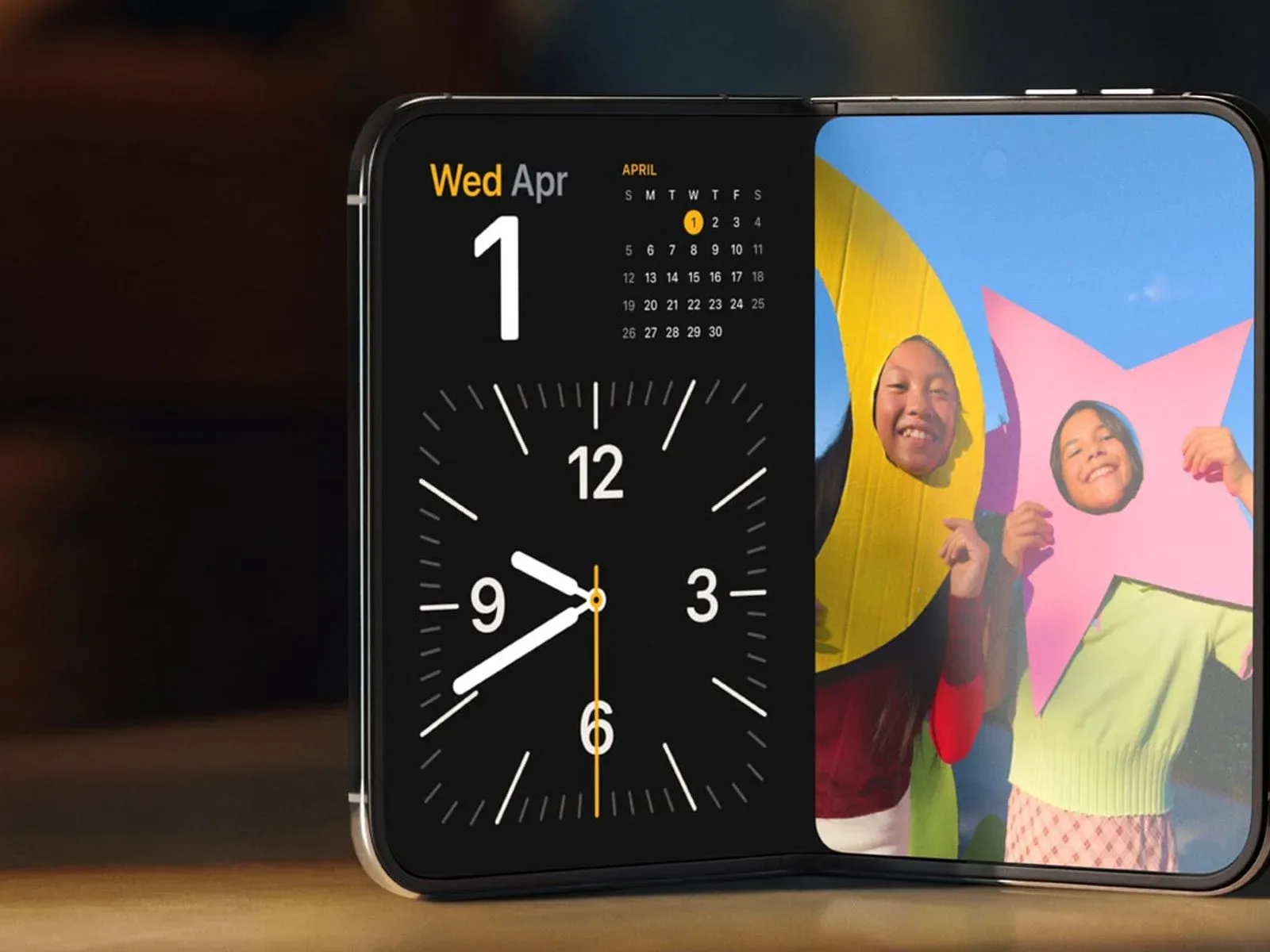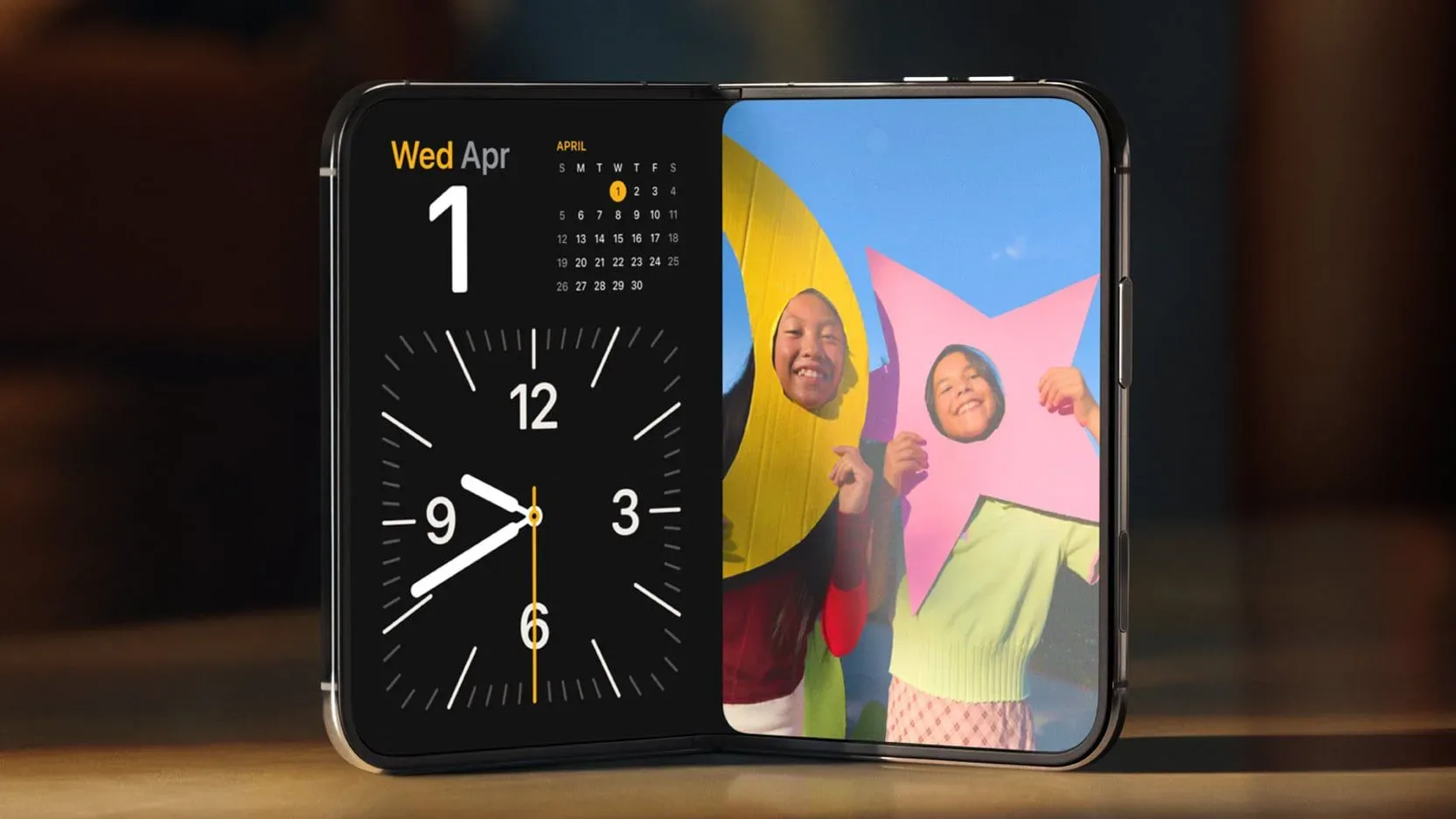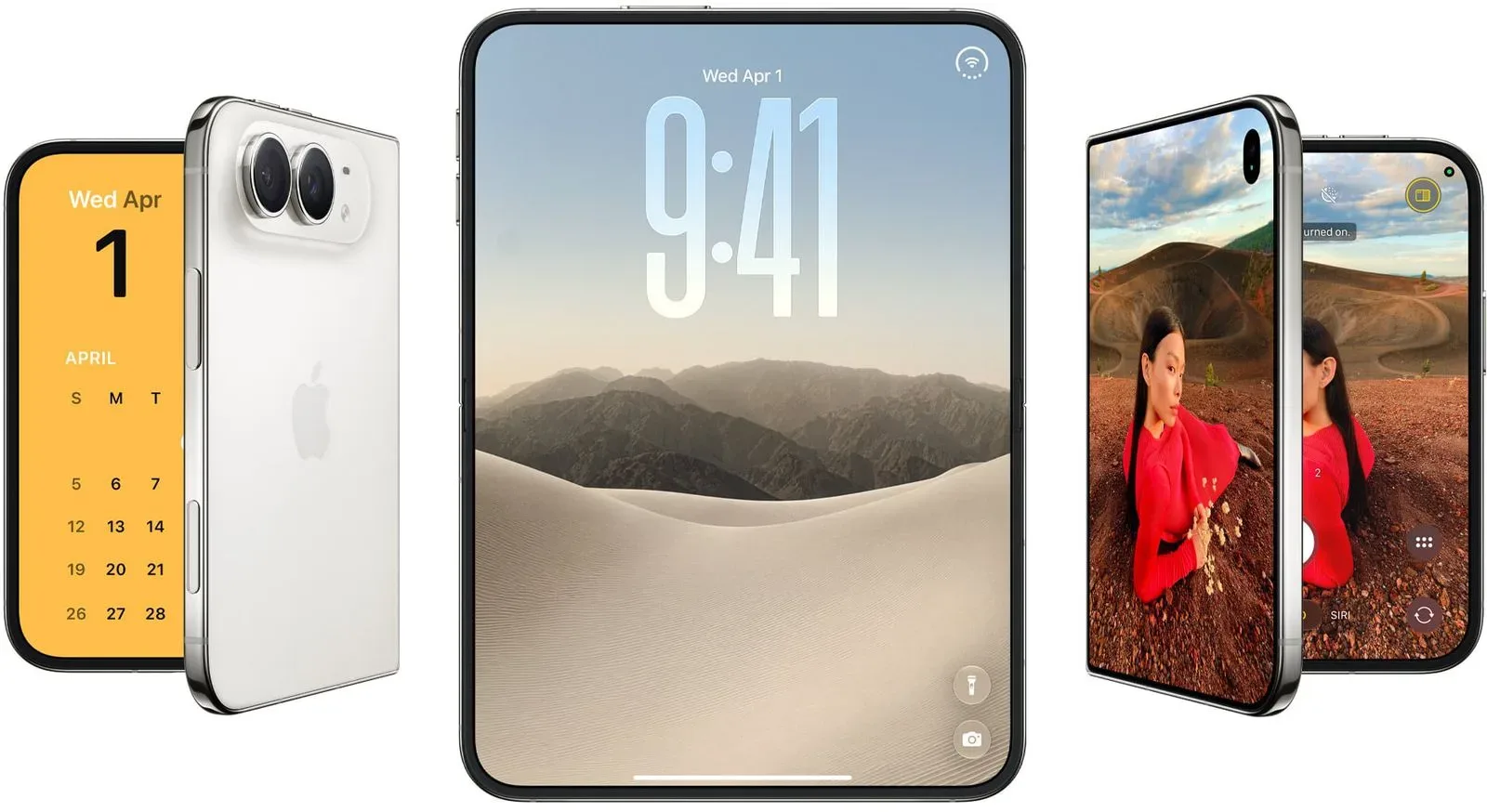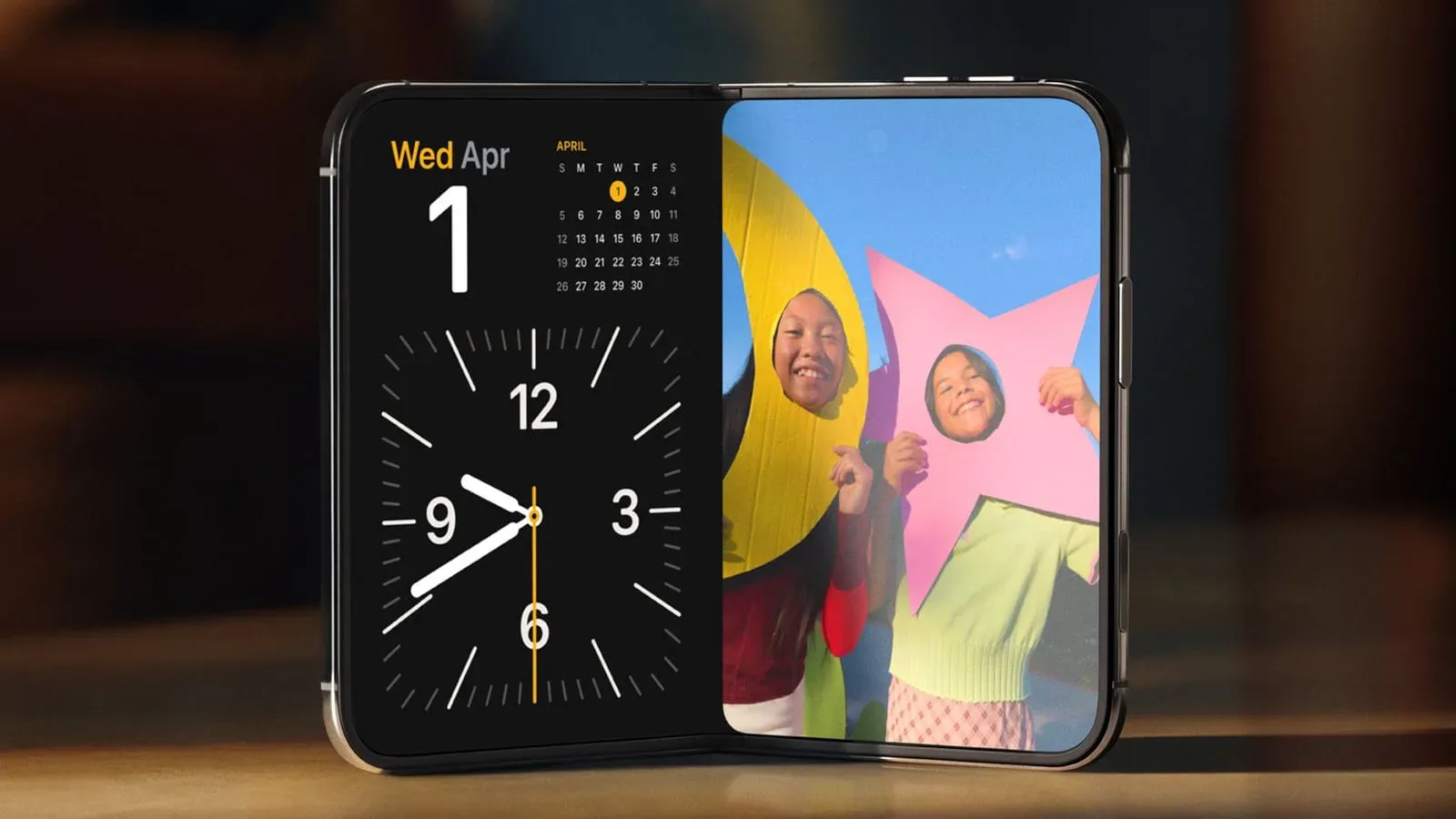
Foldable phones have spent years battling one extremely stubborn miniboss: the crease. It sits right in the middle of the big inner screen, has the audacity to appear whenever the device is opened, and can become more noticeable after a long campaign of folding and unfolding. For Apple’s upcoming iPhone Duo, the question was never going to be whether people would look for it. The question was whether Apple would say it had defeated it.
Its answer is more measured than that. Apple describes the iPhone Duo’s interior display as flat and smooth, and points to a custom nano-texture finish, optical adhesives, structural support, and a complex hinge as the gear loadout intended to make the fold less conspicuous. But Apple does not explicitly say the crease is absent. In fact, its own wording centers on minimizing the crease and its visibility.
That may sound like hair-splitting, but it is a meaningful distinction for a device that will enter a category where the central fold line is both a physical reality and a visual talking point. The iPhone Duo is scheduled to launch on October 23, with pre-orders beginning October 16.
The FAQ asks the obvious question, then takes a scenic route around it
Apple’s iPhone Duo product page includes a frequently asked question that directly addresses whether the inside display shows a crease at the fold. The response does not provide a simple yes-or-no declaration. Instead, it highlights the feel and appearance of the panel, describing it as “wonderfully flat and smooth,” before explaining the technologies intended to lessen stress on the folding display.
The central technical claim is that optically clear adhesives allow the display’s layers to move against one another as the phone opens and closes. Apple says this reduces stress and minimizes the crease. That is not the same as claiming the fold line has been erased from existence. It is an acknowledgment, wrapped in polished product-page language, that the design aims to manage the challenge rather than pretend the challenge never loaded in.
There is no reason to turn that careful phrasing into a scandalous reveal. Every company has to describe complicated hardware in terms shoppers can quickly understand. Still, the language matters because it defines what Apple is promising. The promise is a foldable display engineered to keep the crease subdued, not a guarantee of an entirely crease-free screen under every lighting condition, angle, or stage of long-term use.
Nano-texture is presented as a visibility tool, not a magical un-fold button
Apple repeatedly foregrounds the iPhone Duo’s nano-texture display treatment. The company says the premium finish creates a matte surface that cuts glare and reflections, while also reducing the visibility of the crease. That pairing is important. A reflected light source can draw attention to subtle contours on a screen; reducing reflections may therefore make the crease less visually prominent in normal viewing.
Apple also says the surface is intended to feel good to touch. The device’s pitch, then, is not only about hiding an imperfection but about making the broad inner panel feel more consistent during use. The company frames the resulting display as an uninterrupted viewing experience, though that phrase should be understood as a design goal rather than proof that a fold line cannot be detected.
For prospective buyers, there are two separate questions tucked inside the word “crease”:
- How visible is it? This can change with lighting, the image on screen, viewing angle, reflections, and the display finish.
- How noticeable is it to the touch? This concerns the physical transition across the point where the inner screen bends.
Apple’s messaging speaks most specifically to visual minimization, with the nano-texture finish receiving the spotlight. It also refers to smoothness and the feel of the panel, but it does not offer a categorical statement that the crease cannot be seen or felt. That restraint may be less flashy than declaring victory over geometry, yet it gives the company more room to describe what its engineering is designed to do.
The hinge and under-display structure are part of the argument
Display materials alone do not carry the whole quest. Apple says the iPhone Duo hinge contains more than 100 components and provides smooth, balanced resistance for long-lasting reliability. The company also identifies support ribs and a titanium panel beneath the display as parts of the device’s construction.
Those details establish the broader approach: the fold is being treated as a system-level engineering problem. The hinge governs the motion. The panel and support structure help manage the display during that motion. The adhesives are meant to let layers glide as folding happens. Finally, the nano-texture finish is intended to make the resulting crease less visible to the eye.
None of those individual elements tells buyers exactly what the crease will look like in every circumstance, or how it may change after extended ownership. But together they explain why Apple’s response is not merely “we used a fancy coating.” Its public case is that mechanics, support, materials, and surface treatment are working in tandem. In gamer terms, it is not one legendary item; it is a full build designed for a very specific boss encounter.
Apple’s reliability wording is also deliberately broad. “Long-lasting reliability” signals confidence in the hinge design, yet the company does not publish a specific fold-cycle rating on its website or in its release materials. A fold-cycle figure is a straightforward number that can help shoppers compare durability claims, especially for hardware that is literally built to bend repeatedly. Apple has not supplied one here.
No published iPhone Duo fold count means a key comparison remains open
The absence of an official iPhone Duo fold-cycle rating does not establish that the phone is less durable than a rival. It simply means Apple has not offered that particular metric publicly. That leaves observers without an Apple-provided number to place beside other foldable-phone durability claims.
Samsung, for example, does publish a rating for its new Galaxy Z Fold8, a book-style foldable with the same general shape as the iPhone Duo. Samsung rates the Galaxy Z Fold8 for 500,000 folds. That figure does not automatically tell us how the iPhone Duo will compare, because Apple has not provided an equivalent number, and ratings are only directly comparable when the underlying standards and conditions are clear. Still, the contrast in disclosure is plain: Samsung has put a number on the table, while Apple has chosen hinge and construction descriptions instead.
This is why the iPhone Duo crease conversation has two tracks that should not be mashed into one blob of tech discourse:
- Appearance: Apple says the nano-texture finish and screen design reduce crease visibility, while its FAQ stops short of saying no crease exists.
- Durability: Apple describes a 100-plus-component hinge and long-lasting reliability, but gives no stated fold-cycle total.
One is about what owners may see and feel. The other is about how long the folding mechanism and display construction are expected to hold up under repeated movement. They are related, certainly, but they are not interchangeable. A less visible crease is not itself a published durability test, and a high fold-cycle number does not by itself settle every question about how a crease looks.
Why the careful wording is the real iPhone Duo story
Rumors ahead of the iPhone Duo had suggested Apple was targeting the foldable crease as a major problem to solve. The official product language suggests the company’s actual position is more practical: make it hard to notice, lower the stress that creates it, and build the hinge and display stack for repeated use. That is substantial ambition, but it is not an explicit claim that the crease has been deleted from the tech tree.
For anyone tracking the growing book-style foldable field, Apple’s approach also lands during a wider-screen race that includes designs beyond the iPhone Duo. Motorola, for instance, has teased its own compact book-style Razr concept, as covered in this look at Motorola’s wide-screen foldable push. The category’s recurring design questions remain familiar: screen feel, reflected light, hinge behavior, long-term durability, and whether the center of a folding display fades into the background or keeps waving at you like an NPC with an unskippable side quest.
Apple has provided a clear enough summary of its intended answer: nano-texture to reduce glare, reflections, and crease visibility; optical adhesives to let display layers glide; a hinge with more than 100 components; and support ribs plus a titanium panel below the display. What it has not offered is an absolute no-crease pledge or a numerical fold-cycle rating.
That leaves the iPhone Duo with a carefully framed promise ahead of its October 23 arrival. Apple is saying the fold should be minimized, not mythologized away. The crease, apparently, has not been banished. It has been given a matte finish, a titanium-backed support party, and strict instructions to be less annoying.