Motorola has offered an early, deliberately incomplete look at another Razr foldable—and this one appears to be taking the brand further from the vertical clamshell form that made the name famous. A short social-media video ends on the silhouette of a notably boxy handset that seems to use a compact, book-style fold rather than the classic flip-phone layout associated with Razr.
There is no product name, specification sheet, pricing information, launch date, or stated availability attached to the tease. That means the silhouette should be treated as exactly what it is: a preview of Motorola’s design direction, not a completed list of promises about screens, cameras, processors, battery capacity, durability, or software.
Still, the message is fairly clear. Motorola is building out the Razr identity beyond its clamshell roots at a moment when foldable makers are paying more attention to wider, more traditionally proportioned inner displays. The new teaser also arrives after Motorola’s significant foldable expansion this year, which includes three clamshell-style Razr models and its first full-size book-style device, the Motorola Razr Fold.
A Razr timeline ends with an unfamiliar outline
The video frames the pending model as part of Razr history. It runs through multiple Razr phones released over the past 22 years before landing on the new device’s outline. Rather than showing off a detailed product render, Motorola keeps the final hardware mostly obscured. Even so, the visible shape is enough to distinguish it from the vertical flip format.
The teased phone looks shorter and broader than a conventional slab phone in its closed state, with a thicker, stockier profile than the prior Razr image that precedes it. Its hinge appears to divide the device like a book fold. That matters because it places the unknown model closer to the broader category of inward-folding devices than to the pocket-friendly clamshells most people associate with the modern Razr lineup.
Calling it a “compact” book-style foldable is useful, but it should not be mistaken for a formal Motorola product description. Motorola has not provided dimensions. The teaser instead gives an impression: a book-style foldable that may prioritize a less elongated closed footprint than some existing designs. Until Motorola publishes measurements and display sizes, any more exact characterization would be guesswork.
Why the wider shape stands out
Foldables are often discussed as though the hinge alone defines the category. In reality, proportions can shape the everyday experience just as much. A tall, narrow outer screen can make a closed foldable feel unlike the ordinary phones people already use, while a wider outer display may feel more familiar for typing, browsing, maps, video, and routine app use. Conversely, a wider footprint can affect pocketability and one-handed comfort.
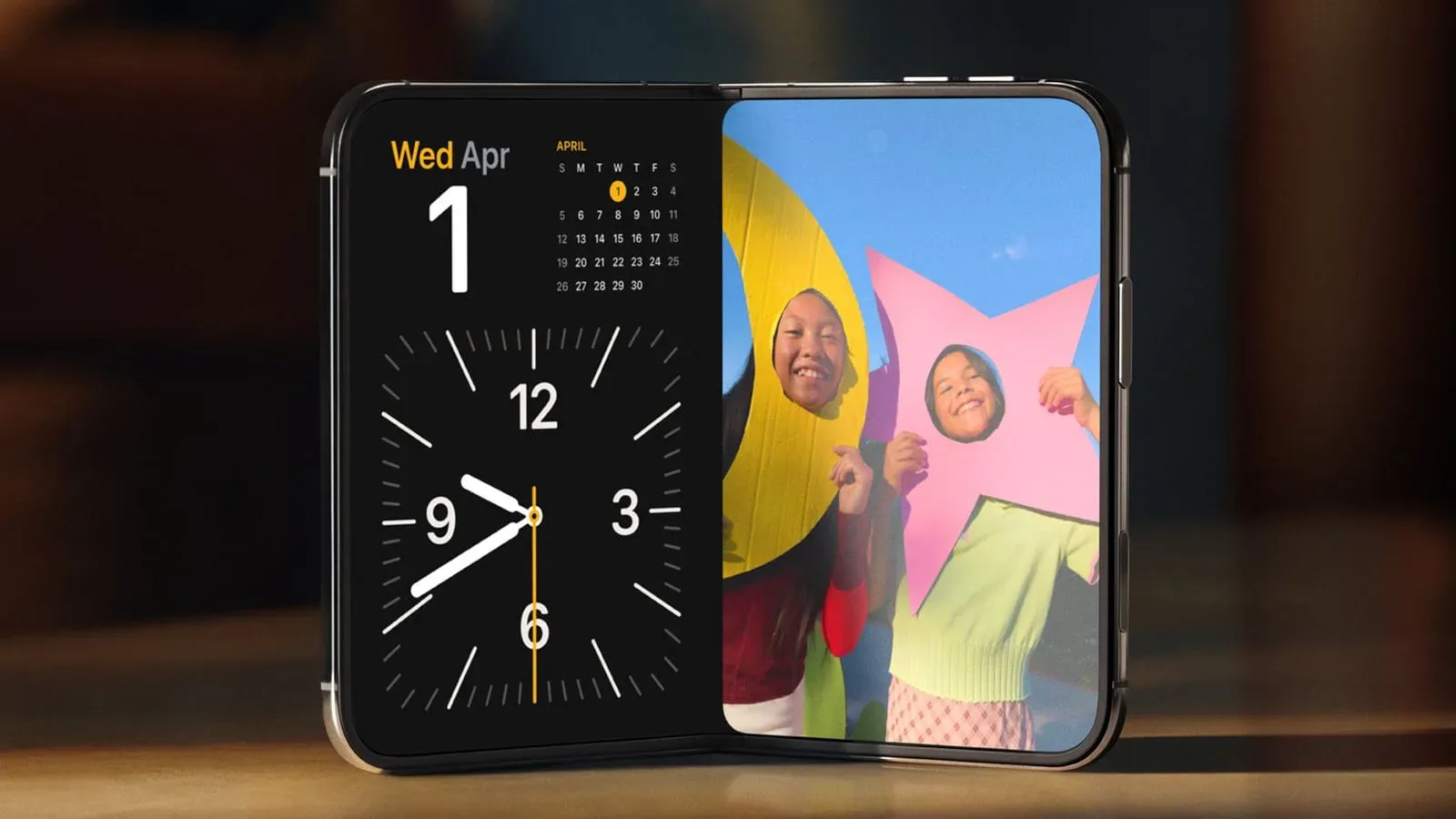
Motorola’s teaser joins a broader apparent interest in less narrow foldable screens. The Samsung Galaxy Z Fold 8 and the iPhone Duo are also described as moving toward broader ratios. That does not mean these products are identical, nor does it establish that they share a common hardware strategy. It does suggest that the industry is testing an answer to a persistent foldable question: should the closed device behave more like a narrow remote control, or more like a conventional smartphone?
The timing is particularly pointed because Motorola posted its Razr preview following the iPhone Duo announcement. For buyers who have watched foldables remain a specialized corner of the smartphone market, more companies settling on wider designs could make the category easier to compare on ordinary phone terms. It could also make competition more direct: screen shape, thickness, weight, multitasking, cameras, battery endurance, and price are likely to be scrutinized alongside the fold itself.
Apple’s foldable developments are already part of the wider smartphone conversation, including uncertainty about which capabilities may reach a foldable model. Reports surrounding charging expectations for the iPhone 18 Pro and a foldable underline how quickly feature-by-feature comparisons can become central once a major platform enters a product category. Motorola’s teaser does not answer those comparison points yet, but it makes clear that the company does not intend to sit out the changing foldable landscape.
Razr is no longer only a flip-phone label
The Razr name has an unusually strong association with a specific kind of phone. The original line was defined by a thin, vertical flip form that became instantly recognizable long before modern flexible displays made folding smartphones a premium-device category. Motorola later brought Razr into the current foldable era through clamshell-style models, preserving that basic open-and-close gesture while replacing the old physical keypad concept with touchscreen hardware.
A book-style Razr changes the role of the name. It would not erase the clamshell models, but it would make Razr a larger family of foldable products rather than a label tied to one silhouette. Motorola has already taken that step this year with the Motorola Razr Fold, its first full-sized model in the format. The newly teased device appears to push the idea further by suggesting another take on the book-folding design, one with a more compact and squared-off visual identity.
That is a meaningful distinction in a market where names can become confusing very quickly. A familiar brand badge may communicate design heritage, while the actual product shape determines whether a phone is aimed at people who want a compact flip device, a larger canvas for apps, or some middle ground between the two. Motorola has not explained where this new model will sit beside the existing Razr Fold and its three clamshell counterparts, so that lineup question remains open.
What Motorola has confirmed—and what it has not
At this stage, there are only a few firm details to take from the video:
- Motorola has teased a new Razr-branded foldable.
- The teaser’s final device appears to have a compact, book-style folding structure.
- Its silhouette is broader and more substantial-looking than the preceding Razr shown in the timeline.
- The presentation links the device to 22 years of Razr phones.
- Motorola has not disclosed a name, schedule, detailed specifications, or other product particulars.
The missing information is at least as important. There is no confirmation of display size or resolution, outer-screen design, hinge construction, crease treatment, camera hardware, chipset, storage configurations, water resistance, battery capacity, wired or wireless charging, colors, markets, carrier support, or cost. There is also no stated release period. The teaser creates anticipation, but it does not establish how close the product is to launch.
That restraint is worth keeping in mind because foldable-phone silhouettes can invite fast assumptions. Thickness in a shadowed clip does not tell us the actual closed measurement. A broad outline does not reveal how comfortable the device will be to hold. A Razr badge does not automatically establish whether the phone is a flagship, a more accessible model, or a regional variant. Motorola will need a full reveal to fill in those blanks.
Motorola’s expanding place in the foldable field
Motorola’s larger foldable push gives the teaser more weight than a one-off nostalgia gesture. Beyond the three clamshell Razr models announced this year, the company introduced the Motorola Razr Fold as its first full-size foldable. That device has been viewed as a credible newer alternative alongside the established foldable ranges from Samsung and Google.
The compact book-style Razr preview suggests Motorola may be looking for differentiation within its own portfolio as well as against competitors. If the final hardware retains the broad proportions implied by the video, it could represent an attempt to occupy a distinct design lane rather than simply repeat the formula of a large book fold or a traditional vertical flip phone.
For now, the most interesting part is not an unannounced spec race. It is the repositioning of a legacy mobile name. Razr has survived multiple eras by changing form without entirely discarding its identity. Motorola’s latest teaser indicates that its next transformation may be less about recreating the famous flip and more about using the Razr name to explore what a compact book-style foldable can be.