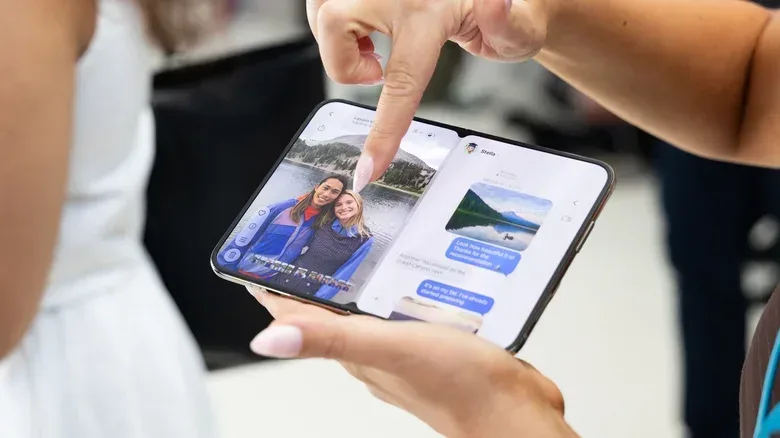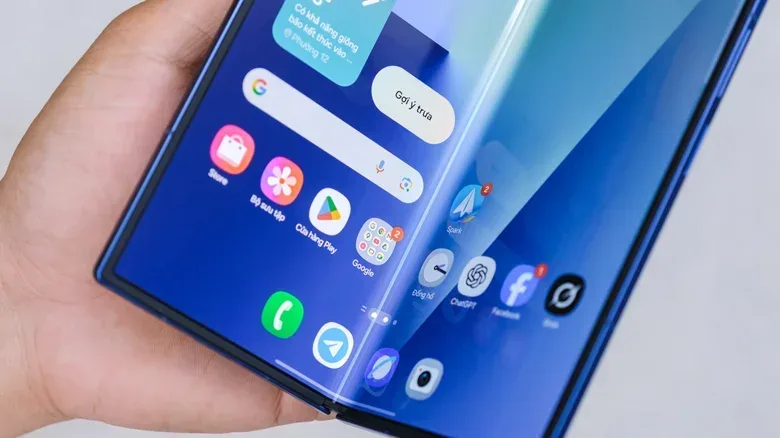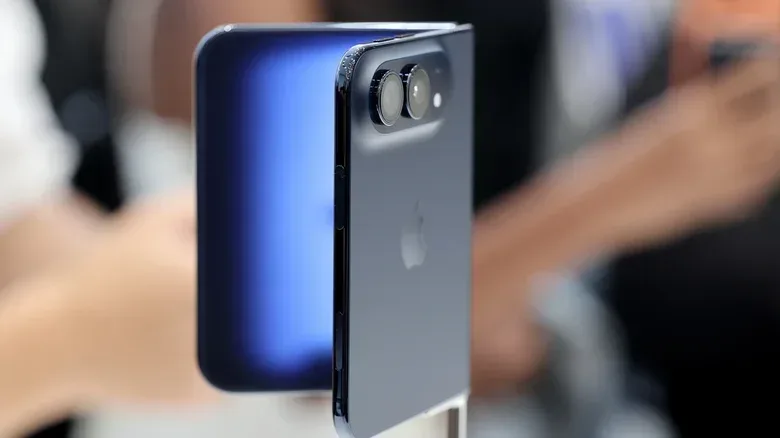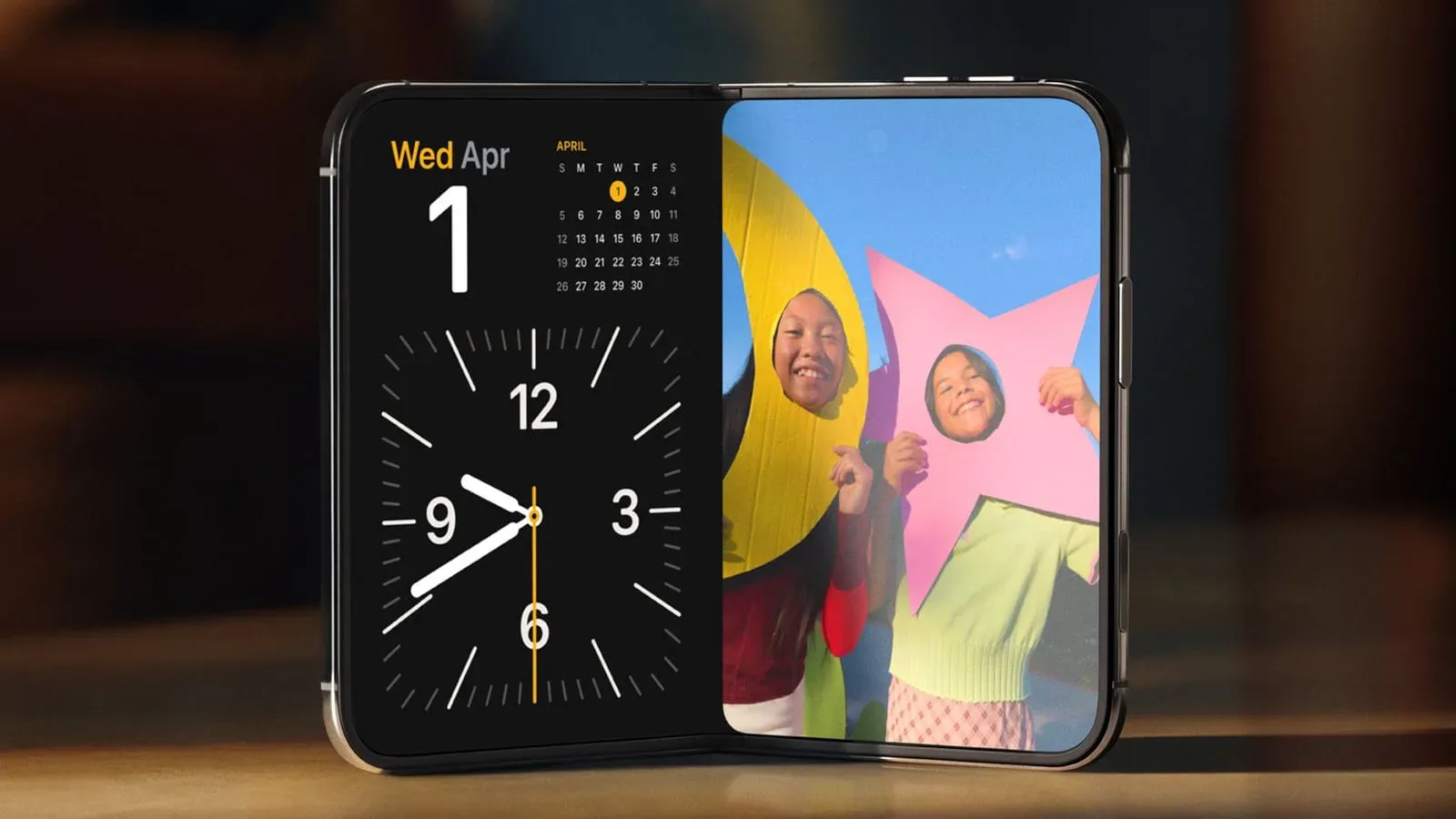
Apple’s first foldable phone, the iPhone Duo, has arrived with one especially attention-grabbing claim wrapped into its design: a screen treatment meant to make the central fold crease much harder to see. Early in-person impressions suggest that it works, at least on a fresh device. The crease has been described as easier to detect by touch than by sight, and that is a meaningful early result for a product category where the crease has long been the unavoidable visual compromise.
But “fresh” is doing enormous work in that sentence. A foldable screen is not judged only by its appearance during a brief demo or immediately after it is removed from the box. It is judged after the display has repeatedly bent along the same line through ordinary ownership. That distinction means the iPhone Duo’s screen may look highly encouraging now without yet answering the question prospective buyers actually need answered: will it still look that way after months or years of opening and closing the phone?
The crease problem is a physical one, not merely a cosmetic oversight
A foldable phone asks a display to do something a conventional phone screen does not: bend repeatedly. Current flexible-display technology can reduce the resulting crease, but it cannot make the underlying challenge disappear. Folding concentrates stress around a consistent point in the screen assembly. Even as manufacturers improve the materials and mechanics, a visible or tactile line at the fold remains a familiar consequence.
That is why the iPhone Duo should not be evaluated using a simple yes-or-no question such as “does it have a crease?” It does. The more useful questions are:
- How noticeable is the crease when viewing the screen normally?
- How noticeable is it when a finger crosses the center of the display?
- Does its appearance change as folding cycles accumulate?
- Does the panel remain visually flat and intact over longer ownership?
The distinction between seeing and feeling matters. A crease that can be felt but is difficult to see may be far less distracting while reading, watching video, browsing, or working across the unfolded display. It may still be apparent during touch interaction, however. Neither reaction is inherently wrong; they describe different parts of the experience. Apple’s early result seems to improve the visual side of that equation, while the tactile presence of a fold is not portrayed as having vanished.
What the nano-texture approach appears to change
The iPhone Duo uses a matte, nano-texture treatment over its display. In practical terms, the important effect described so far is reduced light reflection. A crease can stand out because reflections catch differently along the bent area than they do on the flat portions of a screen. By cutting down on those reflections, a matte surface can make the line visually recede.
That is an important clarification: reducing the visibility of a crease is not necessarily the same thing as eliminating the crease itself. The screen’s fold line may remain physically present, but it can become less obvious to the eye because glare and shifting highlights no longer draw attention to it. For daily use, that may be precisely the improvement that matters most. A foldable does not need to pretend it has no hinge in order to feel more polished; it needs to avoid continually reminding the user where that hinge is.
There is also a reason initial reports can legitimately differ. Visibility depends on viewing angle and available light. A crease that seems almost absent in one position can reveal itself more clearly in another. The matte finish is therefore a promising method for controlling what the eye notices, not evidence that the screen has escaped the material stresses of folding.
Related coverage includes The iPhone Duo’s Crease Looks Promising, but Longevity Is Still Unknown.
Why first impressions cannot establish durability
Brief hands-on time is well suited to evaluating the immediate visual presentation of the iPhone Duo. It can reveal whether the screen looks smooth at a glance, whether reflected light makes the fold distracting, and whether a fingertip detects a transition across the center. It cannot reproduce sustained ownership.
The concern is cumulative wear: changes that emerge through many folds and unfolds over time. The Galaxy Z Fold 8 provides the relevant comparison point described here. It is shipped unfolded, where its display can look notably flat when first seen. After continued opening and closing, the crease becomes more noticeable. Images of foldable phones with damaged screens also demonstrate why long-term behavior, rather than launch-day appearance alone, is central to assessing the category.
This does not establish that the iPhone Duo will develop the same problems, nor does it prove that the nano-texture finish will fail. It establishes the uncertainty. The iPhone Duo has not yet spent months in the hands of a broad group of owners, and it will not reach stores until next month. There is simply no real-world record yet for how its screen looks after extensive use.
A nearly invisible crease on a new unit is a strong first impression. It is not, by itself, a long-term durability verdict.
What Apple has shown—and what remains unproven
Apple executives have expressed confidence in the iPhone Duo and its durability relative to competing foldables. The early visual result gives that confidence a plausible foundation: making the crease less obvious from day one is a concrete achievement, and an early display that attracts fewer reflections at the fold has a practical advantage.
Still, the available evidence supports only a limited set of conclusions.
Reasonable conclusions now
- The iPhone Duo’s crease appears substantially less conspicuous during early hands-on viewing than many people expect from a foldable phone.
- The matte nano-texture layer appears to reduce reflections that can emphasize the fold line.
- The crease can still be felt, even where it is difficult to observe visually.
- The display design is a positive sign for Apple’s first attempt at a foldable phone.
Questions that need time to answer
- Whether the crease becomes more noticeable with repeated use.
- Whether the texture continues to obscure reflections around the fold over extended ownership.
- How the display holds up across a large number of consumer devices rather than a small number of newly demonstrated units.
- Whether the phone’s long-term durability matches Apple’s confidence.
This is not excessive caution for its own sake. A foldable is a device whose defining feature is repeated mechanical motion, so its most revealing test necessarily takes time. A standard phone can be assessed more readily from its static construction and day-one performance. With a foldable, every open-and-close cycle contributes to the story.
Why launch reviews will be useful but incomplete
Reviews published around release will matter. They can compare the initial crease presentation, explain whether it is visible in common lighting, and describe whether the fold is distracting during normal touch use. They will also help establish how the iPhone Duo’s new display treatment changes the immediate feel of a foldable screen.
Those reviews will nevertheless be snapshots. They can show the phone as buyers receive it, but cannot yet report on what happens after a long period of repeated folding. Later owner reports and extended durability examinations will be more informative for a different question: does the screen preserve its first-day advantage?
Extreme durability videos may become part of that conversation, but they should be understood for what they are. They can expose how a device behaves under unusually harsh conditions. They do not replace the slower, more ordinary evidence generated by a broad group of people using a phone across many months. Both forms of scrutiny can be informative, yet neither should be mistaken for the other.
What buyers should pay attention to after release
For anyone considering the iPhone Duo, the sensible move is to separate display appearance from display longevity. The initial signs are encouraging if the priority is a foldable screen whose center line does not dominate the view. But buyers who want confidence about years of use will need to wait for evidence that does not exist at launch.
When longer-term reports arrive, the most useful observations will be specific rather than dramatic: whether the crease has become easier to see under ordinary light, whether it feels materially different when swiping across the display, and whether panel damage appears across real usage. A report that merely says a foldable is “durable” or “fragile” will be less helpful than one that describes how its condition changed over time.
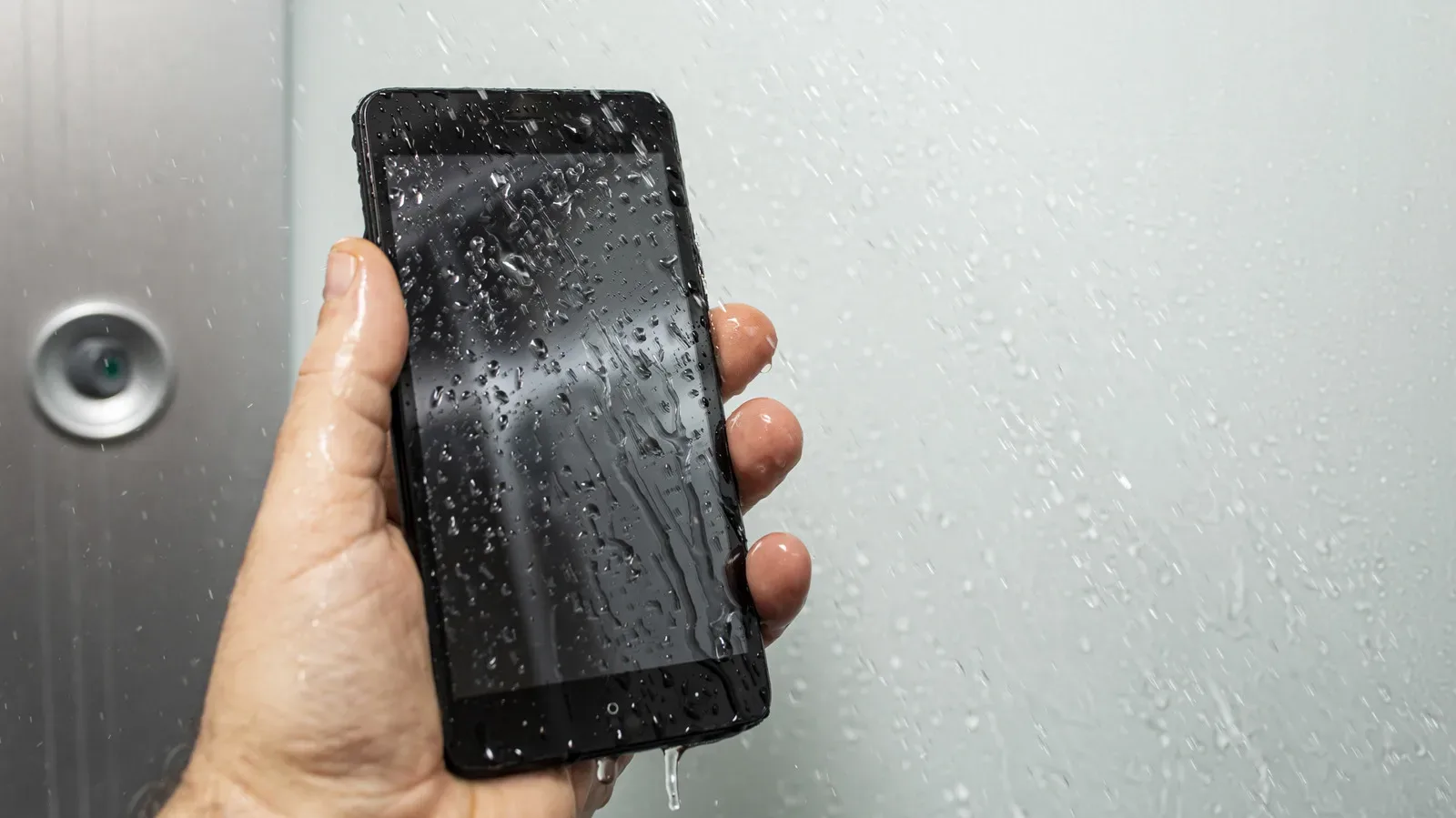
Care also remains part of the broader ownership picture for any phone. Environmental exposure is not the same issue as a fold crease, but buyers should avoid assuming a rating or premium construction makes a device invulnerable. Our guide on why an IP68 rating is not a shower pass explains why steam, heat and humidity deserve separate consideration.
A promising start, not a solved problem
The iPhone Duo’s nano-texture display may represent a smart response to the part of foldable creases users most often notice: light reflecting off the fold and making it announce itself. If early impressions hold up, Apple has made a new foldable look cleaner at the moment when buyers first encounter it. That alone is a notable step.
But the core limitation is straightforward. The foldable-display crease is tied to repeated bending, and repeated bending cannot be meaningfully simulated by a short hands-on session. Apple’s design has earned attention for making the crease less visible out of the gate. Its real achievement will be determined later, when the novelty has worn off and the phone has been opened and closed enough times for durability to stop being a claim and become evidence.