Apple is reportedly reshaping the leadership behind one of the most immediately visible parts of its hardware: the display. Victor Yin has taken responsibility for much of the company’s display development after a multi-year transition period under Wei Chen and John Zhong, two executives said to have spent roughly three decades at Apple.
Chen and Zhong are moving into more limited advisory duties as part of what has been described as a succession process that has been developing for several years. That distinction matters. This is not presented as an abrupt replacement of a display organization, but as a handoff designed to retain experience while placing day-to-day responsibility with a newer leader.
The changes sit inside a wider adjustment to Apple’s engineering structure. Rajesh Ambati, Louie Sanguinetti, and Derek Shaeffer have been promoted to vice president roles spanning connectivity hardware and software. Meanwhile, Johny Srouji’s role has expanded to chief hardware officer, bringing hardware engineering and hardware technologies under his leadership. Apple has also reorganized product development with the stated aim of improving coordination between the teams responsible for chips and the devices that use them.
Why display leadership is a meaningful handoff
A display is more than the panel that shows an image. In a finished device, display work involves the screen’s relationship with the surrounding hardware, the software that drives it, the device’s power demands, and the visual result seen by the customer. For a company whose products depend heavily on physical design and tightly integrated hardware and software, leadership over display development is a consequential technical responsibility.
The reported transition therefore has two dimensions. First, it represents an ordinary but important succession question: how a company transfers specialized institutional knowledge when veteran leaders reduce their operational involvement. Second, it comes as Apple is seeking closer coordination among its device, chip, and wider hardware engineering groups.
Chen and Zhong remaining as advisers could help make that transfer less disruptive. Advisers generally provide guidance and continuity rather than leading a function’s daily decisions. The report does not spell out their individual responsibilities under the new arrangement, the precise boundaries of Yin’s remit, or a timetable for their eventual departures. Those details should not be assumed. What is clear is that Yin is now overseeing much of display development after preparation that reportedly stretched over years.
The broader hardware structure around Yin
Apple’s display shift is only one part of a larger set of leadership moves. Srouji’s expanded chief hardware officer role is particularly significant because it places hardware engineering and hardware technologies under one executive. The subsequent product-development reorganization is intended to improve the working relationship between chip teams and device teams.
In practical terms, that objective is about reducing friction between disciplines. A chip team works on the silicon that performs computing tasks, while a device team must turn that technology into a complete product with physical components, thermal constraints, power limits, wireless systems, displays, and other requirements. Better coordination does not mean every team becomes the same team; it means the decisions made by one group can be aligned earlier and more directly with the needs of another.
For displays, this organizational direction is relevant even without any newly disclosed product specifications. A display is part of the device system, and the system must account for hardware technologies and the chips that support the device’s operation. The reported structural changes suggest Apple wants those interdependencies handled with greater coordination.
That is different from a claim about an upcoming screen, new panel technology, or a particular device feature. No such product details were provided. The meaningful news here is organizational: Apple is adjusting who leads specialized engineering work and how its engineering groups connect to one another.
Connectivity promotions broaden the picture
The October promotions of Ambati, Sanguinetti, and Shaeffer reinforce that the reorganization is not limited to displays. Their responsibilities cover connectivity hardware and software, another field where a product’s experience depends on technical layers working together.
Connectivity is the umbrella term for the systems that allow devices to communicate with networks, accessories, and other devices. It contains both hardware and software components. Hardware refers to the physical electronics and related technologies; software supplies the instructions and behavior that make those systems function as part of a product. The report notes that Sanguinetti’s work in wireless hardware stretches back decades, underscoring the depth of experience involved in these leadership changes.
There is a common thread between the display succession, the connectivity promotions, and the chief hardware officer role: Apple appears to be elevating people in specialized engineering areas while also trying to make the overall hardware organization more closely coordinated. That does not automatically reveal the company’s future product roadmap. It does, however, indicate that engineering leadership and reporting structures are receiving active attention.
Fewer layers, and the human cost of restructuring
The reorganization has also reportedly involved layoffs affecting some hardware program managers in recent weeks. Those reductions are tied to an effort by Srouji and CEO John Ternus to remove management layers. Earlier reporting described Ternus as seeking to speed product development and reduce the number of roles between engineers and senior leadership.
Management layers are the levels of supervision and decision-making that sit between the people doing specialized work and the people who set senior priorities. Reducing them can be intended to make communication shorter, decisions faster, and accountability more direct. It can also mean real disruption for employees whose positions are eliminated or changed. Both aspects belong in any clear reading of the strategy.
Hardware program managers are distinct from the engineers who design a component or write the software that supports it. Program management commonly focuses on organizing the work across teams, tracking dependencies, and helping bring complex efforts through development. The report does not identify the affected managers, quantify the cuts, or provide a full breakdown of which programs were involved. It would be a mistake to infer those missing details.
Still, the combination of senior promotions and reduced management layers points to a recognizable organizational goal: put responsibility closer to technical leadership while reducing the distance between engineering work and executive decision-making. Whether that goal changes the pace or quality of products is not established by these personnel moves alone. Organizational charts can enable different ways of working, but they are not themselves product outcomes.
What this does—and does not—say about future devices
For people who follow consumer hardware, leadership reshuffles can invite a rush of speculation about screens, chips, wireless performance, or a specific unreleased product. The available reporting supports a more restrained reading. Apple has changed responsibilities across display development, connectivity, corporate development, and the App Store, while consolidating hardware authority under Srouji and streamlining parts of product management.
It does not establish an announced new display type, a release schedule, or a feature list for any future Apple device. Nor does it say that Chen and Zhong have already left the company; they are reportedly taking advisory roles as the succession continues.
The news is best understood as a leadership transition with operational stakes rather than a product reveal. Yin’s expanded oversight puts a new executive at the center of a major hardware discipline, while veteran leaders remain available in advisory capacities. That pairing can be especially important in a field where technical knowledge accumulates over long product cycles.
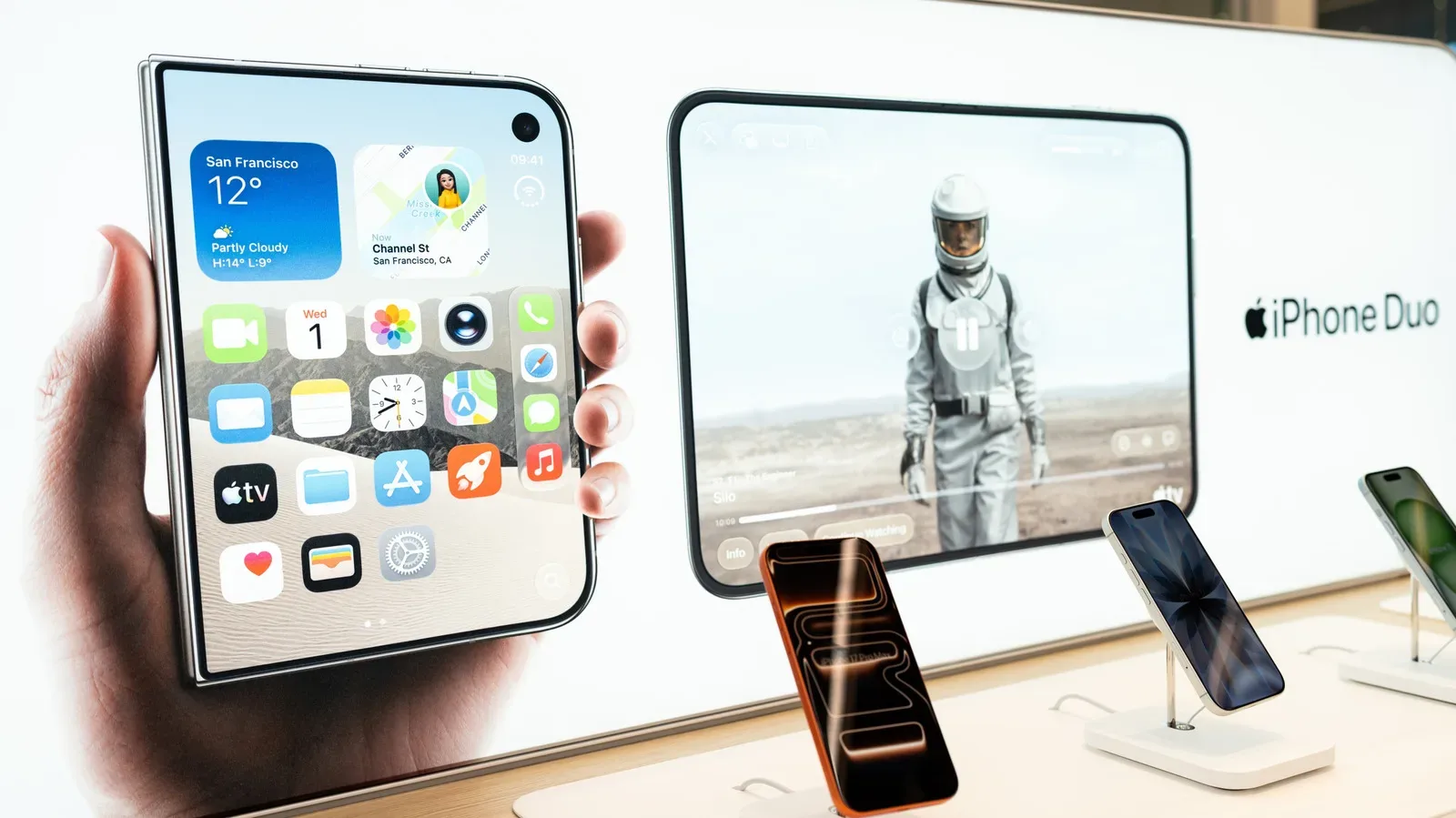
Display quality will remain a major point of comparison in the wider device market, including among phones and foldables; the challenges of comparing hardware categories are evident in this look at how no foldable is a perfect match for an iPhone Duo. But the present development is about Apple’s internal engineering stewardship, not a direct comparison or a declaration of new display capabilities.
Other executive moves extend beyond hardware
The leadership changes also reach outside the engineering organization. App Store head Carson Oliver has received a vice president title, and Steve Smith has taken charge of corporate development. These appointments had been reported earlier in the month.
Corporate development is generally the area concerned with strategic business opportunities and relationships, though the report does not provide further detail on Smith’s specific priorities. The App Store promotion similarly signals an executive-title change for Oliver, but does not disclose any changes to App Store policy, operations, or developer terms.
Taken together, the appointments show a company updating several parts of its senior leadership bench at once. The display succession is the most technically specific element because it identifies a direct transfer of oversight from Chen and Zhong’s long-standing work toward Yin. The other promotions and restructuring measures show the transition happening within a broader push to reshape how Apple organizes engineering and senior responsibility.
For now, the clearest takeaway is continuity paired with consolidation: veteran display executives are not described as disappearing overnight, a prepared successor is taking on wider authority, and Apple is simultaneously seeking a flatter path between its engineers and leadership.