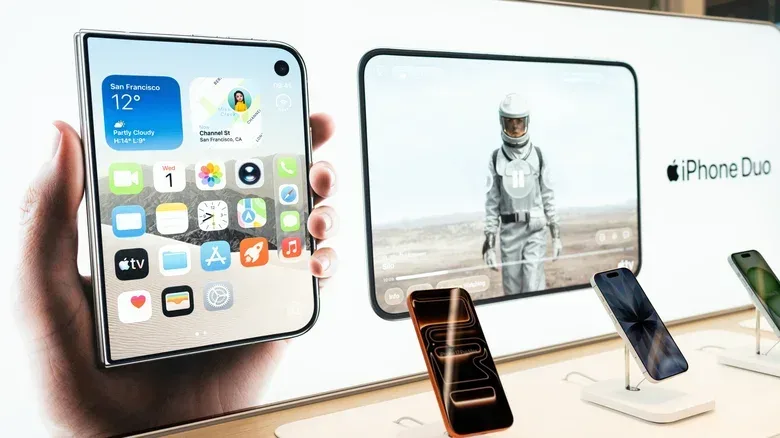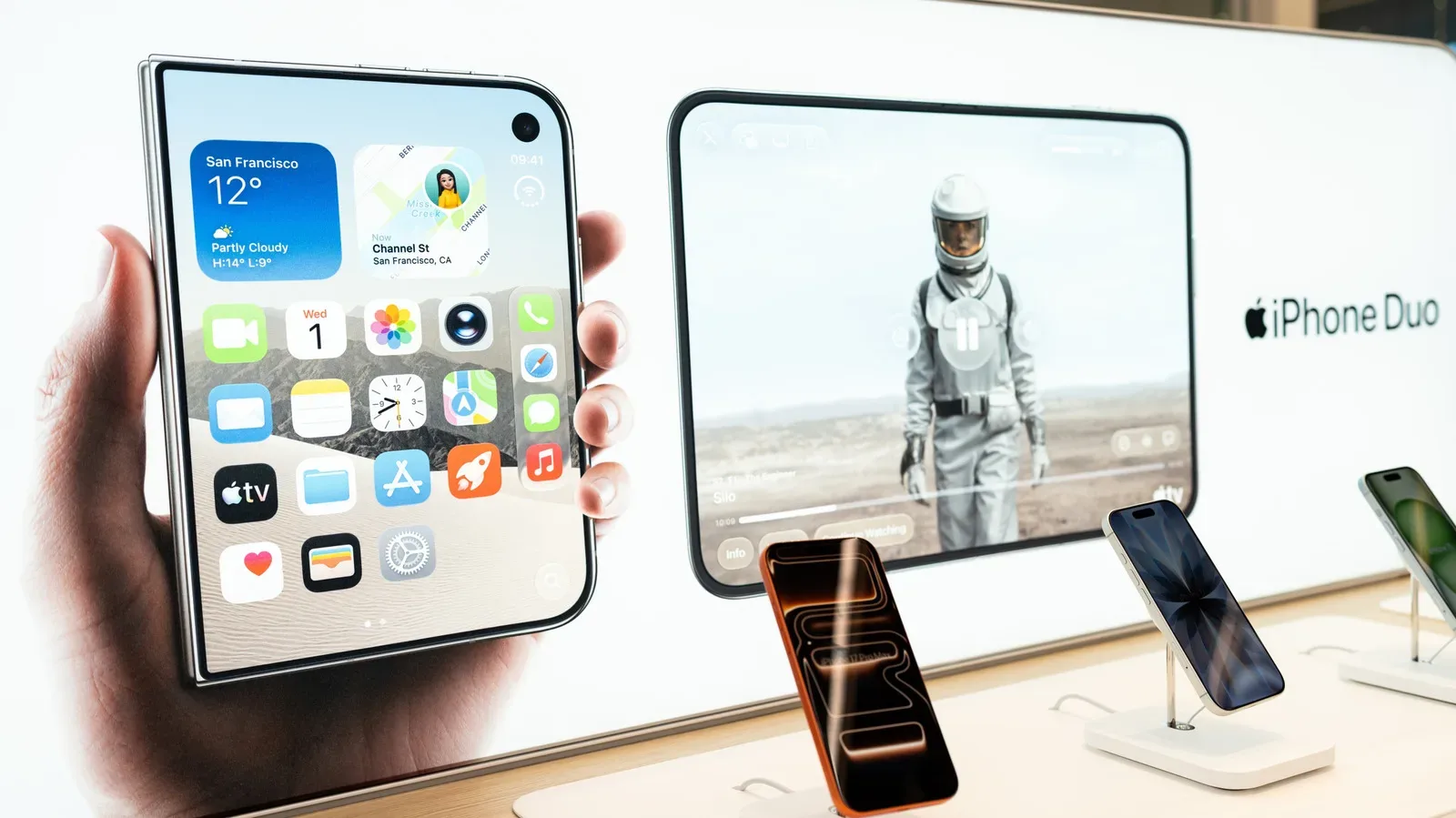
Apple’s iPhone Duo arrives in a foldable-phone category that Android manufacturers have been working in for years. That timing matters less than the practical question for anyone comparing devices: if the Duo’s phone-that-opens-into-a-tablet format looks appealing, which Android handset comes closest?
The short answer is the Samsung Galaxy Z Fold 8. Its screen measurements are nearly identical to Apple’s, its rear camera arrangement is broadly comparable on paper, and it is among the foldables available in the US. But “closest” should not be mistaken for “identical.” The Google Pixel 11 Pro Fold matches the Duo’s IP68 dust-and-water-resistance rating, Motorola’s Razr Fold posts the highest listed camera megapixel counts and the largest stated battery capacity, while Xiaomi’s 18 Fold is another close size match that is not distributed stateside.
That makes the comparison less like choosing a replacement controller with the same button layout and more like choosing among several high-end builds that share a genre. They all use the book-style foldable format: a conventional outer display for closed-phone tasks and a larger interior screen when opened. The premise is a compact device that can become a small tablet for reading, streaming and multitasking. The details, however, decide which compromise is easiest to live with.
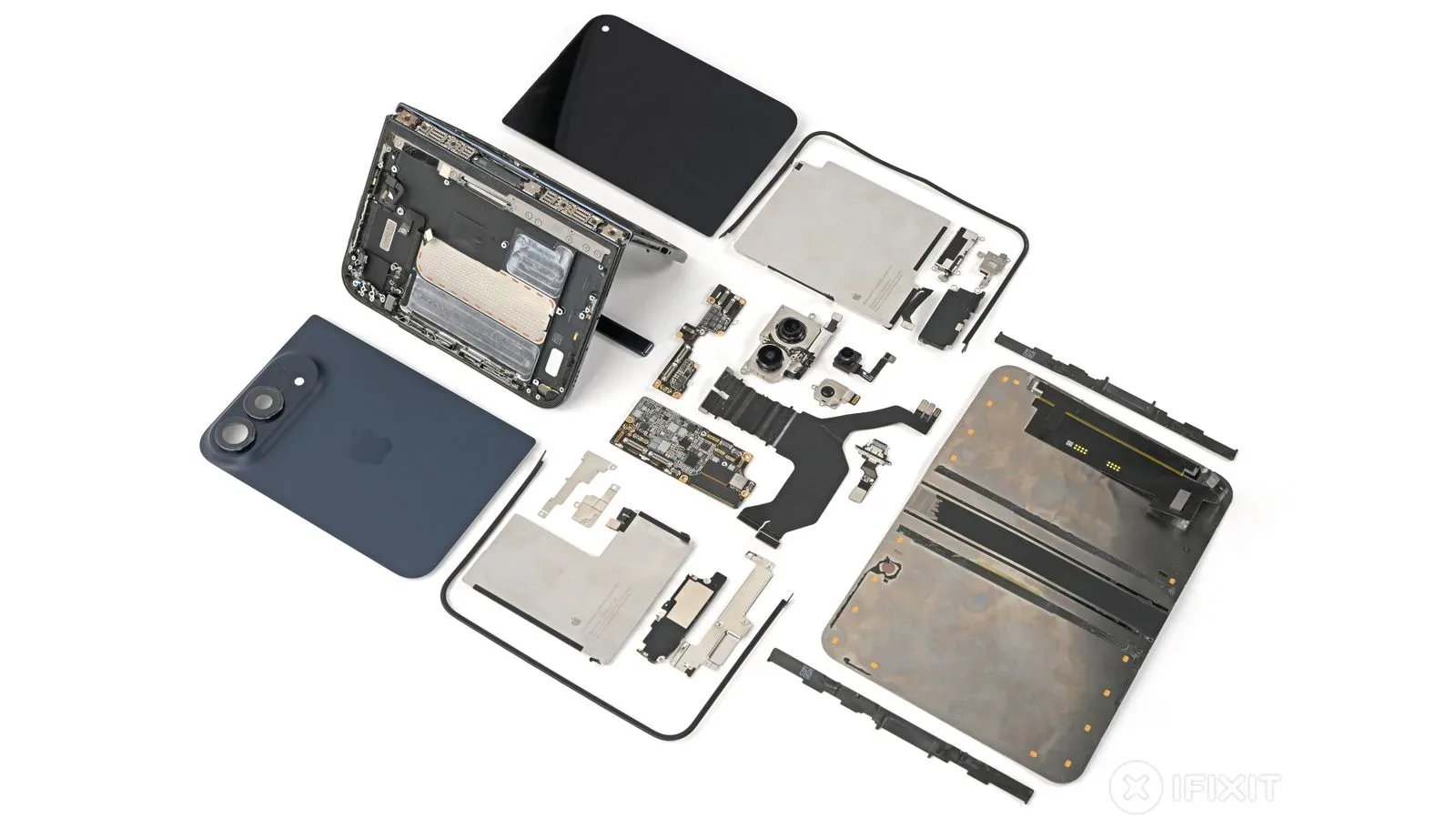
For related context on the hardware concerns surrounding Apple’s model, see our coverage of the iPhone Duo hinge stress zone identified in a teardown.
The closest screen-size pairing: iPhone Duo and Galaxy Z Fold 8
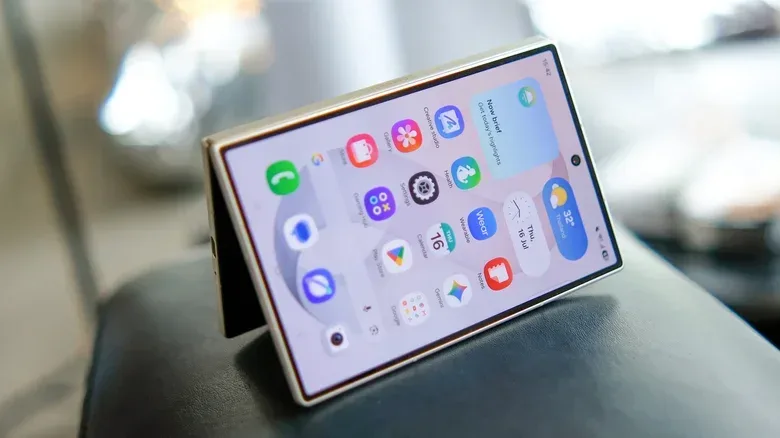
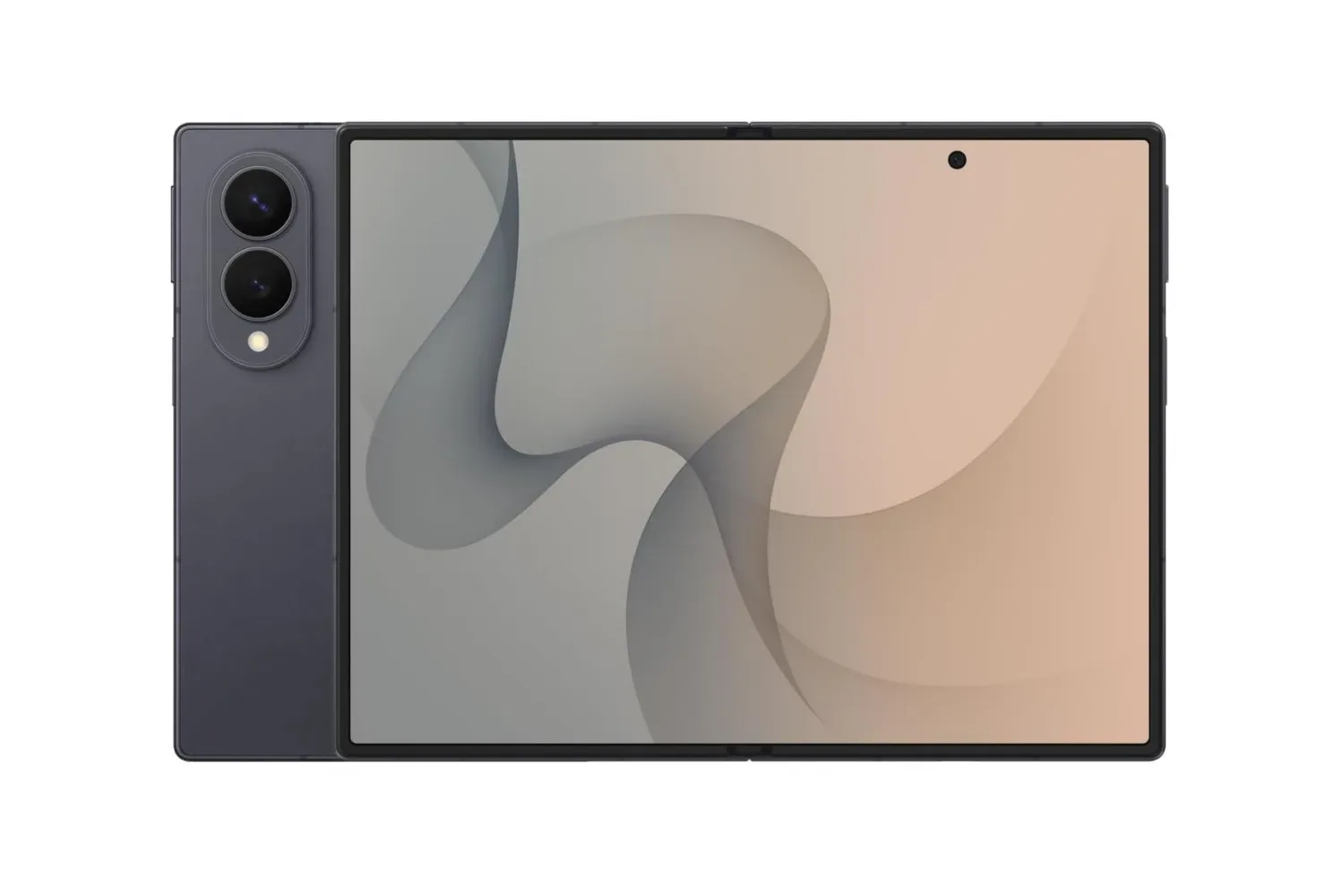
The iPhone Duo has a 5.4-inch exterior screen and a 7.6-inch inner display. Samsung’s Galaxy Z Fold 8 lines up unusually closely: a 5.5-inch cover screen and the same 7.6-inch interior measurement.
Those figures make the Z Fold 8 the most direct dimensional comparison in this group. A cover screen is the display used while the phone is shut; the inner screen is the larger panel revealed when the device unfolds. Matching diagonal measurements do not guarantee that every aspect of the displays feels the same, and the supplied specifications do not settle questions such as panel shape or software behavior. Still, for a shopper who wants the Duo’s general physical screen scale without changing platforms, Samsung is the obvious starting point.
Google and Motorola take a larger-screen route. The Pixel 11 Pro Fold has an 8-inch inside screen and a 6.5-inch outer display. Motorola’s Razr Fold goes a little farther, with a 6.6-inch cover display and an interior display measuring nearly 8.1 inches. Those are meaningful departures from the Duo’s 5.4-inch outer screen, especially for people who expect to spend lots of time using a folded device one-handed or who prefer a more expansive front display.
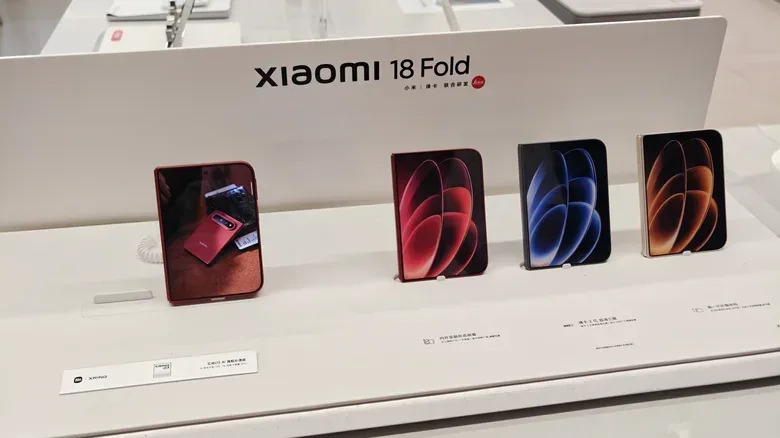
Xiaomi’s 18 Fold belongs in this size discussion despite its US distribution limitation. Xiaomi describes it as its first “mid-size” foldable, and its 7.68-inch unfolded screen plus 5.38-inch exterior screen sits strikingly near the Duo and Z Fold 8 measurements. It underscores that Samsung is not alone in pursuing this particular size class; it is simply the most relevant close analogue among the options identified as readily available in the US.
Weight is a real separation point
The iPhone Duo weighs 9 ounces. Every Android foldable in this comparison is lighter: 7.09 ounces for the Galaxy Z Fold 8, 8.4 ounces for the Pixel 11 Pro Fold and 8.6 ounces for the Razr Fold.
On a spec sheet, an ounce or two can look like trivia. On a device designed to be held closed, opened, repositioned and used for extended reading or video, it is a practical distinction. The Z Fold 8 is not only the closest display-size match; it is also the lightest listed option by a considerable margin. Conversely, Apple’s Duo is the heaviest device here even though its screens are not the largest.
That does not establish which construction is better, because weight alone cannot explain materials, hinge design, balance or durability. It does mean that shoppers should not assume a similar screen footprint equals a similar carry or holding experience. In this lineup, it plainly does not.
Camera comparisons need more than one number
The Duo uses a 12-megapixel Center Stage front camera and two 48-megapixel rear cameras. Samsung’s Z Fold 8 is the nearest basic camera-layout neighbour, with two 50MP rear cameras and a 10MP front camera. The rear figures are close, while Samsung’s front-camera resolution is slightly lower.
Megapixels are a measure of image resolution, not a complete verdict on image quality. A higher number describes how many pixels a sensor image contains, but it cannot by itself tell buyers how photos will look in every situation. The most useful conclusion from these listed numbers is therefore modest: Samsung is the closest on the count and arrangement of the Duo’s two main rear cameras, not necessarily the unquestioned winner in photography.
Google overlaps with Apple in one key figure: the Pixel 11 Pro Fold has a 48MP main camera. Its important difference is a 10.8MP telephoto camera, a dedicated camera specification the Duo does not have. A telephoto lens is intended for more distant subjects, so the Pixel’s stated setup offers a category of camera hardware not listed for Apple’s phone.
Motorola leads this narrow numerical contest. The Razr Fold has 50MP main, ultrawide and telephoto cameras, plus a 20MP cover selfie camera. An ultrawide camera is built for a wider field of view, while a telephoto camera serves more distant framing. Based on the listed hardware alone, Motorola gives buyers the broadest rear-camera spread: main, ultrawide and telephoto rather than the Duo’s two 48MP rear cameras.
The key is to match camera priorities to the actual use case. Someone seeking the nearest numerical counterpart to the Duo’s twin rear sensors should look first at Samsung. Someone who regards telephoto hardware as essential has a meaningful reason to consider Google or Motorola instead. Someone comparing megapixel totals alone will find the Razr Fold at the top, but that is only one part of a camera decision.
Durability labels are not interchangeable
For expensive foldables, resistance to water and dust can be as consequential as display size. The iPhone Duo carries an IP68 rating. Of the Android handsets named here, the Pixel 11 Pro Fold is the only one that matches it.
Samsung’s Galaxy Z Fold 8 has an IP48 rating. Motorola’s Razr Fold is listed at IP48/IP49. These ratings should not be treated as identical labels with a digit shuffled around: the supplied specifications explicitly distinguish them, and the Pixel is the sole Android model in this group stated to match Apple’s IP68 rating.
In practical buying terms, this is the clearest specification reason to put the Pixel ahead of Samsung as an Apple match, even though its screens are larger. Buyers who are chiefly interested in the Duo’s stated dust-and-water-resistance class should not overlook that difference just because the Z Fold 8 wins the size comparison.
Battery figures answer different questions
Battery comparisons are less tidy. Apple has not disclosed the Duo’s precise battery capacity. Its stated claim is up to 24 hours of mixed use on a charge. “Mixed use” signals an estimate spanning different activities rather than a capacity number that can be lined up directly against Android rivals.
Samsung lists a 4,800mAh battery for the Z Fold 8, while the Pixel 11 Pro Fold has a 4,806mAh battery. The difference between those stated capacities is tiny. Motorola lists a 6,000mAh battery in the Razr Fold and calls it the largest available in a foldable.
mAh, or milliampere-hours, is a battery-capacity measurement. It is useful for identifying the stated size of a battery, but it does not create a direct conversion to Apple’s 24-hour mixed-use claim. The Duo lacks a disclosed capacity in the available details, and the supplied information does not provide comparable endurance testing for the Android models. As a result, it would be unsound to declare a battery-life winner here.
There is still a sensible takeaway: Motorola has the largest listed capacity, Google and Samsung are almost tied in their stated capacities, and Apple’s public claim uses a different metric. Buyers comparing these phones should keep capacity and claimed endurance in separate columns rather than force them into a false one-number race.
Pricing and storage: closer than the category suggests
The iPhone Duo starts at $1,999.99 with 256GB of storage. The Galaxy Z Fold 8 starts at $1,899.99 for 256GB, as does the Pixel 11 Pro Fold. Motorola’s Razr Fold also starts at $1,899.99, but that starting configuration includes 512GB.
That means Apple’s entry price is $100 higher than each Android rival listed here, though Motorola’s baseline has twice the storage of the Duo’s entry configuration. Storage capacity matters particularly to people who keep substantial local photo, video, app or download libraries, but the figures are configuration-specific, so the starting price comparison is not a complete value judgement.
Samsung and Google offer up to 1TB, which brings them closest to Apple’s higher-capacity approach. Neither reaches the Duo’s 2TB configuration. For people who need the maximum stated storage ceiling, Apple stands alone in this particular group. For those content with 1TB, Samsung and Google offer a more direct match.
Which Android foldable actually fits the Duo brief?
Pick the Galaxy Z Fold 8 as the closest overall physical counterpart. Its 7.6-inch inner screen exactly matches the Duo’s listed inner measurement, its 5.5-inch outer screen is only 0.1 inches larger, and its two 50MP rear cameras are close to Apple’s two 48MP cameras. It is also much lighter at 7.09 ounces, starts $100 below the Duo at the same 256GB capacity, and is available in the US.
Pick the Pixel 11 Pro Fold when matched IP68 protection and a telephoto camera matter more than dimensions. It has larger displays than the Duo, but it is the only Android model here with the same listed IP68 rating. Its 48MP main camera also mirrors one of Apple’s headline camera figures, while the 10.8MP telephoto provides hardware not listed on the Duo.
Pick the Razr Fold if bigger screens, higher listed megapixel counts, a 6,000mAh battery and 512GB at the starting price are the priorities. It is the least Duo-like in physical scale among these three major US options, but it makes a distinct case rather than merely trying to replicate Apple’s formula.
And Xiaomi’s 18 Fold is the reminder that physical resemblance is not the same as market relevance. Its display measurements are close to Apple’s and Samsung’s, yet its lack of US distribution prevents it from being the straightforward choice for buyers there.
The foldable market does not offer an Android clone of the iPhone Duo. It offers several credible alternatives that each mirror a different part of the brief. For the closest all-around spec silhouette, the Galaxy Z Fold 8 takes the crown. For protection parity, Pixel has the sharper argument. For the broadest listed camera array and biggest battery capacity, Motorola makes the loudest counteroffer. That is a healthier answer than a fake one-to-one equivalence—and a useful reminder that, in foldables, the hinge is only the beginning of the decision.